A Patient's Guide to Starting Hormone Replacement Therapy
Written by YiQiu Hu, NMD
Arizona-licensed naturopathic physician and concierge medicine provider
Published July 2026 | Medically reviewed July 2026
Hormones play an important role in nearly every aspect of health, including energy, sleep, mood, metabolism, muscle strength, sexual health, and overall well-being. As we age, natural hormone levels can change, sometimes leading to symptoms that interfere with daily life and quality of life.
If you have been considering hormone replacement therapy (HRT), it's normal to have questions about how the process works and what to expect. This guide is designed to help you understand each step, from your first consultation through ongoing treatment, so you can feel informed and confident in your healthcare decisions.


Hormone replacement therapy is used when declining hormone levels begin causing symptoms that affect daily functioning.
For women, this commonly occurs during perimenopause and menopause as estrogen and progesterone levels decline.
For men, testosterone levels may gradually decrease with age or because of underlying medical conditions.
Symptoms may include:
Persistent fatigue
Brain fog
Low libido
Erectile dysfunction
Hot flashes
Night sweats
Mood changes
Anxiety or irritability
Difficulty sleeping
Weight gain
Reduced muscle mass
Poor exercise recovery
Decreased motivation
Not everyone experiencing these symptoms needs HRT, which is why a thorough medical evaluation is the first step.
Why Do People Start Hormone Replacement Therapy?


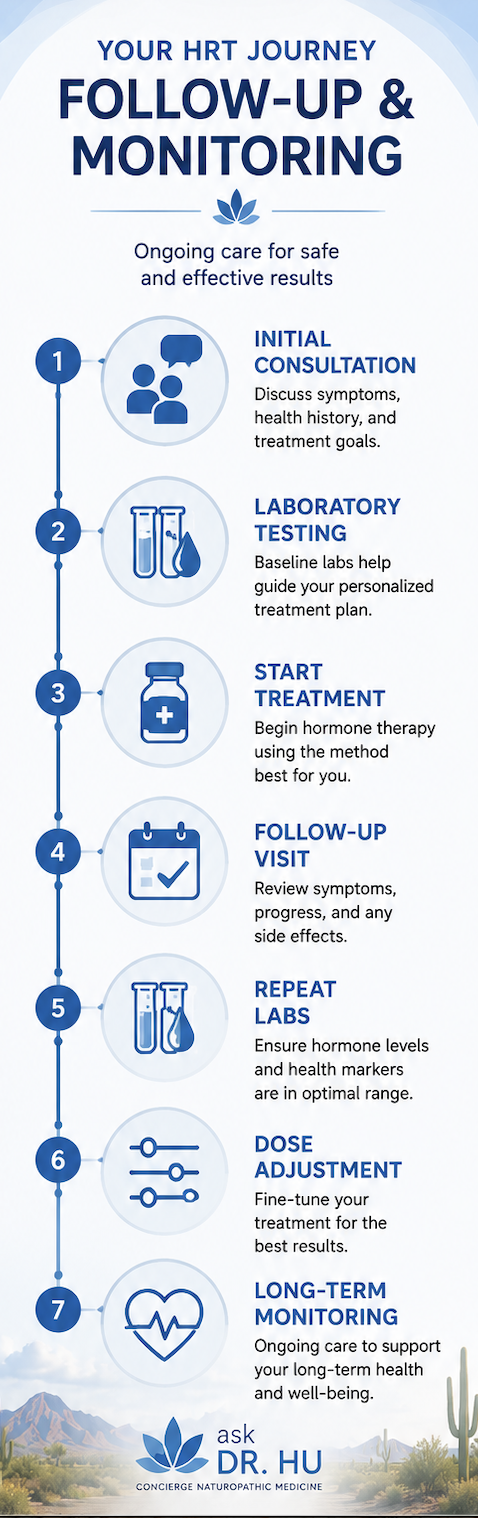
Step 1: Your Initial Medical Evaluation
Your first appointment focuses on understanding your overall health rather than simply prescribing hormones.
During your visit, your physician may discuss:
Current symptoms
Medical history
Family history
Current medications
Lifestyle habits
Previous hormone treatments
Future health goals
Your provider also considers medical conditions that may contribute to similar symptoms, such as thyroid disease, nutritional deficiencies, chronic stress, or sleep disorders.
Step 2: Laboratory Testing
Blood testing helps determine whether hormone levels are contributing to your symptoms.
Depending on your situation, laboratory testing may include:
For women:
Estradiol
Progesterone
FSH
LH
Testosterone
DHEA-S
Thyroid testing
For men:
Total testosterone
Free testosterone
SHBG
Estradiol
PSA (when appropriate)
CBC
Comprehensive metabolic panel
Additional testing may be recommended based on your medical history.
Step 3: Reviewing Your Results
Hormone therapy should never be based solely on a laboratory number.
Your physician combines:
Your symptoms
Physical examination
Medical history
Laboratory findings
Overall health
Two patients with similar hormone levels may receive very different recommendations depending on their symptoms and health goals.
Step 4: Choosing the Right Treatment
Hormone replacement therapy is individualized for each patient.
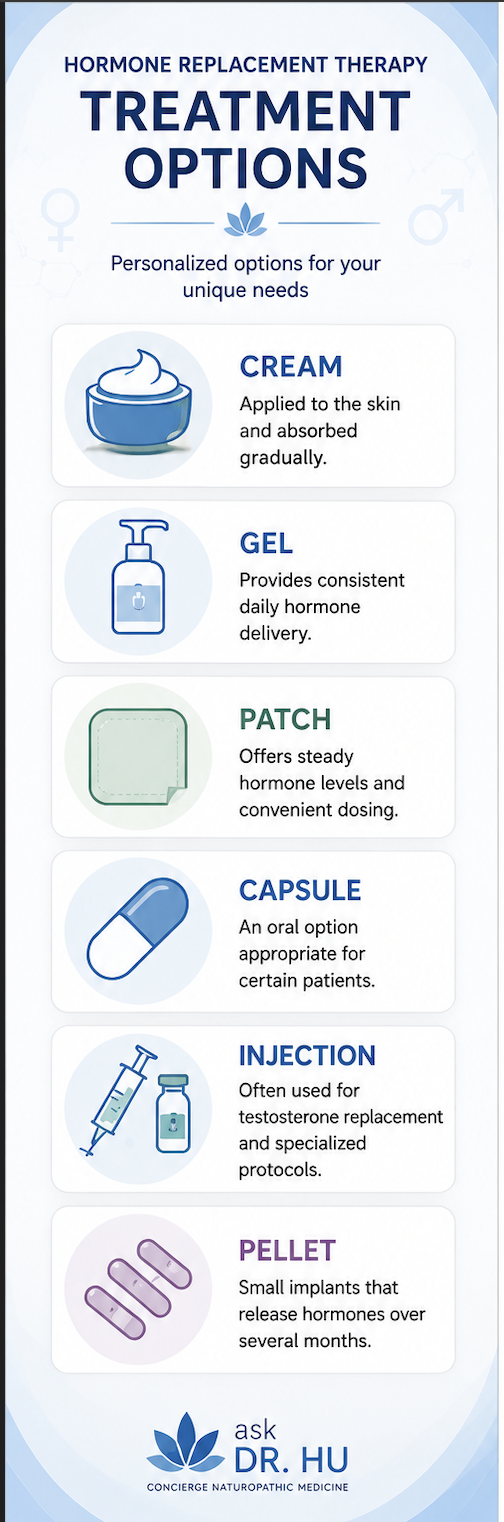
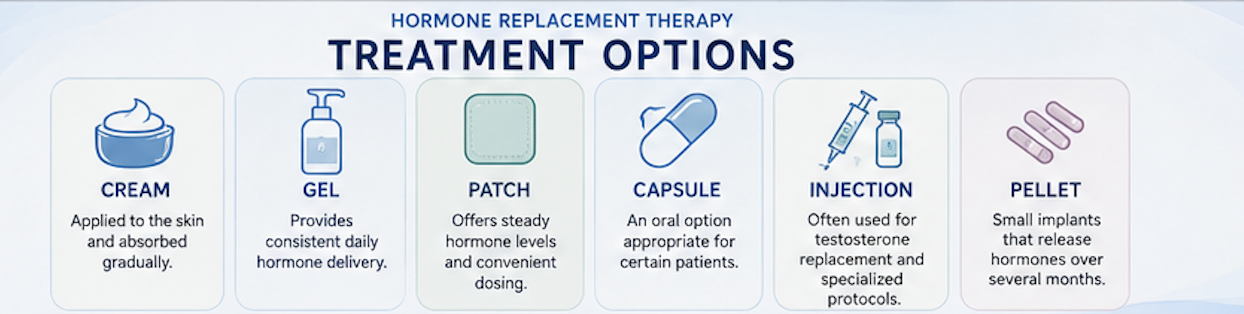
Depending on your needs, treatment options may include:
Creams
Applied directly to the skin and absorbed gradually.
Gels
Provide consistent daily hormone delivery.
Patches
Offer steady hormone levels and convenient dosing.
Capsules
An oral option appropriate for certain patients.
Injections
Often used for testosterone replacement and some specialized hormone protocols.
Pellets
Small implants placed under the skin that release hormones over several months.
Your physician will discuss the benefits, limitations, convenience, and potential risks of each option before selecting the most appropriate treatment.
Step 5: Starting Therapy
Once treatment begins, your body requires time to adjust.
Some people notice improvements within several weeks, while others experience gradual changes over several months.
Early improvements may include:
Better sleep
Improved energy
Increased motivation
Enhanced mood
Better concentration
Other changes, such as improvements in muscle mass, body composition, libido, or bone health, often develop more gradually.

Step 6: Follow-Up Visits
Hormone therapy requires regular follow-up appointments.
During these visits, your physician evaluates:
Symptom improvement
Side effects
Blood pressure
Weight changes
Laboratory results
Medication effectiveness
Adjustments may be made to dosage or treatment method as your body responds.
Step 7: Monitoring Laboratory Results
Periodic laboratory testing helps clinicians monitor treatment response, identify potential adverse effects, and determine whether adjustments are appropriate.
Monitoring may include:
Hormone levels
Blood counts
Liver function
Cholesterol
PSA (when appropriate)
Thyroid testing
Additional labs based on individual treatment
Routine monitoring allows your physician to make thoughtful adjustments while minimizing potential risks.
Lifestyle Still Matters
Hormone therapy works best when combined with healthy lifestyle habits.
Your physician may recommend:
Regular exercise
Strength training
Adequate protein intake
Good sleep habits
Stress management
Proper hydration
Weight management
Smoking cessation when applicable
These habits often improve treatment outcomes and long-term health.
Possible Side Effects
Like any medical treatment, hormone replacement therapy can have side effects.
Depending on the medication and individual response, these may include:
Acne
Fluid retention
Breast tenderness
Mood changes
Injection site discomfort
Changes in menstrual bleeding (women)
Increased red blood cell count (certain testosterone therapies)
Most side effects can often be managed by adjusting the treatment plan under medical supervision.
When Should You Contact Your Physician?
Contact your healthcare provider if you experience:
Severe headaches
Chest pain
Shortness of breath
Significant swelling
Persistent side effects
Unexpected bleeding
Worsening symptoms
Questions about your medications
Prompt communication allows your physician to evaluate concerns, address potential side effects, and adjust treatment when appropriate.
Frequently Asked Questions
-
Some people notice improvements within a few weeks, while full benefits may continue developing over several months.
-
Not necessarily. The duration of therapy depends on your symptoms, treatment goals, medical history, and ongoing evaluation.
-
Hormone therapy has potential benefits and risks that vary by medication, dosage, delivery method, and individual health history. A clinician should determine whether treatment is appropriate and reassess it through regular follow-up.
-
Yes. Periodic laboratory testing helps monitor your response to treatment and supports safe long-term care.
If you're experiencing symptoms that may be related to changing hormone levels, professional evaluation can help determine whether hormone replacement therapy is appropriate for you. At Ask Dr. Hu, we provide individualized assessments, comprehensive laboratory review, ongoing monitoring, and personalized treatment plans designed to help patients throughout Arizona feel their best.
Schedule a consultation today to learn whether hormone replacement therapy may be right for you.