A Patient's Guide to Preventive Healthcare and Health Optimization
Written by YiQiu Hu, NMD
Arizona-licensed naturopathic physician and concierge medicine provider
Published July 2026 | Medically reviewed July 2026
Your Health Is More Than the Absence of Disease
Many people only visit a doctor when they are sick. While treating illness is important, the greatest opportunity to improve your health often comes before symptoms ever appear.
Preventive healthcare focuses on identifying potential health concerns early, reducing risk factors, and helping you maintain your health over time. Health optimization goes one step further by working to improve how you feel, function, and perform—even if you are already healthy.
Whether you're in your 20s, 40s, or 70s, investing in preventive healthcare can help you enjoy a healthier future with fewer medical problems and a better quality of life.

Preventive healthcare is the practice of identifying and addressing health risks before they become serious medical conditions.
Instead of waiting for high blood pressure, diabetes, heart disease, or other illnesses to develop, preventive medicine aims to:
Detect problems early
Reduce disease risk
Improve long-term health
Support healthy aging
Lower the chance of preventable complications
Think of preventive healthcare as routine maintenance for your body, similar to servicing your car before it breaks down.
What Is Preventive Healthcare?
What Is Health Optimization?
Health optimization builds upon preventive healthcare by helping you achieve your best possible level of health.
Rather than simply asking, "Are you sick?" health optimization asks:
How can you have more energy?
How can you improve your sleep?
How can you optimize your metabolism?
How can you reduce inflammation?
How can you improve your physical performance?
How can you support healthy aging?
The goal is to help you feel your best while reducing the risk of future disease.
Why Prevention Is Better Than Waiting Until You're Sick
Examples include:
High blood pressure
Prediabetes
Type 2 diabetes
High cholesterol
Fatty liver disease
Heart disease
Kidney disease
Osteoporosis
By the time symptoms appear, damage may already have occurred.
Preventive healthcare helps identify these issues early, when they are often easier to manage or even reverse through lifestyle changes and appropriate medical care.
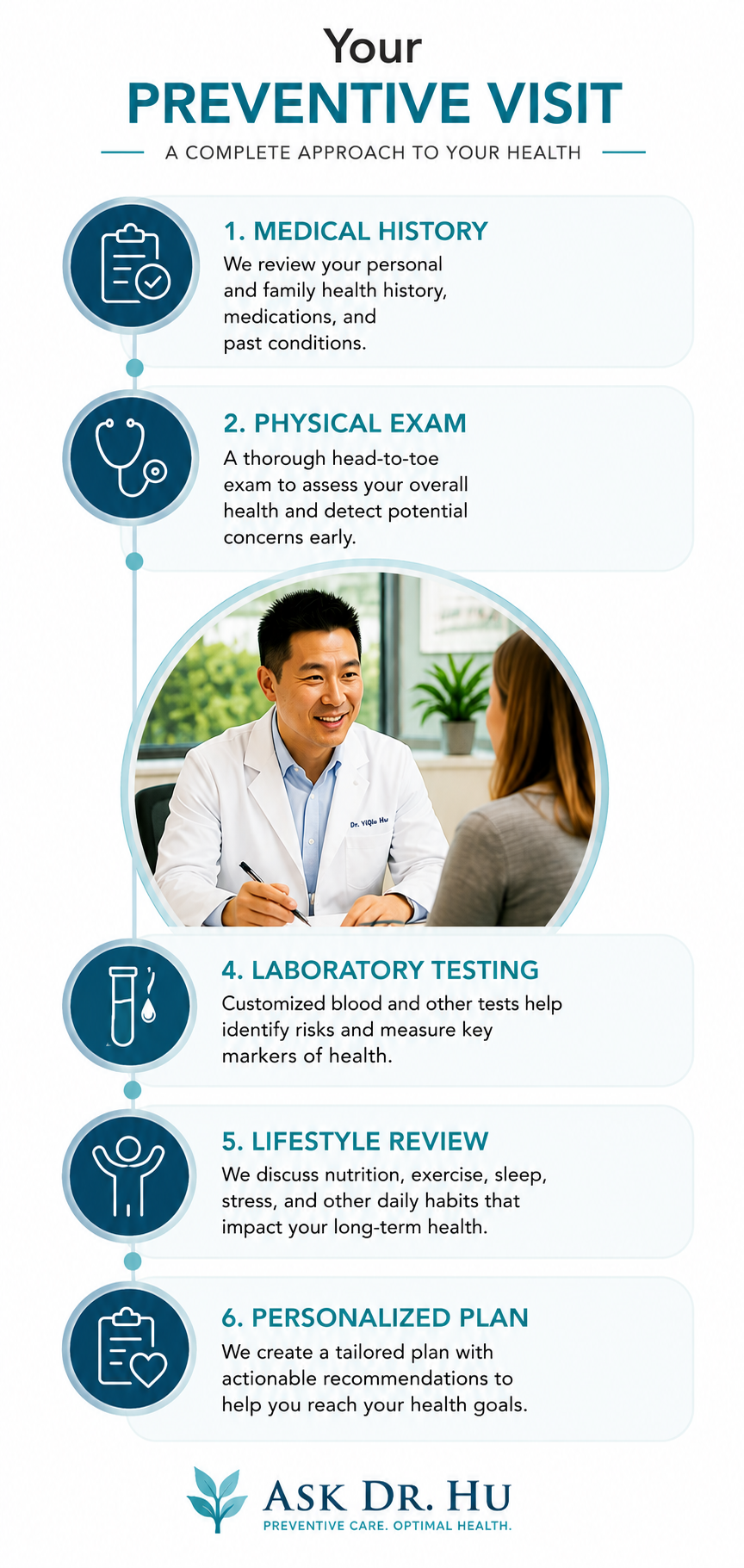
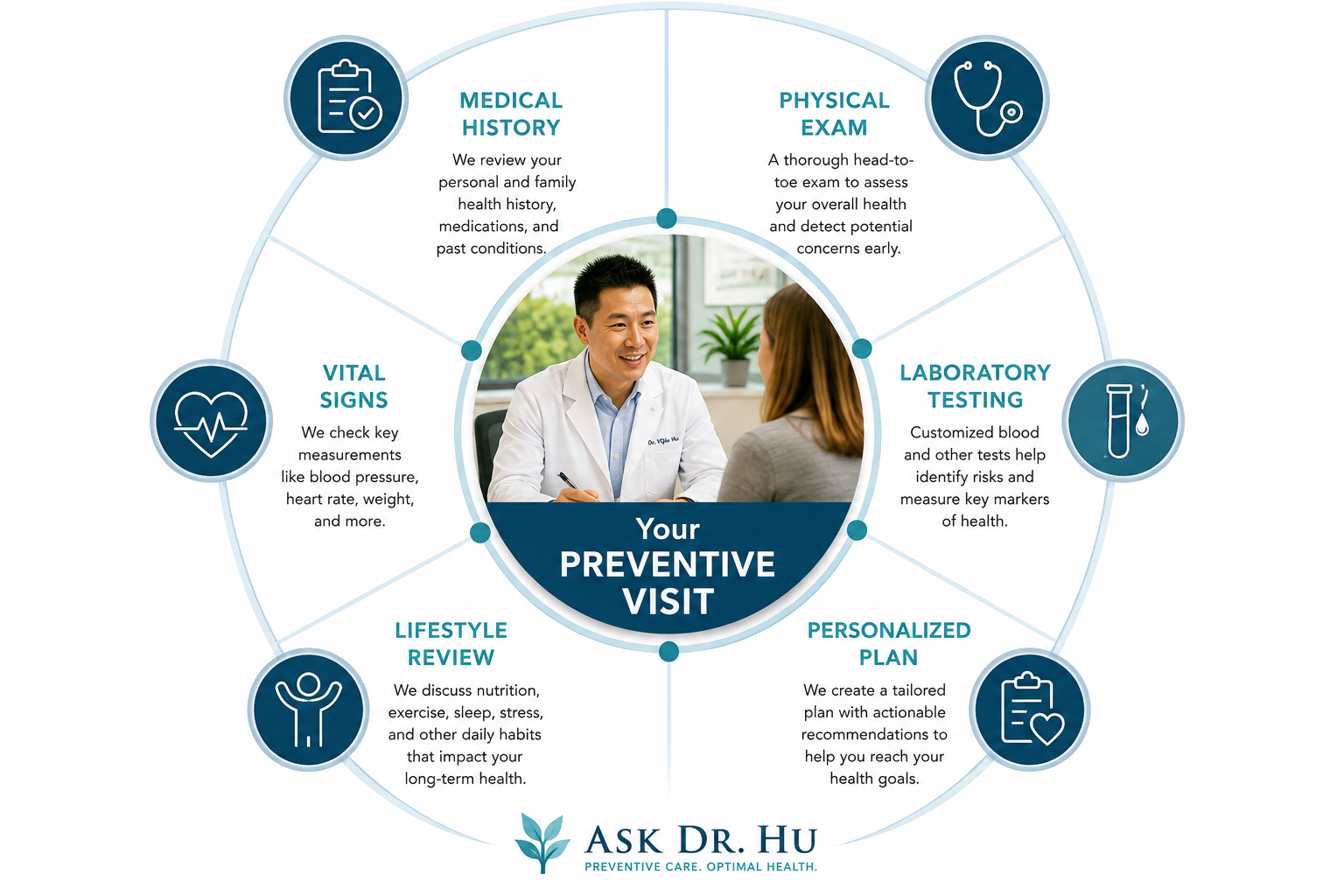
A comprehensive preventive visit looks at your overall health—not just one specific concern.
Your physician may review:
Your Medical History
This includes:
Past illnesses
Previous surgeries
Current medications
Allergies
Family medical history
Lifestyle habits
Understanding your history helps personalize your care.
Vital Signs
Common measurements include:
Blood pressure
Heart rate
Height
Weight
Body mass index (BMI)
Waist circumference (when appropriate)
These measurements provide valuable information about your overall health.
Lifestyle Assessment
Many aspects of daily life influence long-term health.
Topics often include:
Nutrition
Physical activity
Sleep quality
Stress levels
Alcohol consumption
Tobacco use
Recreational drug use
Work-life balance
Small improvements in daily habits can lead to significant long-term benefits.
Physical Examination
A preventive exam may include evaluation of:
Heart
Lungs
Abdomen
Skin
Thyroid
Lymph nodes
Neurological function
Musculoskeletal system
Additional examinations may be recommended depending on your age, medical history, and symptoms.
What Happens During a Preventive Healthcare Visit?
Common Preventive Laboratory Tests
Laboratory testing helps identify problems that may not yet be causing symptoms.
Depending on your individual needs, your physician may recommend:
Complete Blood Count (CBC)
Comprehensive Metabolic Panel (CMP)
Cholesterol panel
Blood sugar (glucose)
Hemoglobin A1c
Kidney function
Liver function
Thyroid testing
Vitamin D
Vitamin B12
Iron studies
Hormone testing (when appropriate)
Testing should always be individualized rather than ordering unnecessary labs.
Preventive Screenings
In addition to laboratory work, preventive screening may include:
Blood pressure screening
Diabetes screening
Cholesterol screening
Colon cancer screening
Breast cancer screening
Cervical cancer screening
Prostate cancer screening
Osteoporosis screening
Skin cancer evaluation
The recommended timing depends on your age, family history, and personal risk factors.
Lifestyle Habits That Have the Greatest Impact on Health
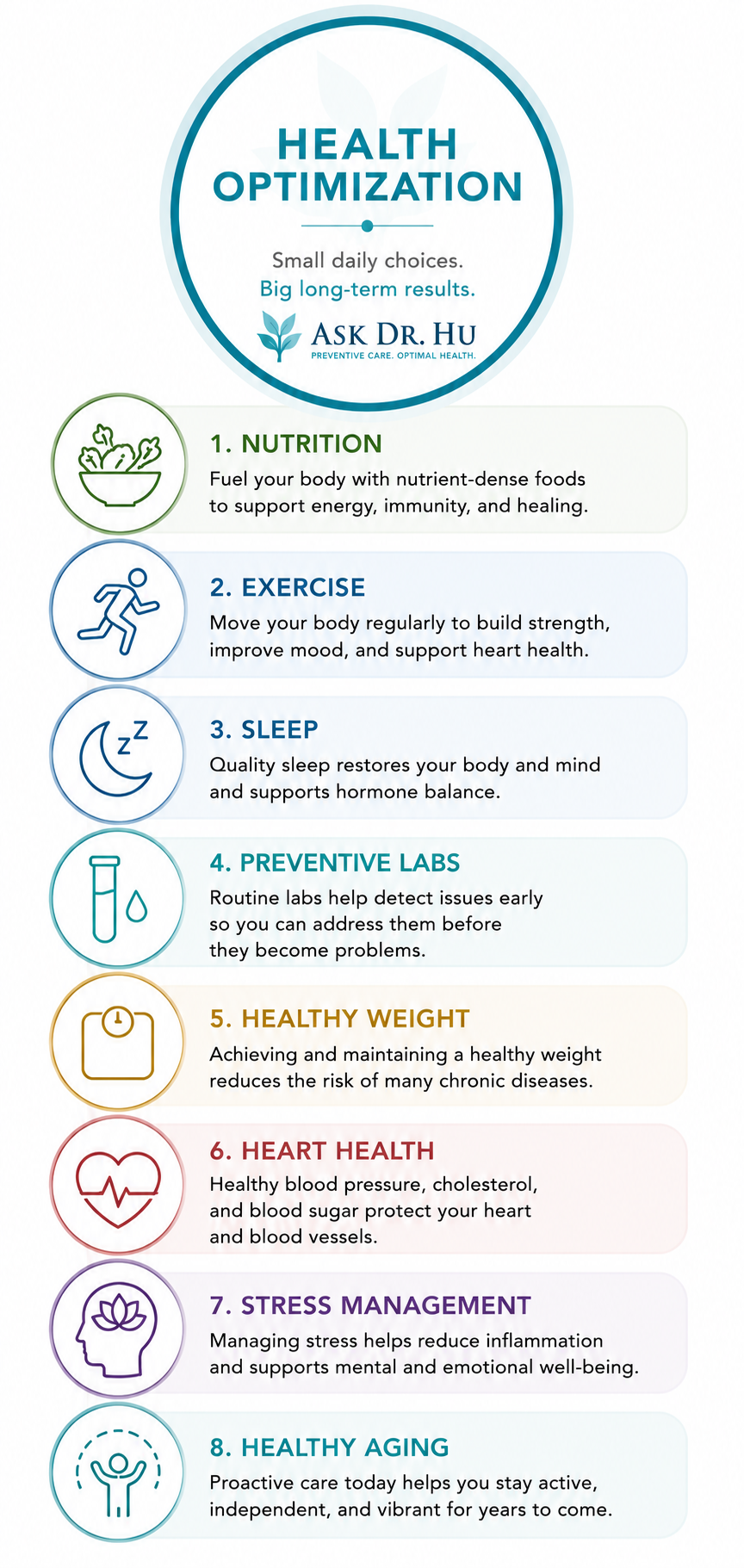
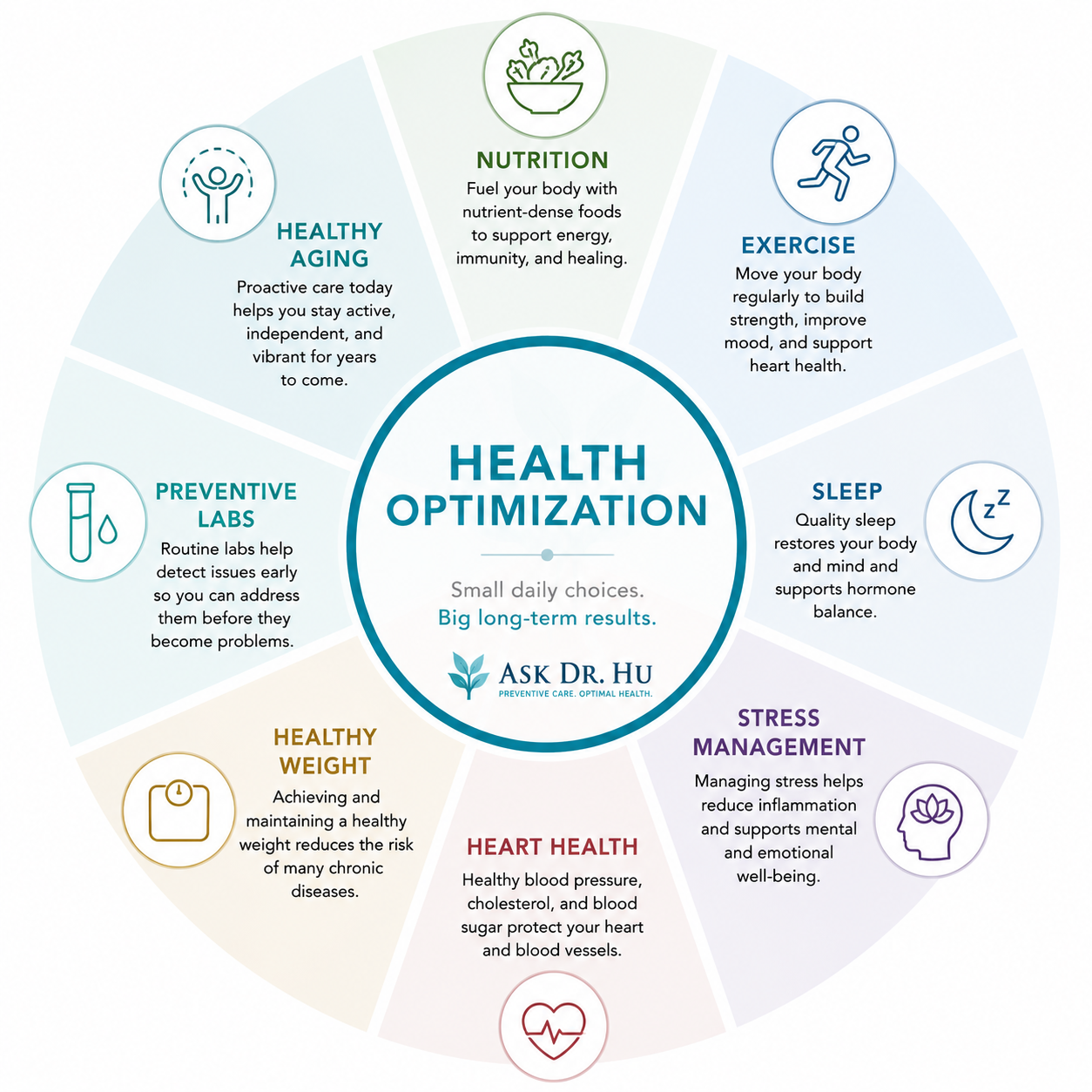
Although genetics play a role in health, everyday habits have an enormous influence on long-term wellness.
Nutrition
A balanced diet can help:
Improve energy
Reduce inflammation
Support heart health
Maintain a healthy weight
Improve blood sugar control
Your nutrition plan should fit your individual lifestyle and medical needs.
Physical Activity
Regular exercise supports:
Cardiovascular health
Muscle strength
Bone density
Mental health
Blood sugar control
Healthy aging
Even modest increases in physical activity can produce meaningful health benefits.
Sleep
Quality sleep is essential for:
Immune function
Memory
Hormone regulation
Recovery
Mood
Metabolic health
Adults generally benefit from 7–9 hours of sleep each night, although individual needs may vary.
Stress Management
Long-term stress can contribute to:
High blood pressure
Anxiety
Depression
Poor sleep
Digestive issues
Chronic inflammation
Healthy stress management may include:
Exercise
Mindfulness
Counseling
Relaxation techniques
Time outdoors
Social support
Avoiding Tobacco and Limiting Alcohol
Avoiding tobacco products remains one of the most important steps for protecting long-term health.
Alcohol should also be consumed responsibly, if at all, according to current health recommendations and your physician's guidance.
No two patients have the same health goals.
A healthy 28-year-old athlete requires a different preventive plan than a 65-year-old with diabetes and high blood pressure.
Personalized care considers factors such as:
Age
Family history
Medical conditions
Lifestyle
Occupation
Activity level
Personal goals
Individual risk factors
Rather than applying the same checklist to every patient, personalized preventive care focuses on what is most relevant for you.
Personalized Preventive Care
Who Benefits From Preventive Healthcare?
You may especially benefit if you:
Want to stay healthy as you age
Have a family history of chronic disease
Are concerned about heart disease or diabetes
Want more energy
Have gained weight
Have high blood pressure or elevated cholesterol
Want to optimize your long-term health
Prefer preventing disease rather than treating it later
Even people who feel completely healthy can benefit from regular preventive evaluations.
The ideal schedule varies depending on your age and medical history.
Many adults benefit from:
Periodic laboratory testing
Routine blood pressure monitoring
Age-appropriate cancer screening
Ongoing lifestyle counseling
Patients with chronic medical conditions or elevated risk factors may benefit from more frequent follow-up visits.
How Often Should You Have Preventive Visits?
How Concierge Medicine Supports Preventive Healthcare
One of the biggest challenges in traditional healthcare is limited appointment time.
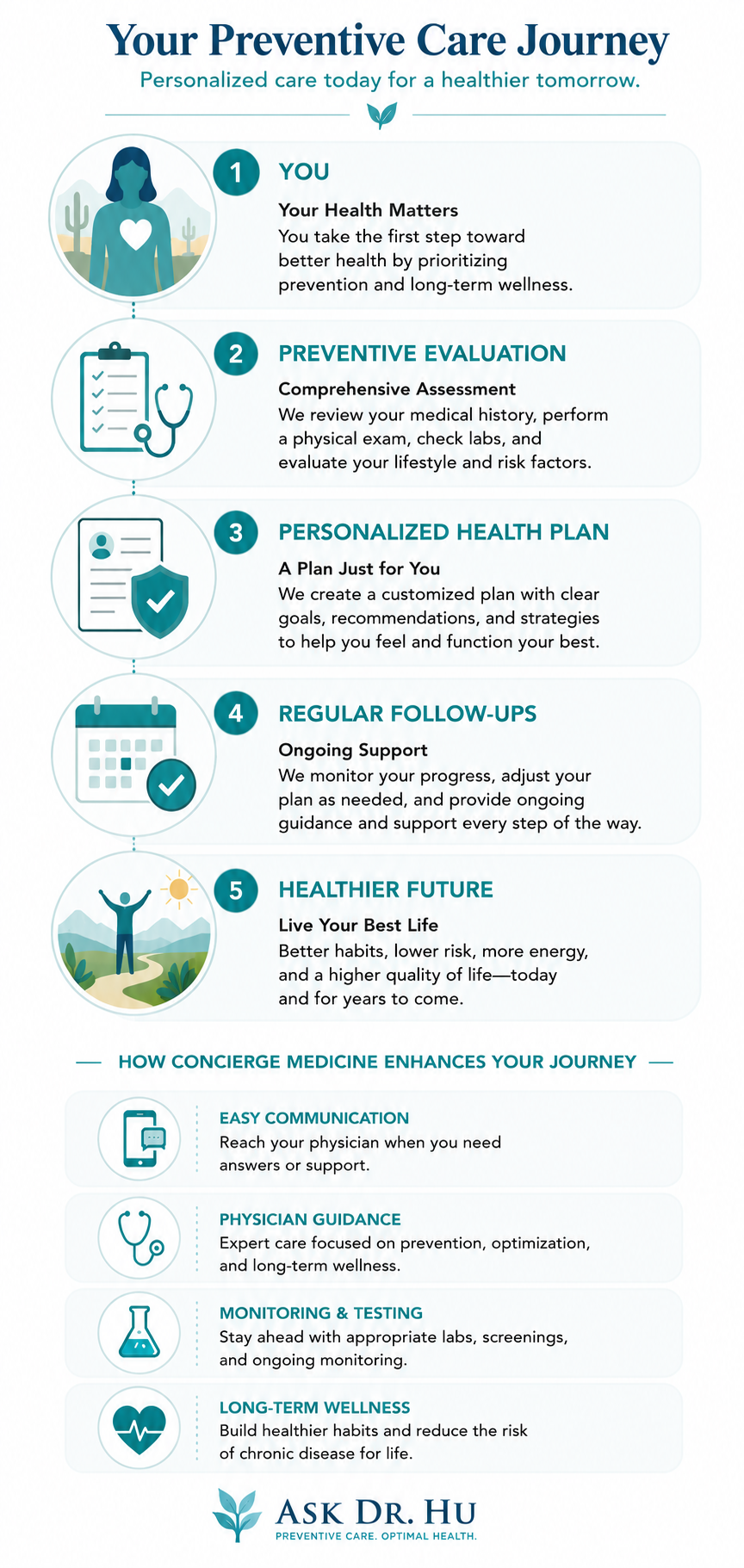
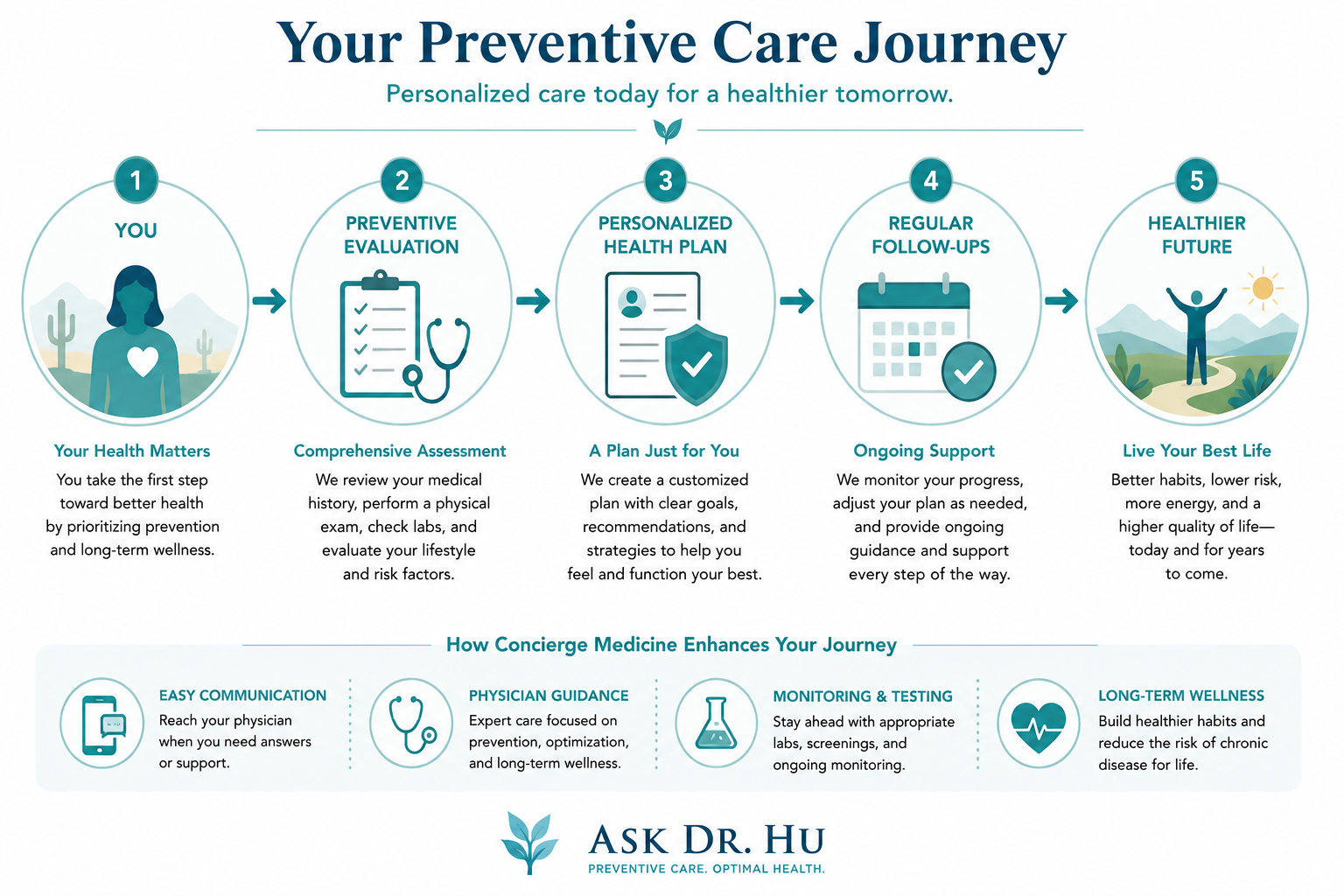
Concierge medicine offers a different approach by allowing more time to focus on prevention, education, and long-term wellness.
Depending on the practice, patients may benefit from:
Longer appointments
Personalized health planning
Easier communication with their physician
Ongoing monitoring
Lifestyle counseling
Comprehensive preventive evaluations
Continuity of care
This additional time often allows for more individualized discussions about health goals and preventive strategies.
Frequently Asked Questions
-
Many preventive services are covered by insurance plans, but coverage varies. If you receive care through a concierge practice, preventive recommendations may still be made, although membership fees and insurance benefits differ by practice.
-
Yes. Many chronic diseases develop gradually without noticeable symptoms. Preventive visits can help identify potential issues before they become more serious.
-
No. Health optimization is appropriate for anyone who wants to improve overall wellness, energy, and long-term health—not just athletes or high performers.
-
The frequency depends on your age, medical history, medications, symptoms, and individual risk factors. Your physician can recommend a schedule that is appropriate for you.
-
Healthy nutrition, regular exercise, adequate sleep, stress management, and avoiding tobacco are associated with a lower risk of many chronic diseases. While lifestyle changes cannot prevent every illness, they are among the most effective ways to improve long-term health and reduce risk.
Take Charge of Your Health Today
Preventive healthcare is one of the most valuable investments you can make in your future. Rather than waiting for illness to develop, regular preventive care helps identify risks early, supports healthier lifestyle choices, and provides a personalized plan to help you stay well.
Whether your goal is to reduce your risk of chronic disease, improve your energy, or simply maintain good health as you age, a proactive approach can make a meaningful difference.
If you're looking for personalized preventive healthcare in Arizona, Ask Dr. Hu provides comprehensive concierge medical care focused on disease prevention, health optimization, and long-term wellness. We take the time to understand your unique health goals and develop a preventive care plan tailored specifically to you.
Ready to invest in your long-term health? Contact Ask Dr. Hu to learn more about our preventive healthcare services and concierge membership options.
Interested in Preventative Medicine?
At Ask Dr. Hu, we provide personalized concierge and naturopathic medical care to patients throughout Arizona. Explore our membership options to learn what is included, or contact us if you have questions about whether our practice may be a good fit for your healthcare needs.