What Is Concierge Medicine?
Written by YiQiu Hu, NMD
Arizona-licensed naturopathic physician and concierge medicine provider
Published July 2026 | Medically reviewed July 2026
If you've been researching healthcare options, you've probably come across the term concierge medicine. But what exactly does it mean, and how is it different from a traditional primary care practice?
Concierge medicine is a healthcare model in which patients pay a recurring membership fee in exchange for greater access to their physician, longer appointments, and more personalized medical care. Rather than managing thousands of patients like many traditional practices, concierge physicians intentionally keep their patient panels smaller so they can devote more time and attention to each individual.
For many people, concierge medicine offers a more convenient, relationship-based approach to healthcare, one that emphasizes prevention, accessibility, and long-term wellness instead of rushed office visits.
If you're looking for a more comprehensive overview—including the history of concierge medicine, how the model developed, and its long-term benefits, read our What Is Concierge Medicine? physician-authored guide.

How Does Concierge Medicine Work?
Although every practice is different, most concierge medicine practices operate using a membership model.
Patients typically pay a monthly or annual membership fee that provides access to services such as:
Longer medical appointments
Same-day or next-day scheduling
Direct communication by phone, text, or email
Telemedicine visits
Preventive care planning
Chronic disease management
Annual wellness examinations
Coordination with specialists
Personalized treatment recommendations
Rather than seeing dozens of patients each day, concierge physicians often spend significantly more time with each patient, allowing for more thorough evaluations and individualized care. While membership structure varies between practices, you can learn more about how membership works at Ask Dr. Hu by visiting our Membership page.
Why Patients Choose Concierge Medicine
Many patients become frustrated with the limitations of traditional healthcare, including:
Difficulty obtaining appointments
Short office visits
Long wait times
Limited communication outside appointments
Seeing a different provider at every visit
Concierge medicine addresses many of these concerns by emphasizing continuity of care and a stronger physician-patient relationship.
Patients often appreciate having a physician who knows their medical history, understands their health goals, and is available when questions arise.
What Are the Benefits of Concierge Medicine?
Some of the most commonly reported benefits include:
More Time With Your Physician
Appointments are generally longer, allowing time to discuss multiple concerns instead of focusing on only one issue.
Easier Access
Many concierge physicians offer direct communication through secure messaging, phone calls, or text, making it easier to receive guidance without scheduling another office visit.
Personalized Care
Treatment plans can be tailored to your medical history, lifestyle, family history, and personal goals rather than following a one-size-fits-all approach.
Focus on Prevention
Instead of only treating illness, concierge medicine often emphasizes preventing disease through regular monitoring, lifestyle counseling, and early intervention.
Better Continuity
Patients usually see the same physician consistently, allowing for stronger long-term relationships and more coordinated care.
Is Concierge Medicine the Same as Health Insurance?
No.
Concierge medicine is not health insurance.
The membership fee generally covers access to your physician and services included within the practice.
Depending on the practice, patients may still use health insurance for:
Specialist visits
Hospital care
Emergency care
Imaging studies
Prescription medications
Laboratory testing (when applicable)
Surgical procedures
Many concierge patients continue carrying traditional health insurance to help cover these larger healthcare expenses.
Who Is Concierge Medicine Best For?
Concierge medicine can benefit a wide variety of individuals, including:
Busy professionals
Families seeking personalized care
Adults managing multiple chronic medical conditions
Individuals interested in preventive medicine
Patients who frequently travel
Retirees who value convenient physician access
Patients looking for longer appointments and more comprehensive discussions
People who simply want a closer relationship with their physician often find concierge medicine to be an excellent fit.
What Conditions Can Be Managed Through Concierge Medicine?
Concierge physicians commonly provide care for:
High blood pressure
Diabetes
High cholesterol
Thyroid disorders
Asthma
Allergies
Weight management
Hormone concerns
Acute illnesses
Preventive screenings
Medication management
Mental wellness support
Lifestyle optimization
The exact services vary depending on the physician's training and practice focus. Interested in the services we offer? Visit our Services page to learn more about preventive care, chronic disease management, telemedicine, hormone therapy, medical weight loss, and other personalized healthcare services.
Not usually.
Concierge physicians often serve as your primary healthcare provider while coordinating care with specialists when necessary.
Examples include referrals to:
Cardiology
Orthopedics
Neurology
Gastroenterology
Dermatology
Oncology
General surgery
Many patients appreciate having one physician who helps coordinate the overall treatment plan across multiple specialists.
Does Concierge Medicine Replace Specialist Care?
Is Concierge Medicine Worth the Cost?
Whether concierge medicine is worth the investment depends on your healthcare needs and personal priorities.
Many patients find value in:
Faster access to care
Reduced waiting
Longer appointments
More individualized treatment
Convenient communication
Stronger physician relationships
Increased emphasis on preventive health
For people who value convenience, accessibility, and personalized medical care, the membership fee may provide benefits that traditional healthcare models cannot easily offer.
Concierge Medicine vs Traditional Primary Care
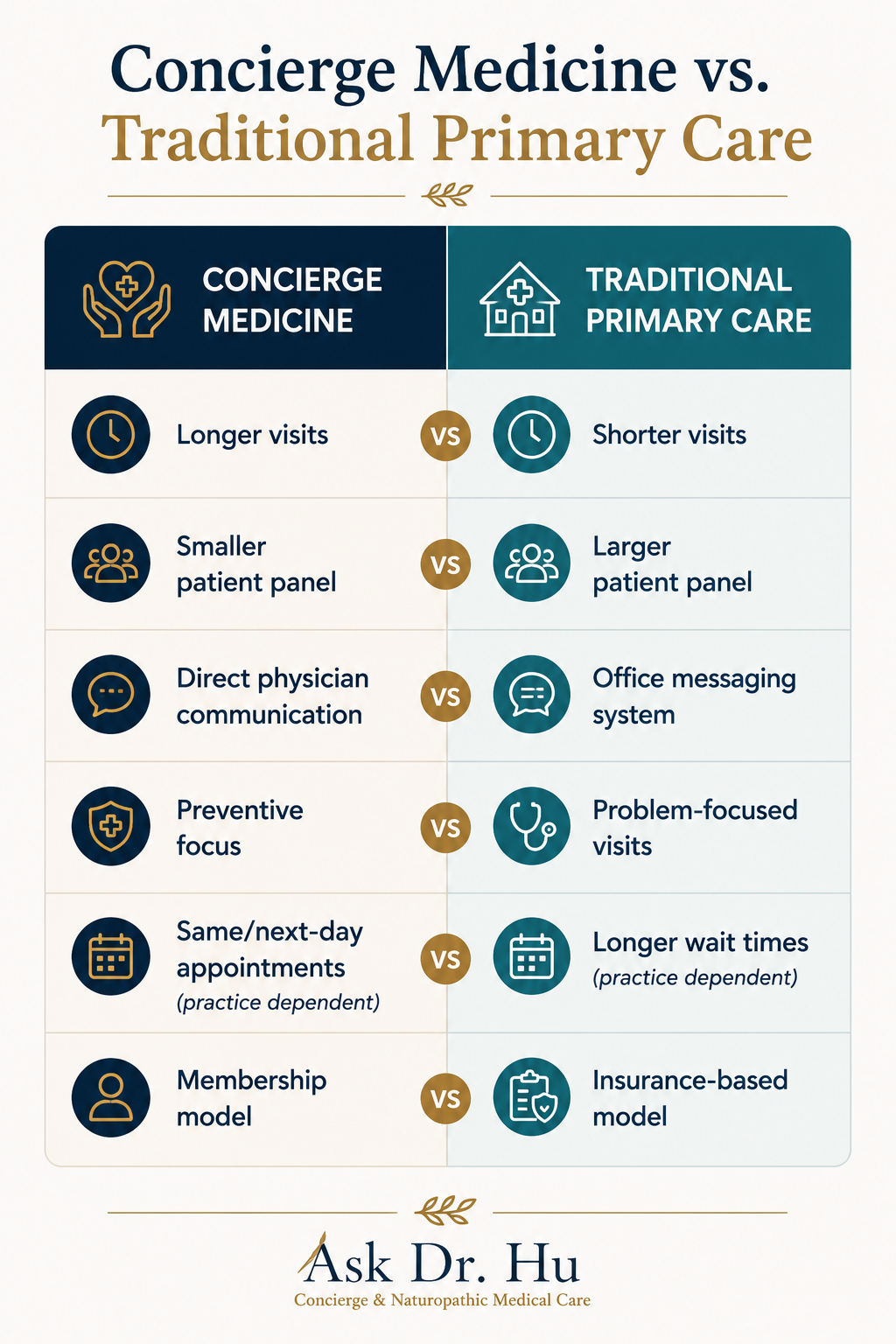
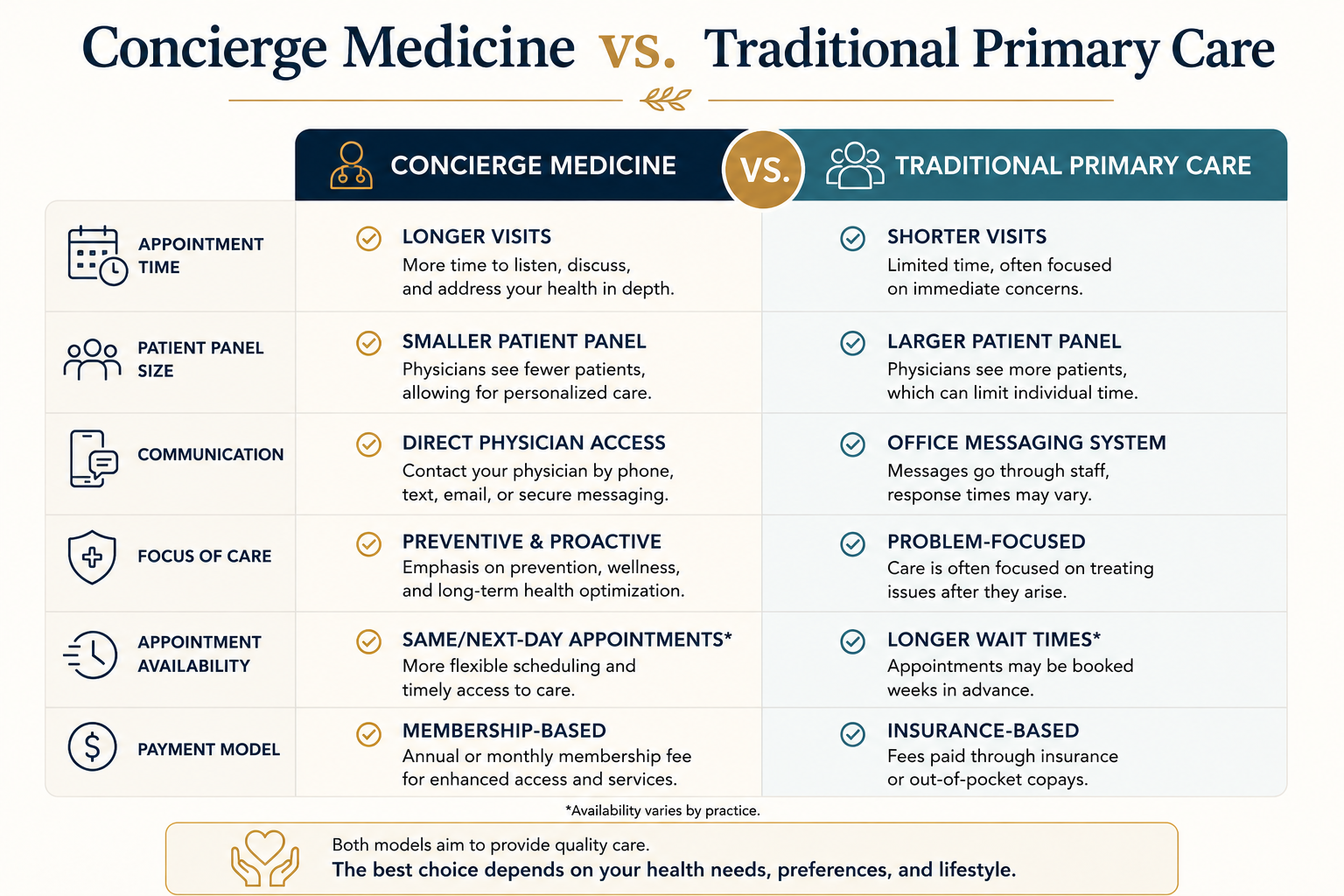
Both concierge medicine and traditional primary care aim to provide high-quality healthcare, but their practice models differ.
Traditional primary care often requires physicians to care for a large number of patients, which can lead to shorter appointments and longer wait times for routine visits.
Concierge medicine generally allows physicians to maintain smaller patient panels, spend more time with each patient, and provide greater accessibility. This often results in more personalized care, although patients pay a membership fee for these enhanced services.
Neither model is universally better. The best choice depends on your healthcare needs, communication preferences, and expectations.
Frequently Asked Questions
-
Yes. Concierge medicine is not a replacement for health insurance. Insurance remains important for hospitalizations, emergency care, surgeries, specialist visits, and other covered medical expenses.
-
Many concierge practices allow patients to communicate with their physician through phone, secure messaging, text, or email, depending on practice policies.
-
Typically, yes. One of the main advantages of concierge medicine is having more time to discuss your health concerns.
-
Yes. Concierge physicians can generally order laboratory tests, imaging studies, and referrals just like traditional primary care physicians.
-
Not necessarily. Membership fees vary widely among practices. Many patients choose concierge medicine because they value accessibility, convenience, and preventive care.
Learn More About Concierge Medicine
Concierge medicine is designed to create a more personalized healthcare experience by giving physicians the time and flexibility to focus on each patient as an individual. For many people, this means easier access to care, stronger physician relationships, and a greater emphasis on prevention and long-term wellness.
If you're considering whether concierge medicine is right for you, learning how a specific practice operates, including its membership structure, available services, and communication options, can help you determine whether it aligns with your healthcare goals. If you'd like to learn more about the physicians behind Ask Dr. Hu, visit our About Us page to learn about our philosophy of personalized, patient-centered care.
If you're wondering whether concierge medicine is right for you, we're happy to help. Visit our Contact page to schedule a consultation or ask any questions about our practice.