Concierge Medicine and Direct Primary Care: Similarities, Differences, and How to Choose
Written by YiQiu Hu, NMD
Arizona-licensed naturopathic physician and concierge medicine provider
Published August 2026 | Medically reviewed August 2026
Patients looking for a more personal alternative to conventional primary care frequently encounter two terms: concierge medicine and direct primary care, commonly called DPC.At first glance, the two models can look almost identical.Both may involve a recurring membership fee. Both may provide longer appointments, easier access to a physician, smaller patient panels, and greater emphasis on preventive and relationship-based care.However, concierge medicine and direct primary care are not necessarily the same thing.The most important differences usually involve how the practice is paid, whether health insurance is billed, what the membership includes, and how extensive the services and access may be.Understanding these differences can help you compare practices based on what they actually provide rather than simply the terminology they use.If you are new to membership-based healthcare, you may also want to begin with our physician guide to What Is Concierge Medicine?.


What Is the Main Difference Between Concierge Medicine and Direct Primary Care?
The simplest distinction is this:
Direct primary care is generally defined by how primary care is paid for. Patients pay the practice directly through a recurring membership fee, and the practice generally does not bill insurance for the primary care services covered by that membership.
Concierge medicine is a broader membership-based model. Patients also pay a recurring fee for enhanced physician access and services, but some concierge practices continue billing health insurance for certain medical services while others operate primarily or entirely outside insurance.
The American Academy of Family Physicians describes DPC as an alternative to fee-for-service insurance billing in which a monthly, quarterly, or annual payment generally covers most primary care services.
That means the distinction is usually financial and operational rather than philosophical.
A DPC physician and a concierge physician may have very similar approaches to patient care despite operating under different payment structures.
What Is Concierge Medicine?
Concierge medicine is a membership-based healthcare model designed to give patients greater physician access, more time during appointments, and a more continuous relationship with their medical provider.
Depending on the practice, membership may include:
Longer appointments
Same-day or next-day scheduling
Direct physician communication
Telephone, text, or secure messaging access
Virtual appointments
Preventive healthcare planning
Chronic disease management
Medication management
Laboratory interpretation
Specialist coordination
After-hours guidance
Comprehensive health evaluations
Some concierge practices continue participating with health insurance plans. In those practices, the membership fee may primarily pay for services or access that insurance does not reimburse.
Other concierge practices operate on a predominantly self-pay basis.
There is therefore considerable variation within concierge medicine itself.
Patients considering membership should review the actual services included rather than assuming that every concierge practice operates the same way.
You can learn more about the practical structure of these practices in How Concierge Medicine Works: Everything You Need to Know Before Joining.
What Is Direct Primary Care?
Direct primary care is a primary care delivery and payment model in which patients typically pay their physician or medical practice a recurring monthly or annual fee.
In exchange, the membership generally covers a defined range of primary care services.
The defining feature is that the practice typically does not submit fee-for-service insurance claims for the primary care services covered under the DPC agreement.
Depending on the practice, DPC membership may include services such as:
Routine primary care appointments
Acute illness evaluation
Preventive examinations
Chronic disease management
Medication management
Certain office procedures
Care coordination
Telemedicine
Physician messaging
Some basic laboratory testing
The exact services vary substantially between practices.
According to current AAFP information, DPC membership fees frequently fall around $50–$100 per month, although individual practices can charge more or less depending on services, location, and practice structure.
Why Do Concierge Medicine and DPC Seem So Similar?
The two models developed in part because physicians and patients were looking for alternatives to high-volume, fee-for-service healthcare.
Both models can create an environment where physicians have more time to communicate with patients and where patients have easier access to their healthcare provider.
That creates significant overlap in the patient experience.
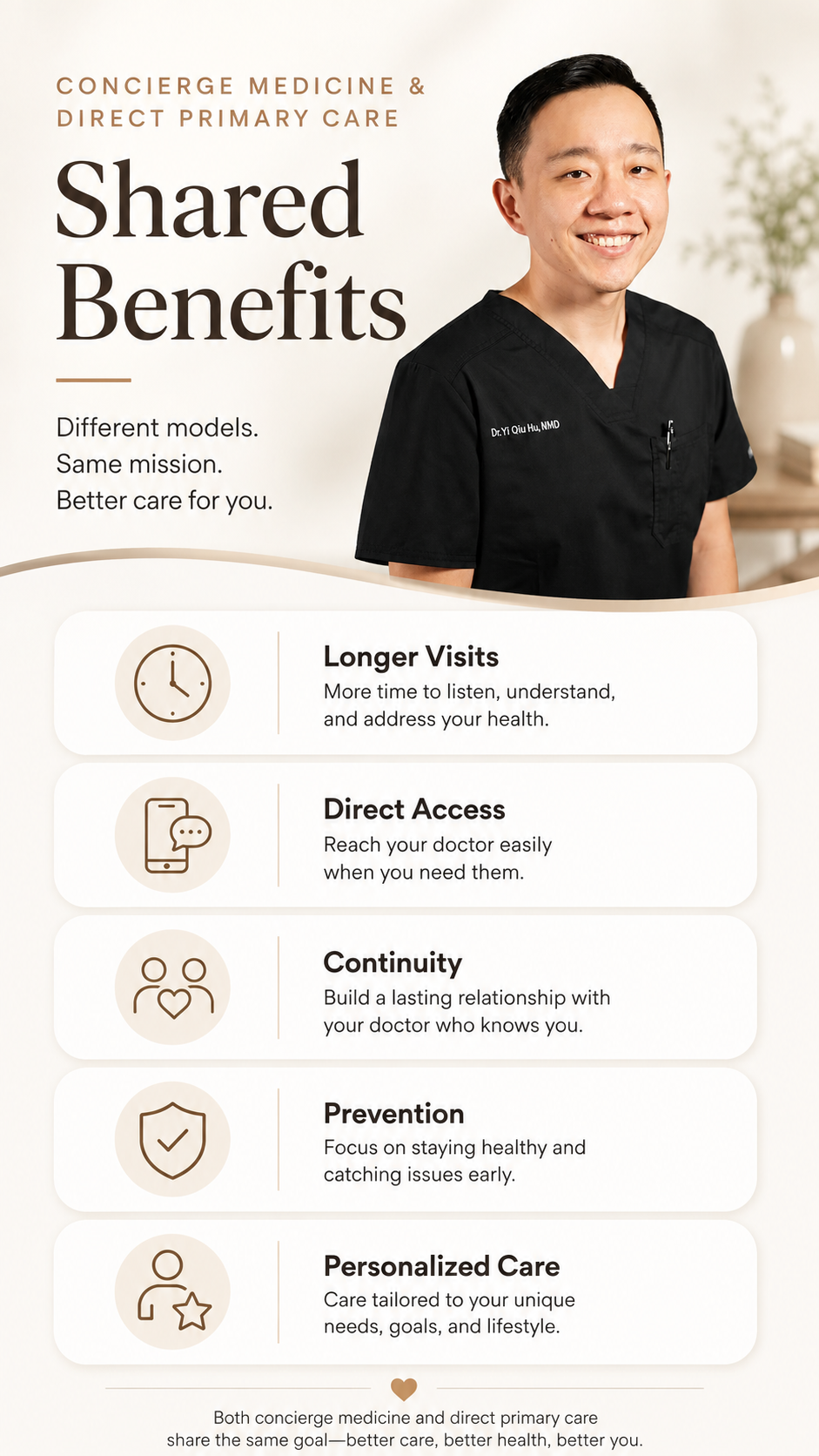
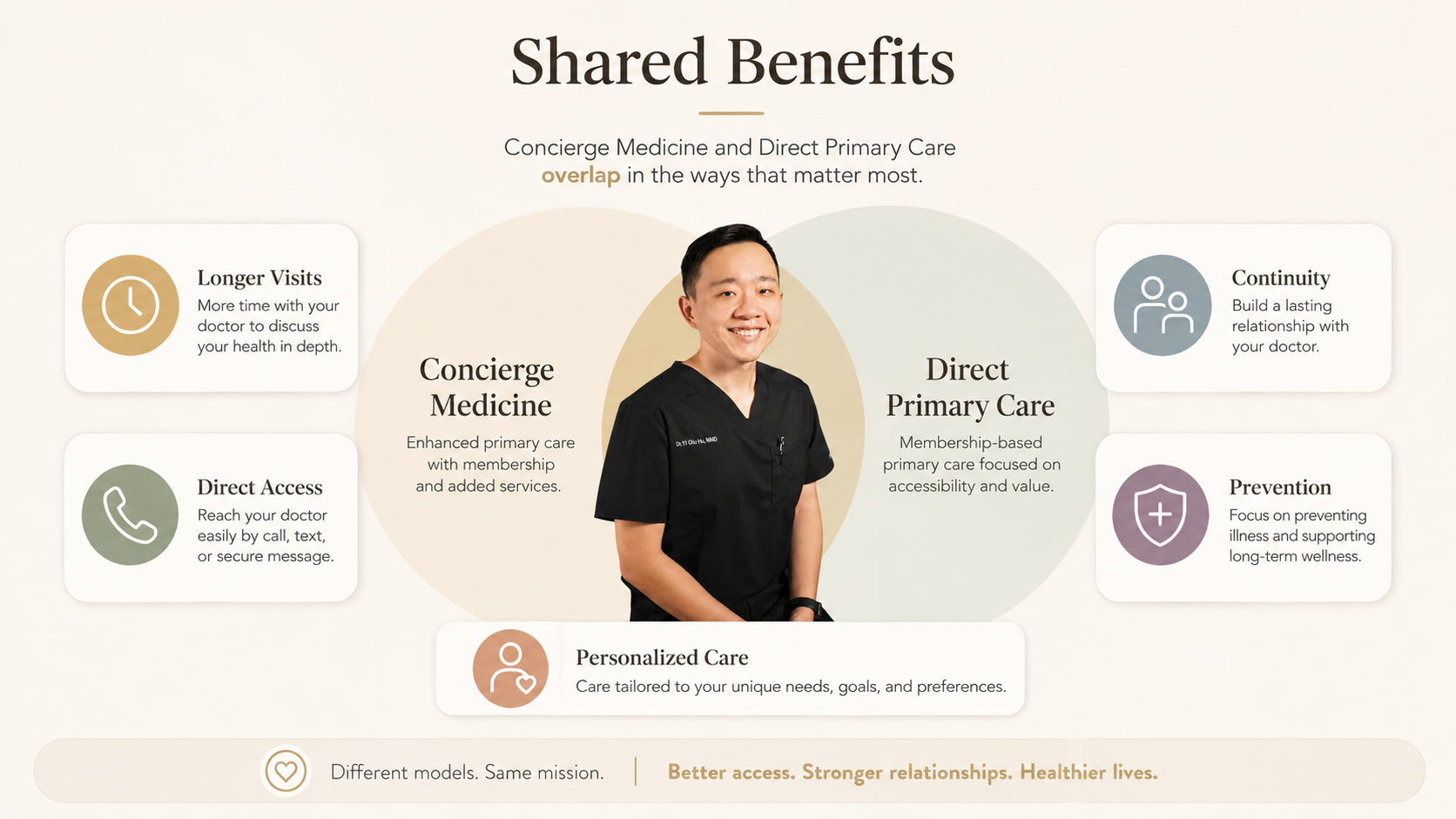
Similarity #1: Membership-Based Care
Both concierge and DPC practices commonly use recurring membership fees.
Instead of relying entirely on reimbursement for individual office visits, the membership helps support ongoing access to the medical practice.
The predictable membership structure can also allow practices to design care around an ongoing physician-patient relationship rather than isolated medical encounters.
Similarity #2: Longer Appointments
Membership-based practices often intentionally care for fewer patients than high-volume traditional offices.
That can give physicians more time to discuss:
Multiple medical concerns
Laboratory results
Medications
Lifestyle factors
Preventive screenings
Family history
Long-term health risks
Patient questions and priorities
Longer visits do not automatically guarantee better medical care, but additional time can make it easier to perform a thorough evaluation and communicate clearly.
Similarity #3: Easier Physician Access
Both models frequently emphasize access between traditional appointments.
Depending on the practice, that might include:
Telephone communication
Secure messaging
Email
Text messaging
Virtual visits
Earlier appointment availability
However, patients should never assume that “direct access” means unlimited 24-hour physician availability.
Every practice establishes its own communication policies.
Similarity #4: Greater Continuity of Care
Both DPC and concierge medicine generally emphasize maintaining an ongoing relationship with the same physician or medical team.
Continuity can be especially helpful for patients who have:
Multiple chronic conditions
Complex medication regimens
Frequent laboratory monitoring
Several specialists
Changing health concerns
Long-term preventive health goals
A physician who understands your history over time may be better positioned to recognize meaningful changes and place new medical information into context.
Similarity #5: Preventive and Proactive Healthcare
Membership-based practices frequently have more opportunity to focus on what happens before illness becomes severe.
That may involve:
Age-appropriate screening
Cardiovascular risk evaluation
Diabetes prevention
Weight management
Nutrition and exercise counseling
Medication monitoring
Laboratory testing
Cancer screening recommendations
Sleep and lifestyle assessment
At Ask Dr. Hu, this philosophy is also reflected in our approach to Preventive Care and Health Optimization, where testing and preventive recommendations are individualized according to the patient's history, symptoms, risk factors, and goals.
Concierge Medicine vs DPC: Where the Models Differ
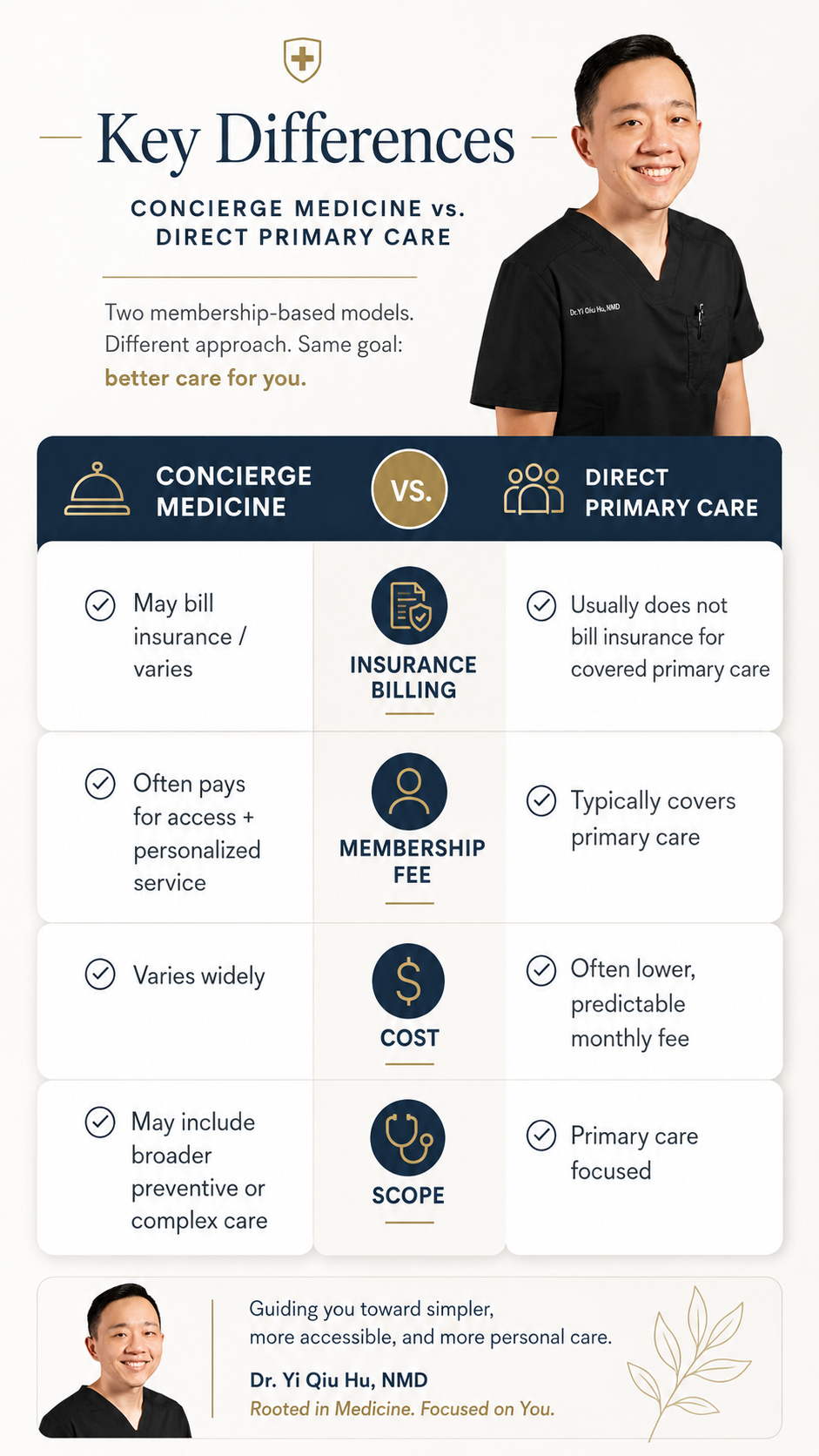
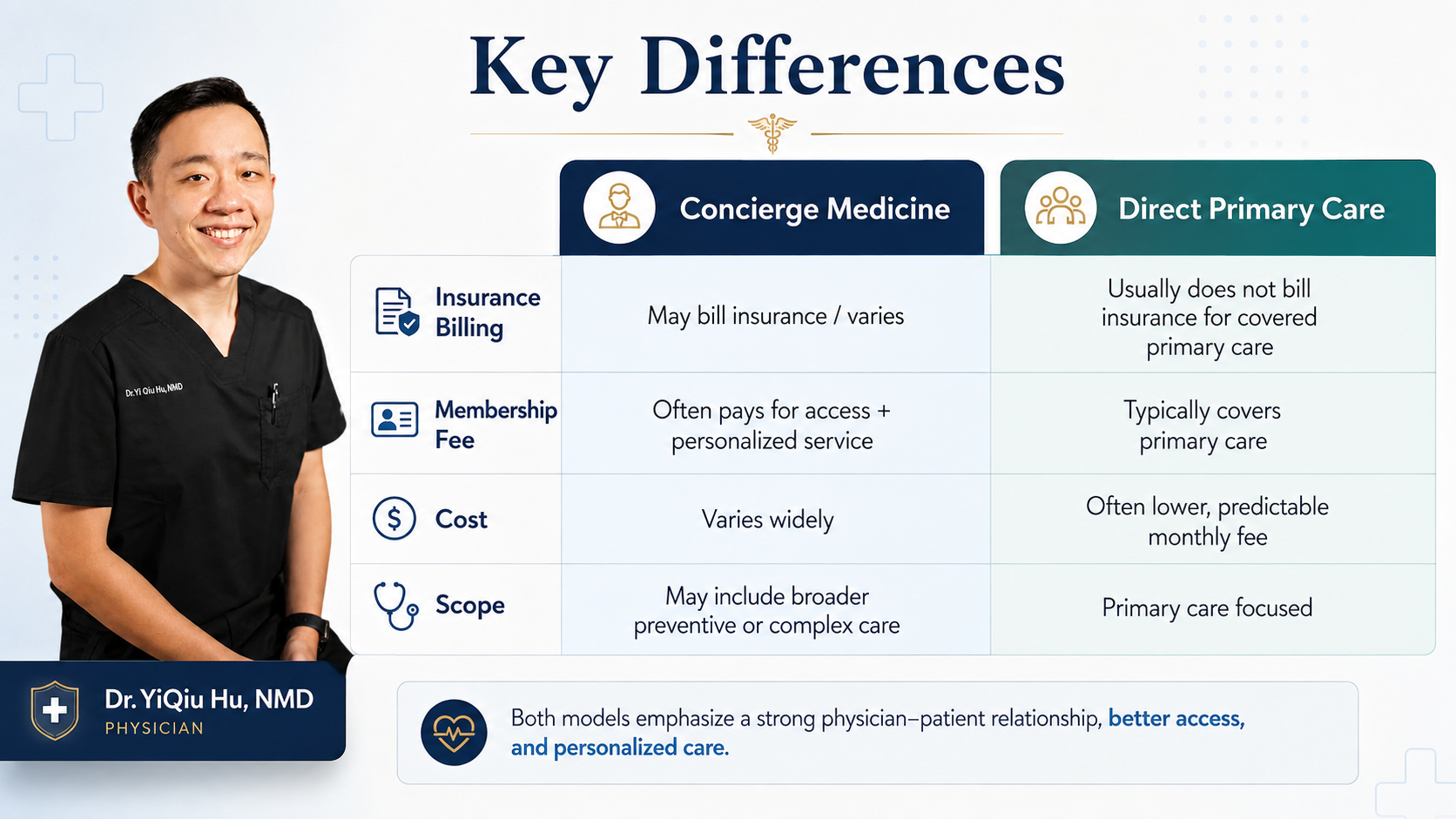
Although the patient experience can feel very similar, several important structural differences may exist.
Difference #1: Insurance Billing
This is generally the most important distinction.
Direct Primary Care
A true DPC practice generally receives payment directly from patients rather than billing an insurance company for covered primary care services.
Patients pay their recurring membership fee, and the services specified in the DPC agreement are provided according to that contract.
Concierge Medicine
Concierge practices vary.
Some charge a membership fee and bill insurance for medically covered office visits or other services.
Others charge the membership fee and do not bill insurance for physician care.
Therefore:
DPC usually implies a specific direct-payment structure. Concierge medicine does not necessarily tell you whether insurance will be billed.
This is one reason patients should ask every membership practice exactly how billing works.
Difference #2: What the Membership Fee Is Paying For
In many DPC models, the recurring fee directly covers a substantial portion of routine primary care.
The membership itself is essentially the payment mechanism for primary care.
In some concierge practices, the membership instead pays primarily for enhanced services such as:
Greater physician availability
Longer appointments
Smaller patient panels
Advanced preventive planning
Care coordination
After-hours communication
Executive-style health evaluations
Medical visits or testing may then be billed separately.
Other concierge practices combine both approaches and include extensive clinical care within the membership itself.
Difference #3: Membership Cost
DPC has traditionally emphasized making routine primary care available for a relatively predictable monthly fee.
The AAFP currently reports that many DPC memberships fall around $50–$100 per month, although fees vary.
Concierge medicine has a much wider pricing spectrum.
Some practices cost only slightly more than DPC, while highly comprehensive or luxury concierge practices can cost substantially more.
For a deeper discussion of pricing, read How Much Does Concierge Medicine Cost?.
Price alone, however, does not tell you whether one practice provides better value.
A $100 membership and a $500 membership may include dramatically different levels of physician access, diagnostic review, preventive planning, after-hours availability, and medical services.
The better comparison is:
What will I actually receive for the membership fee?
Difference #4: Scope of Services
DPC is specifically built around primary care.
That often includes preventive care, routine illness evaluation, chronic disease management, and care coordination.
Concierge medicine can include primary care but may also incorporate additional medical services depending on the physician's training and practice.
For example, concierge practices may place greater emphasis on:
Comprehensive preventive evaluations
Health optimization
Advanced laboratory testing
Longevity-focused care
Nutrition
Weight management
Hormone management
Integrative medicine
Executive health services
These services are not inherent to concierge medicine, however.
Each practice should be evaluated individually.
Difference #5: Practice Philosophy
DPC is primarily a payment and practice model.
Concierge medicine frequently describes both a payment model and a particular type of healthcare experience.
However, neither label tells you whether a physician is thoughtful, thorough, evidence-informed, preventive, integrative, conventional, or particularly experienced with your medical concerns.
Those characteristics depend on the individual physician and practice.
This is why choosing the right physician is ultimately more important than choosing the right label.
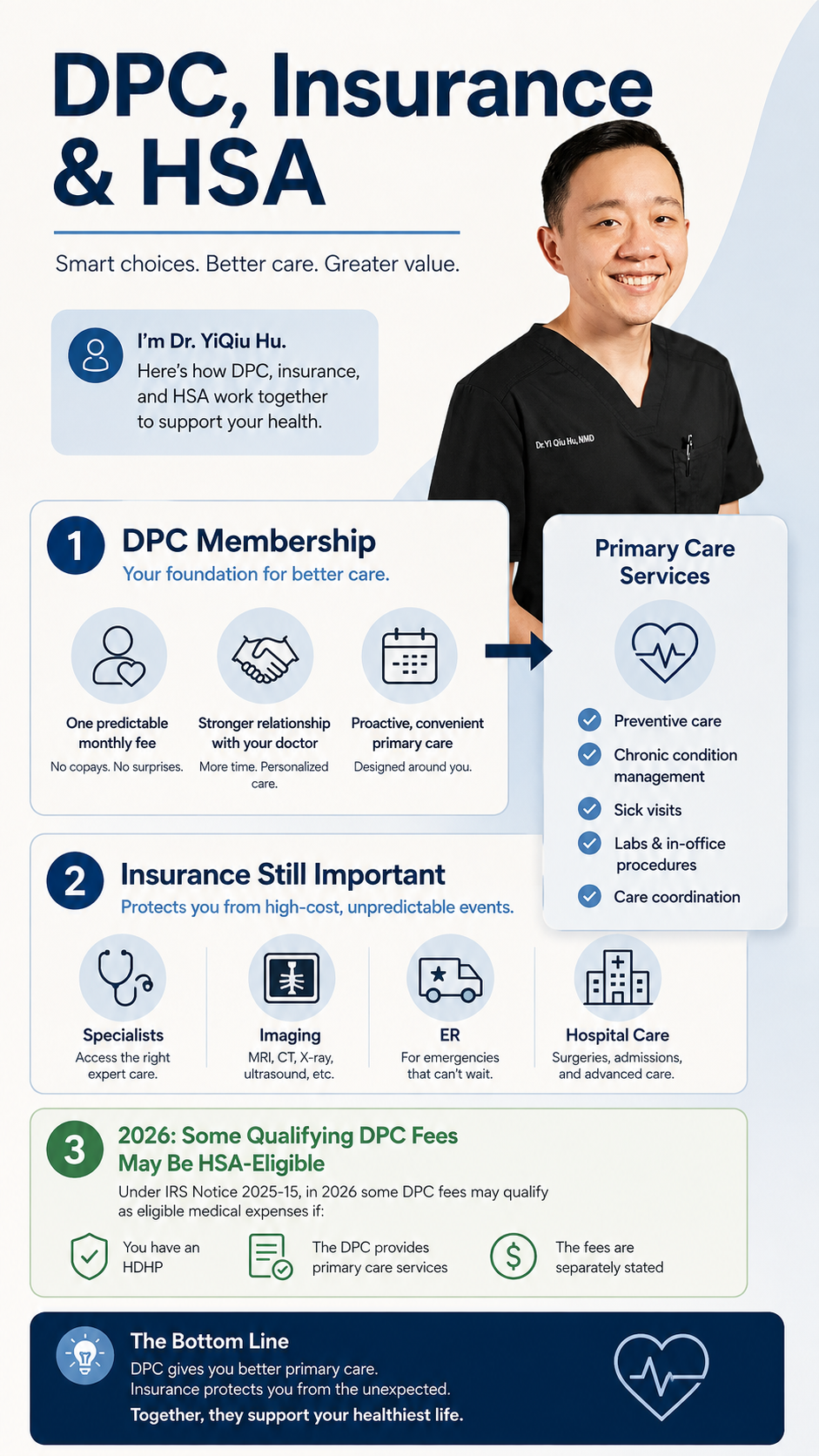
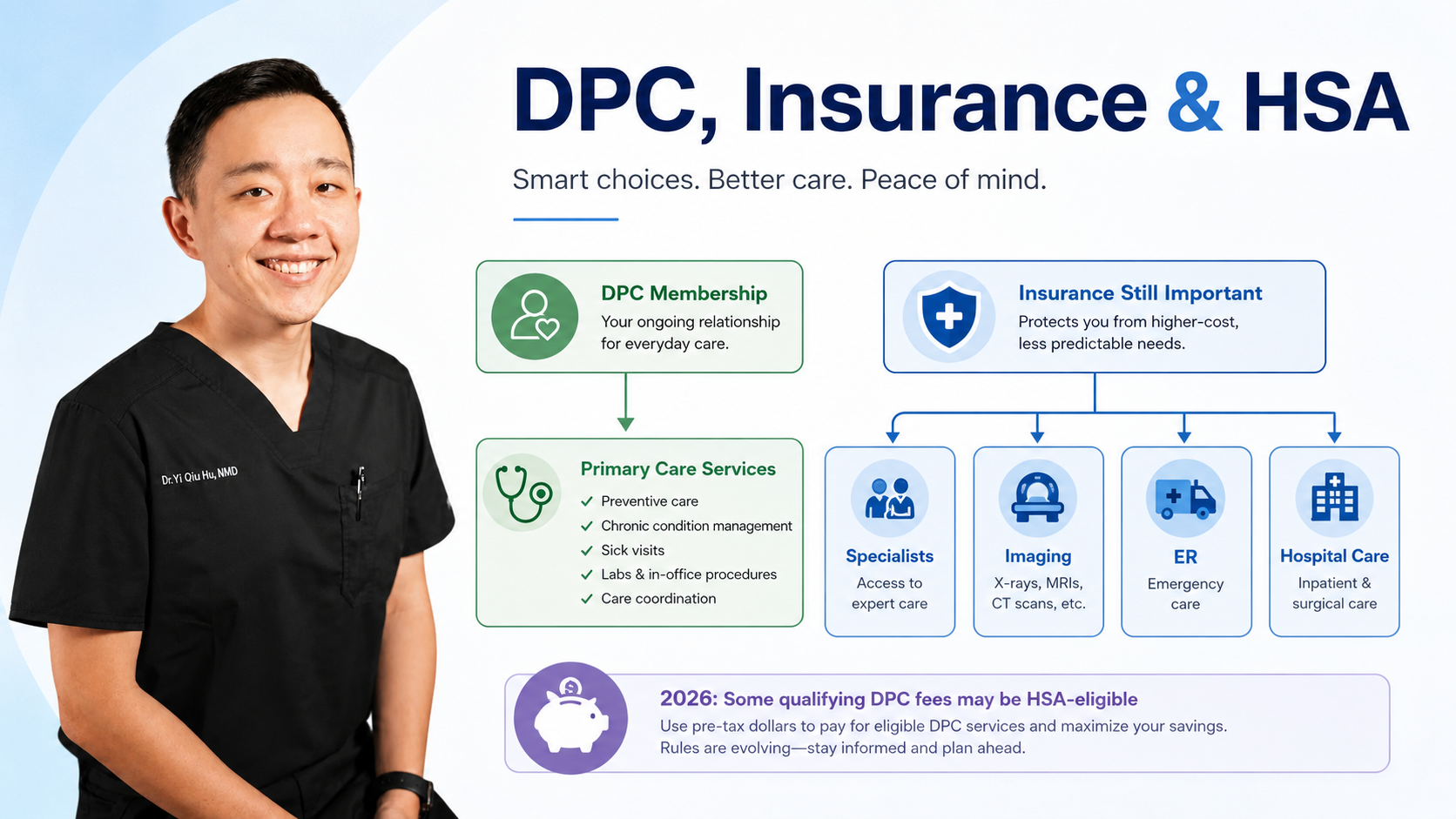
Do You Still Need Health Insurance With Concierge Medicine or DPC?
Usually, yes.
Neither concierge medicine nor direct primary care should automatically be considered a substitute for comprehensive health insurance.
A membership may cover physician care provided through that particular practice, but patients can still experience medical expenses involving:
Emergency departments
Hospitalization
Surgery
Specialists
Imaging
Prescription medications
Ambulance services
Cancer treatment
Major medical procedures
Outside laboratory services
The AAFP similarly notes that many DPC patients maintain insurance for healthcare services that cannot be provided within the primary care setting, particularly specialty and hospital care.
Patients should carefully review both their membership agreement and insurance coverage before making changes to their health plan.
A New 2026 Consideration: Direct Primary Care and HSAs
Federal rules affecting certain direct primary care arrangements changed beginning January 1, 2026.
Under current IRS guidance, an otherwise eligible person participating in certain qualifying direct primary care service arrangements may remain eligible to contribute to a Health Savings Account and may use HSA funds tax-free to pay qualifying periodic DPC fees.
This is an important change because DPC participation historically created HSA eligibility complications.
However, patients should not assume that any healthcare membership labeled “concierge,” “membership medicine,” or even “direct primary care” automatically receives this treatment.
Federal definitions, fee limitations, HSA eligibility requirements, and the specific services included in the arrangement matter.
Patients considering HSA reimbursement should review current IRS guidance regarding direct primary care and HSAs and discuss their individual circumstances with a qualified tax professional when appropriate.
Concierge Medicine vs Direct Primary Care: A Simple Comparison
Rather than focusing only on terminology, think about the models this way:
Direct Primary Care usually means:
Recurring membership fee
→ Primary care services included
→ Practice generally does not bill insurance for covered primary care
→ Often relatively simple and predictable pricing
→ Emphasis on accessible, relationship-based primary care
Concierge Medicine usually means:
Recurring membership fee
→ Enhanced physician access and personalized care
→ Services vary considerably by practice
→ Practice may or may not bill health insurance
→ Membership fees vary widely
→ May include broader preventive or specialized services
There is significant overlap.
A cash-based concierge practice may function very similarly to a DPC practice.
Likewise, a DPC practice may offer longer appointments and direct communication that feel very much like concierge medicine.
The contract matters more than the label.
How Should You Choose Between Concierge Medicine and Direct Primary Care?
Start by identifying what you actually want from your healthcare.
Consider DPC if:
You primarily want comprehensive, accessible primary care for a predictable recurring fee.
You may especially appreciate DPC if you value:
Straightforward pricing
Routine primary care included in membership
Minimal insurance involvement
Easy access to your primary care physician
Longer visits
Chronic disease management
Preventive care
Consider Concierge Medicine if:
You want a higher level of physician access, personalization, preventive planning, or services beyond routine primary care.
Concierge medicine may appeal to patients who value:
Extensive physician communication
Flexible appointment availability
Longer comprehensive consultations
Complex care coordination
Preventive medicine
Health optimization
Detailed laboratory review
Multiple medical concerns addressed together
Ongoing access between appointments
Neither model is universally superior.
The best choice depends on what the individual practice provides and how well those services match your needs.


Questions to Ask Before Joining Either Model
Before paying a membership fee, ask the practice:
What is included in the membership?
Which services cost extra?
Does the practice bill health insurance?
Are office visits included?
Are virtual visits included?
How long are typical appointments?
How quickly can I usually schedule an appointment?
Can I contact the physician directly?
Which communication methods are available?
What happens after regular business hours?
Are laboratory tests included or billed separately?
Can the physician coordinate specialist referrals?
What happens if I need hospital care?
Can I cancel the membership?
Is there a long-term commitment?
Does the physician have experience managing the health concerns most important to me?
Our Patient's Guide to Joining a Concierge Medicine Practice provides a more detailed checklist for evaluating a membership practice before enrolling.
How Concierge Medicine Works at Ask Dr. Hu
At Ask Dr. Hu, we use a concierge medicine model designed around ongoing physician access, personalized medical care, prevention, and continuity.
Our Concierge Medicine Membership currently includes services such as medically appropriate virtual visits, direct physician communication, laboratory ordering and interpretation, medication management, preventive healthcare planning, specialist coordination, and after-hours availability for appropriate non-emergency concerns.
Medical visits provided through the membership are not submitted to health insurance.
Patients may continue using health insurance for eligible outside services such as prescriptions, imaging, specialist care, hospital care, and laboratory services performed by outside facilities. The membership itself is not health insurance and does not replace comprehensive medical coverage.
Patients who do not need ongoing membership care can also explore our individual medical services.
Which Model Is Better?
There is no universal answer.
For one patient, an affordable DPC membership providing straightforward primary care may be exactly what is needed.
Another patient may place greater value on extensive physician access, complex medical management, preventive health planning, diagnostic review, and care coordination available through a concierge practice.
And some patients may be well served by a traditional primary care physician without any membership fee.
The most important question is not:
“Is concierge medicine better than direct primary care?”
It is:
“Which physician and healthcare model best match my health needs, expectations, budget, and preferred relationship with my doctor?”
Final Thoughts
Concierge medicine and direct primary care share many of the same goals: making healthcare more personal, accessible, and relationship-centered.
The primary distinction is usually the payment model.
DPC generally replaces fee-for-service insurance billing for covered primary care services with a recurring direct payment from the patient. Concierge medicine is more variable and may either supplement insurance-based care or operate independently from insurance.
Beyond that distinction, there can be tremendous overlap.
Both models may provide longer visits, stronger physician relationships, better access between appointments, greater continuity, and more opportunity to focus on prevention.
Instead of choosing based on terminology alone, examine the physician, membership agreement, services, communication policies, insurance relationship, and actual level of care being offered.
That will tell you far more about the experience you can expect than whether the practice calls itself direct primary care or concierge medicine.
Considering Concierge Medicine in Arizona?
If you are exploring a more personalized approach to healthcare, learn more about the Ask Dr. Hu Concierge Medicine Membership or contact our practice with questions about whether membership may be appropriate for your healthcare needs.
Ask Dr. Hu provides concierge and naturopathic medical care for eligible patients throughout Arizona through virtual care and in-person services when appropriate.
Medical Review & Editorial Standards
This article was written for patient education by YiQiu Hu, NMD, an Arizona-licensed naturopathic physician and concierge medicine provider.
Information regarding direct primary care terminology and practice structure was reviewed against guidance from the American Academy of Family Physicians.
Information regarding 2026 Health Savings Account rules for qualifying direct primary care arrangements was reviewed against current Internal Revenue Service guidance.
Medical and financial arrangements vary between practices and patients. Information on this page is intended for general educational purposes and should not be interpreted as individualized medical, insurance, legal, or tax advice.
Last reviewed: August 2026
About the Author
YiQiu Hu, NMD
Dr. YiQiu Hu is an Arizona naturopathic physician and the founder of Ask Dr. Hu. He provides concierge medicine, preventive healthcare, health optimization, diagnostic evaluation, and individualized medical care for patients throughout Arizona.
Dr. Hu's approach emphasizes longer and more thoughtful medical visits, clear explanations, preventive healthcare, evidence-informed treatment options, and long-term physician-patient relationships.
He earned his Doctor of Naturopathic Medicine degree from Sonoran University of Health Sciences and a Bachelor of Science in Biomedical Sciences from Northern Arizona University. His clinical interests include concierge medicine, preventive healthcare, laboratory testing, medical weight management, hormone care, integrative pain management, and the ongoing management of complex health concerns.