Understanding Laboratory Testing: A Complete Guide for Patients
Written by YiQiu Hu, NMD
Arizona-licensed naturopathic physician and concierge medicine provider
Published July 2026 | Medically reviewed July 2026
Laboratory testing is one of the most valuable tools in modern healthcare. While symptoms and physical examinations provide important clues, blood work and other laboratory tests often reveal what is happening inside the body long before noticeable symptoms develop.
Whether you are scheduling your annual wellness visit, investigating new symptoms, monitoring a chronic condition, or simply taking a proactive approach to your health, understanding laboratory testing can help you make more informed healthcare decisions.
As a physician, I use laboratory testing every day to evaluate overall health, identify nutritional deficiencies, diagnose medical conditions, monitor treatment progress, and help patients reduce their long-term risk of disease. However, laboratory tests should never be viewed in isolation. The most accurate interpretation comes from combining laboratory results with your medical history, symptoms, physical examination, medications, lifestyle, and personal health goals.
This guide explains how laboratory testing works, what common blood tests measure, and how physicians use these results to provide personalized medical care.

Why Laboratory Testing Matters
Laboratory testing provides objective information about how your body is functioning. Unlike symptoms, which can be subjective and sometimes misleading, laboratory values offer measurable data that helps physicians understand what is happening beneath the surface.
Many medical conditions develop gradually over months or even years before noticeable symptoms appear. Routine laboratory testing can often identify these changes early, allowing treatment to begin before complications develop.
Laboratory testing may be used to:
Screen for diseases before symptoms occur
Confirm or rule out a suspected diagnosis
Monitor chronic medical conditions
Evaluate medication safety and effectiveness
Assess nutritional status
Measure hormone levels
Detect inflammation or infection
Monitor organ function
Track overall health over time
For example, elevated cholesterol usually causes no symptoms until heart disease develops. Similarly, prediabetes, thyroid disorders, vitamin deficiencies, kidney disease, and liver disease may all be present long before patients feel unwell.
Routine laboratory testing allows physicians to identify these issues earlier, when lifestyle changes or treatment may be most effective.
Rather than waiting for disease to develop, laboratory testing supports a preventive approach to healthcare by identifying opportunities to improve health before significant problems arise.
How Laboratory Tests Help Diagnose Disease
When patients develop new symptoms, laboratory testing often becomes one of the first steps in the diagnostic process.
For example, fatigue may be caused by many different conditions, including:
Iron deficiency
Vitamin B12 deficiency
Low thyroid function
Diabetes
Chronic infection
Liver disease
Kidney disease
Inflammatory disorders
Sleep disorders
Stress or mental health conditions
Because many illnesses produce similar symptoms, laboratory testing helps narrow the list of possible causes.
Physicians rarely order "random" blood work. Instead, laboratory tests are selected based on the patient's symptoms, medical history, physical examination, medications, family history, and overall risk factors.
For example:
A patient with chest discomfort may require:
Cardiac biomarkers
Cholesterol testing
Blood sugar evaluation
Kidney function testing
Electrolytes
A patient experiencing weight gain may need:
Thyroid testing
Blood sugar evaluation
Liver function tests
Hormone testing
Vitamin D assessment
A patient with chronic digestive symptoms may benefit from:
Complete blood count
Iron studies
Vitamin B12
Folate
Inflammatory markers
Celiac disease testing
Laboratory testing does not replace a thorough medical evaluation. Instead, it provides additional information that helps physicians confirm or rule out potential diagnoses while avoiding unnecessary testing.
Laboratory Testing for Preventive Healthcare
One of the greatest benefits of laboratory testing is its ability to identify health risks before symptoms develop.
Preventive healthcare focuses on maintaining wellness rather than simply treating illness after it occurs. Laboratory testing plays a central role in this proactive approach.
During routine preventive visits, physicians commonly evaluate:
Blood sugar
Cholesterol
Kidney function
Liver function
Blood cell counts
Electrolytes
Thyroid function
Vitamin deficiencies
Hormone levels when appropriate
These tests help establish a baseline for your health and make it easier to detect meaningful changes over time.
For example, a gradual increase in fasting glucose over several years may indicate developing insulin resistance before diabetes occurs. Likewise, slowly rising cholesterol levels can identify cardiovascular risk early enough for lifestyle modifications to have a significant impact.
Preventive laboratory testing also helps physicians personalize healthcare recommendations. Two patients of the same age may have very different laboratory findings, resulting in different recommendations for nutrition, exercise, medication, or additional testing.
In my practice, laboratory testing is often used not only to identify disease but also to help patients optimize their health. Rather than focusing solely on whether a value falls within a reference range, we also consider trends over time, overall health goals, symptoms, and individual risk factors.
When interpreted appropriately, laboratory testing becomes an ongoing conversation about maintaining long-term wellness rather than simply looking for illness.
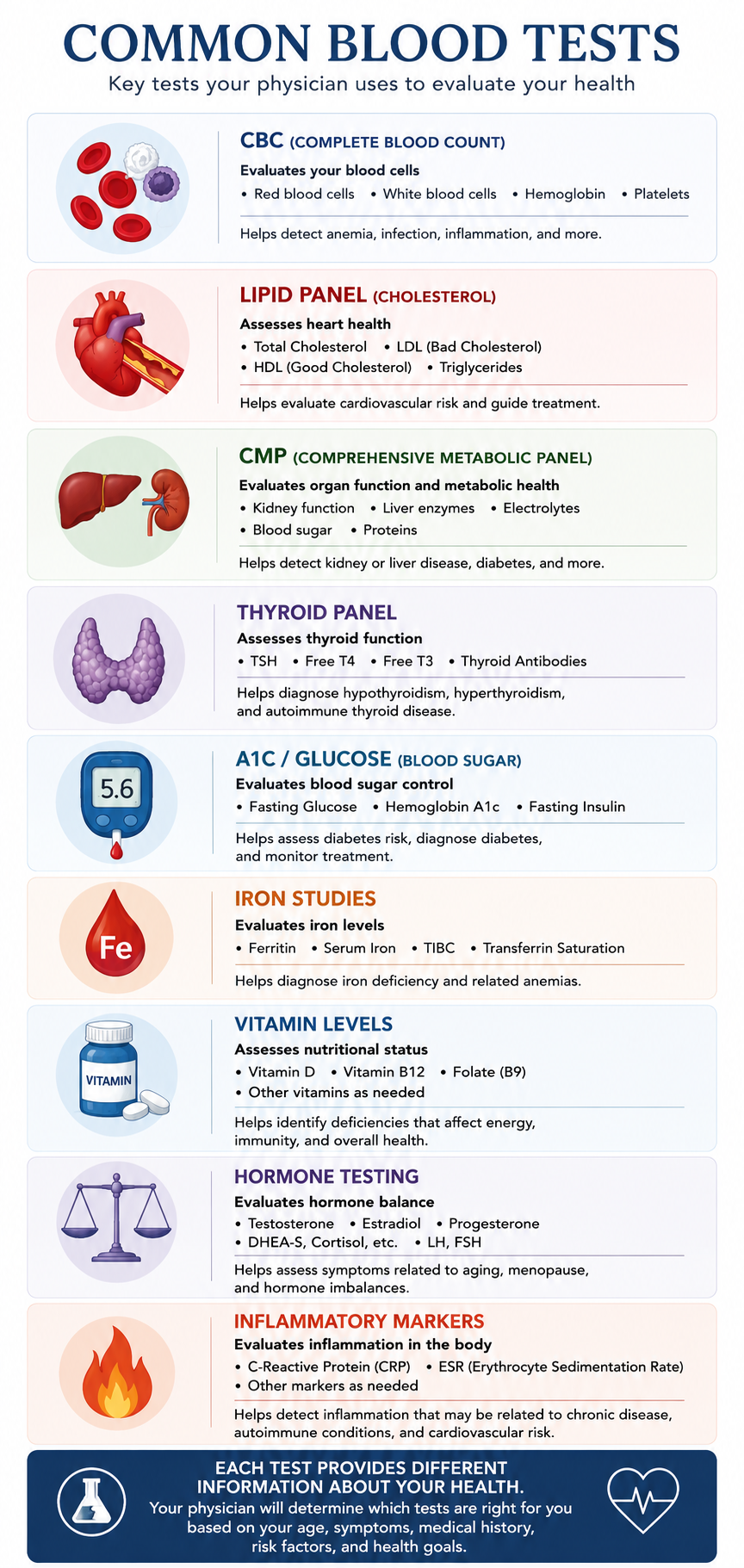
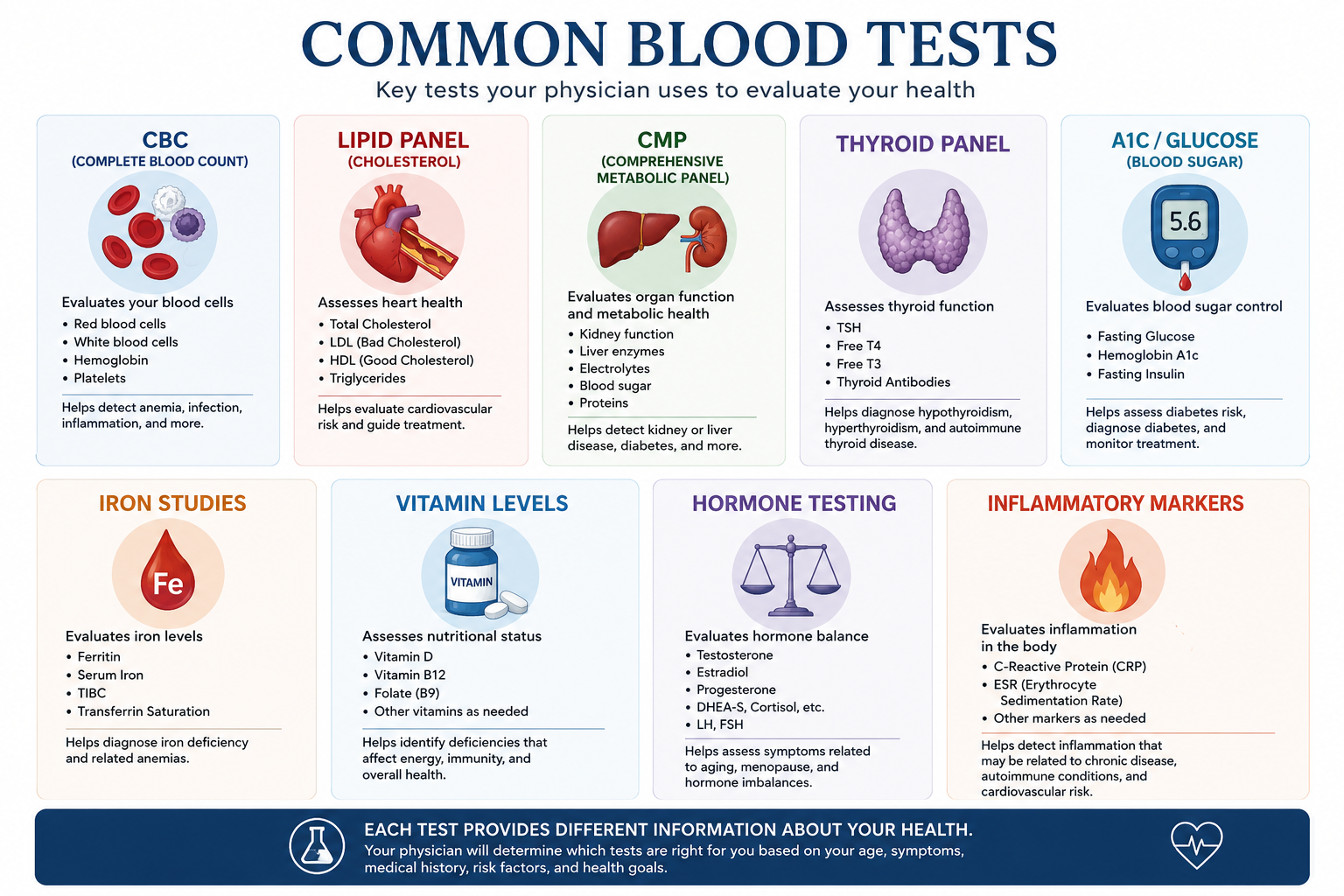
There are hundreds of laboratory tests available, but a relatively small number account for the majority of routine medical evaluations. Each provides different information about your health.
Complete Blood Count (CBC)
A Complete Blood Count measures the cells circulating in your bloodstream.
It evaluates:
Red blood cells
White blood cells
Hemoglobin
Hematocrit
Platelets
A CBC may help identify:
Anemia
Infection
Certain inflammatory conditions
Bone marrow disorders
Blood clotting abnormalities
It is one of the most commonly ordered laboratory tests because it provides a broad overview of overall health.
Comprehensive Metabolic Panel (CMP)
The Comprehensive Metabolic Panel evaluates many aspects of your body's chemistry.
It typically includes measurements of:
Kidney function
Liver enzymes
Blood sugar
Electrolytes
Blood proteins
Calcium
The CMP helps physicians evaluate how several major organ systems are functioning and may detect dehydration, liver disease, kidney disease, diabetes, and electrolyte imbalances.
Lipid Panel
A lipid panel evaluates cholesterol and other blood fats.
It usually includes:
Total cholesterol
LDL cholesterol
HDL cholesterol
Triglycerides
These values help estimate cardiovascular risk and guide recommendations regarding diet, exercise, weight management, and, when appropriate, medication.
Blood Sugar Testing
Several laboratory tests evaluate blood sugar regulation.
These commonly include:
Fasting glucose
Hemoglobin A1c
Fasting insulin (when appropriate)
Together, these tests help physicians assess diabetes risk, diagnose diabetes, and monitor treatment effectiveness.
Thyroid Testing
The thyroid gland influences nearly every organ in the body.
Depending on your symptoms, physicians may order:
TSH
Free T4
Free T3
Thyroid antibodies
These tests help diagnose conditions such as hypothyroidism, hyperthyroidism, and autoimmune thyroid disease.
Iron Studies
Iron deficiency is one of the most common nutritional deficiencies worldwide.
Iron testing may include:
Ferritin
Serum iron
Total iron-binding capacity (TIBC)
Transferrin saturation
These tests help determine whether low iron levels may be contributing to fatigue, hair loss, weakness, or anemia.
Vitamin Testing
Depending on your symptoms and medical history, physicians may evaluate vitamins such as:
Vitamin D
Vitamin B12
Folate
Deficiencies can contribute to fatigue, nerve symptoms, mood changes, impaired immune function, and other health concerns.
Hormone Testing
Hormone testing may be appropriate for patients experiencing symptoms such as fatigue, low libido, irregular menstrual cycles, infertility, weight changes, or menopause-related symptoms.
Depending on the situation, testing may include:
Testosterone
Estradiol
Progesterone
DHEA-S
Cortisol
LH and FSH
Hormone results should always be interpreted within the context of age, sex, symptoms, medications, and overall health.
Inflammatory Markers
Certain blood tests help evaluate inflammation within the body.
Examples include:
High-sensitivity C-reactive protein (hs-CRP)
Erythrocyte sedimentation rate (ESR)
These tests are not diagnostic by themselves but can provide useful information when evaluating autoimmune diseases, infections, cardiovascular risk, and other inflammatory conditions.
Common Types of Blood Tests
What Your Blood Test Results Mean
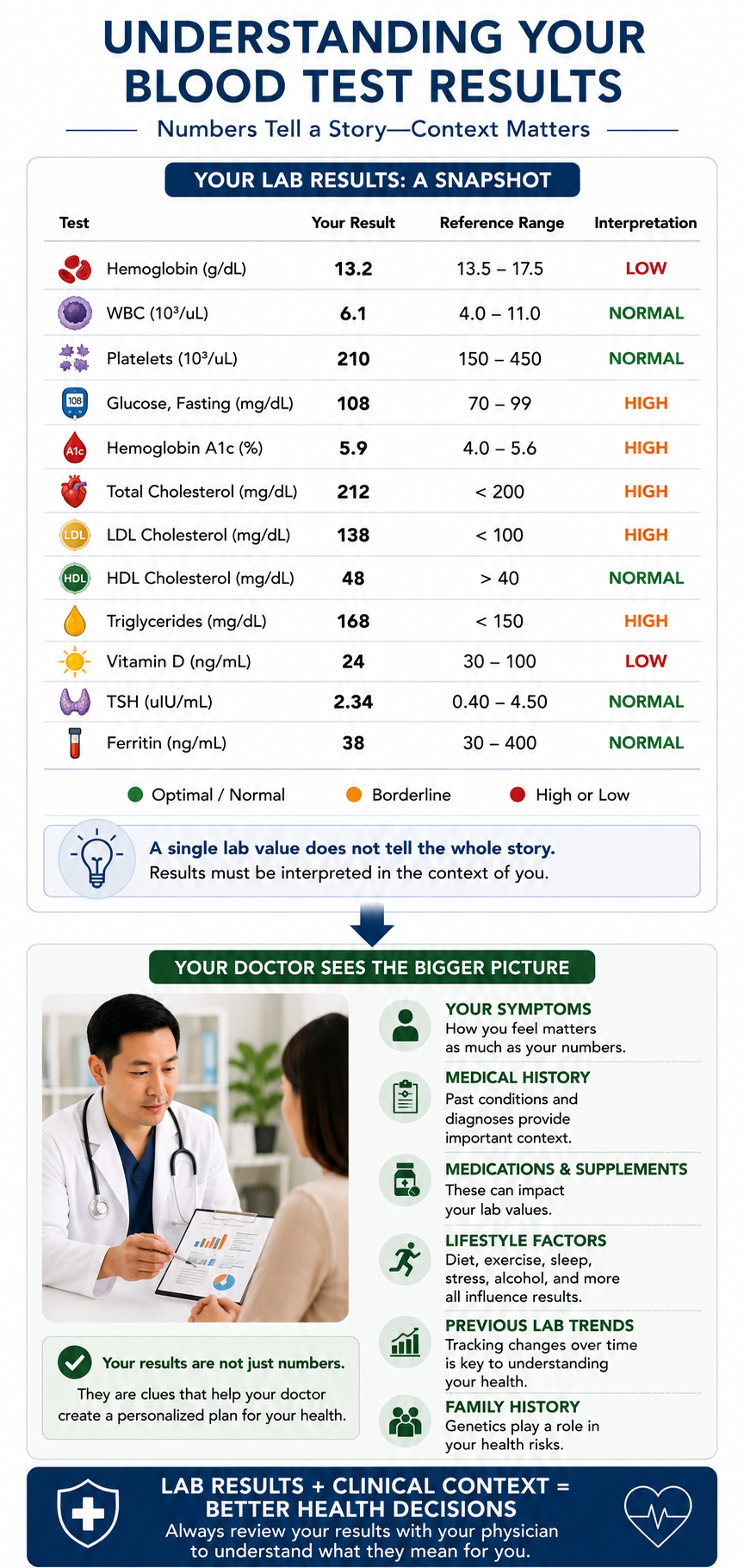
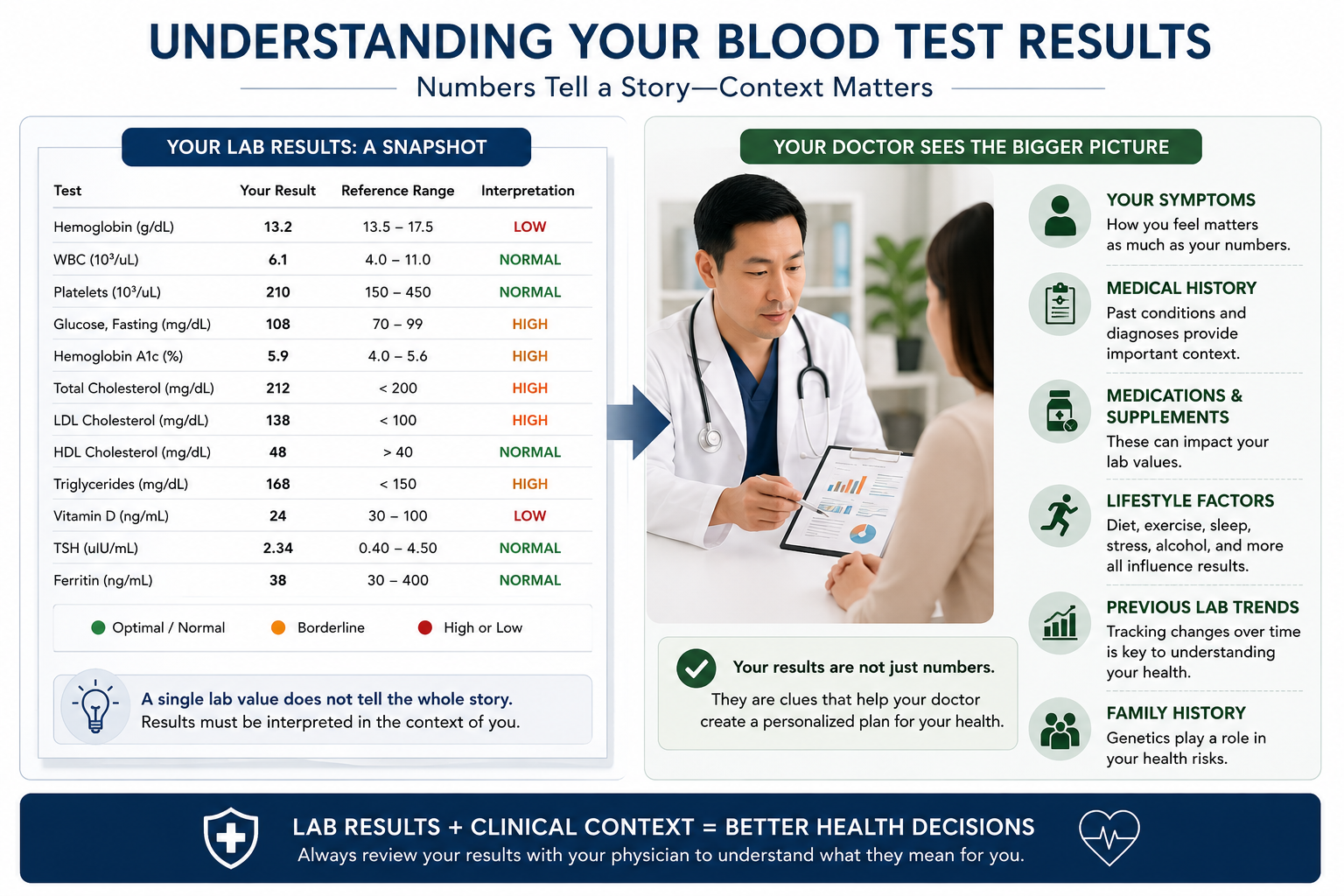
Receiving laboratory results can be confusing, especially when values are highlighted in red or marked as "high" or "low." Fortunately, an abnormal result does not always mean something is seriously wrong.
Laboratory values are interpreted using reference ranges, which are statistical ranges derived from large groups of generally healthy individuals. These ranges help laboratories identify values that fall outside what is considered typical for the population.
However, reference ranges are only one piece of the puzzle.
A result that is slightly outside the reference range may be completely normal for one person, while a value that falls within the reference range may still deserve attention in another patient depending on symptoms, medical history, medications, or previous laboratory trends.
For example, a patient's thyroid hormone levels may technically fall within the laboratory's normal range, yet they may still experience symptoms that warrant further evaluation. Likewise, cholesterol, blood sugar, or vitamin levels can remain within the reference range while showing gradual changes over several years that may indicate increasing health risks.
This is why physicians rarely focus on a single number alone. Instead, we evaluate:
Your current symptoms
Your medical history
Family history
Current medications and supplements
Physical examination findings
Previous laboratory results
Trends over time
Overall risk factors
Laboratory testing should be viewed as one part of a much larger clinical picture rather than a standalone diagnosis.
Understanding how your results fit into your overall health allows for more personalized recommendations and often helps identify opportunities to improve wellness before disease develops.
How Often Should You Have Blood Work?
There is no single laboratory testing schedule that applies to everyone. The right testing frequency depends on your age, medical history, family history, medications, lifestyle, and overall health goals.
For many healthy adults, routine blood work performed during an annual wellness visit provides an excellent baseline and allows physicians to monitor for changes over time. However, individuals with chronic medical conditions or increased health risks may benefit from more frequent testing.
Your physician may recommend more frequent laboratory testing if you have:
Diabetes or prediabetes
High blood pressure
High cholesterol
Thyroid disease
Kidney disease
Liver disease
Autoimmune conditions
Hormone imbalances
Nutritional deficiencies
A strong family history of chronic disease
Certain medications also require periodic laboratory monitoring to ensure they remain safe and effective. For example, some blood pressure medications, cholesterol-lowering medications, hormone therapies, and other prescription medications may require routine monitoring of kidney function, liver function, electrolytes, or hormone levels.
Laboratory testing may also be repeated after making significant lifestyle changes, such as:
Losing weight
Starting a new exercise program
Changing your diet
Beginning nutritional supplements
Starting hormone replacement therapy
Beginning medications for cholesterol, diabetes, or blood pressure
Rather than repeating every laboratory test each year, physicians often customize testing based on your current health needs. Someone who has consistently normal results may not need every test annually, while another patient with multiple medical conditions may require more comprehensive monitoring.
The goal is to order the right tests at the right time—not simply more tests.
Can Lifestyle Affect Laboratory Results?
Absolutely. Many everyday factors can influence laboratory values, sometimes enough to change how results are interpreted.
Understanding these factors helps ensure laboratory testing provides the most accurate picture of your health.
Fasting
Some blood tests are most accurate after fasting, while others are not significantly affected by food intake.
Tests that may require fasting include:
Lipid panels (in certain situations)
Fasting glucose
Fasting insulin
Some metabolic evaluations
Always follow your physician's instructions before having blood drawn.
Hydration
Being dehydrated can temporarily increase the concentration of certain blood components, making laboratory values appear higher than they actually are.
Drinking adequate water before routine blood work (unless instructed otherwise) can help produce more reliable results.
Exercise
Strenuous exercise shortly before laboratory testing may temporarily affect:
Creatine kinase (CK)
Liver enzymes
Blood sugar
White blood cell count
Inflammatory markers
If your physician is evaluating these values, they may recommend avoiding intense exercise for a day or two before testing.
Illness
Even a mild viral infection can temporarily alter laboratory results.
For example, illnesses may affect:
White blood cell count
C-reactive protein (CRP)
Liver enzymes
Blood sugar
Platelet counts
If you are acutely ill, your physician will consider how your illness may be influencing the results.
Medications and Supplements
Prescription medications, over-the-counter medications, vitamins, herbal supplements, and performance-enhancing products can all influence laboratory testing.
Examples include:
Biotin interfering with certain thyroid tests
Iron supplements affecting iron studies
Testosterone therapy altering blood counts
Corticosteroids increasing blood sugar
Cholesterol medications improving lipid panels
Always provide your physician with a complete list of everything you take, including supplements and vitamins.
Sleep and Stress
Poor sleep and chronic stress may influence:
Cortisol
Blood sugar
Blood pressure
Inflammatory markers
Certain hormone levels
These factors may not dramatically change every laboratory value, but they can contribute to overall health trends over time.
One of the most common questions patients ask is whether an abnormal laboratory result should immediately be repeated.
The answer depends on what was abnormal and why.
Some abnormal results require prompt follow-up, while others simply need routine monitoring during your next scheduled visit.
A physician may recommend repeating laboratory testing when:
An unexpected abnormal result needs confirmation
Monitoring response to a new medication
Evaluating progress after lifestyle changes
Following treatment for a nutritional deficiency
Monitoring hormone replacement therapy
Tracking chronic medical conditions
Following recovery from an illness
In many cases, physicians are less concerned about a single isolated laboratory value than they are about long-term trends.
For example, a cholesterol level that has gradually increased over five years often provides more meaningful information than one mildly elevated result obtained during a single visit.
Similarly, blood sugar, thyroid function, kidney function, and inflammatory markers become much more useful when viewed over time.
This is one reason why establishing care with a physician who follows your health consistently can be so valuable. Having access to previous laboratory results allows for more accurate interpretation and better-informed medical decisions.
When Should Blood Tests Be Repeated?
The Importance of Physician Interpretation
Modern patient portals have made laboratory results more accessible than ever. Many patients can now review their blood work within hours of having blood drawn.
While this increased access is beneficial, laboratory reports can also be confusing and sometimes anxiety-provoking.
A value highlighted in red does not necessarily indicate serious disease.
Likewise, laboratory values that fall within the normal reference range do not always mean everything is functioning optimally.
Physicians interpret laboratory testing by considering many factors together, including:
Your symptoms
Physical examination
Medical history
Family history
Current medications
Previous laboratory results
Lifestyle
Age
Individual risk factors
For example, two patients with identical cholesterol levels may receive completely different recommendations depending on their age, blood pressure, diabetes status, smoking history, family history, and cardiovascular risk.
Likewise, hormone levels that appear normal for one individual may warrant further evaluation in another patient experiencing significant symptoms.
Laboratory testing should never replace a comprehensive medical evaluation.
Instead, laboratory results help physicians answer important clinical questions, guide treatment decisions, and monitor progress over time.
The goal is not simply to identify abnormalities but to understand what those results mean for your overall health.
-
Not always. Some laboratory tests require fasting, while many do not. Your physician or laboratory will let you know if fasting is necessary before your appointment.
-
Many routine laboratory tests are available within one to three business days. More specialized testing may require several days or even a few weeks, depending on the complexity of the analysis.
-
Not necessarily. Mild abnormalities are common and are often temporary or clinically insignificant. Your physician will interpret the results within the context of your overall health.
-
Yes. Nutrition, regular exercise, maintaining a healthy weight, adequate sleep, stress management, and smoking cessation can positively influence many laboratory values, including cholesterol, blood sugar, inflammation, and liver health.
-
Not always. Reference ranges are designed to identify values commonly seen in healthy populations, but they do not always represent the ideal target for every individual. Depending on your medical history, symptoms, and health goals, your physician may recommend optimizing certain laboratory values even if they technically fall within the normal range.
-
Direct-to-consumer laboratory testing can provide useful information in some situations. However, results are most valuable when interpreted alongside your medical history, physical examination, symptoms, medications, and long-term health trends. Working with a qualified healthcare professional helps ensure that testing is appropriate and that the results lead to meaningful, personalized recommendations.
Frequently Asked Questions


Laboratory testing is one of the most powerful tools available for understanding your health. It helps physicians diagnose illness, monitor chronic conditions, evaluate treatment effectiveness, identify nutritional deficiencies, and detect potential health concerns before symptoms develop.
However, laboratory results are only one part of the picture.
The true value of laboratory testing comes from thoughtful interpretation. A comprehensive review of your medical history, symptoms, lifestyle, physical examination, and laboratory trends allows physicians to provide recommendations that are personalized rather than based on isolated numbers.
Whether your goal is preventive healthcare, managing a chronic condition, improving your energy, optimizing athletic performance, or simply staying healthy as you age, laboratory testing can provide valuable insights that help guide informed medical decisions.
If you have questions about your laboratory results or would like a personalized evaluation, working with a physician who takes the time to review your health as a whole can help you better understand what your results mean and what steps, if any, should come next.
At Ask Dr. Hu, we use comprehensive laboratory testing as part of a personalized approach to preventive healthcare and health optimization. Rather than focusing on lab values alone, we consider your symptoms, medical history, lifestyle, and long-term goals to develop a plan tailored specifically to you.
If you're interested in learning more about your health through comprehensive laboratory testing, explore our Laboratory Testing services or Contact Us to schedule a consultation.