Who Qualifies for a Medical Marijuana Card in Arizona?
Written by YiQiu Hu, NMD
Arizona-licensed naturopathic physician and concierge medicine provider
Published July 2026 | Medically reviewed July 2026
Arizona residents may qualify for a medical marijuana card if they have a qualifying medical condition and receive written certification from an approved physician. Even though recreational marijuana is legal in Arizona for adults, a medical marijuana card may still be helpful for patients who use cannabis for a specific health condition and want to participate in Arizona’s medical marijuana program.
In Arizona, the medical marijuana program is regulated by the Arizona Department of Health Services, also known as ADHS. According to Arizona law, a qualifying patient is someone diagnosed by a physician as having a debilitating medical condition and who receives physician certification stating that medical marijuana may provide therapeutic or palliative benefit for that condition or related symptoms. Arizona Revised Statutes
Arizona residents may qualify for a medical marijuana card if they have a qualifying medical condition and receive written certification from an approved physician.


Basic Requirements for an Arizona Medical Marijuana Card
To qualify for a medical marijuana card in Arizona, most adult patients need to meet three basic requirements:
Be an Arizona resident.
Be at least 18 years old, or apply as a minor with a parent or legal guardian.
Have a qualifying medical condition certified by a physician.
Patients must also complete the required ADHS application process and provide the necessary documentation, including a physician certification form and identity documents. ADHS provides an adult patient application checklist
that outlines the required materials. ADHS Adult Patient Checklist
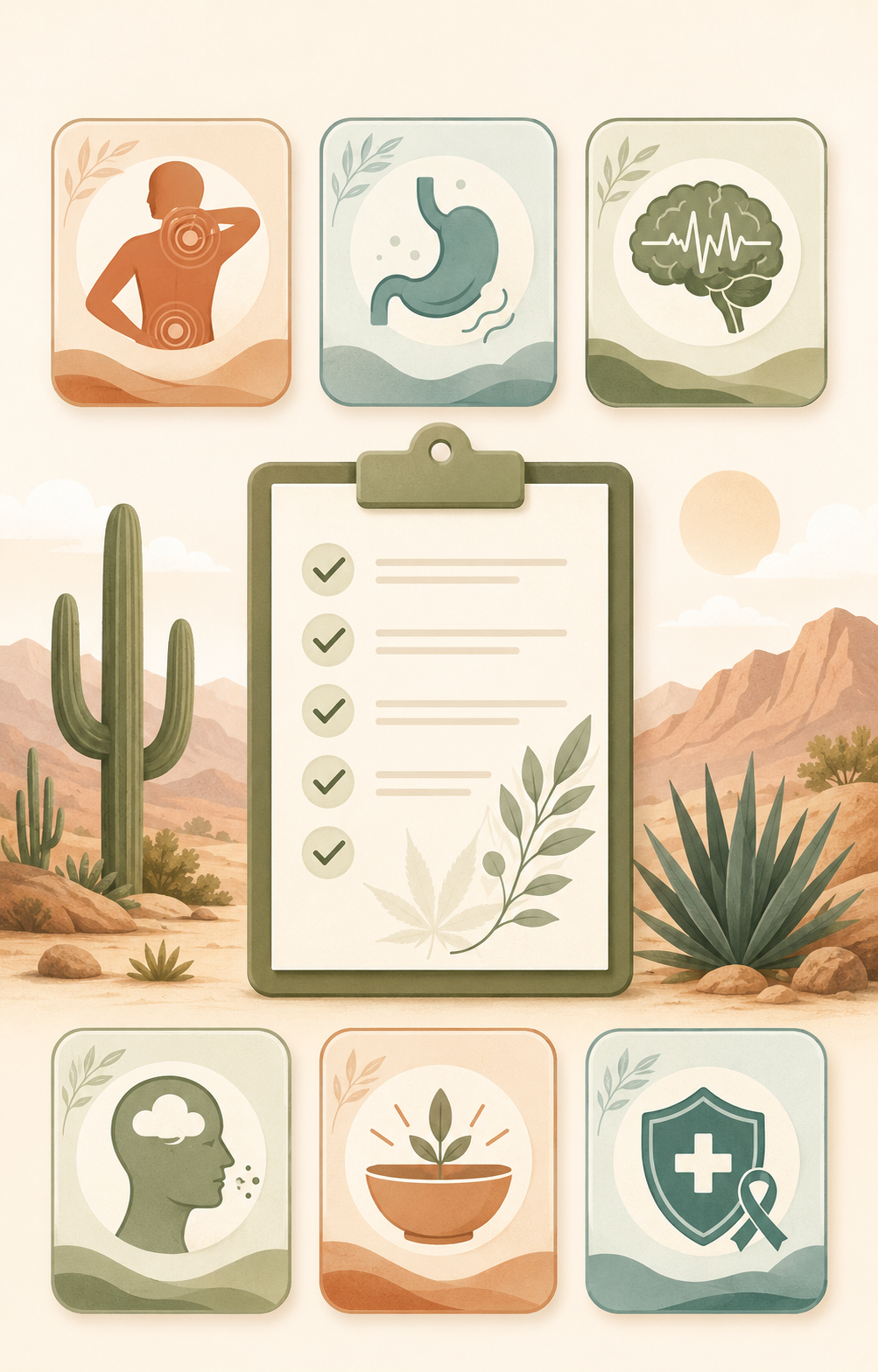
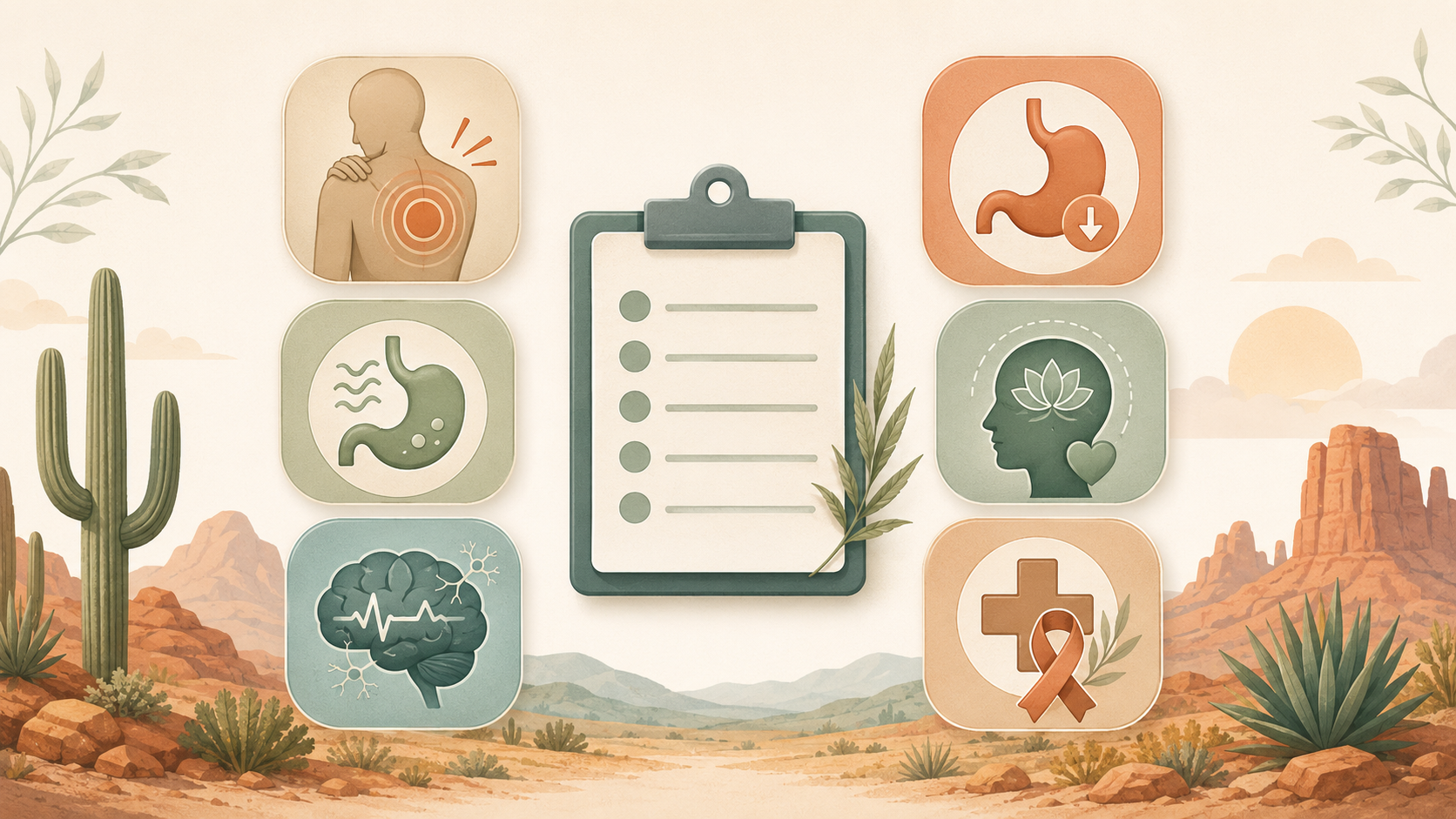
Arizona’s qualifying medical conditions include:
Cancer
Glaucoma
HIV or AIDS
Hepatitis C
Amyotrophic lateral sclerosis, also known as ALS
Crohn’s disease
Agitation of Alzheimer’s disease
Post-traumatic stress disorder, also known as PTSD
Patients may also qualify if they have a chronic or debilitating disease, medical condition, or treatment that causes one or more of the following:
Cachexia or wasting syndrome
Severe and chronic pain
Severe nausea
Seizures, including those characteristic of epilepsy
Severe or persistent muscle spasms, including those characteristic of multiple sclerosis
This means some patients qualify based on the underlying diagnosis, while others may qualify based on the severity of their symptoms. For example, a patient may not see their exact condition listed, but may still qualify if the condition causes severe chronic pain, severe nausea, seizures, or persistent muscle spasms. Severe and chronic pain is one of the most common reasons patients seek medical marijuana certification in Arizona.
Does Chronic Pain Qualify for a Medical Marijuana Card in Arizona?
Yes. Severe and chronic pain is one of the most common reasons patients seek medical marijuana certification in Arizona. However, the patient still needs a proper medical evaluation. A physician must determine whether the pain meets Arizona’s qualifying standard and whether medical marijuana may reasonably help with symptom relief.
Common pain-related concerns may include long-term back pain, joint pain, nerve pain, arthritis-related pain, pain after injury, or other chronic pain conditions. Qualification depends on the individual’s medical history, symptoms, prior treatments, and clinical evaluation.
Does PTSD Qualify for a Medical Marijuana Card in Arizona?
Yes. PTSD is a qualifying condition for a medical marijuana card in Arizona. Patients with PTSD may qualify if they receive appropriate medical evaluation and physician certification.
Because PTSD can affect sleep, mood, anxiety, concentration, and daily functioning, the certification visit should include a careful discussion of symptoms, current treatment, safety, and whether medical marijuana is appropriate as part of the patient’s overall care plan.
Do Anxiety, Depression, or Insomnia Qualify?
Anxiety, depression, and insomnia by themselves are not typically listed as standalone qualifying conditions under Arizona’s medical marijuana program. However, some patients with these symptoms may still qualify if they also have an approved condition, such as PTSD, cancer, chronic pain, severe nausea, seizures, or another qualifying issue.
This is why a personalized evaluation matters. The goal is not simply to match a symptom to a card, but to understand the patient’s full health history and determine whether they meet Arizona’s medical marijuana requirements.
Can Minors Qualify for a Medical Marijuana Card in Arizona?
Yes, but the process is more involved. Patients under 18 may qualify for Arizona’s medical marijuana program, but they generally need a parent or legal guardian involved in the application process. Minors also have additional documentation requirements.
For pediatric or adolescent patients, medical marijuana certification should be approached carefully and thoughtfully, with attention to diagnosis, safety, treatment history, and parent or guardian involvement.
Do You Need Medical Records to Qualify?
Medical records are strongly helpful and may be required depending on the situation. Records can help support the diagnosis, document previous treatments, and show why medical marijuana is being considered.
Helpful records may include:
Prior diagnosis notes
Imaging reports
Medication history
Specialist notes
Hospital or urgent care records
Mental health documentation
Pain management records
Lab results, when relevant
If a patient does not have records available, the physician may still be able to evaluate the concern, but additional documentation may be requested before certification.
Do You Still Need a Medical Marijuana Card if Recreational Marijuana Is Legal in Arizona?
Not everyone needs a medical marijuana card. Arizona allows adult-use cannabis for adults 21 and older. However, some patients still choose to get a medical card because they are using cannabis for a medical condition and want physician documentation through the state medical program.
A medical card may also be helpful for patients who want their cannabis use connected to a documented medical evaluation rather than purely recreational use.
How the Certification Process Works
The process usually starts with a medical marijuana evaluation. During the visit, the physician reviews the patient’s medical history, symptoms, qualifying condition, prior treatments, and goals for cannabis use.
If the patient qualifies, the physician completes the medical marijuana certification form. The patient can then submit the required information through the Arizona medical marijuana application process.
When to Schedule a Medical Marijuana Evaluation
You may want to schedule a medical marijuana evaluation if you live in Arizona and have a condition such as chronic pain, PTSD, cancer, Crohn’s disease, glaucoma, seizures, severe nausea, persistent muscle spasms, HIV/AIDS, hepatitis C, ALS, or agitation related to Alzheimer’s disease.
At Ask Dr. Hu, we provide personalized medical marijuana certification evaluations for Arizona patients. The visit is designed to review your health history, determine whether you meet Arizona’s qualifying requirements, and help you understand the next steps clearly.
What Conditions Qualify for a Medical Marijuana Card in Arizona?
Frequently Asked Questions
-
Arizona residents may qualify if they have an approved medical condition or qualifying symptoms, such as severe chronic pain, PTSD, cancer, glaucoma, Crohn’s disease, severe nausea, seizures, or persistent muscle spasms.
-
Severe and chronic pain can qualify, but a physician must evaluate the patient and certify that medical marijuana may provide benefit.
-
Anxiety alone is generally not a listed qualifying condition in Arizona. However, a patient may qualify if they have another approved condition, such as PTSD or severe chronic pain.
-
Yes. PTSD is a qualifying condition for an Arizona medical marijuana card.
-
It depends. Medical records are very helpful and may be requested to support the diagnosis. A physician can review your situation and let you know what documentation is needed.
-
Yes, minors may qualify, but they need parent or legal guardian involvement and additional documentation through the ADHS process.
When to Schedule a Medical Marijuana Evaluation
You may want to schedule a medical marijuana evaluation if you live in Arizona and have a condition such as chronic pain, PTSD, cancer, Crohn’s disease, glaucoma, seizures, severe nausea, persistent muscle spasms, HIV/AIDS, hepatitis C, ALS, or agitation related to Alzheimer’s disease.
At Ask Dr. Hu, we provide personalized medical marijuana certification evaluations for Arizona patients. The visit is designed to review your health history, determine whether you meet Arizona’s qualifying requirements, and help you understand the next steps clearly.
Medical Disclaimer
This article is intended for general educational purposes and does not provide individualized medical or legal advice. Medical marijuana laws, administrative requirements and state fees may change. Consult a qualified healthcare professional and review current ADHS guidance before making medical or legal decisions.