INTEGRATIVE PAIN MANAGEMENT
Personalized Pain Care Designed to Improve Movement and Function

Pain can interfere with your mobility, sleep, work, exercise, and overall quality of life. Our integrative approach looks beyond the location of your symptoms to identify the medical, structural, and lifestyle factors that may be contributing to your pain.
Your treatment plan may combine conventional medical care, naturopathic therapies, targeted procedures, and personalized recommendations based on your condition, health history, and goals.

Personalized treatment options beyond medication alone
Care for acute and chronic musculoskeletal pain
In-person evaluation and treatment in Phoenix, Arizona
Initial integrative pain management evaluations are $150. Treatment recommendations and procedure costs vary based on your condition and individual care plan.

A PERSONALIZED, WHOLE-PERSON APPROACH
A More Personalized Approach to Pain Care
Pain does not always come from a single structure or injury. Muscles, joints, tendons, ligaments, nerves, movement patterns, previous injuries, daily activities, and overall health can all influence how pain develops and persists.
Our integrative approach begins by looking at the complete picture, not simply the location of your symptoms. We take time to understand how your pain started, what makes it better or worse, how it affects your movement and daily life, and what treatments you have already tried.
Based on your evaluation, we develop a personalized care plan that may combine conservative therapies, acupuncture or dry needling, targeted injection procedures, movement and rehabilitation strategies, lifestyle support, and additional imaging or specialist referral when appropriate.
The goal is not only to temporarily reduce discomfort. It is to help identify the factors contributing to your pain, improve function, and determine the most appropriate next step in your care.
Your evaluation may help us:

Understand how pain is affecting your mobility and daily activities

Identify the structures or movement patterns contributing to your symptoms

Select conservative and targeted treatment options based on your needs
Adjust your treatment plan as your symptoms and function change
CONDITIONS WE EVALUATE
Types of Pain We Evaluate
Pain can arise from muscles, joints, tendons, ligaments, nerves, or a combination of structures. We take the time to understand your symptoms, movement limitations, medical history, and possible contributing factors before recommending the next steps in your care.

Muscle and Myofascial Pain
Muscle tension, spasms, trigger points, strains, and areas of persistent tenderness can interfere with movement, sleep, work, and everyday activities.
Back and Neck Pain
We evaluate acute and persistent neck and lower-back pain to identify possible muscular, joint, or nerve contributors

Joint Pain and Arthritis
We evaluate joint pain, stiffness, and arthritis-related symptoms involving areas such as the knees, shoulders, hips, hands, and other joints.

Nerve-Related Pain
Burning, tingling, numbness, or shooting pain may be associated with nerve irritation and may require a more detailed neurological evaluation.

Tendon & Ligament Injuries
Tendon irritation, repetitive strain, sprains, and ligament injuries may cause localized pain, weakness, instability, or discomfort.

Sports and Overuse Injuries
Repetitive activities, exercise, or changes in training can place excessive stress on muscles, joints, tendons, and surrounding tissues.

Not sure which category describes your symptoms?
Pain is often influenced by more than one structure or contributing factor. Your evaluation helps determine whether additional imaging, laboratory testing, conservative treatment, or referral to another healthcare professional may be appropriate.
Pain Care Focused on More Than Temporary Relief
GOALS OF TREATMENT
Our goal is not simply to cover up symptoms. We work to understand the factors contributing to your pain and develop a personalized treatment plan designed to improve comfort, movement, function, and overall quality of life.

Reduce Pain and Irritation
Treatment may help decrease pain, sensitivity, muscle tension, and irritation around affected joints, muscles, tendons, or nerves. The goal is to make everyday activities more comfortable and manageable.

Improved Mobility
Pain can interfere with walking, exercising, working, sleeping, and completing daily activities. We aim to help restore movement and improve your ability to participate in the activities that matter to you.

Support Recovery
When appropriate, treatment may focus on supporting the body’s natural healing processes and improving the health of injured or irritated tissues, along with nutrition and lifestyle.

Reduce Recurring Pain
Long-term improvement often requires identifying the movements, habits, muscle imbalances, health conditions, or lifestyle factors that may be contributing to repeated symptoms.
Your treatment goals will be based on your condition, medical history, examination findings, and personal priorities. Although no treatment can guarantee complete pain relief, our aim is to help you achieve meaningful and sustainable improvement.
Treatment Options Tailored to Your Condition
PERSONALIZED TREATMENT OPTIONS
Pain does not always respond to a single treatment. Depending on your diagnosis, symptoms, medical history, and personal goals, your care plan may combine conventional pain-management techniques with naturopathic and regenerative treatment options.

Acupuncture
Thin, sterile needles are placed at carefully selected points to help reduce pain, ease muscle tension, and support more comfortable movement. Acupuncture may be incorporated into the treatment of certain acute or chronic pain conditions.

Nerve Blocks
A targeted injection containing a local anesthetic may temporarily reduce pain signals from a specific nerve. Nerve blocks may also help determine whether a particular nerve is contributing to the patient’s symptoms.

Dry Needling and Cupping
Dry needling targets tight muscle bands and sensitive trigger points, while cupping may be used to address soft-tissue tension and restricted movement. These therapies may be included as part of a broader musculoskeletal treatment plan.

Prolotherapy
Prolotherapy may be considered for selected ligament, tendon, or joint conditions. Treatment recommendations depend on the injury, examination findings, previous treatments, and the available clinical evidence.

Trigger Point Injections
Small injections are placed directly into painful muscle knots or trigger points. This treatment may be considered for persistent localized muscle pain that has not improved sufficiently with stretching, massage, or other conservative approaches.
Platelet-Rich Plasma
Platelet-rich plasma, commonly called PRP, is prepared from patient’s own blood. It may be injected into selected injured tissues when appropriate. Potential benefits vary depending on the condition being treated.

Perineural Injection Therapy
A low-concentration dextrose solution is carefully placed near irritated superficial nerves. This treatment may be considered for localized burning, tenderness, sensitivity, or other symptoms that appear to involve irritated peripheral nerves.
Joint Injections
For certain painful or inflamed joints, treatment may include a corticosteroid injection. The recommended option depends on the diagnosis, treatment goals, medical history, previous care, and the expected benefits and risks.

Your Treatment Plan Is Personalized
Not every patient needs an injection or procedure. Dr. Ngo begins with a detailed evaluation and recommends the least-invasive reasonable options for your condition. Treatment may also include home exercises, activity modification, physical therapy, medication management, diagnostic imaging, or referral to another specialist when appropriate.
What to Expect
Your care begins with a detailed evaluation, not a one-size-fits-all procedure. We take time to understand your symptoms, identify possible sources of pain, and discuss treatment options that fit your condition, goals, and comfort level.

Comprehensive Consultation
We will discuss where your pain is located, when it began, what makes it better or worse, previous injuries, prior treatments, medications, and how the pain affects your daily activities.
Focused Physical Examination
Your physician may evaluate your posture, movement, strength, flexibility, joint function, areas of tenderness, and other findings that may help identify the source of your symptoms.
Review of Records and Imaging
When available, we may review medical records, laboratory results, X-rays, MRIs, ultrasound studies, or other imaging. Additional testing or imaging may be recommended when clinically appropriate.

Personalized Treatment Plan
After the evaluation, we will explain the findings and discuss appropriate treatment options. Your plan may include conservative care, therapeutic exercises, injection-based therapies, or referrals.

Treatment and Follow-Ups
Some treatments may be performed during the initial appointment when appropriate, while others require a separate procedure visit. Follow-up recommendations will depend on your condition.
Before an Injection or Procedure
Before proceeding, your physician will explain the recommended treatment, expected benefits, reasonable alternatives, possible risks, recovery instructions, and anticipated costs. You will have an opportunity to ask questions before deciding whether to move forward.
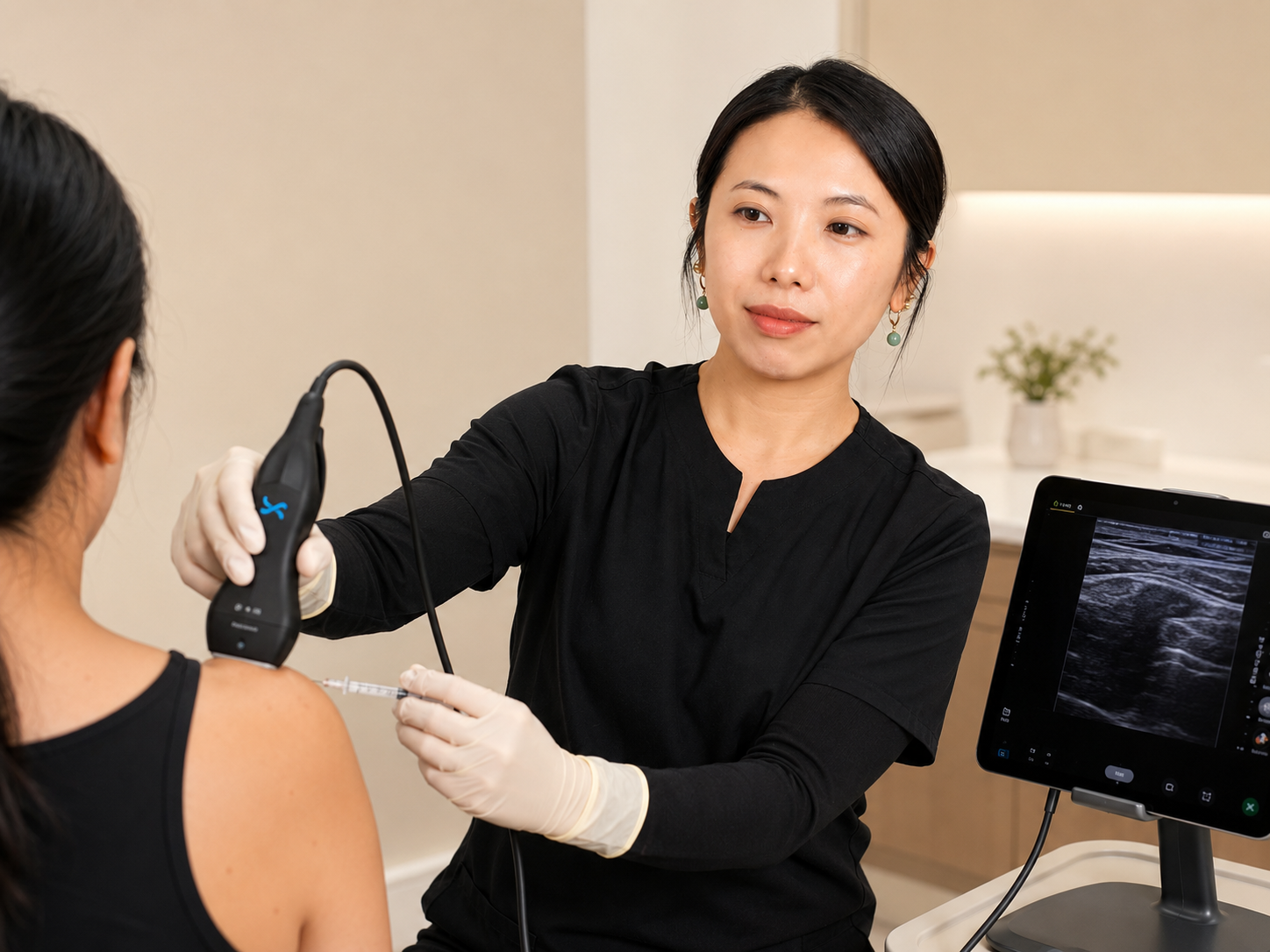
Not every pain-management procedure is appropriate for every patient. Before recommending an injection or other treatment, we carefully evaluate your symptoms, medical history, medications, physical examination findings, previous treatments, and available imaging. Our goal is to determine whether a procedure is likely to be appropriate, whether additional testing is needed, and which treatment option best fits your individual condition.
Careful Evaluation. Precise, Ultrasound-Guided Treatment
SAFETY & CANDIDACY
Real-Time Ultrasound Guidance for Targeted Injections

Live Visualization
The treatment area and needle are viewed in real time throughout the procedure.

More Precise Targeting
Ultrasound helps guide treatment toward the intended target.

Awareness of Surrounding Structures
Nearby blood vessels, nerves, and soft tissues can be identified during the injection.
Ultrasound guidance supports safer, more precise treatment, but no injection or medical procedure is completely risk-free.

You May Be a Candidate
✓ Your pain has persisted or repeatedly returned despite appropriate conservative care.
✓ Your symptoms and examination findings suggest an identifiable joint, tendon, muscle, fascia, ligament, or peripheral nerve source.
✓ Pain is limiting your movement, sleep, work, exercise, or everyday activities.
✓ A treatment offered by our practice may reasonably support pain relief, healing, mobility, or improved function.
✓ You understand the possible benefits, limitations, alternatives, recovery expectations, and risks of the proposed treatment.

Additional Safety Review May Be Needed
! A fever, active infection, or redness, rash, wound, or skin infection near the proposed treatment area.
! A bleeding disorder, unusual bruising, or current use of anticoagulant or antiplatelet medication.
! Diabetes, particularly when a corticosteroid-containing injection is being considered.
! A history of reactions to local anesthetics, corticosteroids, antiseptics, adhesives, latex, or injectable medications.
! A current pregnancy, possible pregnancy, or breastfeeding considerations.

Individualized Evaluation
We begin by identifying the likely source of your pain and determining whether the proposed procedure is appropriate for your condition and treatment goals.

Medical Review
Your physician reviews relevant health conditions, medications, supplements, allergies, prior procedures, previous imaging, and factors that may affect healing, bleeding, infection risk, or medication selection.
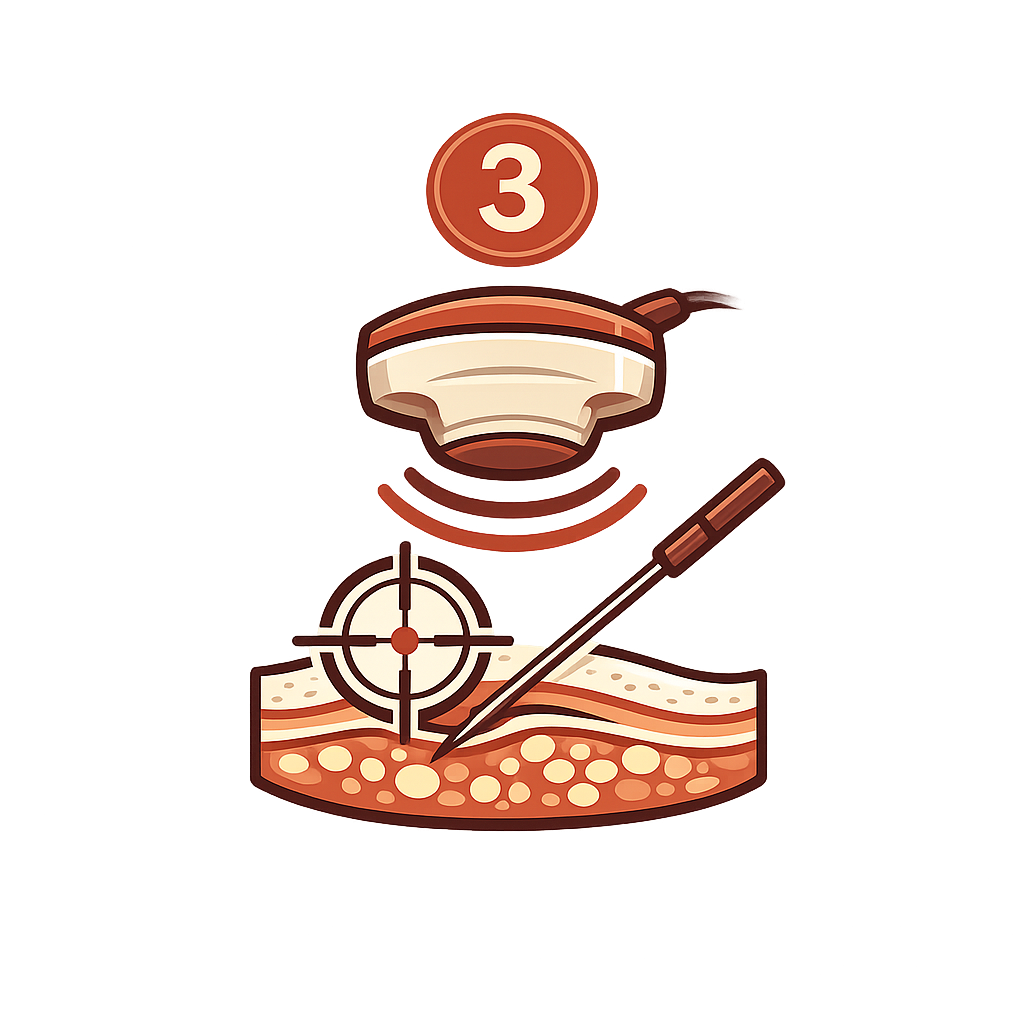
Ultrasound Guidance
When clinically appropriate, real-time ultrasound is used to evaluate the target area, plan the needle path, visualize the procedure, and account for nearby anatomical structures.

Sterile Technique
Procedures are performed using appropriate sterile supplies and aseptic technique. You will receive individualized aftercare instructions, activity guidance, and information about symptoms that should prompt medical attention.

Important Safety Information
All injections and minimally invasive procedures have potential risks. Depending on the treatment, these may include temporary soreness, bruising, bleeding, infection, allergic reaction, temporary numbness or weakness, injury to nearby tissue, worsening pain, or limited improvement.
Some medications have additional considerations. For example, corticosteroid-containing injections may temporarily increase blood sugar and may have other systemic effects. Your physician will explain the risks, benefits, alternatives, and post-procedure instructions that apply to the specific treatment being considered.
Seek urgent medical evaluation for severe or rapidly worsening symptoms, significant weakness, difficulty breathing, signs of a serious allergic reaction, or other symptoms that may represent a medical emergency.
PRICING & SCHEDULING
Transparent Pricing for Integrative Pain Care
We believe you should have a clear understanding of anticipated costs before beginning treatment. The appropriate procedure, number of treatment areas, and use of ultrasound guidance will be determined based on your evaluation and individualized treatment plan.
Integrative Pain Management Evaluation - $150
Your evaluation may include a review of your symptoms, medical history, prior imaging or treatment, physical examination, and discussion of appropriate treatment options.
Acupuncture and Dry Needling with Cupping - $150
Individualized treatment based on your symptoms, health history, and treatment goals. Cupping may be added to an acupuncture or dry needling session when clinically appropriate.
Targeted Injection Procedures - $300 per body area
Trigger Point Injections
Perineural Injection Therapy
Nerve Block
Joint Injection Procedures - varies
Prolotherapy: $600 - $1,000 per joint
Steroid Joint Injection: $600 - $1,000 per joint
PRP Therapy: $1,000 - $1,400 per joint
Musculoskeletal Ultrasound - $300
Musculoskeletal ultrasound may be used to guide injection procedures for more precise needle placement or offered as a standalone diagnostic service to help evaluate the source of pain and identify certain conditions.

Home Visit Fee - Starting at $300
This fee is added when an eligible evaluation or procedure is performed during a scheduled home visit. The home visit fee varies based on travel distance and will be confirmed before your appointment.
Our Scheduling Process
Schedule an Evaluation
Begin with a pain management evaluation so we can understand your symptoms, review prior treatments, and determine which options may be appropriate.
Receive a Treatment Plan
We will discuss recommended treatment options, expected benefits, important risks, alternatives, and whether ultrasound guidance is appropriate.
Review Treatment Cost
You will receive a clear estimate based on the procedure, joint or body area being treated, and any additional services.
Schedule Treatment
Once you are comfortable with the plan, our office will help you schedule the procedure or follow-up treatment.
Important Pricing Information
Prices are based on one joint or treatment area unless otherwise stated. Treating multiple joints or body areas may result in additional charges. Final pricing may vary depending on the joint, number of areas treated, procedural complexity, ultrasound guidance, and home-visit requirements. Your anticipated cost will be reviewed before treatment.
We respect your time and your trust. No hidden fees. Ever.
LEARN MORE ABOUT PAIN CARE
Explore Integrative Pain Management Resources
Pain can have many possible causes, and the most appropriate treatment depends on your symptoms, medical history, examination findings, and individual goals. Explore these educational resources to better understand integrative pain care and the conditions that may benefit from evaluation.

Integrative Pain Management: A Complete Guide to Pain Care
Learn how integrative pain management combines a detailed medical evaluation with conservative therapies and procedures.

FAQ: What Is Integrative Pain Management?
Understand how integrative pain care differs from symptom-focused treatment and how an individualized plan may be developed.

FAQ: What Types of Pain Can Integrative Pain Management Treat?
Review common muscle, joint, tendon, nerve, and musculoskeletal concerns that may benefit from a comprehensive evaluation.
COMMON QUESTIONS
Integrative Pain Management FAQs
Every patient’s condition and treatment plan is different. The answers below provide general information about evaluation, treatment selection, procedural guidance, recovery, and scheduling.
-
Yes. An initial evaluation is generally required before a treatment or procedure is recommended. Your physician will review your symptoms, medical history, previous testing, current medications, physical examination findings, and treatment goals to determine which options may be appropriate.
In some cases, additional imaging, laboratory testing, medical records, or specialist evaluation may be recommended before treatment.
-
The appropriate treatment depends on the suspected source of your pain, the structures involved, the severity and duration of your symptoms, your overall health, and your personal preferences.
Some patients may benefit from conservative options such as acupuncture, dry needling, or cupping. Others may be candidates for targeted injections, nerve blocks, prolotherapy, platelet-rich plasma therapy, joint injections, or a combination of approaches. A specific treatment cannot be recommended until you have been evaluated.
-
Ultrasound guidance may be used when clinically appropriate to visualize muscles, tendons, joints, nerves, blood vessels, and other relevant anatomy during an injection procedure. This can help the physician plan needle placement and deliver treatment more precisely.
Not every procedure requires ultrasound guidance. Its use will depend on the treatment area, procedure type, anatomy, and clinical circumstances.
-
Yes. Musculoskeletal ultrasound may also be offered as a stand-alone service to help evaluate certain muscles, tendons, ligaments, joints, nerves, and soft-tissue structures.
Ultrasound findings must be interpreted alongside your symptoms and physical examination. Additional imaging or specialist evaluation may still be necessary.
-
The number of treatments varies considerably. Some patients experience improvement after one treatment, while others may require a series of treatments or a broader rehabilitation plan.
Your response will depend on the underlying condition, how long it has been present, the severity of the tissue injury, your general health, activity level, and the treatment selected. No specific outcome or number of treatments can be guaranteed.
-
Downtime depends on the procedure. Acupuncture, cupping, and dry needling often involve little interruption to normal activities, although temporary soreness or bruising may occur.
Injection procedures may require temporary activity modification. You will receive individualized aftercare instructions based on the treatment performed and the area treated.
-
Ask Dr. Hu is a direct-pay medical practice and does not bill insurance for visits or procedures. Payment is due at the time of service.
Upon request, documentation may be provided that you can submit to your insurance company, health savings account, or flexible spending account. Reimbursement is not guaranteed and depends on the terms of your plan.
-
Integrative pain-management appointments are not appropriate for medical emergencies. Call 911 or seek immediate emergency care for severe trauma, sudden weakness or paralysis, new loss of bowel or bladder control, numbness in the groin or saddle region, chest pain, difficulty breathing, stroke-like symptoms, rapidly worsening swelling, or signs of a severe infection.
Patients who are unsure whether their symptoms require urgent care should seek timely medical evaluation rather than waiting for a routine appointment.

Take the Next Step Toward Better Function and Less Pain
Pain treatment should begin with understanding the possible source of your symptoms, not simply selecting a procedure.
Schedule an integrative pain-management evaluation to discuss your symptoms, review your previous testing and treatments, and determine whether conservative therapies, ultrasound evaluation, or targeted procedures may be appropriate for you.
$150 initial pain-management evaluation • In-office care available • Home visits may be available based on location
Treatment recommendations and pricing are discussed before a procedure is performed.
Pain management services are not intended for medical emergencies. Individual results vary, and no treatment outcome can be guaranteed. A medical evaluation is required to determine whether a particular treatment is appropriate.