Integrative Pain Management: A Complete Guide to Personalized Pain Care
Written by YiQiu Hu, NMD
Arizona-licensed naturopathic physician and concierge medicine provider
Published July 2026 | Medically reviewed July 2026
Pain affects every aspect of life. Whether it comes from an old injury, arthritis, nerve irritation, repetitive strain, or an unknown cause, persistent pain can interfere with work, sleep, exercise, hobbies, and time with family.
At Ask Dr. Hu, we believe that effective pain management begins by understanding why pain exists, not simply masking symptoms. Our integrative approach combines modern diagnostic techniques, evidence-informed regenerative therapies, lifestyle medicine, and personalized treatment plans designed to improve function while helping patients reduce pain naturally whenever possible.
Whether your goal is returning to sports, improving mobility, avoiding surgery, or simply enjoying daily life with less discomfort, personalized care can often provide meaningful improvements.
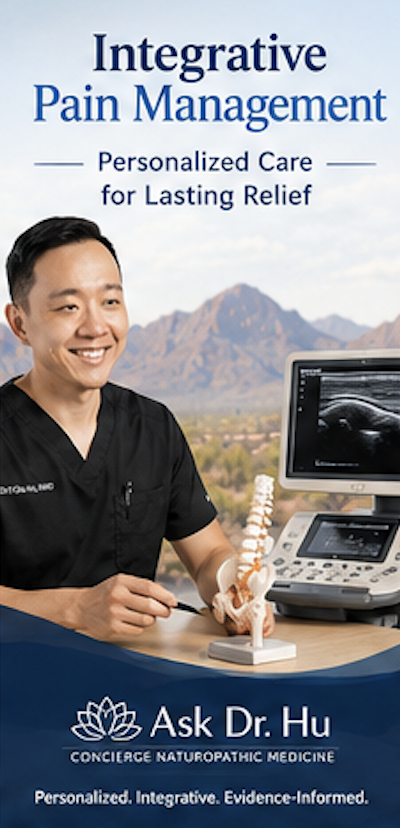
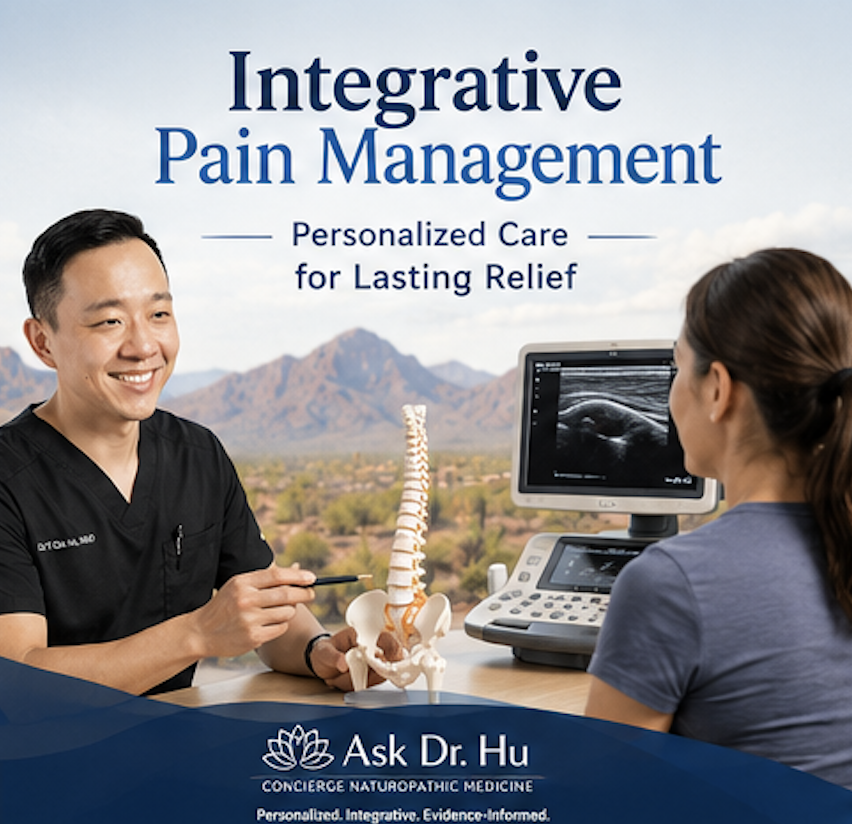
What Is Integrative Pain Management?
Integrative pain management combines conventional medical knowledge with evidence-based complementary therapies to address pain from multiple angles.
Rather than relying on one treatment alone, an individualized plan may include:
Detailed musculoskeletal evaluation
Ultrasound-guided procedures
Regenerative medicine
Trigger point therapy
Perineural injection therapy
Acupuncture
Dry needling
Physical rehabilitation recommendations
Anti-inflammatory strategies
The goal is not only pain reduction but also restoring movement, improving function, and supporting long-term healing whenever possible.
Why Does Pain Become Chronic?
Pain often begins with an injury, but over time the nervous system itself can become more sensitive.
Common reasons include:
Chronic inflammation
Tendon degeneration
Ligament injuries
Muscle imbalance
Nerve irritation
Joint instability
Arthritis
Scar tissue
Repetitive overuse
Poor movement mechanics
Treating only the symptoms without addressing these underlying contributors may lead to recurring pain.
Conditions That May Benefit
Our personalized approach may help patients experiencing:
Joint Pain
Knee pain
Shoulder pain
Hip pain
Ankle pain
Wrist pain
Elbow pain
Spine Conditions
Neck pain
Low back pain
Degenerative disc disease
Facet joint pain
Sacroiliac dysfunction
Tendon & Muscle Injuries
Tennis elbow
Golfer's elbow
Rotator cuff tendinopathy
Achilles tendinopathy
Patellar tendinopathy
Hamstring injuries
Nerve Conditions
Sciatica
Peripheral nerve irritation
Entrapment neuropathies
Carpal tunnel syndrome
Meralgia paresthetica
Sports & Overuse Injuries
Running injuries
Shoulder injuries
Repetitive strain injuries
Plantar fasciitis
Muscle strains
Ligament sprains
Every patient receives an individualized evaluation to determine the most appropriate treatment plan.
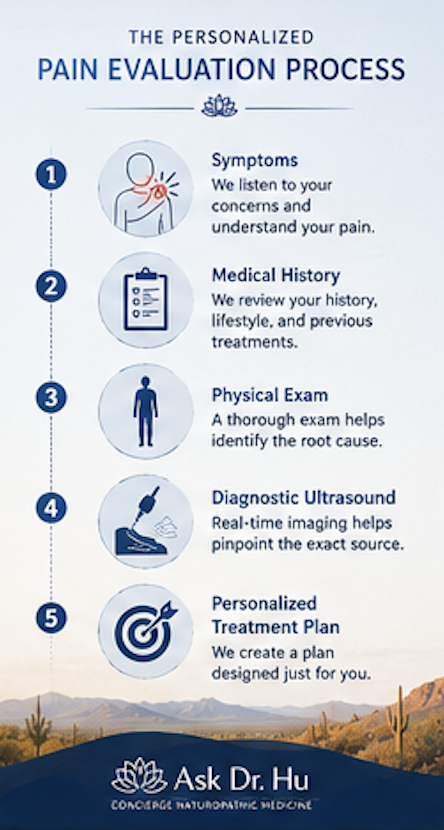
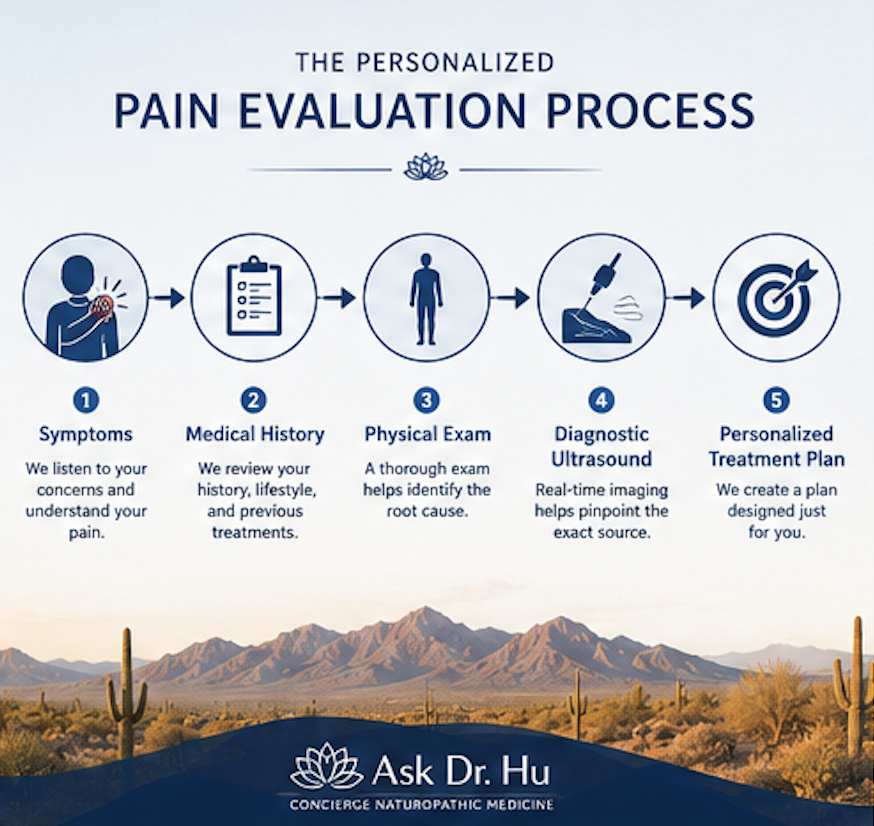
Successful treatment starts with an accurate diagnosis.
Your evaluation may include:
Comprehensive medical history
Functional movement assessment
Orthopedic examination
Neurological testing
Review of prior imaging
Laboratory testing when appropriate
Diagnostic musculoskeletal ultrasound
Rather than focusing only on where pain occurs, we evaluate the structures contributing to the problem.
How We Evaluate Pain
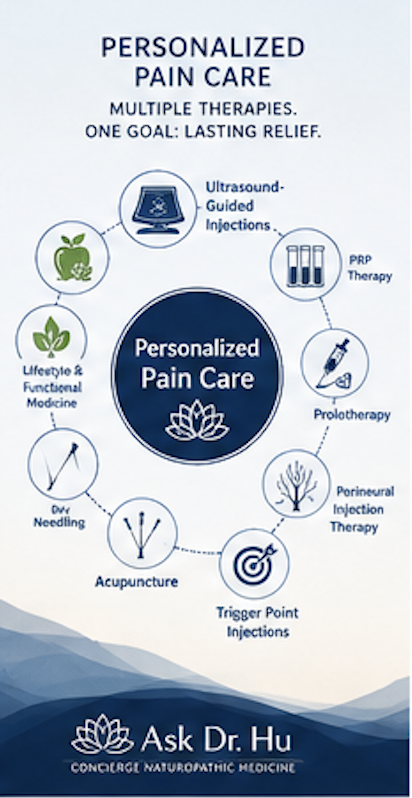
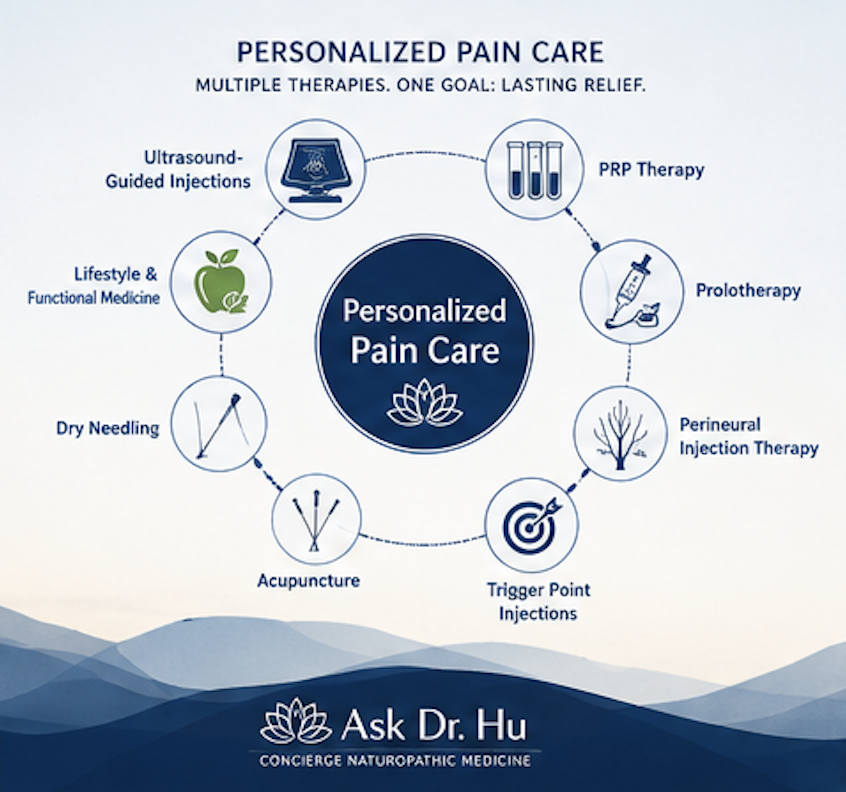
One of the advantages of our practice is the use of diagnostic musculoskeletal ultrasound.
Ultrasound allows us to visualize:
Tendons
Ligaments
Muscles
Nerves
Joint spaces
Areas of inflammation
When injections are appropriate, ultrasound guidance helps improve precision by allowing medication or regenerative treatments to be delivered directly to the intended anatomical structure.
Depending on your condition, options may include corticosteroid injections, regenerative therapies, or other evidence-informed procedures.
Regenerative Medicine
Some chronic injuries involve tissues with limited healing capacity.
Depending on the diagnosis, regenerative treatments may include:
Platelet-Rich Plasma (PRP)
PRP is prepared from a patient’s own blood and contains concentrated platelets. It may be injected into selected tissues with the goal of supporting healing or improving symptoms, but evidence and outcomes vary substantially by condition and preparation.
Prolotherapy
Prolotherapy involves injecting a dextrose-based solution into selected joints, ligaments, or tendons. It is proposed to stimulate a localized healing response, but evidence of benefit varies by condition and remains limited for many uses.
These therapies may be appropriate for selected patients after a comprehensive evaluation.
Perineural Injection Therapy
Perineural Injection Therapy (PIT) is a technique that targets irritated superficial nerves using dilute dextrose solution.
For selected patients with nerve-related pain, PIT may help reduce nerve irritation while improving comfort and function as part of a broader treatment plan.
Trigger Point Injections
Muscle knots, or trigger points, can contribute to localized pain and referred pain patterns.
Trigger point injections may help:
Reduce muscle tension
Improve mobility
Restore normal muscle function
Decrease pain during movement
When appropriate, these injections may be combined with stretching, rehabilitation, or corrective exercise as part of a broader treatment plan. Outcomes vary by condition and patient.
Acupuncture & Dry Needling
Needle-based therapies can help address both muscular and neurologic contributors to pain.
Acupuncture
Acupuncture has been used for centuries to help reduce pain while promoting relaxation and improved function.
Dry Needling
Dry needling specifically targets myofascial trigger points to reduce muscle tension and improve movement.
Although both use thin needles, they are based on different treatment philosophies and may be appropriate for different clinical situations.
Lifestyle & Functional Medicine
Pain rarely exists in isolation.
Many patients benefit from addressing factors that influence inflammation and recovery, including:
Nutrition
Sleep quality
Stress management
Physical activity
Weight management
Vitamin and nutrient status
Hormonal health when appropriate
Optimizing overall health may enhance recovery while supporting long-term pain management.
What to Expect During Treatment
Every patient's plan is individualized.
Treatment may include one therapy or a combination of approaches depending on your diagnosis, goals, and response over time.
Follow-up visits allow us to monitor progress, adjust treatments, and recommend additional therapies when appropriate.
Our goal is steady, measurable improvement rather than temporary symptom relief alone.
Ultrasound-Guided Injections
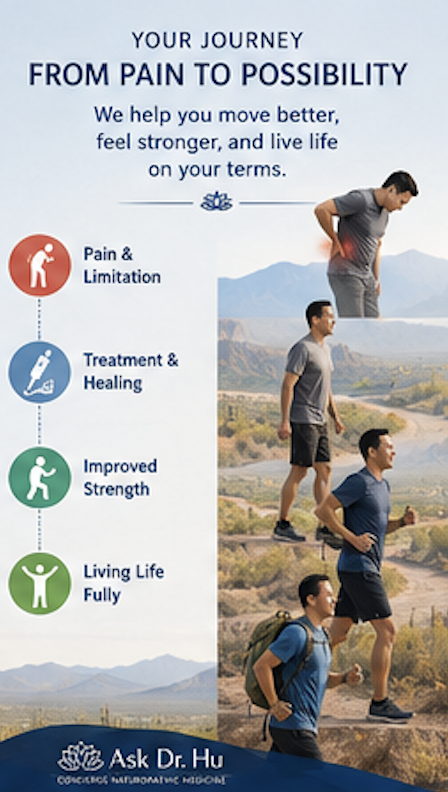
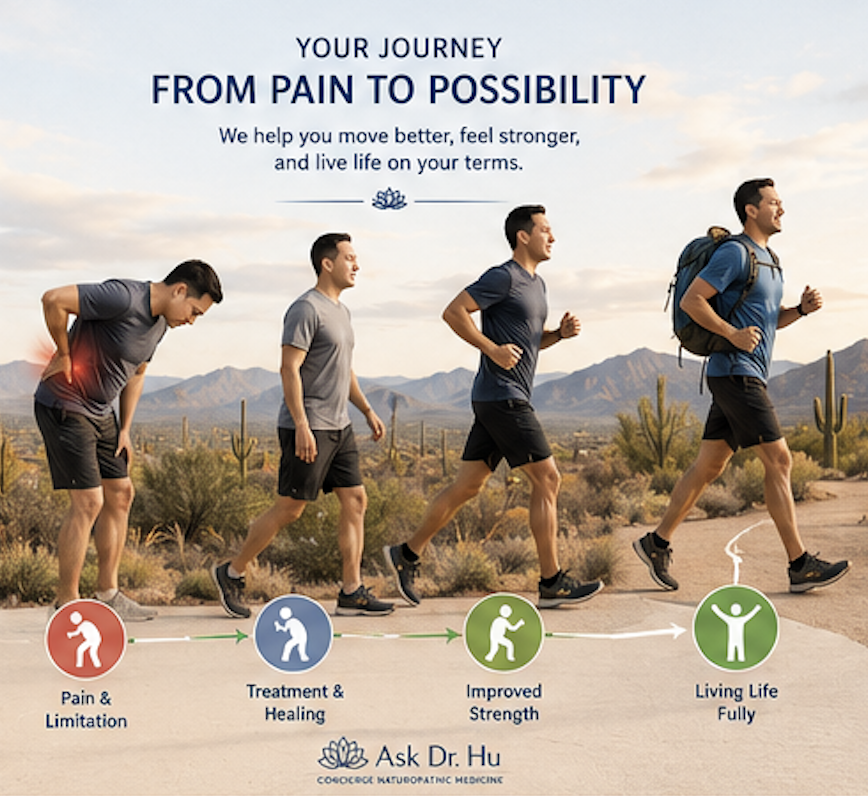
Our practice focuses on personalized concierge medical care throughout Arizona.
Patients appreciate our approach because we emphasize:
Thorough evaluations
Individualized treatment plans
Ultrasound-guided precision
Multiple evidence-informed treatment options
Conservative care whenever appropriate
Ongoing physician access through concierge membership
Rather than offering the same treatment to everyone, we tailor recommendations to each patient's condition, goals, and lifestyle.
Why Choose Ask Dr. Hu?
-
Many patients with chronic pain may benefit from a comprehensive evaluation and individualized treatment plan. The best approach depends on the underlying cause of pain.
-
No. Many patients improve with conservative treatments alone, while others may benefit from targeted procedures depending on their diagnosis.
-
Not necessarily. PRP, prolotherapy, and other regenerative treatments are selected based on individual conditions, examination findings, and treatment goals.
-
Yes. We evaluate many acute and chronic sports-related injuries affecting muscles, tendons, ligaments, joints, and nerves.
-
Not always. Existing imaging may be sufficient, and diagnostic ultrasound performed during your visit may provide additional information when appropriate.
Frequently Asked Questions
Every person's pain story is unique. If you've been living with persistent discomfort, recurring injuries, or limitations that affect your quality of life, a personalized evaluation can help identify the underlying causes and determine which treatment options may be appropriate.
At Ask Dr. Hu, we combine comprehensive assessment with individualized care plans designed to help you move more comfortably, improve function, and support long-term wellness.