What Is Integrative Pain Management?
Pain can affect nearly every part of daily life, from walking and exercising to sleeping, working, and spending time with family. Although pain medication may provide temporary relief for some people, pain is often too complex to be addressed with a single treatment.
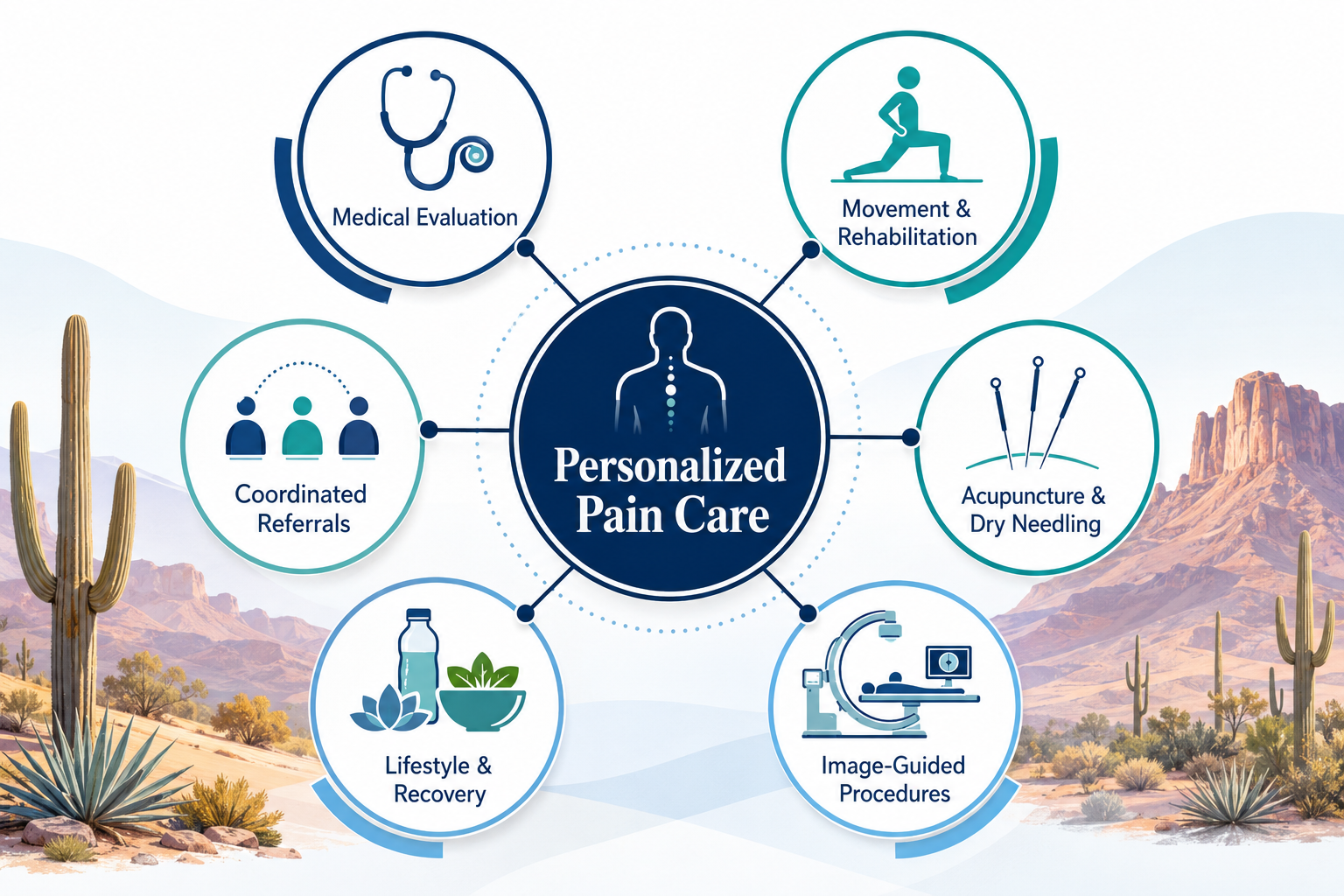
Integrative pain management is a personalized approach that combines appropriate conventional medical care with physical, procedural, lifestyle, and complementary therapies. Instead of concentrating exclusively on reducing a pain score, it considers the possible causes of pain, its effects on everyday function, and the factors that may be interfering with recovery.
The goal is not to use every available therapy. It is to select a reasonable combination of treatments based on the individual’s diagnosis, health history, symptoms, preferences, and functional goals.
Written by YiQiu Hu, NMD
Arizona-licensed naturopathic physician and concierge medicine provider
Published July 2026 | Medically reviewed July 2026
What Does “Integrative” Mean in Pain Management?
In medicine, “integrative” generally means thoughtfully combining different evidence-informed approaches within one coordinated treatment plan.
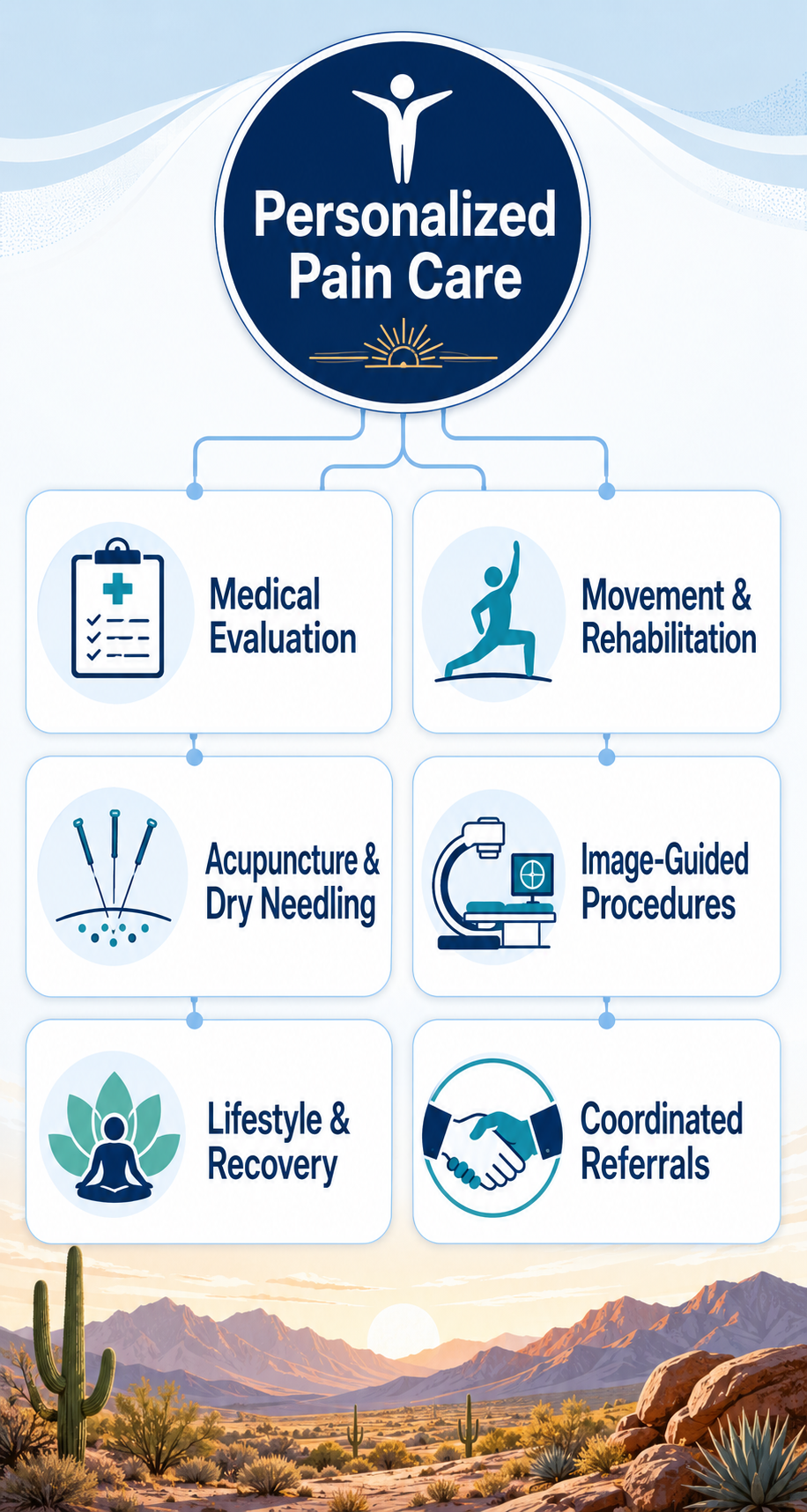
Depending on the patient and condition, an integrative pain-management plan may include:
Medical evaluation and diagnostic testing
Physical therapy or therapeutic exercise
Activity and ergonomic modifications
Non-opioid medications when appropriate
Acupuncture or dry needling
Trigger-point treatment
Image-guided injections
Nutrition and weight-management support
Sleep and stress management
Mind-body therapies
Referral to an orthopedic, neurologic, rheumatologic, or other specialist
Integrative care does not mean rejecting conventional medicine. It uses conventional evaluation and treatment when indicated while considering additional approaches that may support recovery, mobility, and overall well-being.
The CDC recommends maximizing appropriate nonpharmacologic and non-opioid treatments for subacute and chronic pain. These may include exercise, physical therapy, psychological therapies, mindfulness, manual therapies, acupuncture, massage, and selected non-opioid medications. CDC: Nonopioid Therapies for Pain Management
How Is Integrative Pain Management Different From Conventional Pain Management?
There can be considerable overlap between the two. Conventional pain care may already include medications, physical therapy, injections, behavioral treatment, and specialist referrals.
The main distinction is usually the breadth and coordination of the treatment plan. An integrative evaluation may pay particular attention to:
The medical or mechanical source of the pain
Muscle, tendon, ligament, joint, and nerve function
Prior injuries or surgeries
Posture, movement, strength, and mobility
Sleep quality and recovery
Nutrition and metabolic health
Stress and the nervous system’s response to persistent pain
The patient’s ability to work, exercise, and perform everyday activities
Rather than viewing conventional and complementary care as competing options, integrative pain management considers how carefully selected treatments may work together.
What Treatments May Be Used?
Treatment recommendations depend on the diagnosis, medical history, examination findings, and physician’s scope of practice. Options may include the following.
Exercise and rehabilitation
Appropriate movement is often an important part of recovery. A patient may receive recommendations for gentle mobility, strengthening, physical therapy, activity modification, or gradual return to exercise.
Acupuncture and dry needling
Acupuncture and dry needling use thin needles, although they are based on different treatment frameworks. These therapies may be considered for certain musculoskeletal or myofascial pain conditions.
Research suggests that some complementary approaches may provide modest benefits for selected chronic pain conditions, but the evidence varies by therapy and diagnosis. NCCIH: Chronic Pain and Complementary Health Approaches
Trigger-point treatment
Myofascial trigger points are sensitive areas within muscles that may produce localized or referred pain. Treatment may involve stretching, manual techniques, dry needling, or trigger-point injections when medically appropriate.
Ultrasound-guided procedures
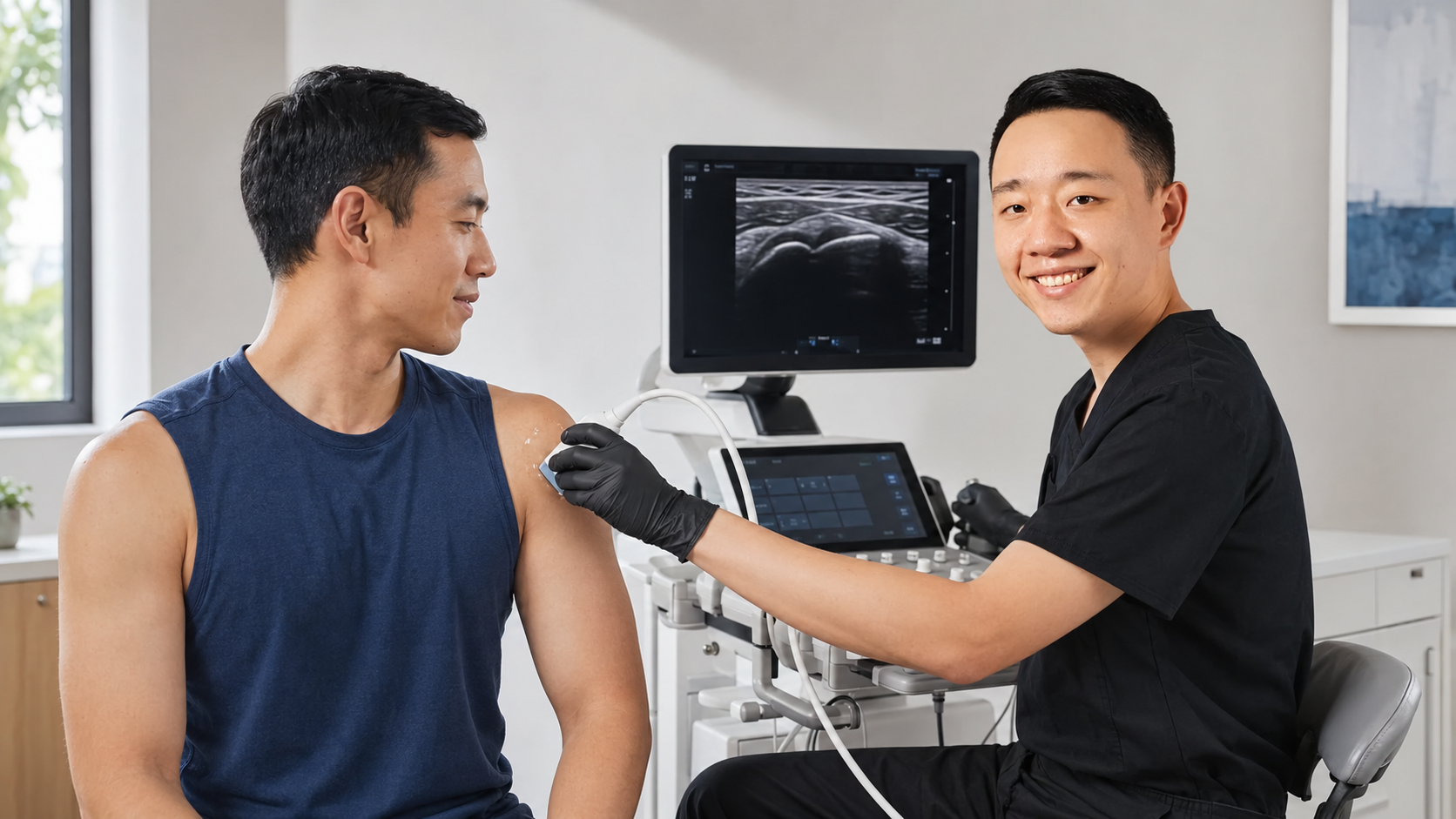
Musculoskeletal ultrasound can help a trained physician examine certain soft-tissue and joint structures in real time. It may also be used to guide a needle toward a specific treatment area while avoiding nearby structures.
Ultrasound does not replace every form of imaging. X-rays, MRI, CT, electrodiagnostic testing, or specialist evaluation may still be necessary depending on the condition.
Injection-based therapies
After an appropriate evaluation, selected patients may be considered for treatments such as:
Trigger-point injections
Perineural injection therapy
Certain nerve blocks
Prolotherapy
Platelet-rich plasma, or PRP
Joint or soft-tissue injections
Corticosteroid injections when indicated
These procedures have different purposes, supporting evidence, risks, costs, and expected recovery periods. The fact that a treatment is available does not mean it is appropriate for every patient.
Lifestyle and recovery support
Sleep, nutrition, body weight, activity level, and stress can influence pain perception, inflammation, physical function, and recovery. Addressing these areas does not imply that pain is “all in your head.” It recognizes that pain is influenced by interactions among injured tissues, the nervous system, physical conditioning, health status, and daily habits.
Does Integrative Pain Management Avoid Medication?
Not necessarily. Integrative care is not automatically medication-free.
Depending on the condition, an appropriate plan might include topical treatments, acetaminophen, anti-inflammatory medication, or other non-opioid prescriptions. Medication decisions should consider the patient’s age, health history, other medications, and gastrointestinal, kidney, liver, and cardiovascular risks.
The purpose is to use medication thoughtfully as one possible component of care rather than assuming that medication alone will resolve every pain condition.
Can Integrative Pain Management Help Reduce the Need for Opioids?
Integrative pain management often emphasizes non-opioid strategies, particularly for subacute and chronic pain. However, no treatment can guarantee that a patient will no longer need pain medication.
CDC guidance states that non-opioid therapies are preferred for subacute and chronic pain and recommends considering both nonpharmacologic treatments and non-opioid medications when appropriate. Decisions involving opioid therapy should be individualized and handled by the prescribing clinician. CDC Guideline Recommendations
Patients should not abruptly discontinue prescribed medication without consulting the clinician responsible for prescribing it.
How Long Does It Take to See Results?
The timeline varies considerably. It depends on:
The underlying diagnosis
How long the pain has been present
The severity of the injury or degeneration
General health and activity level
The treatment being used
Adherence to rehabilitation recommendations
Whether surgery or prior treatment has altered the area
Some patients notice improvement relatively early, while others require a series of treatments and a longer rehabilitation period. Chronic pain may be managed rather than completely eliminated.
Regular reassessment is important. If a treatment is not producing meaningful improvement in pain, mobility, or function, the plan may need to be changed or the diagnosis reconsidered.

Is Integrative Pain Management Safe?
Many integrative treatments can be performed safely when they are properly selected and provided by a qualified professional. Nevertheless, every treatment has potential risks.
For example, needle-based procedures may cause temporary soreness, bruising, bleeding, lightheadedness, infection, nerve irritation, or injury to nearby structures. Injection risks vary depending on the medication, substance, location, technique, and patient’s medical history.
Before a procedure, patients should disclose:
Blood-thinning medications
Bleeding disorders
Allergies
Pregnancy
Active infection or illness
Diabetes or impaired healing
Immune-system conditions
Previous reactions to injections or anesthetics
Recent surgery or planned procedures
A proper consultation and informed-consent discussion should occur before treatment.
Who Is a Good Candidate?
You may be a candidate if pain is limiting your daily life and you are interested in a personalized plan that considers more than one treatment option.
An evaluation may be particularly helpful when:
Pain has not improved with basic home care.
Symptoms continue to return.
You want to explore non-opioid options.
Previous treatment provided incomplete relief.
You want to understand the possible source of your symptoms.
You are willing to participate in rehabilitation and lifestyle recommendations.
You want a physician to coordinate treatment and appropriate referrals.
Candidacy for a particular procedure can only be determined after reviewing your diagnosis, medical history, medications, examination findings, and available imaging.
When Should Pain Be Evaluated Urgently?
Seek urgent or emergency medical care for pain associated with:
Chest pain or difficulty breathing
Sudden facial drooping, confusion, or difficulty speaking
New or rapidly worsening weakness
Loss of bowel or bladder control
Numbness around the groin or saddle area
A severely swollen, red, or hot joint with fever
Major trauma or a possible fracture
A cold, pale, pulseless, or severely swollen limb
Severe abdominal pain
Sudden, severe headache
Signs of serious infection
Integrative pain management is not a substitute for emergency treatment.
Is Integrative Pain Management Available Through Ask Dr. Hu?
Ask Dr. Hu provides individualized integrative pain-management evaluations for Arizona patients. Depending on the condition and findings, care may include treatment planning, acupuncture or dry needling, selected injection therapies, lifestyle recommendations, imaging review, and referrals for physical therapy, diagnostic testing, or specialist care.
The recommended treatment is determined after an evaluation. No specific procedure or outcome can be promised before your condition has been appropriately assessed.
Ready to explore your options?
Contact Ask Dr. Hu to schedule an integrative pain-management evaluation and discuss a personalized approach to improving comfort, mobility, and everyday function.
This article is for general educational purposes and is not a substitute for individualized medical evaluation, diagnosis, or emergency care.
Looking for a Licensed Arizona Concierge Physician?
At Ask Dr. Hu, we provide personalized naturopathic and concierge medical care for patients throughout Arizona via secure telemedicine, with in-person visits available when appropriate.
Whether you're looking for preventive care, chronic disease management, integrative pain management, medical marijuana certification, hormone optimization, weight management, medical documentation, health optimization, or a more personalized healthcare experience, we're here to help.
Contact us today to learn whether our practice is the right fit for your healthcare needs.