Inflammation and Chronic Musculoskeletal Pain
Written by YiQiu Hu, NMD
Arizona-licensed naturopathic physician and virtual concierge medicine provider
Published August 2026 | Medically reviewed August 2026

When musculoskeletal pain persists for weeks or months, patients often hear that “inflammation” may be responsible. Inflammation can certainly contribute to joint, tendon, muscle, and other forms of musculoskeletal pain—but the relationship is more complicated than simply having too much inflammation.
Inflammation is part of the body's normal response to injury and tissue stress. It can help coordinate repair, protect damaged tissues, and recruit immune cells to an injured area. Problems can arise when inflammatory activity becomes excessive, persists longer than necessary, accompanies an underlying inflammatory disease, or interacts with changes in the nervous system that make pain pathways more sensitive.
At the same time, not all chronic musculoskeletal pain is primarily inflammatory. Mechanical stress, degenerative changes, tendon or ligament injury, nerve irritation, altered movement, previous trauma, and pain sensitization may all contribute.
Understanding which of these mechanisms is driving a patient's symptoms is one reason an accurate musculoskeletal evaluation is so important.
If you are new to this subject, our complete guide to integrative pain management provides a broader overview of how chronic musculoskeletal pain can be evaluated and treated.
What Is Inflammation?
Inflammation is a coordinated biological response involving the immune system, blood vessels, signaling molecules, and affected tissues.
After an acute injury, inflammatory signaling can produce familiar symptoms such as:
Pain
Warmth
Swelling
Redness
Temporary loss of function
This response is not inherently harmful. In the early stages of an injury, inflammation is one component of the healing process.
Ideally, the inflammatory response eventually transitions toward resolution and tissue repair. Modern pain research increasingly recognizes that immune cells participate not only in producing inflammatory pain but also in pathways that help resolve inflammation and reduce pain sensitivity.
The problem is therefore not simply that “inflammation is bad.” The more useful question is whether inflammatory signaling is appropriate and temporary, persistent because of ongoing tissue stress, part of an inflammatory medical condition, or only one component of a more complex chronic pain process.
How Can Inflammation Cause Pain?
Inflammatory tissues release signaling molecules that can affect nearby sensory nerves.
These mediators may lower the threshold at which pain-sensing nerve endings respond to pressure, movement, temperature, or chemical signals. As a result, a structure that is irritated or inflamed may become more sensitive.
This phenomenon is known as peripheral sensitization.
Pain can therefore serve an important protective role after injury. A painful ankle after a significant sprain, for example, naturally encourages a person to temporarily reduce loading while the injured tissues recover.
When inflammation or tissue irritation persists, however, continued signaling from the affected area may contribute to ongoing sensitivity.
Research examining immune-pain interactions shows that inflammatory cytokines, chemokines, growth factors, and other mediators can influence sensory neurons and pain signaling. At the same time, these relationships are complex; not every inflammatory mediator simply increases pain, and some immune responses participate in pain resolution.
Chronic Pain Is Not Always the Same as Chronic Inflammation
This distinction is extremely important.
A person may continue experiencing pain even when the original injury has largely healed or when measurable tissue inflammation is relatively limited.
Persistent pain may involve several overlapping mechanisms:
Ongoing tissue irritation
Repeated mechanical loading, instability, altered movement mechanics, or an incompletely healed injury may continue irritating a painful structure.
Local inflammation
A joint, bursa, tendon-related structure, or other tissue may have ongoing inflammatory activity.
Structural or degenerative changes
Cartilage loss, tendon degeneration, previous injury, joint changes, or other structural abnormalities may contribute to symptoms.
Nerve irritation
Compression, traction, inflammation, or injury affecting a peripheral nerve or spinal nerve root may produce pain, tingling, burning, or other neurologic symptoms.
Pain sensitization
Over time, the nervous system itself can become more responsive to sensory input.
Modern pain medicine recognizes nociplastic pain as an important mechanism in some chronic pain disorders. In this situation, altered pain processing contributes to symptoms even when tissue injury or peripheral inflammation alone cannot fully explain the patient's pain.
More than one mechanism can exist simultaneously.
For example, someone with knee osteoarthritis might have structural joint changes, intermittent synovial inflammation, weakness around the knee, altered gait, and increasing pain sensitivity all contributing to symptoms.
That is why treating every chronic pain problem as simply an “inflammation problem” can miss important parts of the diagnosis.
Osteoarthritis: More Than Just “Wear and Tear”
Osteoarthritis is a useful example of how our understanding of musculoskeletal pain has evolved.
It was once commonly described primarily as cartilage “wear and tear.” We now understand osteoarthritis as a disease involving the entire joint, including cartilage, bone, synovium, ligaments, muscles, and other surrounding structures.
Local inflammatory activity, including synovitis, may occur in osteoarthritis and can contribute to symptoms and disease processes. Current research recognizes both local and systemic inflammatory mechanisms as potential contributors to osteoarthritis rather than viewing it as a purely mechanical disease.
However, the amount of pain a person experiences does not always correspond neatly with the amount of structural damage or inflammation visible on imaging.
This is another reason clinicians should evaluate the patient, not simply the MRI or X-ray.
What About Tendon Pain?
Tendon disorders provide another example of why terminology matters.
Chronic tendon pain was historically referred to almost universally as “tendinitis,” implying that inflammation was the primary problem. We now know that many persistent tendon disorders involve a combination of changes in collagen organization, tendon structure, cellular signaling, mechanical loading, and sometimes inflammatory activity.
For that reason, tendinopathy is often the more accurate general term for chronic tendon disorders.
The practical implication is important: eliminating inflammation alone may not restore tendon capacity.
Appropriate rehabilitation often focuses on gradually rebuilding the tendon and surrounding muscles' ability to tolerate load.
This is why movement and rehabilitation frequently remain important components of a broader integrative pain-management approach.
Can Inflammation Make the Nervous System More Sensitive?
Potentially, yes.
Repeated inflammatory and nociceptive input from injured tissues can influence both peripheral nerves and pain-processing pathways within the spinal cord and brain.
With persistent pain, some patients develop increased sensitivity to pressure, movement, or other normally tolerable stimuli.
This does not mean that pain is imaginary.
It means that pain is produced by a biological nervous system whose sensitivity can change over time.
Chronic musculoskeletal pain may therefore involve combinations of:
Nociceptive pain from tissues
Inflammatory pain
Neuropathic pain
Nociplastic or sensitization-related pain
The relative contribution of each mechanism differs from patient to patient. Research increasingly emphasizes this type of pain-mechanism stratification rather than assuming all patients with pain in the same body region have the same underlying problem.
Why Does Identifying the Pain Mechanism Matter?
Because different mechanisms may respond to different treatments.
Consider several hypothetical patients who all report knee pain.
One patient may have an acute ligament injury.
Another may have osteoarthritis with an inflammatory flare.
Another may have patellar tendinopathy related to repetitive loading.
Another may have pain referred from the hip.
Another may have lumbar nerve irritation producing symptoms around the knee.
And another may have persistent pain involving both osteoarthritis and heightened nervous-system sensitivity.
The location of pain alone does not tell us which treatment is appropriate.
For this reason, our approach to integrative pain management in Arizona begins with determining the likely source and contributing mechanisms before deciding whether rehabilitation, medications, injections, complementary therapies, further imaging, or specialist referral should be considered.
How Do Physicians Evaluate Whether Inflammation Is Contributing?
There is no single test that answers this question for every patient.
Evaluation may involve several pieces of information.
Medical history
The timing and behavior of symptoms can provide important clues.
A clinician may ask about:
When the pain started
Whether an injury occurred
Morning stiffness
Joint swelling
Pain at rest versus during activity
Symptoms that improve or worsen with movement
Previous injuries
Autoimmune or inflammatory conditions
Fever or other systemic symptoms
Skin or gastrointestinal symptoms
Family history
Previous treatments and their effects
Physical examination
An examination may assess:
Swelling
Warmth
Tenderness
Range of motion
Strength
Joint stability
Neurological function
Movement patterns
Specific orthopedic tests
Imaging
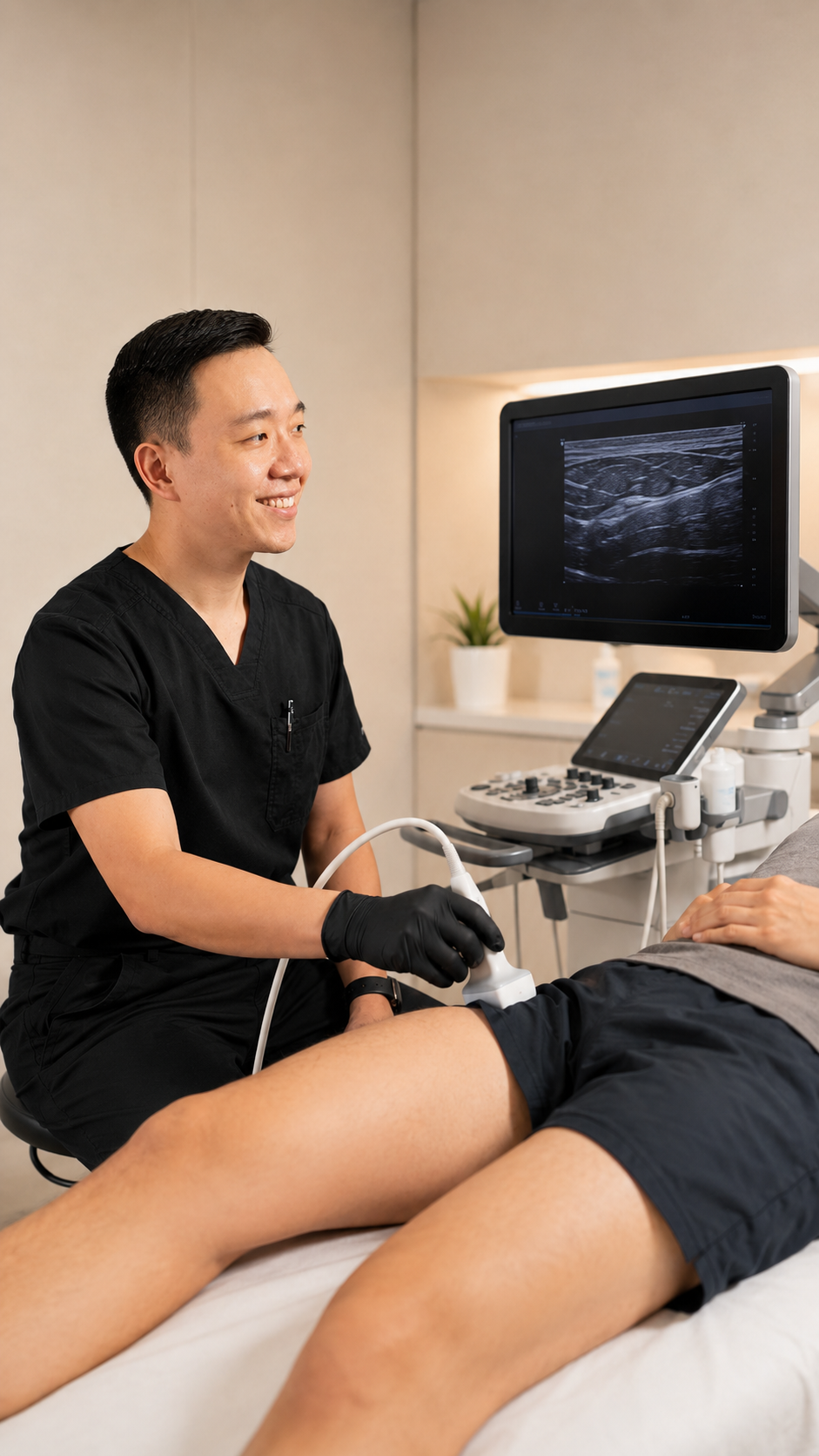
Depending on the condition, X-rays, MRI, or musculoskeletal ultrasound may help evaluate joint changes, tendon abnormalities, fluid collections, synovial changes, structural injury, or other potential sources of symptoms.
Diagnostic ultrasound is particularly useful for certain superficial musculoskeletal structures because it provides real-time visualization of tendons, muscles, joints, nerves, and other soft tissues.
Laboratory testing
Blood tests such as C-reactive protein, erythrocyte sedimentation rate, or disease-specific testing may be appropriate when systemic inflammatory or autoimmune disease is suspected.
These tests are not universal screening tests for every case of chronic musculoskeletal pain. Laboratory results must be interpreted in the context of the patient's symptoms, examination findings, and clinical probability of disease.
When Should Inflammatory Arthritis Be Considered?
Most musculoskeletal pain is not caused by systemic autoimmune disease, but certain patterns deserve closer evaluation.
Examples include:
Recurrent or persistent joint swelling
Prolonged morning stiffness
Multiple painful or swollen joints
Symmetrical small-joint symptoms
Back pain accompanied by substantial morning stiffness
Symptoms that improve noticeably with movement rather than rest
Unexplained fever
Rash
Unexplained weight loss
Persistent fatigue in combination with inflammatory symptoms
The American College of Rheumatology notes that prolonged morning stiffness and recurrent joint swelling are among the clinical features that may justify evaluation for inflammatory arthritis.
When an autoimmune rheumatic disorder is suspected, rheumatology evaluation may be appropriate rather than treating the problem solely as a localized orthopedic injury.
Does Reducing Inflammation Always Reduce Pain?
Not necessarily.
If inflammation is a major driver of symptoms, reducing it may improve pain substantially.
But if pain is being maintained primarily by mechanical dysfunction, nerve compression, tendon degeneration, instability, weakness, or altered nervous-system processing, an anti-inflammatory treatment may provide incomplete or temporary relief.
This explains why the same treatment can produce very different results in patients who appear to have similar pain.
It also explains why symptom improvement after an anti-inflammatory medication or injection should not automatically be interpreted as proof of one specific diagnosis.
How Is Inflammation-Related Musculoskeletal Pain Treated?
Treatment depends on the diagnosis rather than inflammation alone.
A comprehensive plan may involve several strategies.
Address the underlying condition
If inflammation is caused by rheumatoid arthritis, gout, infection, or another systemic condition, treating the underlying disease is essential.
In these situations, localized pain treatments alone are generally insufficient.
Modify aggravating activities when necessary
Temporary changes in activity can allow acutely irritated tissues to recover.
The goal is usually not prolonged inactivity. Excessive rest can contribute to weakness, reduced tissue capacity, and fear of movement.
Instead, activity is often modified while gradually restoring tolerance.
Rehabilitation and progressive exercise
Exercise is one of the most consistently recommended interventions for many chronic musculoskeletal conditions.
Strengthening, mobility work, balance training, cardiovascular activity, and condition-specific rehabilitation can help improve function and increase the amount of physical stress tissues can safely tolerate.
For knee and hip osteoarthritis, for example, the American College of Rheumatology/Arthritis Foundation strongly recommends exercise as part of treatment.
Weight management when appropriate
For weight-bearing joints, body weight influences both mechanical loading and metabolic health.
When a patient has overweight or obesity and knee or hip osteoarthritis, gradual weight loss combined with physical activity may improve pain and function. Weight management is therefore included among recommended nonpharmacologic approaches for appropriate patients with osteoarthritis.
Patients interested in addressing nutrition, physical activity, sleep, and other long-term health factors can also explore our Healthy Living & Nutrition resources.
Anti-inflammatory medications
Nonsteroidal anti-inflammatory drugs, or NSAIDs, may be useful for selected conditions.
Whether they are appropriate depends on factors including cardiovascular health, kidney function, gastrointestinal history, medication interactions, age, and the underlying diagnosis.
They should therefore be considered based on the individual patient's risks and expected benefit rather than assumed to be appropriate for every chronic pain condition.
Targeted injections
For certain diagnoses, localized injections may be considered.
Corticosteroid injections can temporarily reduce inflammation and symptoms in selected joints or soft-tissue conditions, although the expected duration of benefit and appropriateness of repeated injections vary.
The ACR/Arthritis Foundation osteoarthritis guideline includes intra-articular glucocorticoid injections among treatment options for selected patients with knee or hip osteoarthritis.
When an injection is appropriate, ultrasound guidance can sometimes be used to visualize the target and needle position in real time.
Treat other contributors to pain
A comprehensive treatment plan may also need to address:
Muscle weakness
Reduced mobility
Poor movement tolerance
Sleep problems
Nerve irritation
Psychological stress
Metabolic health
Deconditioning
Fear of movement
Other medical conditions
These factors do not mean the pain is “all in your head.” They reflect the reality that chronic pain is influenced by multiple biological and functional systems.
What Role Does Nutrition Play?
Nutrition is often discussed in conversations about inflammation, and healthy dietary patterns can support overall metabolic and cardiovascular health.
However, patients should be cautious about claims that one food, supplement, cleanse, or highly restrictive diet can “eliminate inflammation” and cure chronic pain.
For most musculoskeletal conditions, nutrition works best as one part of a broader treatment strategy rather than a replacement for diagnosis, rehabilitation, or appropriate medical treatment.
A reasonable approach usually emphasizes sustainable dietary quality, adequate protein and micronutrients, appropriate calorie intake, and management of relevant metabolic conditions rather than relying on a single “anti-inflammatory” product.
Our Healthy Living & Nutrition library covers these broader lifestyle considerations in more detail.
Sleep, Stress, and Recovery Matter Too
Persistent pain frequently disrupts sleep, while inadequate sleep can increase pain sensitivity and make rehabilitation more difficult.
Stress can also influence muscle tension, autonomic function, behavior, activity level, and pain processing.
This does not mean stress causes every chronic pain problem.
Instead, sleep, stress, physical activity, metabolic health, tissue injury, inflammation, and nervous-system function can interact with one another.
Addressing several modifiable contributors simultaneously may therefore be more effective than searching for one universal cause.
Our preventive care and health optimization resources provide additional information about these broader aspects of health.
Why “Treat the Inflammation” Is Sometimes Too Simplistic
Patients with chronic pain are frequently told that they simply need to reduce inflammation.
That explanation is appealing because it provides a single target.
Unfortunately, chronic musculoskeletal pain is rarely that simple.
Inflammation may be:
The dominant cause of symptoms
One contributor among several
A consequence of another mechanical problem
Intermittently present
Relatively minor compared with other pain mechanisms
A useful treatment plan therefore asks a broader set of questions:
What tissue appears to be generating the symptoms?
Why is that tissue irritated?
Is there evidence of ongoing injury or inflammation?
Could nerves be involved?
Is the patient's movement or loading capacity contributing?
Has persistent pain changed nervous-system sensitivity?
Are systemic medical conditions contributing?
Answering these questions is more clinically useful than assuming that all pain is caused by generalized inflammation.
A Personalized Approach to Chronic Musculoskeletal Pain
Two patients with the same diagnosis may need very different treatment plans.
Age, activity level, previous injuries, medical history, medications, imaging, physical examination findings, treatment goals, and previous response to therapy all matter.
At Ask Dr. Hu, an integrative pain-management evaluation may incorporate medical history, orthopedic and neurological examination, review of previous imaging, diagnostic musculoskeletal ultrasound when appropriate, rehabilitation recommendations, lifestyle considerations, and selected procedures.
Treatment may involve conservative care alone or, when clinically appropriate, a combination of rehabilitation, acupuncture or dry needling, medications, ultrasound-guided procedures, injection therapies, or specialist referral.
You can explore additional physician-written articles and patient guides in our Integrative Pain Management Resource Center.
The Bottom Line
Inflammation plays an important role in some forms of chronic musculoskeletal pain, but it is rarely the entire story.
Persistent pain can involve an interaction between tissue injury, local inflammation, joint or tendon changes, mechanical loading, nerve function, muscular capacity, general health, and changes in the way the nervous system processes pain.
For that reason, the goal should not simply be to “fight inflammation.”
The better goal is to determine why the pain persists, which mechanisms appear to be contributing, and which treatments are most appropriate for that individual patient.
A careful diagnosis provides the foundation for choosing treatment rather than applying the same anti-inflammatory strategy to every painful condition.
Evidence and Medical Review
This article is intended to provide evidence-informed patient education about chronic musculoskeletal pain. The medical concepts discussed here are consistent with contemporary research describing interactions among inflammation, tissue pathology, immune signaling, and pain sensitization.
Key sources include the American College of Rheumatology/Arthritis Foundation guideline for osteoarthritis, research examining inflammation in osteoarthritis, contemporary reviews of nociplastic pain, and research examining immune mechanisms involved in pain and pain resolution.
Medical knowledge continues to evolve, and recommendations must be individualized according to diagnosis, health history, medications, risks, and treatment goals.
About the Author
YiQiu Hu, NMD, is an Arizona-licensed naturopathic physician and founder of Ask Dr. Hu. His clinical approach combines conventional medical evaluation with evidence-informed integrative care, preventive medicine, lifestyle medicine, and individualized treatment strategies.
His work in musculoskeletal medicine includes evaluating acute and chronic pain, reviewing diagnostic imaging, performing musculoskeletal ultrasound, and considering conservative, rehabilitative, complementary, and targeted procedural options when appropriate.
Learn more about Dr. YiQiu Hu and the physicians at Ask Dr. Hu. Arizona naturopathic physicians are regulated by the Arizona Naturopathic Physicians Medical Board.
This article is provided for general educational purposes and does not replace individualized medical evaluation, diagnosis, or treatment. New, severe, rapidly worsening, traumatic, neurologic, infectious, or otherwise concerning symptoms may require prompt medical evaluation.