Who Benefits Most from Concierge Medicine? Patients, Priorities, and Situations to Consider
Written by YiQiu Hu, NMD
Arizona-licensed naturopathic physician and concierge medicine provider
Published August 2026 | Last medically reviewed August 2026
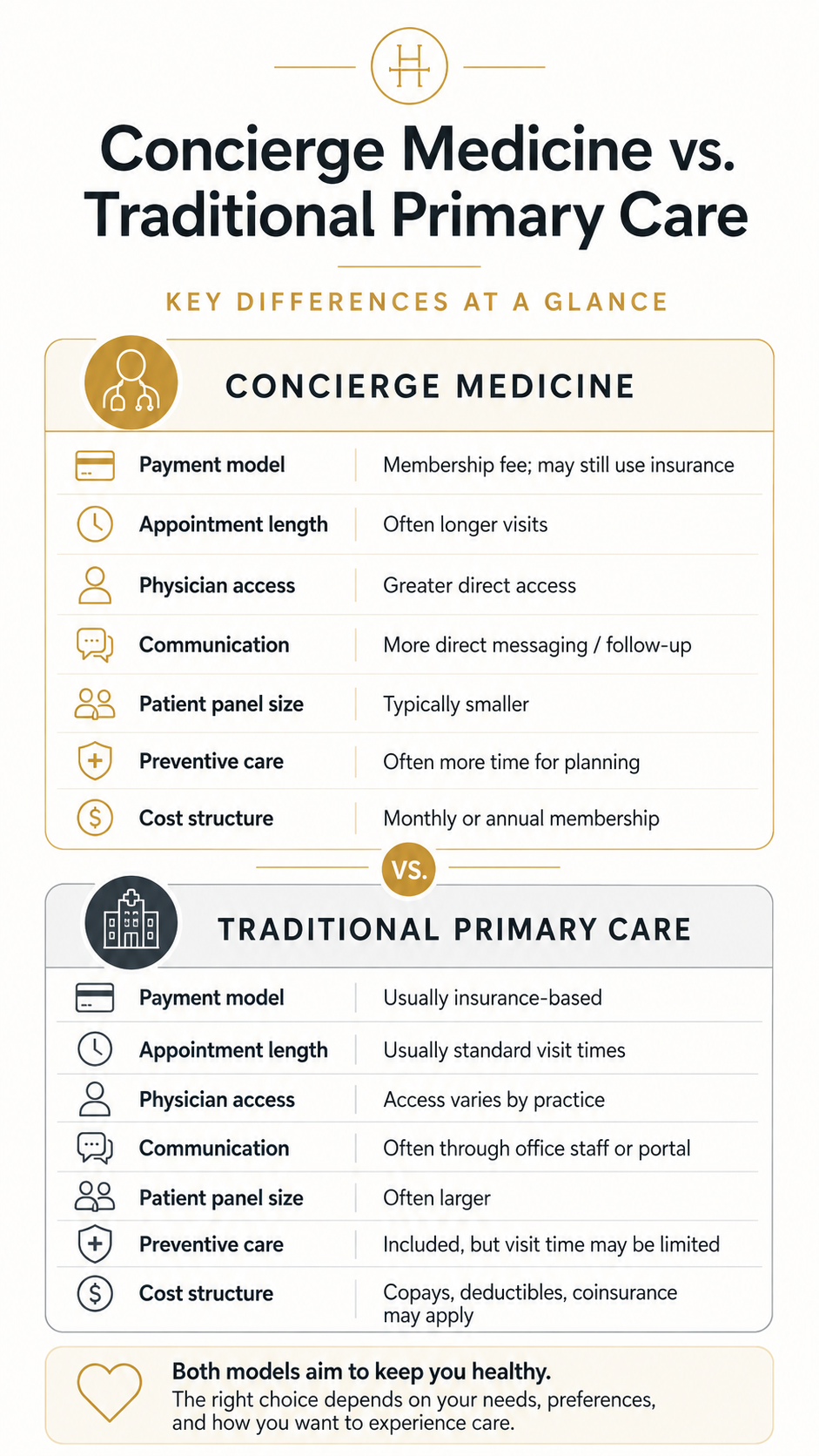
Concierge medicine may be especially valuable for patients who want easier access to their physician, more time during appointments, consistent follow-up, and a long-term healthcare relationship. It can also be helpful when medical care has become difficult to coordinate because of multiple conditions, medications, specialists, or changing health priorities.
However, no single practice model is best for everyone. A healthy adult with infrequent medical needs may value concierge care for prevention and convenience, while another person may be completely satisfied with a traditional primary care practice. Someone with complex health problems may benefit from closer follow-up, but still need specialists, hospital services, insurance coverage, and in-person care outside the concierge practice.
The better question is not simply, “Who needs concierge medicine?” It is: Which healthcare experience fits your needs, preferences, expectations, and budget?
If you are new to the model, begin with What Is Concierge Medicine? A Complete Guide for Arizona Patients. This article focuses specifically on who may receive the most practical value from membership-based care.
Quick answer: Concierge medicine may be a strong fit for busy professionals and caregivers, patients managing ongoing or complex health concerns, adults focused on prevention, people who want direct physician communication, and anyone who places a high value on continuity and longer appointments. It may be less useful when healthcare needs are rare, the fee would create financial strain, or a patient expects membership to replace insurance, emergency care, hospitalization, or specialist treatment.



1. Busy Professionals, Business Owners, and Frequent Travelers
Patients with demanding or unpredictable schedules may struggle to arrange routine appointments during conventional office hours. Delaying care can be tempting when an appointment requires weeks of advance planning, travel to an office, time in a waiting room, and another visit for follow-up.
A concierge model may reduce some of that friction by offering more flexible scheduling, direct communication, and virtual visits when medically appropriate and legally permitted based on the patient’s location. This can be useful for:
Business owners who cannot easily leave work
Professionals with changing schedules
Patients who travel frequently
Parents balancing work and family responsibilities
People who live far from their physician’s office
Patients who need timely guidance about whether a concern requires an appointment
Convenience should never substitute for necessary examination or urgent evaluation. A responsible physician should tell a patient when a virtual visit is insufficient and direct the patient to local, in-person, urgent, or emergency care when needed.
For Arizona patients considering a virtual-first model, review how concierge medicine works before joining, including communication methods, appointment policies, and services that may require in-person care.


2. Patients Managing Ongoing or Multiple Health Concerns
Chronic conditions often require more than a single annual appointment. Blood pressure, diabetes, thyroid disorders, cholesterol, asthma, weight concerns, medication effects, sleep, stress, and other health issues can change over time. When several concerns overlap, short and disconnected visits may make it difficult to see the full picture.
Patients with ongoing health needs may value:
Regular monitoring and follow-up
Time to discuss several related concerns
Medication review and reconciliation
Earlier discussion of new symptoms or side effects
A written plan with clear priorities
Coordination with specialists and other clinicians
Continuity during changes in treatment
The Agency for Healthcare Research and Quality describes care coordination as deliberately organizing patient-care activities and sharing information among everyone involved in a patient’s care. A concierge structure can create more time and communication capacity for this work, but the quality of coordination still depends on the practice and the patient’s broader healthcare team.
Concierge care does not mean that every chronic condition can be managed by one physician. Cardiology, endocrinology, gastroenterology, oncology, psychiatry, surgery, or another specialty may still be necessary. The concierge physician’s role may be to help the patient understand recommendations, monitor the overall plan, and identify gaps or conflicts—not to replace appropriately indicated specialist care.
3. Patients Who Want Proactive Preventive Care
Some patients seek medical care mainly when they feel sick. Others want to understand their risk factors, establish health goals, and address preventable concerns before symptoms become severe.
Concierge medicine may suit adults who value:
Age- and risk-appropriate screening
Regular review of blood pressure, cholesterol, glucose, and other health markers
Nutrition, physical activity, sleep, and stress counseling
Vaccination discussions and referral when vaccines are not provided by the practice
Family-history review
Healthy-aging planning
Follow-up on realistic behavior changes
Preventive care should be individualized and evidence-informed. More testing is not automatically better, and an extensive panel does not guarantee early detection or better outcomes. Screening decisions should consider age, sex, medical history, family history, risk factors, symptoms, patient preferences, and current guidance such as the U.S. Preventive Services Task Force recommendations.
Patients who want to explore this approach can also visit the Preventive Care and Health Optimization Resource Center.
4. Patients With a Complex or Fragmented Medical History
Healthcare can become fragmented when records are spread across several systems, multiple clinicians make recommendations, or no single person is helping the patient understand how everything fits together.
This commonly occurs when a patient:
Sees several specialists
Uses multiple pharmacies or care systems
Has had recent emergency-department visits or hospitalization
Receives conflicting recommendations
Has an extensive medication or supplement list
Has abnormal laboratory results that need follow-up
Is moving between states or changing insurance plans
Has symptoms involving several body systems
A physician with sufficient time can help create an updated problem list, review medications and supplements, identify unanswered questions, track pending referrals or tests, and clarify which concerns deserve priority. This does not eliminate fragmentation throughout the healthcare system, but it can give the patient a more consistent point of contact.



5. Patients Who Want More Time, Explanation, and Shared Decisions
Medical choices are rarely meaningful if the patient does not understand the options. Some patients are comfortable with a short visit and a concise recommendation. Others want to discuss how a treatment works, likely benefits, possible risks, alternatives, costs, monitoring, and what happens if they choose to wait.
Longer visits may be especially valuable for patients who:
Have several questions or concerns
Want to compare conventional and integrative options
Have experienced side effects or treatment uncertainty
Prefer to understand the reasoning behind recommendations
Want a spouse, adult child, or caregiver involved in planning
Have felt rushed, dismissed, or confused in prior healthcare encounters
Time does not guarantee agreement, and a patient-centered physician should not simply approve every requested test or treatment. The goal is a respectful decision-making process in which medical evidence, clinical judgment, safety, patient values, and practical constraints are considered together.
6. Older Adults and Family Caregivers
Older adults may have changing health needs, multiple medications, more specialists, and a greater risk of communication gaps after hospitalization or a new diagnosis. Family caregivers may also need clear instructions and a consistent contact who understands the overall plan.
Concierge medicine may be useful when it provides:
Medication and supplement review
Monitoring after treatment changes
Coordination with specialists
Inclusion of authorized family members or caregivers
Advance planning for changing needs
More time to discuss function, mobility, sleep, cognition, mood, and independence
It is equally important to evaluate practical limitations. A virtual-first practice may not be enough for someone who needs frequent hands-on examinations, home health, skilled nursing, complex mobility support, or local urgent assessment. Before enrolling, clarify what can be managed remotely, where in-person care occurs, and who will assist when the concierge physician is unavailable.
7. Patients Who Value Continuity With the Same Physician
Continuity can be valuable even when medical problems are not complex. A physician who knows a patient’s history, usual laboratory patterns, treatment preferences, family circumstances, and health goals may be better positioned to recognize meaningful changes and place new information in context.
Patients who are tired of repeatedly explaining their history or seeing a different clinician at each visit may prefer a smaller practice designed around an ongoing relationship.
Before joining, ask whether you will usually see the same physician, how coverage works during vacations or illness, and whether messages may be handled by staff or another clinician. “Direct access” can mean different things in different practices.
8. Generally Healthy Adults Who Place a High Value on Access and Planning
Concierge medicine is not limited to people with chronic illness. A generally healthy adult may choose membership because the person values convenience, prevention, a trusted medical relationship, or access to guidance when something changes.
The practical value may come from:
Establishing baseline health information
Maintaining a personalized screening plan
Addressing concerns before they become disruptive
Discussing health goals without waiting for an illness
Receiving guidance while traveling when the physician is permitted to provide care in the patient’s location
Having an established physician when an acute concern develops
However, a healthy person who rarely seeks care and is satisfied with current access may receive less tangible value from a recurring fee. This is why the decision should be based on priorities and anticipated use—not fear that membership is medically necessary.
Situations in Which Concierge Medicine May Be Less Helpful
Concierge medicine may not be the best fit when:
The membership fee would create financial strain. Good healthcare should not require sacrificing essential needs, medication, insurance coverage, or emergency savings.
You are satisfied with your current primary care. If you already have timely access, strong continuity, and enough appointment time, changing models may add little value.
You need only occasional, problem-specific care. An individual appointment or traditional primary care relationship may be more economical.
You want all care billed through insurance. Some concierge practices do not bill insurance for membership or visits.
You expect membership to replace health insurance. It generally does not cover hospital care, emergencies, surgery, specialists, advanced imaging, or other major expenses.
Your primary needs fall outside the physician’s scope. A membership is not useful if the practice cannot safely manage the conditions or services you need.
You require frequent hands-on or facility-based treatment. Telemedicine and messaging cannot replace every physical examination, procedure, infusion, imaging study, or urgent evaluation.
You expect guaranteed outcomes or unlimited immediate access. Ethical medical care cannot promise a particular result, and every practice needs defined communication and coverage boundaries.
Medicare describes concierge care as a model involving a membership fee that may provide services or amenities Medicare does not cover; the membership fee itself is not the same as health-insurance coverage. Patients should confirm the rules that apply to their own plan and practice. Learn more from Medicare’s concierge-care overview and Ask Dr. Hu’s guide to concierge-medicine costs and coverage.
Concierge Medicine Is Not a Substitute for Emergency Care
No concierge membership should be treated as a replacement for 911, an emergency department, or an urgent care center.
Symptoms such as severe chest pain, significant difficulty breathing, signs of stroke, severe bleeding, loss of consciousness, a serious allergic reaction, suicidal intent, or another potentially life-threatening concern require immediate emergency evaluation. Contacting a concierge physician should not delay emergency care.
Membership also does not remove the need for hospital care, surgery, specialist evaluation, imaging, or other services when medically appropriate.
How to Decide Whether the Membership Is Worth It for You
Start by listing the healthcare problems you are trying to solve. Are you mainly seeking faster appointments? More time? Better communication? Preventive planning? Help coordinating complicated care? A physician who understands both conventional and naturopathic options?
Then ask each practice:
What services are included in the membership fee?
What services cost extra?
Does the practice bill insurance for any care?
How quickly are routine appointments usually available?
How may patients communicate with the physician?
What does “after-hours access” actually mean?
Who responds when the primary physician is unavailable?
Which concerns require an in-person visit?
How are emergencies and urgent problems handled?
Are laboratory, imaging, medication, and specialist costs separate?
Does the physician’s training and scope match your needs?
What are the cancellation and refund policies?
Do not compare practices by price alone. Compare the physician relationship, included services, exclusions, access rules, clinical approach, location, and your likelihood of using what is offered. The Patient’s Guide to Joining a Concierge Medicine Practice provides a more detailed evaluation checklist.



Who May Benefit From Concierge Medicine at Ask Dr. Hu?
At Ask Dr. Hu, membership is designed for eligible Arizona patients who want an ongoing relationship with an Arizona-licensed physician, convenient communication, longer appointments, preventive planning, and individualized care. Virtual visits allow many patients to receive care throughout Arizona, while some examinations, procedures, and medical concerns require an in-person appointment or local evaluation.
Membership is not required for every service, and an individual appointment may be more appropriate for someone seeking help with a specific concern. Review the current Ask Dr. Hu membership details, explore individual medical services, or contact the practice to discuss which option fits your needs.
Frequently Asked Questions
Is concierge medicine only for patients with chronic conditions?
No. Patients with chronic conditions may value closer monitoring and coordination, but generally healthy adults may choose concierge care for access, prevention, convenience, and continuity. The potential value depends on the individual’s priorities and how the specific membership works.
Can concierge medicine help if I see several specialists?
It may. A concierge physician may help review specialist recommendations, medications, laboratory results, and follow-up plans. The physician does not replace necessary specialists and cannot guarantee that outside organizations will share records promptly.
Is concierge medicine a good option for older adults?
It can be, particularly when an older adult values longer visits, medication review, continuity, and caregiver involvement. The practice must also be able to meet the patient’s in-person, mobility, urgent-care, and specialist needs.
Do I still need health insurance if I join a concierge practice?
For most patients, yes. Membership generally does not replace coverage for emergency care, hospitalization, surgery, specialists, imaging, medications, or other major expenses. Review both the membership agreement and your insurance plan before making changes.
Is concierge medicine worth it if I am healthy?
It may be worthwhile if you place a high value on physician access, preventive planning, and an established long-term relationship. If you rarely need care and are satisfied with your current physician access, the recurring fee may provide less practical value.
The Bottom Line
The patients who benefit most from concierge medicine are not defined by one diagnosis or demographic. They are usually people whose healthcare priorities align with the model: more time, easier communication, continuity, preventive planning, and help navigating ongoing care.
Concierge medicine can reduce some barriers and create space for a stronger physician-patient relationship, but it does not replace health insurance, emergency services, hospitals, or specialists. It is also not automatically superior to traditional primary care.
The right decision depends on the physician, the membership terms, your medical needs, your preferred way of receiving care, and whether the cost fits comfortably within your budget. Compare the specific practice—not just the label—and choose the model that gives you the most appropriate, sustainable support.
To continue learning, visit the Concierge Medicine Resource Center or review whether concierge medicine may be worth the cost for your priorities.
Medical Review, Editorial Standards, and Transparency
This article was written and medically reviewed by YiQiu Hu, NMD, an Arizona-licensed naturopathic physician who provides concierge medicine, preventive care, health optimization, and individualized medical care to patients throughout Arizona.
The article was developed using clinical experience and current patient-care principles, with reference to:
The American Medical Association Code of Medical Ethics guidance on retainer practices, which emphasizes clear terms, patient dignity, quality, access, and continuity
Medicare’s explanation of concierge care, including the distinction between a membership fee and covered medical services
The U.S. Preventive Services Task Force for evidence-based preventive-service recommendations
The Agency for Healthcare Research and Quality for principles of patient-centered care coordination
Transparency statement: Ask Dr. Hu offers a paid concierge-medicine membership and therefore has a financial interest in this topic. To support informed decision-making, this article describes both circumstances in which membership may provide meaningful value and situations in which traditional primary care, individual visits, local in-person care, urgent care, emergency care, or specialist services may be more appropriate.
Medical information changes over time, and concierge practices differ. This article is for general educational purposes and does not provide individualized medical advice, establish a physician-patient relationship, or guarantee that concierge membership is appropriate for a particular person.
About the Author
YiQiu Hu, NMD is an Arizona-licensed naturopathic physician, founder of Ask Dr. Hu, and medical director. He provides concierge medicine, preventive care, health optimization, laboratory evaluation, and individualized treatment for patients throughout Arizona. Dr. Hu’s approach combines thorough medical assessment, evidence-informed naturopathic care, clear explanations, and practical treatment planning, with an emphasis on long-term physician-patient relationships.
Patients can learn more about Dr. Hu and the Ask Dr. Hu care philosophy on the About page or contact the practice with questions about membership and individual care options.