Is Concierge Medicine Worth It? Benefits, Costs, and Who It Is Best For
Written by YiQiu Hu, NMD
Arizona-licensed naturopathic physician and concierge medicine provider
Published July 2026 | Medically reviewed July 2026


Introduction
Concierge medicine can be worth the cost for patients who value easier physician access, longer appointments, ongoing communication, preventive care, and a strong long-term relationship with their doctor. However, it is not automatically the best choice for everyone.
The true value of concierge medicine depends on several factors:
How frequently you need medical guidance
How difficult it is to access your current physician
Whether you manage ongoing or complex health concerns
How much you value convenience and continuity
What services the membership includes
Whether the cost comfortably fits your budget
What kind of physician-patient relationship you want
Someone who frequently needs medical care may find the membership extremely valuable. Another person who rarely sees a physician and is satisfied with traditional primary care may decide that the additional expense is unnecessary.
This article explains the potential benefits, costs, limitations, and practical considerations that can help you decide whether concierge medicine is worth it for you.
Patients who are unfamiliar with the model may first want to read What Is Concierge Medicine? for a broader introduction.
Is Concierge Medicine Worth It?
Concierge medicine is worth considering when the benefits you receive are meaningful enough to justify the membership fee.
The value does not come solely from the number of appointments you schedule. Patients are also paying for the structure that allows a physician to provide more time, availability, communication, continuity, and attention throughout the year.
For some patients, the most valuable benefit is being able to contact a physician who already understands their medical history when a new concern develops.
For others, it is having enough appointment time to discuss several concerns without feeling rushed. Patients managing chronic conditions may value regular monitoring, medication review, and coordination among multiple specialists. Healthy patients may place greater value on preventive planning and identifying risk factors before symptoms develop.
The question is therefore not simply:
“Will I schedule enough appointments to recover the membership fee?”
A more useful question is:
“Will this healthcare relationship provide enough access, time, guidance, and peace of mind to improve my overall healthcare experience?”
What Are You Really Paying for?
A concierge membership is not simply a prepaid bundle of medical appointments.
The membership fee generally supports a practice model in which physicians care for fewer patients and reserve more time for each person. This may allow the practice to provide services that are difficult to offer consistently in a high-volume medical setting.
Depending on the practice, membership benefits may include:
Longer appointments
Same-day or next-day availability when possible
Direct physician communication
Telephone, text, email, or portal support
Telemedicine appointments
Preventive health planning
Chronic-disease management
Medication monitoring
Laboratory review
Care coordination
Specialist referrals
Annual wellness evaluations
Follow-up between scheduled visits
Evening or weekend availability
Every concierge practice is structured differently. Some memberships include most routine visits, while others charge separate appointment or procedure fees. Before enrolling, review the written agreement and clarify exactly what the membership does and does not cover.
Our guide explaining how concierge medicine works provides a more detailed look at membership enrollment, communication, appointments, laboratory testing, referrals, and ongoing care.
The Potential Benefits of Concierge Medicine
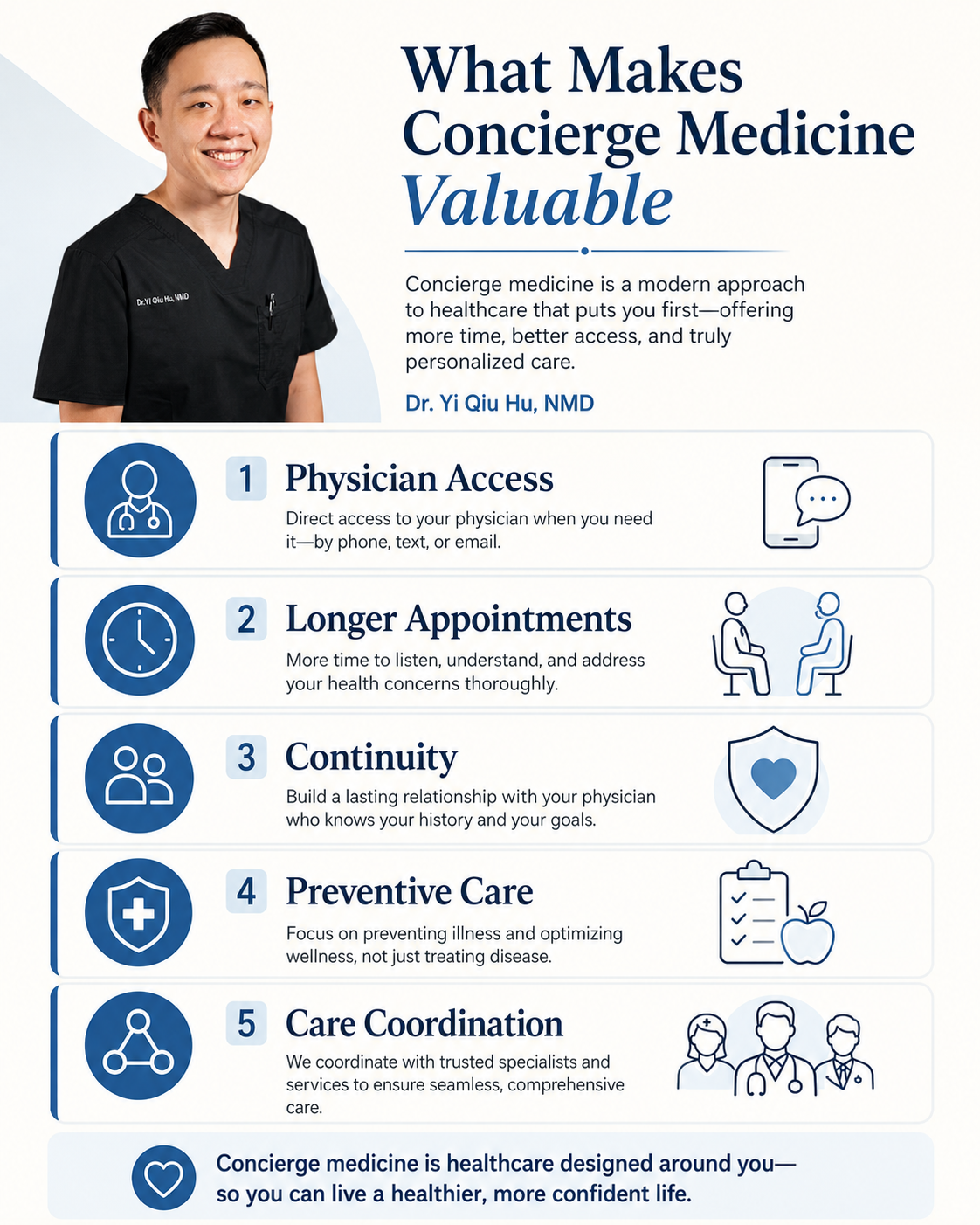
Easier Access to Your Physician
Difficulty accessing a physician is one of the most common frustrations patients experience in healthcare.
In some traditional practices, patients may wait days or weeks for an appointment. Questions may pass through receptionists, medical assistants, nurses, patient portals, and scheduling departments before reaching the physician.
Concierge practices generally provide more direct communication and greater scheduling flexibility. Depending on the practice and the medical concern, a patient may be able to receive guidance, schedule a virtual visit, arrange an in-person evaluation, or determine whether urgent care is necessary more quickly.
Direct access does not mean that a physician is available instantaneously every minute of every day. It should mean that the practice clearly explains how communication works, which methods are available, and what response time patients can reasonably expect.
Longer and Less-Rushed Appointments
Many health concerns cannot be adequately discussed during a brief appointment.
Patients may need time to explain their symptoms, review previous testing, discuss medications, ask questions, understand treatment options, and consider how recommendations fit into their daily lives.
Longer appointments can create more opportunity for:
A complete medical history
Discussion of multiple concerns
Medication and supplement review
Patient education
Shared decision-making
Lifestyle counseling
Preventive planning
Questions about risks and alternatives
Development of realistic treatment goals
More appointment time does not guarantee better care by itself. However, it can give both the patient and physician greater opportunity to communicate thoroughly and make informed decisions.
Better Continuity of Care
Continuity means receiving care from a physician who becomes familiar with your medical history, previous treatments, communication preferences, personal circumstances, and long-term goals.
When the same physician follows you over time, new symptoms and test results can be interpreted within the context of your broader health history.
For example, your physician may already know:
Which medications caused side effects
Which treatments were previously ineffective
How your laboratory results have changed
Which specialists you have seen
What health risks run in your family
Which treatment approaches you prefer
What financial, work, or family limitations affect your plan
This familiarity can reduce the need to repeat your entire history every time you seek care and can help keep different parts of your healthcare plan organized.
A Greater Focus on Preventive Healthcare
Traditional primary care includes preventive services, but brief appointments may make it difficult to discuss prevention in depth—especially when an immediate medical concern requires attention.
Concierge medicine can make prevention an ongoing part of the physician-patient relationship rather than a once-a-year checklist.
A personalized preventive plan may address:
Blood pressure
Cholesterol
Blood-sugar regulation
Cardiovascular risk
Age-appropriate cancer screening
Bone health
Weight management
Nutrition
Physical activity
Sleep
Stress
Medication safety
Family-history risks
Laboratory trends
Healthy aging
Preventive care should remain individualized. More access to a physician should not lead to unnecessary testing or identical treatment plans for every patient.
You can learn more about this approach in Preventive Healthcare: Why Prevention Is Better Than Treatment.
More Support for Chronic Medical Conditions
Concierge medicine may be particularly valuable for patients managing one or more chronic conditions.
Ongoing medical care may require:
Regular follow-up
Medication adjustments
Laboratory monitoring
Blood-pressure or glucose review
Lifestyle changes
Symptom tracking
Specialist appointments
Review of outside medical records
Coordination among several treatment plans
Conditions such as hypertension, diabetes, thyroid disease, elevated cholesterol, hormonal concerns, chronic pain, and other long-term health problems often require more than an isolated annual appointment.
More consistent communication may make it easier to identify changes, address obstacles, and modify treatment when appropriate.
No practice model can guarantee a particular health outcome or prevent every complication. The potential value lies in having more opportunities to monitor progress and respond to changes over time.
Better Coordination With Specialists
Patients with complex medical needs may receive recommendations from several healthcare professionals.
One specialist may adjust a medication. Another may order testing. A hospital may provide discharge instructions. A therapist or other practitioner may recommend an additional treatment. Without coordination, the patient can be left trying to understand how all these recommendations fit together.
A concierge physician may help by:
Determining when specialist care is appropriate
Providing referrals
Sending relevant records
Reviewing specialist recommendations
Reconciling medication changes
Explaining test results
Ordering appropriate follow-up
Keeping the overall plan organized
The concierge physician does not replace specialists. The goal is to help the patient navigate the healthcare system and understand how each part of the plan relates to the others.
Convenience for Busy or Frequently Traveling Patients
Medical care can be difficult to fit around work, parenting, caregiving, travel, and other responsibilities.
Virtual appointments and direct communication can make certain types of care more convenient, including:
Medication follow-up
Laboratory review
Lifestyle counseling
Chronic-condition monitoring
Discussion of new but nonemergency symptoms
Questions about an existing treatment plan
Determining whether an in-person evaluation is needed
Telemedicine cannot safely replace every examination. Some symptoms require vital signs, a physical examination, imaging, specimen collection, or immediate in-person care.
The value comes from using the appropriate type of appointment for the situation rather than requiring every concern to begin with the same scheduling process.
Greater Peace of Mind
The emotional value of healthcare access can be difficult to measure.
Some patients feel reassured knowing that they have an established physician who understands their history and can help them determine the appropriate next step when a concern arises.
This does not mean every symptom can be managed remotely or that emergencies can be handled through text messages. It means the patient has an ongoing medical relationship instead of starting from the beginning each time guidance is needed.
For patients who have previously felt ignored, rushed, or uncertain about whom to contact, that continuity may be one of the most meaningful benefits of membership.
How Much Does Concierge Medicine Cost?
Concierge-medicine pricing varies widely according to the physician, location, services, patient-panel size, availability, and practice structure.
Some practices offer relatively basic access-based memberships. Others provide more extensive preventive care, laboratory review, chronic-disease management, care coordination, after-hours availability, or specialized services.
The lowest-priced membership is not automatically the best value, and the most expensive practice does not necessarily provide the best care.
When comparing costs, ask:
What services are included?
Are routine appointments included?
Are virtual visits included?
Is there an enrollment fee?
Are procedures charged separately?
Are laboratory facility fees included?
Is an annual examination included?
Is after-hours communication available?
Can the membership be canceled?
Are processed payments refundable?
Does the practice bill insurance?
Will I receive additional charges?
For a more detailed pricing discussion, read How Much Does Concierge Medicine Cost?.

How Much Does Concierge Medicine Cost?
Concierge-medicine pricing varies widely according to the physician, location, services, patient-panel size, availability, and practice structure.
Some practices offer relatively basic access-based memberships. Others provide more extensive preventive care, laboratory review, chronic-disease management, care coordination, after-hours availability, or specialized services.
The lowest-priced membership is not automatically the best value, and the most expensive practice does not necessarily provide the best care.
When comparing costs, ask:
What services are included?
Are routine appointments included?
Are virtual visits included?
Is there an enrollment fee?
Are procedures charged separately?
Are laboratory facility fees included?
Is an annual examination included?
Is after-hours communication available?
Can the membership be canceled?
Are processed payments refundable?
Does the practice bill insurance?
Will I receive additional charges?
For a more detailed pricing discussion, read How Much Does Concierge Medicine Cost?.
Does Concierge Medicine Replace Health Insurance?
For most patients, concierge medicine does not replace health insurance.
The concierge fee generally pays for the physician access and services described in the membership agreement. Health insurance may still be needed for expenses such as:
Emergency-department care
Hospitalization
Surgery
Specialist visits
Advanced imaging
Prescription medications
Cancer treatment
Rehabilitation
Ambulance transportation
Medical devices
Other major medical expenses
Some concierge practices bill insurance for covered medical services, while others operate separately from insurance. Patients should understand how the particular practice works before enrolling.
Do not cancel your health insurance solely because you join a concierge practice without carefully considering the financial risk of emergencies, hospitalization, surgery, or specialist care.
Additional Costs to Consider
The membership fee may not be your only healthcare expense.
Depending on the practice, additional costs may include:
Laboratory facility charges
Diagnostic imaging
Prescription medications
Specialist fees
Procedures
Vaccinations
Medical supplies
Physical therapy
Hospital services
Emergency care
Treatments provided by outside organizations
Ask whether the membership includes the physician’s laboratory interpretation, the laboratory’s own testing charge, blood-draw services, or all three. These are separate services and may be billed differently.
The value of a membership should be evaluated in the context of your total healthcare expenses—not just the monthly fee.
Can Concierge Medicine Save You Money?
Concierge medicine should not be viewed as a guaranteed way to reduce healthcare spending.
Some patients may avoid unnecessary urgent-care visits when they can receive timely guidance from an established physician. Better medication management, preventive planning, and coordination may also reduce duplication or confusion.
However, a concierge membership creates an additional recurring expense, and patients may still have insurance premiums, deductibles, medication costs, laboratory charges, specialist fees, and hospital expenses.
The financial value will vary significantly from person to person.
A patient who frequently needs medical guidance may receive substantial practical value from the membership. Someone who uses very little routine care may pay more overall than they would in a traditional model.
The primary reason to choose concierge medicine should be the healthcare experience and physician relationship it provides—not an assumption that it will always lower total medical costs.
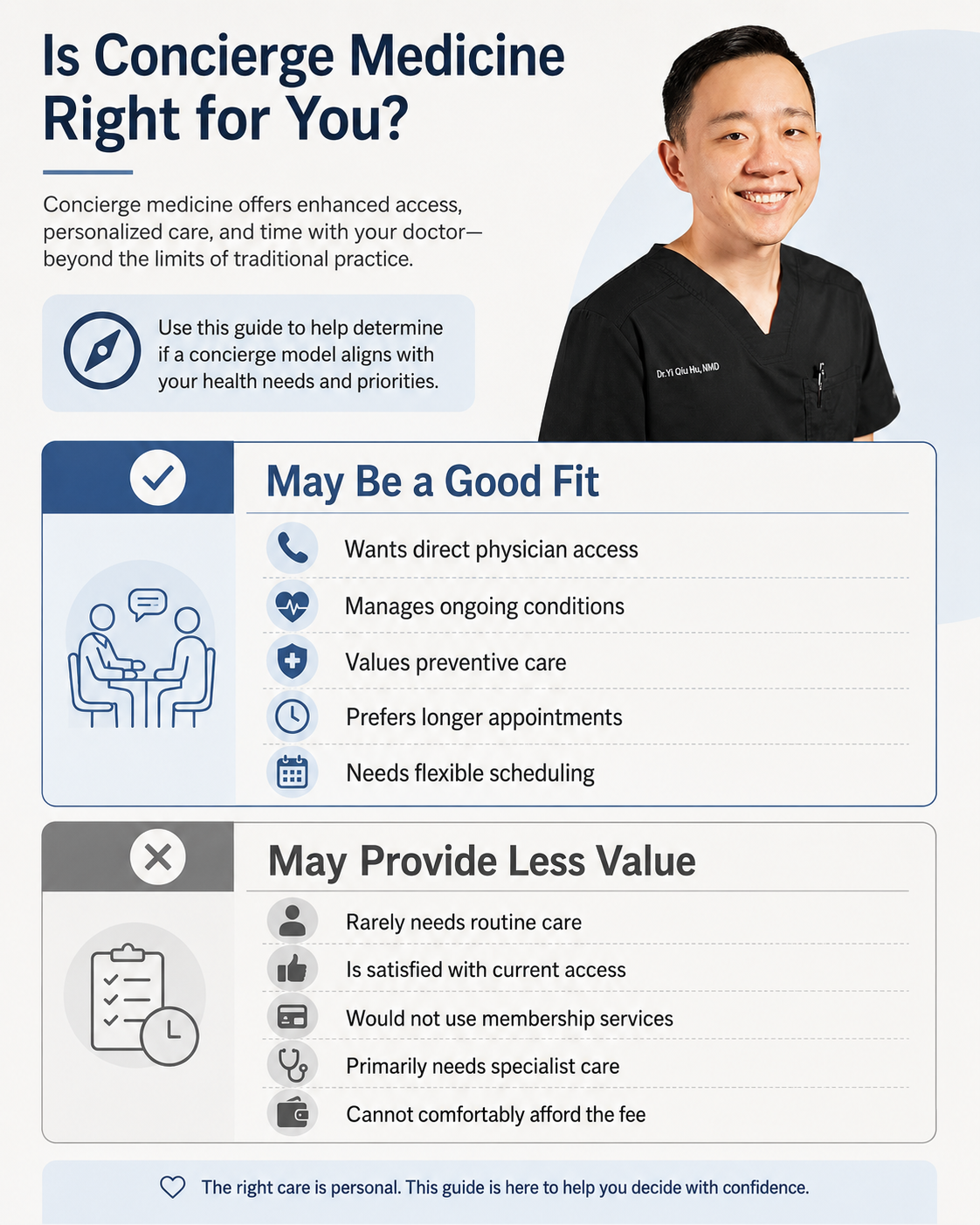
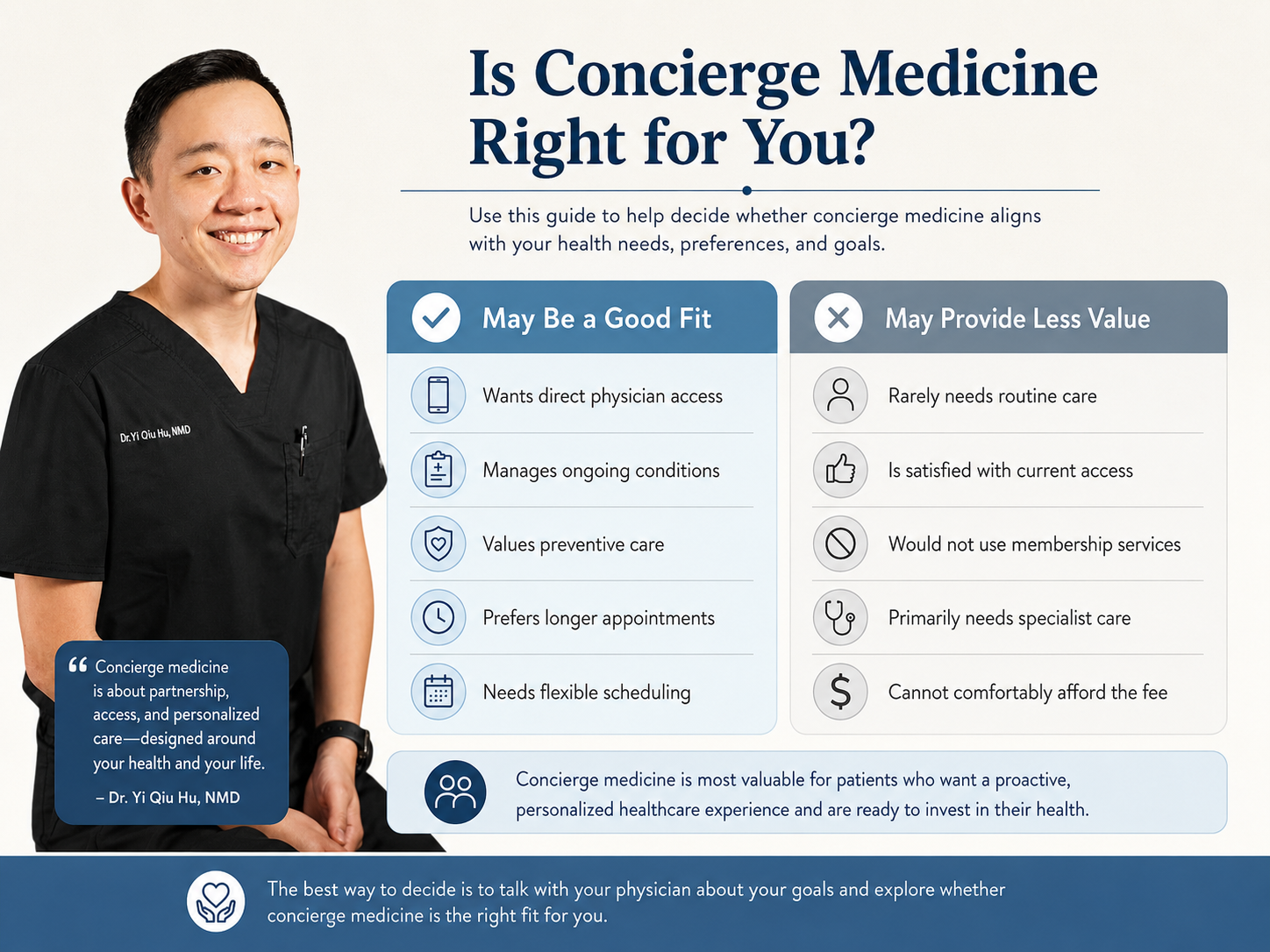
Who Is Concierge Medicine Best For?
Concierge medicine may be especially valuable for the following groups.
Patients Managing Multiple Medical Conditions
Patients with several diagnoses may need frequent monitoring, medication management, laboratory review, and coordination with specialists.
Having one physician who understands the complete picture may make care easier to navigate.
Patients Who Want a Proactive Approach
Some people do not want to wait until symptoms become severe before discussing their health.
They may value preventive evaluation, laboratory trends, lifestyle guidance, early identification of risk factors, and development of long-term health goals.
Busy Professionals and Business Owners
Patients with demanding schedules may have difficulty attending appointments that require long waits or multiple office visits.
Flexible scheduling, telemedicine, and direct communication can make appropriate care easier to access.
Parents and Caregivers
Parents and adults caring for aging relatives often have limited time and many competing responsibilities.
Convenient communication and coordinated care may reduce some of the logistical burden involved in managing healthcare.
Frequent Travelers
Patients who travel regularly may value having an established physician available for virtual follow-up, medication discussions, laboratory review, and guidance about where to seek in-person care when necessary.
Licensing rules and telemedicine requirements still apply, and the physician may not be able to provide care when the patient is physically located in another state.
Patients Who Value a Long-Term Physician Relationship
Some patients place high value on seeing the same physician consistently and building a relationship based on trust, familiarity, and communication.
For these individuals, continuity itself may justify a substantial portion of the membership cost.
Patients Dissatisfied With Rushed Healthcare
Patients who repeatedly feel that there is not enough time to discuss their concerns may benefit from a practice designed around longer appointments and smaller patient panels.
Patients Requiring Regular Medication or Laboratory Monitoring
Patients taking medications that require follow-up or laboratory monitoring may benefit from easier communication and more organized review of results.
To better understand how laboratory information is used in medical decision-making, read Understanding Laboratory Testing: A Complete Guide for Patients.
Who May Receive Less Value From Concierge Medicine?
Concierge medicine may not be the best fit for everyone.
It may provide less value if you:
Rarely use routine medical care
Are satisfied with your current physician access
Do not anticipate using the included communication or appointments
Prefer all care to be billed through insurance
Would experience financial stress from the membership fee
Primarily need specialist rather than general medical care
Primarily need emergency or hospital services
Expect guaranteed outcomes
Expect instant physician responses at every hour
Assume the membership covers every healthcare expense
A traditional primary care practice can provide excellent medical care and may be entirely appropriate for many patients.
Choosing concierge medicine is not a judgment about the quality of traditional medicine. It is a decision about which practice structure best matches your needs, expectations, and budget.
Potential Drawbacks of Concierge Medicine
The Membership Is an Additional Expense
The most obvious limitation is the recurring cost.
Patients must decide whether the benefits justify paying a membership fee in addition to insurance premiums and other healthcare expenses.
Services Vary Between Practices
The term “concierge medicine” does not describe one standardized package.
Two practices charging similar fees may offer very different appointment access, communication, testing, preventive services, and limitations.
Membership Does Not Cover Every Medical Need
Concierge physicians do not replace emergency departments, hospitals, surgeons, or specialists.
Some treatments, procedures, vaccinations, imaging studies, and laboratory services may require separate facilities and fees.
Direct Access Has Reasonable Boundaries
Physicians may be seeing patients, performing procedures, traveling, sleeping, or handling other responsibilities.
Patients should receive clear expectations about routine messages, urgent concerns, evenings, weekends, holidays, and physician coverage.
Potentially serious symptoms should never be sent through routine electronic communication instead of seeking emergency care.
The Physician Must Still Be the Right Fit
Paying a membership fee does not automatically create a strong physician-patient relationship.
The physician’s qualifications, communication style, clinical approach, availability, and experience with your medical needs remain important.
How to Decide Whether Concierge Medicine Is Worth It for You
Consider the following questions before joining.
1. How often do I need medical guidance?
Think beyond annual physicals. Consider medication questions, laboratory monitoring, chronic conditions, new symptoms, preventive planning, and help coordinating specialist care.
2. Am I satisfied with my current access?
Consider how long it takes to schedule an appointment, how easily you can ask questions, and whether you usually see the same physician.
3. Do I feel rushed during appointments?
If important concerns are repeatedly postponed because of limited appointment time, a longer-visit model may be valuable.
4. Do I want a proactive or primarily problem-based approach?
Some patients prefer to seek care only when a specific problem develops. Others want an ongoing plan focused on prevention, risk reduction, and health optimization.
5. What services would I realistically use?
Review the membership benefits and identify which ones matter to you. Do not assign value to services you are unlikely to use.
6. What is not included?
Clarify outside costs, insurance billing, laboratory fees, imaging, specialist services, procedures, hospital care, and emergency services.
7. Can I comfortably afford the fee?
A healthcare membership should not create financial stress that interferes with medications, insurance, housing, food, or other essential needs.
8. Does the physician understand my healthcare priorities?
A successful concierge relationship depends on communication, mutual expectations, and a medical approach that aligns with your needs.
9. Are the terms transparent?
The practice should provide clear written information about fees, included services, communication, cancellation, refunds, and limitations.
10. Would the relationship improve my healthcare experience?
Consider whether greater access, continuity, time, and preventive support would meaningfully change how you receive and manage care.
Our patient’s guide to joining a concierge medicine practice offers additional questions to ask when comparing physicians and membership programs.
Be cautious if a concierge practice:
Will not clearly explain its fees
Does not provide written membership terms
Makes vague promises of constant availability
Guarantees specific health outcomes
Recommends extensive testing without individual justification
Discourages appropriate specialist care
Suggests that membership eliminates the need for emergency care
Claims that every healthcare expense is included
Pressures you to enroll immediately
Avoids discussing cancellation or refund policies
A responsible practice should explain both the benefits and the limitations of membership.
Is Concierge Medicine at Ask Dr. Hu Worth It?
The answer depends on whether our services and approach match your individual needs.
At Ask Dr. Hu, our concierge model is designed for eligible Arizona patients who value:
Direct physician communication
Longer appointments
Flexible scheduling
Virtual care
Preventive health planning
Chronic-disease management
Medication and laboratory monitoring
Care coordination
Ongoing support as health needs change
At the time of publication, our concierge membership is $500 per month. Patients may cancel at any time, although membership payments that have already been processed are not refundable.
Our practice does not replace emergency departments, hospitals, specialists, or services requiring a different level of care. Some concerns also require an in-person examination and cannot be safely managed through telemedicine or electronic communication.
Patients who are not ready for membership may review our individual medical services for selected evaluations and appointments.
The best way to decide whether membership is worthwhile is to compare what you need with what the practice actually provides.
Warning Signs When Evaluating a Practice
Frequently Asked Questions
-
It can be, particularly if you value preventive care, physician access, continuity, and long-term health planning. However, a healthy person who rarely seeks medical care and does not anticipate using the membership benefits may decide that traditional primary care is more economical.
-
It may be particularly valuable for patients who require regular follow-up, medication management, laboratory monitoring, and specialist coordination. The physician should have appropriate experience managing your specific medical needs.
-
No. Membership benefits and limitations vary by practice. Hospital care, emergency services, imaging, medications, specialists, procedures, and outside laboratory charges may remain separate.
-
Most patients should maintain health insurance for emergency care, hospitalizations, surgery, specialists, imaging, prescriptions, and other major medical expenses.
-
Not necessarily. Compare the physician’s qualifications, included services, availability, patient-panel size, communication policies, clinical approach, and limitations—not just the monthly fee.
-
Concierge medicine may provide more time and opportunity for preventive planning, monitoring, and early evaluation. However, no physician or practice model can guarantee that every illness or complication will be prevented.
-
Cancellation policies vary. Review the membership agreement for notice requirements, billing dates, minimum commitments, and refund policies before joining.
-
Look for a physician who listens carefully, communicates clearly, has experience with your needs, explains treatment options, respects your preferences, and provides transparent information about fees and limitations.
Final Thoughts
Concierge medicine is not worth it simply because it offers a premium label or faster scheduling.
Its value comes from the healthcare relationship the membership makes possible: more time, easier communication, continuity, preventive planning, coordinated care, and ongoing access to a physician who understands your history.
For patients who frequently need guidance, manage chronic conditions, value prevention, have demanding schedules, or want a closer relationship with their physician, those benefits may justify the membership cost.
For patients who rarely need medical care, are satisfied with their current access, or would experience financial strain from the fee, traditional primary care may remain the better choice.
There is no universal answer. The right decision depends on your health needs, budget, expectations, and the specific practice you are considering.
Before enrolling, carefully review what is included, what costs extra, how communication works, when in-person care is required, and what happens when you need emergency or specialist services.
Ask Dr. Hu provides personalized concierge and naturopathic medical care for eligible patients throughout Arizona.
Review our concierge membership to see current pricing, benefits, and limitations. You may also contact Ask Dr. Hu with general questions about whether membership may be appropriate for your healthcare needs.