Concierge Medicine and Preventive Care: How Personalized Health Planning Works
Written by YiQiu Hu, NMD
Arizona-licensed naturopathic physician and concierge medicine provider
Published August 2026 | Medically reviewed August 2026
Preventive care is often reduced to a short annual checklist: measure blood pressure, order routine laboratory tests, review vaccines, and determine whether any screenings are due. Those services matter, but effective prevention requires more than completing the same list for every adult.
A meaningful preventive health plan should reflect your age, medical history, family history, medications, previous results, lifestyle, personal risks, and goals. It should also establish priorities, explain why each recommendation matters, and identify when progress or new information should be reviewed.
This is where concierge medicine and preventive care can work well together. A concierge model may provide more appointment time, easier communication, greater continuity, and more opportunities for follow-up. These features can make it easier for a physician and patient to develop an individualized plan and adjust it as circumstances change.
However, concierge medicine does not automatically prevent disease, guarantee earlier diagnosis, or make every available test appropriate. The value comes from using time and continuity thoughtfully—not simply doing more.
If you are new to the membership model, begin with our complete guide to concierge medicine or browse the Concierge Medicine Resource Center.
Key Takeaways
Preventive care should be personalized according to a patient’s history, risk factors, life stage, preferences, and goals.
Concierge medicine may create more time and continuity for preventive planning, education, and follow-up.
A personalized plan may address recommended screenings, immunizations, cardiovascular and metabolic risk, mental health, lifestyle, medications, and care coordination.
More testing is not always better. A test is most useful when it addresses a meaningful clinical question and its result could change management.
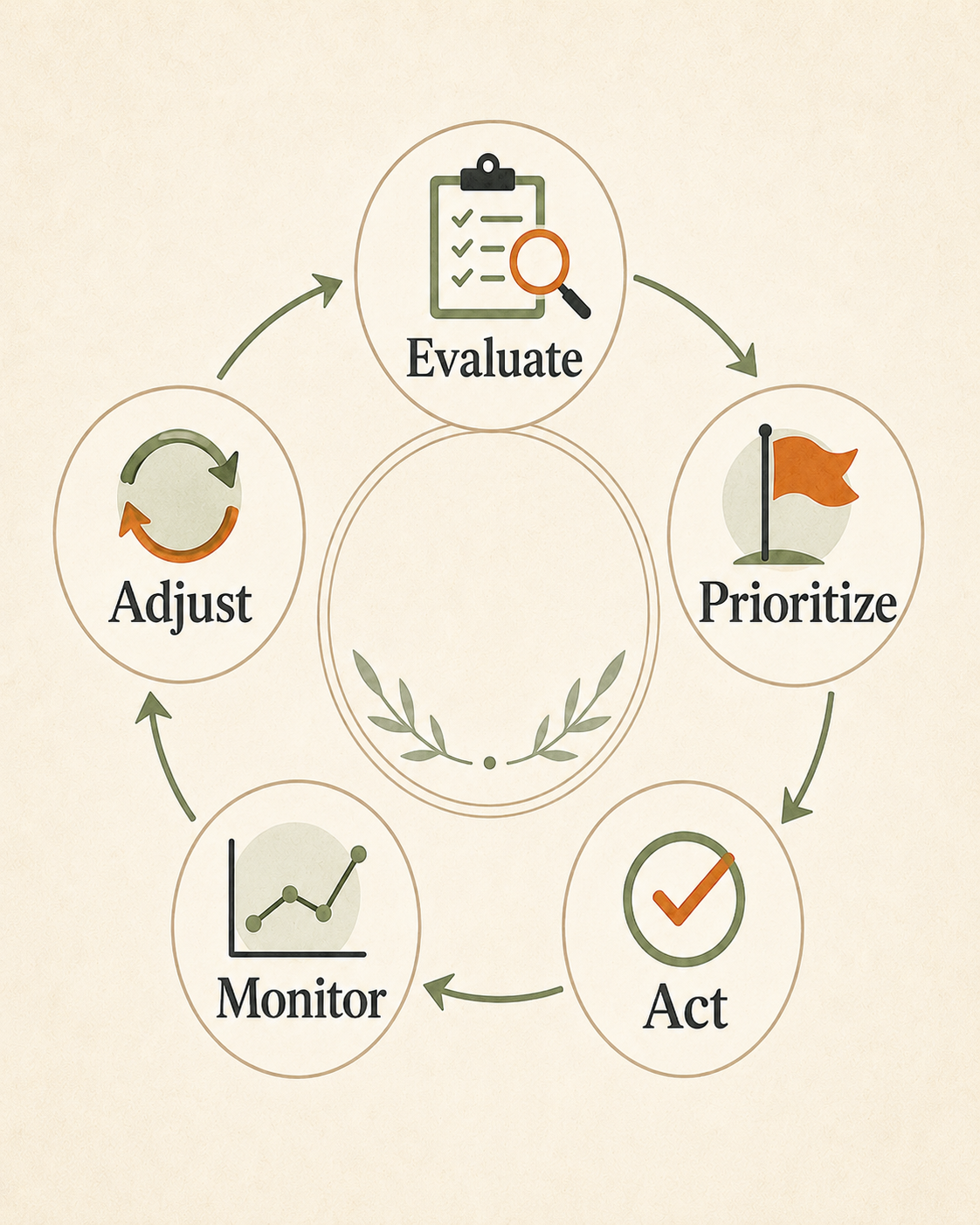
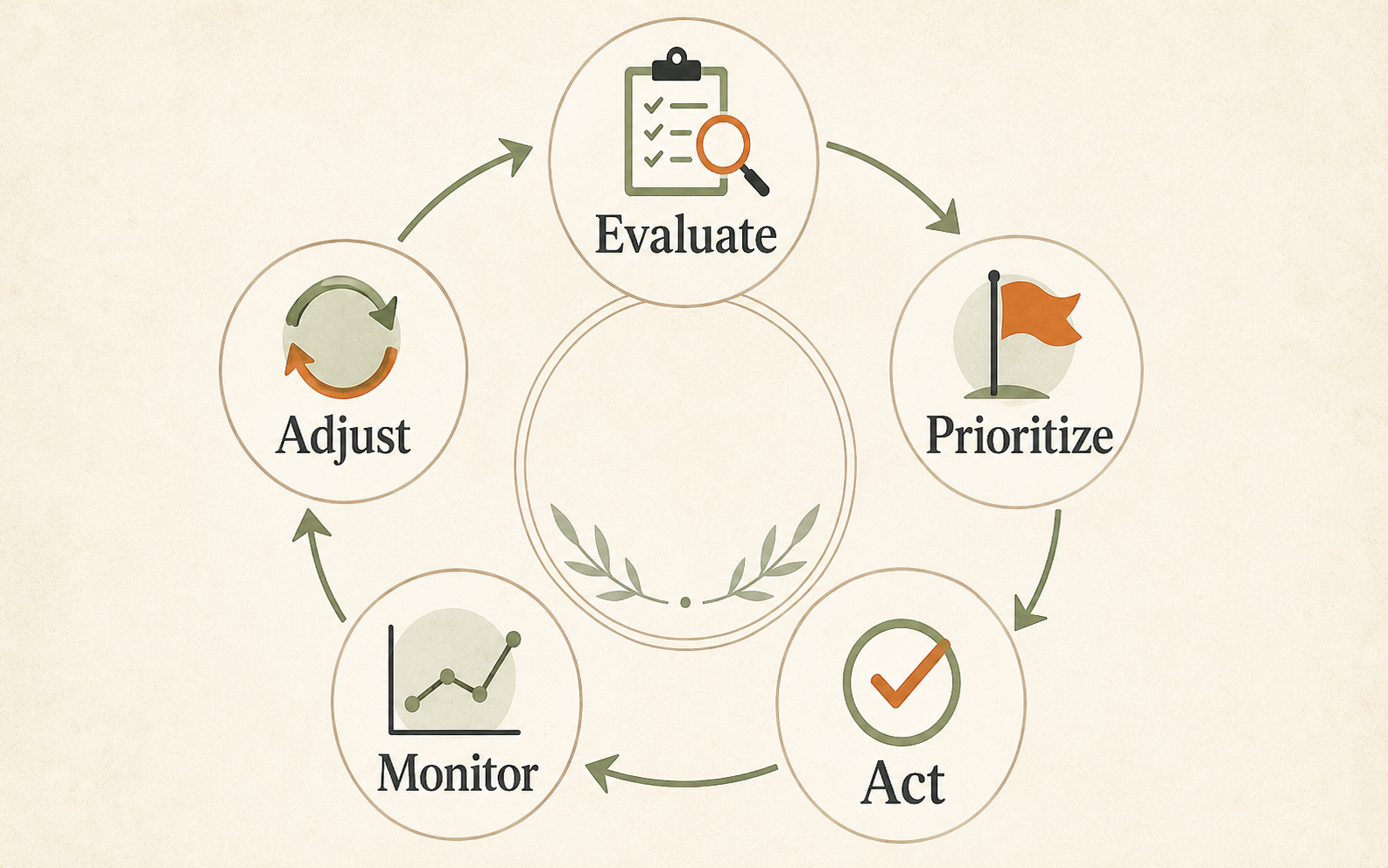
Preventive care is an ongoing cycle. Recommendations may change as a patient ages, develops new symptoms, receives new results, or experiences changes in family history or health priorities.
What Does Preventive Care Include?
Preventive care is routine healthcare intended to reduce risk, identify selected conditions before symptoms develop, and support long-term health. It may include:
Health-risk assessment
Blood-pressure measurement and other vital signs
Evidence-based screening tests
Age- and risk-appropriate immunizations
Mental-health and substance-use screening
Counseling about tobacco, alcohol, nutrition, physical activity, sleep, and safety
Evaluation of family history and inherited risk
Medication review
Reproductive, sexual, and age-related health planning
Strategies to reduce falls, fractures, cardiovascular disease, diabetes, and other relevant risks
The appropriate combination differs from person to person. The U.S. Preventive Services Task Force issues evidence-based recommendations for many clinical preventive services, while the CDC adult immunization schedule organizes vaccine recommendations by age, medical condition, and other indications.
These guidelines provide an important foundation, but they do not replace individualized clinical judgment. A physician must still consider whether a recommendation applies to the specific person, whether symptoms require diagnostic rather than screening evaluation, and whether benefits, risks, preferences, or previous care change the next step.
For a broader explanation, visit our Preventive Care and Health Optimization Resource Center or read A Patient’s Guide to Preventive Healthcare and Health Optimization.
Why Personalized Preventive Care Matters
Two patients of the same age may need different preventive plans.
One may have a strong family history of cardiovascular disease, a prior abnormal glucose result, limited physical activity, and a medication that requires monitoring. Another may have no known metabolic risk but may be overdue for cancer screening, need an immunization review, or have concerns about sleep, stress, alcohol use, bone health, or future pregnancy.
Personalization helps answer several practical questions:
Which health risks deserve attention now?
Which recommended services are due, already complete, or not yet indicated?
Which findings require diagnostic evaluation rather than routine screening?
Which changes are realistic for the patient’s schedule, resources, and preferences?
How will the patient and physician know whether the plan is working?
When should the plan be reviewed or revised?
The goal is not to predict every future illness. It is to make well-supported decisions with the information currently available and to create a reliable process for responding when that information changes.
How Concierge Medicine Can Support Preventive Care
Concierge medicine is a membership-based model that generally offers enhanced physician access and a more relationship-centered approach to care. Every practice is structured differently, but common features include longer appointments, smaller patient panels, direct communication, telemedicine, and more frequent follow-up.
Those features can support prevention in several ways.
More Time for a Complete History
Preventive decisions often depend on details that are easy to miss when a visit focuses only on the most immediate complaint. Longer appointments may allow a physician to review previous diagnoses, procedures, screening dates, medications, supplements, allergies, family history, occupational exposures, lifestyle, and personal priorities in greater depth.
Better Continuity
Seeing the same physician over time can make it easier to recognize trends, understand what has already been tried, and connect new information with a patient’s established history. Continuity also reduces the need to reconstruct the entire story at every appointment.
Easier Follow-Up
A recommendation is only useful if it can be completed, interpreted, and acted upon. Direct communication and flexible follow-up may help resolve questions, review results, address barriers, and revise the plan when necessary.
More Opportunity for Shared Decision-Making
Some preventive decisions are straightforward; others involve several reasonable options. Additional discussion time can help patients understand expected benefits, possible harms, uncertainty, cost, and convenience before choosing how to proceed.
A Plan That Can Evolve
Prevention is not static. A new diagnosis, medication, symptom, family-history update, pregnancy plan, major lifestyle change, or specialist recommendation may alter what should happen next. Ongoing access makes it easier to update the plan between annual visits when clinically appropriate.
To understand the membership experience more broadly, read How Concierge Medicine Works: Everything You Need to Know Before Joining.
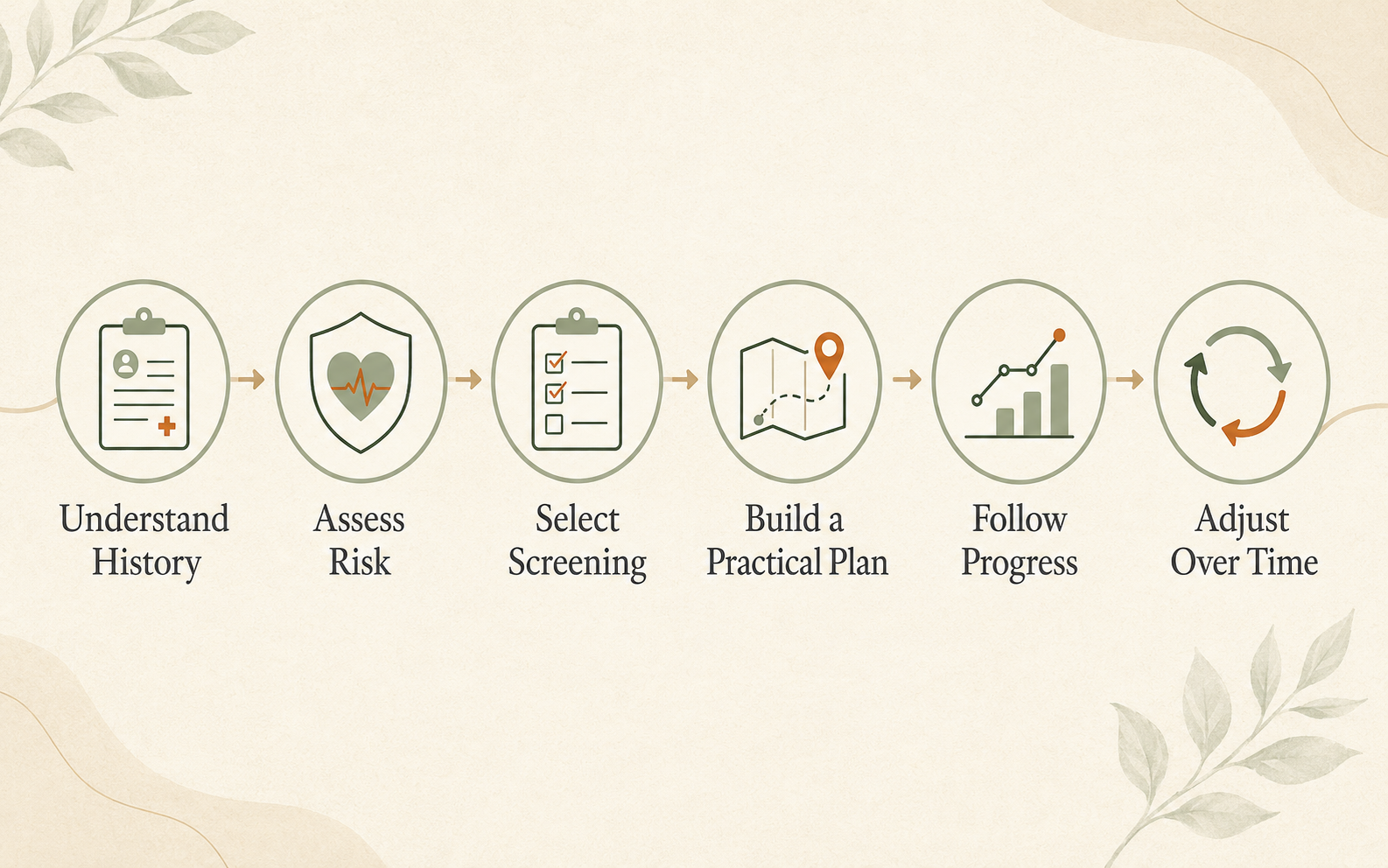
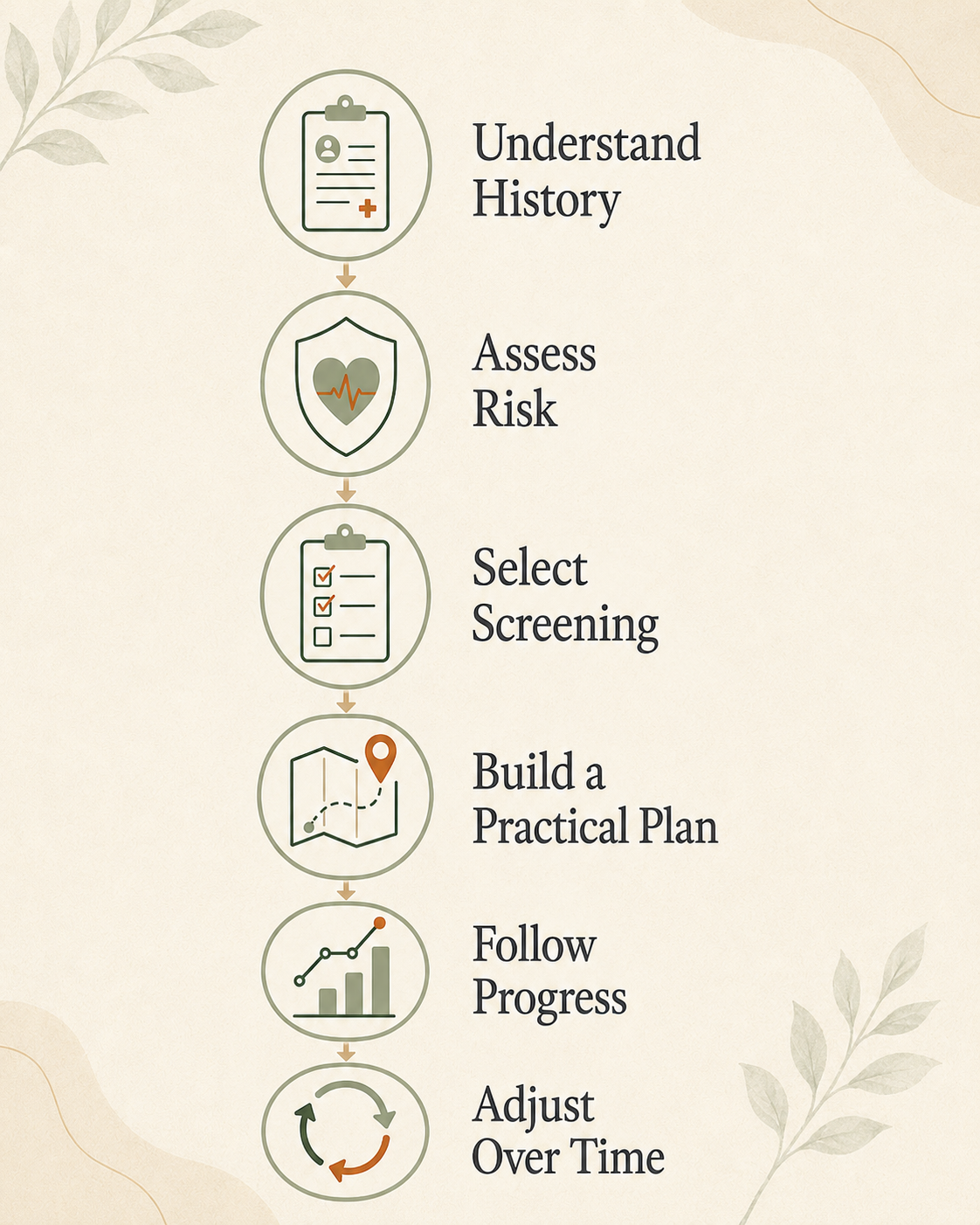
How a Personalized Preventive Health Plan Is Developed
A thoughtful plan usually develops in stages. It may begin during a comprehensive visit, but it often becomes clearer after records, previous results, and current findings have been reviewed.
Step 1: Clarify Concerns, Priorities, and Goals
The process begins with the patient’s perspective. Some patients primarily want to reduce long-term cardiovascular or metabolic risk. Others want to address fatigue, improve physical function, prepare for healthy aging, organize overdue care, or better understand a family history of disease.
Goals should be specific enough to guide decisions. “I want to be healthier” is a reasonable starting point, but the physician and patient should translate it into practical priorities such as improving blood-pressure control, completing an overdue screening, increasing weekly activity, improving sleep regularity, or monitoring a known risk factor.
Step 2: Review the Complete Health History
The physician may review:
Current and previous medical conditions
Surgeries, hospitalizations, and significant injuries
Medications and supplements
Allergies and adverse reactions
Family medical history
Previous laboratory, imaging, and screening results
Immunization history
Reproductive and sexual health history when relevant
Nutrition, physical activity, sleep, stress, tobacco, alcohol, and other exposures
Occupational, travel, caregiving, and environmental considerations
The purpose is not to collect information for its own sake. It is to identify what changes risk, what requires follow-up, and what may influence the safety or usefulness of future recommendations.
Step 3: Establish an Appropriate Baseline
A baseline may include vital signs, physical examination findings, existing laboratory trends, screening history, medication monitoring, and other information appropriate to the patient.
Not every patient requires the same laboratory panel or imaging study. For example, a screening recommendation intended for an asymptomatic person is not necessarily the correct pathway for someone who already has a relevant symptom. Symptoms may require a diagnostic evaluation with a different level of urgency and a different test selection.
Step 4: Build an Individualized Screening and Immunization Plan
The physician can compare the patient’s history with current preventive recommendations and identify what is due, optional, already completed, contraindicated, or not indicated.
The plan may address blood-pressure screening, selected cancer screenings, metabolic risk, mental health, infectious-disease screening, osteoporosis risk, fall prevention, and immunizations. The exact recommendations depend on age, anatomy, medical and family history, previous results, exposures, pregnancy status, smoking history, medications, and other individual factors.
For example, the USPSTF recommends blood-pressure screening for adults, with out-of-office measurements used to confirm a diagnosis before treatment is started. Other services apply only to specific age or risk groups. This is why a personalized review is more useful than copying a generic internet checklist.


Step 5: Identify Lifestyle Priorities
Lifestyle counseling should be practical and connected to the patient’s actual risks and goals. Depending on the situation, the plan may address:
Nutrition quality and meal patterns
Aerobic activity, strength training, mobility, and balance
Sleep duration, regularity, or possible sleep disorders
Stress and recovery
Tobacco or nicotine cessation
Alcohol use
Weight management
Social connection and mental well-being
Sun protection, fall prevention, and other safety measures
The federal Physical Activity Guidelines for Americans provide population-level targets, but an individual plan may need to begin below those targets or be modified for pain, disability, cardiovascular risk, pregnancy, deconditioning, or other medical considerations.
The most useful plan is usually not the most ambitious one. It is the plan the patient can begin safely, sustain consistently, and build upon over time.
Step 6: Assign Priorities and a Timeline
A long list of recommendations can become another barrier. A better plan separates tasks by priority:
Address now: Time-sensitive findings, significant symptoms, overdue high-priority screening, or safety concerns
Address next: Important but nonurgent testing, referrals, immunizations, or lifestyle goals
Monitor: Findings that do not require immediate intervention but should be reassessed
Revisit later: Services that will become relevant at a future age, after another result, or if risk changes
The patient should understand who is responsible for scheduling each service, whether an outside facility or specialist is needed, how results will be communicated, and when follow-up should occur.
Step 7: Measure Progress and Update the Plan
Follow-up may include reviewing home measurements, symptoms, laboratory trends, medication tolerance, screening completion, activity, sleep, nutrition habits, or other agreed-upon indicators.
The purpose is not constant surveillance. It is to determine whether the plan remains appropriate, whether it is producing a meaningful benefit, and whether new information requires a change.
What a Personalized Preventive Health Plan May Include
A written or clearly documented plan may contain several components:
Current Priorities
The most important issues to address first, with a brief explanation of why they matter.
Screening and Immunization Schedule
Which preventive services are due now, which have been completed, and when future review is anticipated.
Laboratory and Monitoring Plan
Which tests or measurements are clinically appropriate, what question each is intended to answer, and when reassessment may be useful.
Lifestyle Strategy
A small number of realistic nutrition, activity, sleep, stress, or substance-use goals matched to the patient’s readiness and medical needs.
Medication and Supplement Review
An updated list, monitoring requirements, potential duplication or interaction concerns, and questions that need further evaluation.
Referrals and Care Coordination
Any specialist, imaging, rehabilitation, dental, behavioral-health, or other outside care that may be appropriate.
Follow-Up Timeline
When to review results, reassess progress, update the plan, or seek care sooner.
Preventive Care Is a Cycle, Not a Once-a-Year Checklist
An annual wellness visit can be an important anchor, but prevention continues throughout the year.
A patient may complete a screening several months after it is ordered. A home blood-pressure pattern may reveal information that one office reading could not. A medication change may require laboratory monitoring. A new family diagnosis may alter inherited risk. A lifestyle plan may need adjustment after an injury, work change, pregnancy, or caregiving responsibility.
Concierge care may make these transitions easier to manage because the physician-patient relationship is designed for continued communication. Still, frequency should be driven by clinical need. More appointments, measurements, messages, or tests are not inherently better.
The Role of Laboratory Testing in Preventive Planning
Laboratory testing can help assess selected risks, investigate abnormalities, monitor chronic conditions, and evaluate treatment safety. It can also provide a useful baseline when testing is appropriate for the patient’s age, history, symptoms, and medications.
However, laboratory data should not be interpreted in isolation. A value may be influenced by timing, hydration, acute illness, medication use, laboratory methodology, normal biological variation, and other factors. A result outside the reference range does not always indicate disease, and a result within range does not always resolve a clinical concern.
Routine testing often provides an appropriate starting point. Specialty testing may be useful for a focused clinical question, but the decision should depend on whether the result is reasonably likely to change a recommendation or next step. Ordering the largest available panel without a clear purpose can lead to cost, incidental findings, unnecessary worry, or follow-up that does not improve care.
You can learn more in Understanding Laboratory Testing: A Complete Guide for Patients and our Specialty Laboratory Testing Resource Center.
What Concierge Preventive Care Cannot Guarantee
Personalized care has important limitations.
Concierge medicine cannot:
Guarantee that a disease will be prevented or detected early
Eliminate false-positive or false-negative test results
Make every screening, laboratory panel, scan, or supplement appropriate
Replace emergency care, hospitalization, or specialist expertise
Remove the need for health insurance
Overcome every genetic, environmental, social, or behavioral risk
Guarantee that a patient will be able to complete or benefit from every recommendation
It is also possible to overuse preventive services. Tests and treatments can create harms as well as benefits, particularly when they are applied to people outside the population for which they were studied or when abnormal results lead to unnecessary procedures.
Responsible personalized care should therefore include restraint. The right question is not, “What else can we test?” It is, “What information would meaningfully improve this decision?”
Health insurance also remains important. Concierge membership fees generally cover enhanced access or services provided by the practice, but insurance may still be needed for outside laboratory work, imaging, medications, specialists, emergency care, and hospitalization. Many health plans cover selected preventive services when eligibility and network requirements are met; patients should confirm details with their insurer. For more context, read Does Concierge Medicine Replace Health Insurance?.
Who May Value This Approach?
Concierge preventive care may be particularly appealing to patients who:
Want a physician who understands their health history over time
Prefer longer discussions and clearer explanations
Have several risk factors, medications, or health priorities to coordinate
Are overdue for preventive services and want help organizing the next steps
Want ongoing support with realistic lifestyle changes
Need regular monitoring or follow-up
Value direct communication when questions arise
Prefer a proactive relationship rather than isolated visits
It may provide less value to someone who rarely needs routine care, is satisfied with current access, primarily needs specialist or hospital care, prefers all visits to be billed through insurance, or would experience financial strain from a membership fee.
The model is not universally better than traditional primary care. The best choice depends on the quality of the physician-patient relationship, the services offered, the patient’s needs, and whether the additional access is likely to be used.
How Preventive Health Planning Works at Ask Dr. Hu
At Ask Dr. Hu, preventive care begins with a detailed conversation about your history, current concerns, previous results, lifestyle, and goals. We then identify the evaluations and preventive services that may be appropriate, explain the reasoning behind our recommendations, and develop a practical plan for follow-up.
Depending on the individual, care may include:
Comprehensive preventive and health-optimization planning
Review of routine or selected specialty laboratory testing
Age- and risk-appropriate screening discussions
Medication and supplement review
Nutrition, physical activity, sleep, stress, and weight-management guidance
Monitoring of chronic risk factors or existing conditions
Specialist referrals and care coordination
Continued virtual follow-up with in-person evaluation when medically appropriate
We do not believe every patient needs the same tests or interventions. Recommendations are selected according to the clinical question, available evidence, potential benefits and harms, and the patient’s preferences.
Arizona patients may schedule an individual Preventive Care and Health Optimization consultation or explore our concierge medicine membership for ongoing physician access and long-term health planning.
Final Thoughts
Preventive care works best when it is more than a generic checklist. It should connect evidence-based recommendations with the individual patient’s history, risks, values, and ability to follow through.
Concierge medicine can provide a useful structure for that work by creating more time for evaluation, more continuity across visits, and easier opportunities to review progress. Its value does not come from ordering the most tests or making the most recommendations. It comes from deciding what matters, explaining why it matters, and maintaining a plan that can change as the patient’s life and health evolve.
The most effective preventive plan is not necessarily the longest. It is the one that is medically appropriate, clearly understood, realistically prioritized, and consistently revisited.
Interested in Personalized Preventive Care?
Ask Dr. Hu provides concierge medicine, preventive healthcare, and individualized health planning for eligible adults throughout Arizona. Care is available through secure virtual appointments, with select in-person services arranged when appropriate.
Explore Concierge Membership or Contact Ask Dr. Hu to discuss which care option may fit your needs.
Medical Accuracy and Editorial Standards
This article was written and clinically reviewed by YiQiu Hu, NMD, an Arizona-licensed naturopathic physician whose clinical work includes concierge medicine, preventive care, health optimization, laboratory interpretation, and individualized treatment planning.
The article was prepared for patient education using current guidance from authoritative sources, including the U.S. Preventive Services Task Force, the CDC adult immunization schedule, and the U.S. Department of Health and Human Services’ Physical Activity Guidelines for Americans.
Preventive recommendations change over time and may not apply equally to every person. This page should be reviewed at least annually and whenever major screening or immunization guidance changes. The most recent clinical review date should remain visible near the top of the article.
About the Author
Dr. YiQiu Hu, NMD is an Arizona naturopathic physician, founder of Ask Dr. Hu, and concierge medicine provider serving patients throughout Arizona. His approach combines thorough medical evaluation, evidence-informed naturopathic care, thoughtful laboratory testing, clear explanations, and practical treatment planning. His clinical interests include preventive healthcare, health optimization, medical weight management, hormone care, integrative pain management, and the ongoing management of complex health concerns.
Learn more about Dr. Hu and the Ask Dr. Hu medical team, explore concierge medical services, or contact the practice.
Medical disclaimer: This article is for general educational purposes only. It does not provide individualized medical advice, establish a physician-patient relationship, or replace evaluation by a qualified healthcare professional. Screening, testing, vaccination, medication, and lifestyle recommendations should be individualized. Call 911 or seek emergency care for a potentially life-threatening concern.