Finding the Source of Pain: Why an Accurate Diagnosis Matters
Written by YiQiu Hu, NMD
Arizona-licensed naturopathic physician and virtual concierge medicine provider
Published August 2026 | Medically reviewed August 2026
When something hurts, it is natural to assume that the painful area is also the source of the problem.
Sometimes it is.
But musculoskeletal pain is often more complicated.
Knee pain can originate from the knee itself, but it can also be influenced by the hip, muscles, tendons, nerves, or surrounding soft tissues. Shoulder pain may involve the rotator cuff, biceps tendon, joint, bursa, neck, or a combination of structures. Pain traveling down the leg may result from irritation of a nerve in the lower back rather than an injury in the leg.
This is one of the reasons effective integrative pain management should begin with a careful evaluation.
The goal is not simply to identify where you hurt. It is to determine, as accurately as possible, why you hurt and which structures or processes are likely contributing to the symptoms.
That distinction can make a major difference in choosing the right treatment.
Pain Is a Symptom, Not a Diagnosis
Pain tells us that something deserves attention, but pain alone does not identify the underlying condition.
A person might say:
“My knee hurts when I climb stairs.”
“My shoulder hurts when I reach overhead.”
“My back hurts when I stand.”
“I have burning pain traveling into my leg.”
“There is one spot beside my shoulder blade that constantly aches.”
Each description provides useful clues, but none is a complete diagnosis.
The International Association for the Study of Pain describes pain as both a sensory and emotional experience associated with, or resembling that associated with, actual or potential tissue damage. In other words, pain is real, but the relationship between pain and visible tissue damage is not always straightforward.
This becomes particularly important when pain has been present for months or years.
A comprehensive pain evaluation therefore asks more than, “Where does it hurt?”
It asks what movements reproduce the pain, when symptoms began, whether an injury occurred, what makes the symptoms better or worse, whether numbness or weakness is present, what previous treatments have been attempted, and how the pain affects everyday function.
The Location of Pain Does Not Always Reveal Its Source
One of the most important concepts in musculoskeletal medicine is that the place where pain is experienced and the structure generating the pain are not always the same.
This can occur because of referred pain, nerve irritation, overlapping sensory pathways, compensatory movement patterns, or several painful structures being present at the same time.
Knee Pain Is Not Always Just a Knee Problem
Pain around the knee may potentially involve:
Osteoarthritis
Meniscus pathology
Patellar or quadriceps tendon problems
Patellofemoral pain
Bursitis
Ligament injury
Muscle weakness or movement dysfunction
Nerve irritation
Referred pain from the hip
Referred symptoms from the lumbar spine
Treating every case of knee pain as though it were simply “inflammation in the knee” can therefore miss the underlying problem.
Shoulder Pain Can Have Several Possible Sources
Shoulder pain may originate from structures such as the:
Rotator cuff
Subacromial bursa
Biceps tendon
Acromioclavicular joint
Glenohumeral joint
Labrum
Cervical spine
Peripheral nerves
Muscles surrounding the shoulder blade
Two people can point to nearly the same painful area but require very different treatment plans.
Back and Leg Pain Can Be Particularly Complex
Lower-back pain may involve muscles, joints, discs, nerve roots, the sacroiliac region, the hip, or other structures.
Pain that travels down the leg may suggest nerve involvement, but not every painful leg symptom represents the same condition.
This is why the clinical history and examination remain important even when imaging is available.
Why an Accurate Diagnosis Matters Before Treatment
When possible, treatment should be directed toward the problem that is actually contributing to the patient's symptoms.
Consider a patient with shoulder pain.
If the primary problem is rotator-cuff tendinopathy, rehabilitation may emphasize progressive tendon loading and shoulder mechanics.
If the pain is coming primarily from the cervical spine and a nerve root is irritated, treating the shoulder alone may accomplish very little.
If significant arthritis is present inside the shoulder joint, the treatment strategy may be different again.
The same principle applies to procedures.
An injection placed into a structure that is not responsible for the patient's symptoms may provide little benefit even if the procedure itself is technically performed correctly.
Likewise, regenerative procedures such as prolotherapy or platelet-rich plasma should not simply be performed wherever a patient reports pain. Appropriate patient selection, diagnosis, anatomy, expected benefits, limitations, risks, and alternative treatments all need to be considered first.
At Ask Dr. Hu, our approach to integrative pain management in Arizona begins with evaluation rather than automatically recommending a procedure.
How Does a Physician Determine the Source of Pain?
There is rarely one test that explains every pain condition.
Instead, diagnosis usually comes from combining several pieces of information.
1. Medical History
The patient's story frequently provides the first major clues.
Important questions may include:
How did the pain begin?
A sudden twisting injury suggests different possibilities than pain that developed gradually over several months.
Where exactly is the pain?
Front, back, inside, outside, deep, superficial, localized, and radiating pain patterns may suggest different structures.
What does the pain feel like?
Sharp, aching, burning, electric, throbbing, catching, and pressure-like symptoms can provide useful information, although these descriptions are not diagnostic by themselves.
What movements make it worse?
Walking, running, sitting, bending, reaching, lifting, climbing stairs, sleeping on one side, or rotating a joint may reproduce symptoms associated with particular structures.
Are there neurologic symptoms?
Numbness, tingling, weakness, altered sensation, or pain traveling along a limb may indicate possible nerve involvement.
What treatments have already been tried?
The response—or lack of response—to physical therapy, medication, injections, rest, exercise, or previous procedures can provide additional information.
A careful history can substantially narrow the possibilities before any imaging is ordered.
2. Physical Examination
A targeted physical examination can help determine which structures deserve closer attention.
Depending on the problem, a musculoskeletal examination may assess:
Range of motion
Strength
Tenderness
Swelling
Joint stability
Muscle function
Tendon loading
Gait
Posture
Movement patterns
Reflexes
Sensation
Nerve tension
Pulses and circulation
Specific orthopedic examination maneuvers
No single orthopedic test is perfect.
Instead, physicians interpret examination findings together with the history and other available information.
The question is not simply whether one test is “positive.” The question is whether the overall pattern makes sense.
Imaging Can Be Helpful—but Imaging Is Not the Diagnosis
X-rays, ultrasound, MRI, and CT scans can provide extremely valuable information.
But imaging needs clinical context.
This is particularly important because abnormalities can sometimes appear on imaging in people who have little or no pain.
Degenerative changes, disc abnormalities, tendon changes, arthritis, and other structural findings become increasingly common with age. Therefore, seeing an abnormality on an MRI does not automatically prove that it is responsible for a patient's symptoms.
The opposite can also happen.
A patient may have substantial pain even though routine imaging does not reveal a dramatic structural abnormality.
This does not mean the pain is imaginary.
It means that imaging is one piece of the diagnostic process.
The American College of Radiology publishes condition-specific Appropriateness Criteria to help clinicians determine when different imaging studies are appropriate.
For uncomplicated acute low-back pain without warning signs, for example, immediate advanced imaging is generally not recommended. In other clinical situations, imaging may be extremely important.
The appropriate test depends on what the physician is looking for.
Where Musculoskeletal Ultrasound Can Help
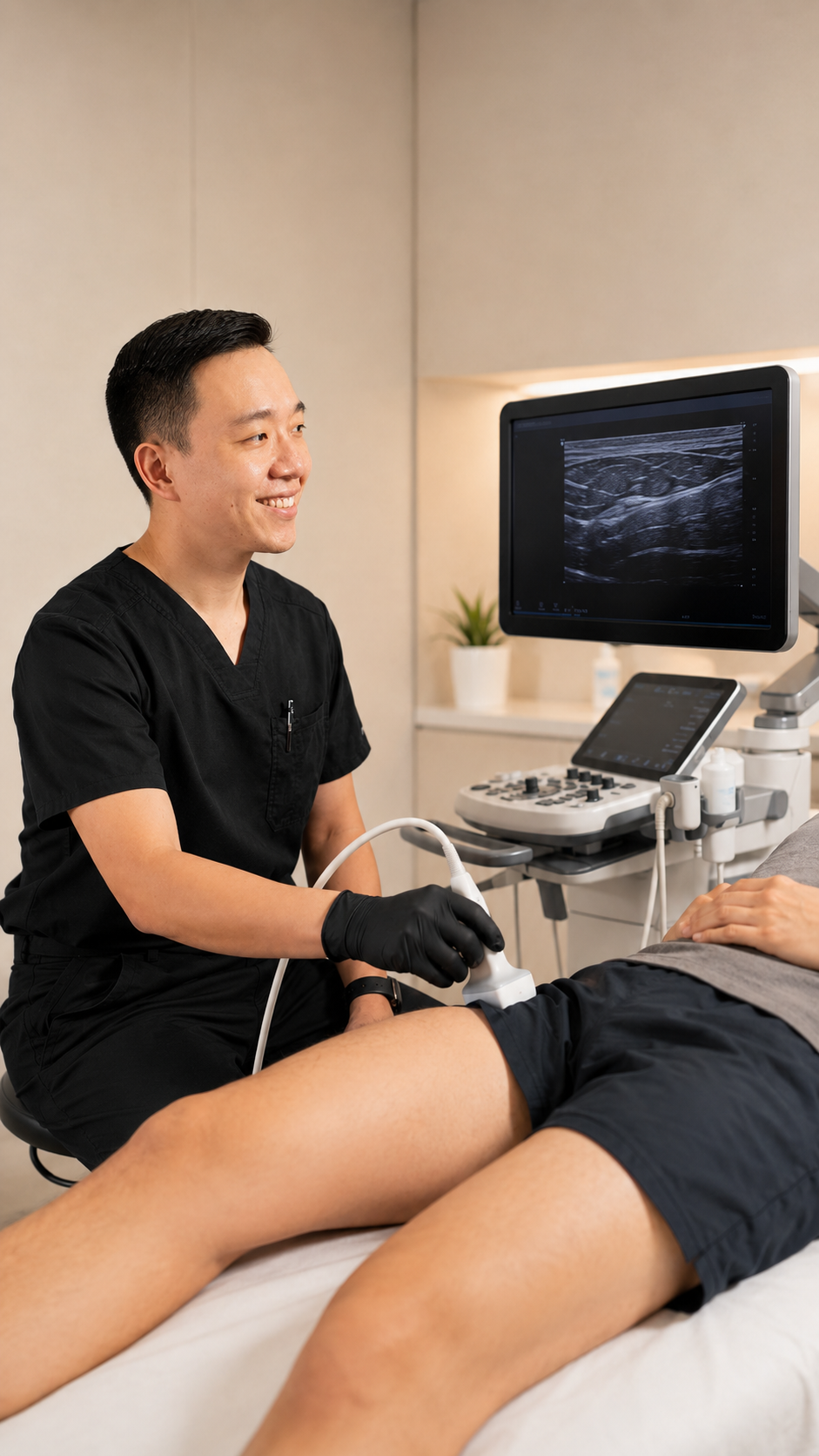
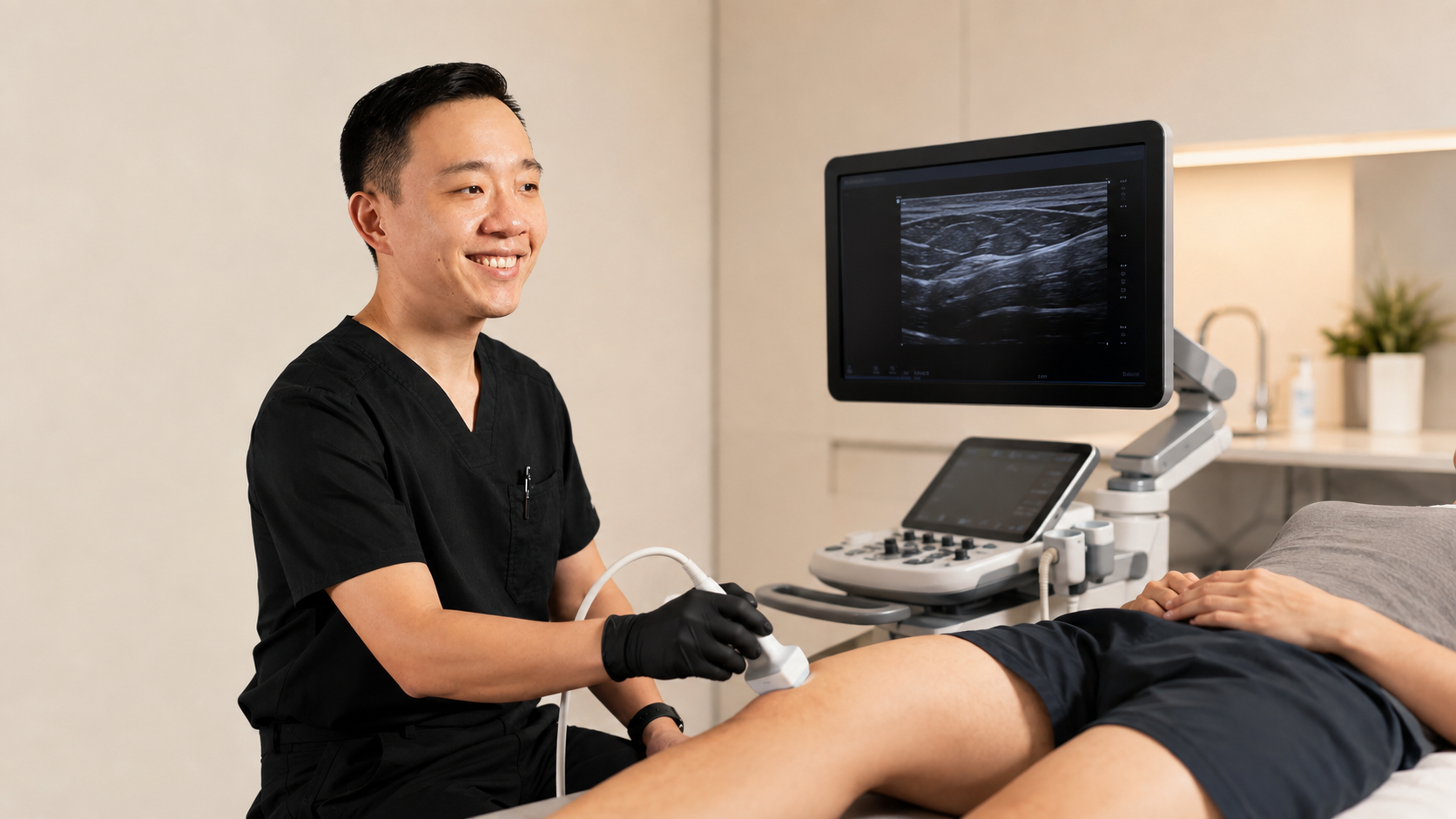
Musculoskeletal ultrasound can be particularly useful for evaluating certain joints, tendons, muscles, ligaments, bursae, superficial nerves, and other soft-tissue structures.
Depending on the clinical situation, ultrasound may allow the physician to examine anatomy dynamically while the patient moves the painful area.
For example, ultrasound may help evaluate certain:
Rotator-cuff abnormalities
Tendon problems
Bursitis
Joint effusions
Muscle injuries
Soft-tissue abnormalities
Peripheral nerve abnormalities
It can also be used to help guide certain injections so the needle can be visualized relative to surrounding anatomy.
However, ultrasound is not the best test for every condition.
Some problems are better evaluated with X-rays, MRI, CT, laboratory testing, electrodiagnostic studies, or specialist assessment.
The purpose of diagnostic testing should therefore be to answer a specific clinical question—not simply to perform more tests.
Sometimes Laboratory Testing Matters Too
Pain is not always purely mechanical.
Laboratory testing may be appropriate when the history or examination raises concern for conditions such as inflammatory arthritis, gout, infection, systemic inflammatory disease, metabolic abnormalities, or other medical causes.
For example, a suddenly swollen, hot, extremely painful joint may require a very different evaluation than gradual knee pain associated with activity.
The diagnostic process should remain broad enough to recognize when musculoskeletal pain may be part of a larger medical condition.
The “Pain Generator” Is Not Always One Structure
Patients often want one clear answer:
“What exactly is causing my pain?”
Sometimes there is one dominant source.
Other times, there are several contributors.
A patient with chronic knee pain might simultaneously have osteoarthritis, quadriceps weakness, limited hip mobility, excess mechanical loading, and sensitization caused by persistent pain.
A patient with chronic neck pain might have degenerative joint changes, muscle tension, nerve irritation, poor workstation ergonomics, sleep disruption, and reduced physical conditioning.
Trying to force every patient into a single structural diagnosis can therefore be as misleading as failing to look for a diagnosis at all.
The goal is to determine the most clinically meaningful contributors and decide which are realistically treatable.
Chronic Pain Can Become More Complex Over Time
The diagnostic approach may also change depending on whether pain is acute or persistent.
You can read more about this distinction in our Integrative Pain Management Resource Center.
With acute pain, the relationship between tissue injury and symptoms may be relatively straightforward.
With persistent pain, changes in how the nervous system processes painful input can sometimes contribute to ongoing sensitivity.
This does not mean chronic pain is “all in someone's head.”
It means pain is produced by a complex nervous system, not by injured tissue alone.
The International Association for the Study of Pain specifically recognizes that pain is influenced by biological, psychological, and social factors and that a person's report of pain should be respected.
For some patients, successful chronic-pain treatment therefore requires addressing both the likely peripheral pain generators and the factors that contribute to persistent nervous-system sensitivity.
Why “Treat First and Diagnose Later” Can Be a Problem
Trying treatment without understanding the likely diagnosis can occasionally be reasonable when the treatment is low risk and the condition is expected to improve naturally.
But repeatedly cycling through medications, injections, procedures, or therapies without reassessing the diagnosis can create problems.
If treatment is not working, several possibilities should be considered:
The original diagnosis may be incomplete.
A second pain source may be present.
The treatment may not adequately address the underlying problem.
Rehabilitation may be missing from the plan.
The condition may require a different type of imaging or testing.
The patient may need evaluation by another specialist.
Persistent pain may have developed additional neurologic or sensitization components.
This is why reassessment is an important part of good pain management.
A treatment plan should not continue indefinitely simply because it was the first plan chosen.
Diagnostic Injections Can Occasionally Provide Additional Information
In certain circumstances, a carefully selected targeted injection may have both therapeutic and diagnostic value.
For example, temporarily anesthetizing a suspected structure and then evaluating whether the patient's characteristic pain changes may provide additional information about whether that structure is contributing to the symptoms.
However, the interpretation is not always absolute.
Pain can come from multiple sources, local anesthetic can affect nearby tissues, and responses can vary.
Diagnostic procedures should therefore be interpreted as one component of the larger clinical picture rather than as a perfect yes-or-no test.
Accurate Diagnosis Does Not Mean Ordering Every Possible Test
A thorough evaluation is not the same thing as excessive testing.
More imaging does not automatically create more certainty.
More laboratory testing does not automatically produce a better diagnosis.
And finding more abnormalities does not necessarily tell us which abnormality matters.
Good diagnostic medicine is targeted.
The physician develops reasonable possibilities based on the history and examination, selects testing when it is likely to change management, and continually asks whether all of the findings fit together.
Sometimes an MRI is necessary.
Sometimes an X-ray provides the needed information.
Sometimes ultrasound is useful.
Sometimes a physical examination is more informative than another scan.
And sometimes the safest approach is conservative treatment with reassessment before additional testing.
When Pain Requires More Urgent Evaluation
Most musculoskeletal pain is not an emergency, but certain symptoms require prompt medical attention.
Seek urgent or emergency evaluation when pain is associated with symptoms such as:
Significant trauma or a possible fracture
New or rapidly worsening weakness
Loss of bowel or bladder control
Numbness around the groin or saddle region
A hot, severely swollen joint accompanied by fever
A cold, pale, pulseless, or severely swollen limb
Chest pain or difficulty breathing
Sudden neurologic symptoms such as facial drooping or difficulty speaking
Severe unexplained systemic illness
Other rapidly worsening or concerning symptoms
A routine pain-management appointment should not delay emergency care when a serious condition may be present.
What Happens During an Integrative Pain Evaluation?
A pain-management consultation should begin by understanding the problem before deciding how to treat it.
Depending on the condition, evaluation may include:
Reviewing how and when the pain began.
Identifying the movements and activities that reproduce symptoms.
Reviewing previous imaging and treatment.
Performing a focused musculoskeletal and neurologic examination.
Developing a reasonable differential diagnosis.
Determining whether additional imaging, ultrasound, laboratory testing, or referral is necessary.
Discussing treatment options based on the most likely diagnosis.
Establishing measurable goals involving both pain and function.
Reassessing the diagnosis if the expected improvement does not occur.
Patients who are preparing for an evaluation can also read A Patient's Guide to Starting Integrative Pain Management.
Treatment Should Follow the Diagnosis
Once the likely source or contributors have been identified, a treatment plan can be built around the individual patient.
Depending on the diagnosis, options might include:
Activity modification
Therapeutic exercise
Physical therapy
Strength and mobility work
Acupuncture
Dry needling
Trigger-point treatment
Non-opioid medication
Ultrasound-guided procedures
Selected joint or nerve injections
Prolotherapy
Platelet-rich plasma when appropriate
Weight management
Sleep and recovery strategies
Specialist referral
Surgical evaluation when necessary
Integrative medicine does not mean that every patient receives multiple therapies.
It means selecting appropriate options from different areas of medicine and coordinating them around the individual diagnosis.
For a broader explanation, see What Is Integrative Pain Management?.
What If the Exact Source of Pain Cannot Be Identified?
Medicine does not always provide perfect certainty.
Some patients have multiple abnormalities.
Some have symptoms that do not correspond neatly to imaging.
Others may have persistent pain despite appropriate testing.
A responsible physician should be comfortable acknowledging that uncertainty.
The goal is not to invent a diagnosis simply to give the pain a name.
Instead, the physician can develop the most likely explanation, rule out dangerous conditions, identify modifiable contributors, begin reasonable treatment, and reassess based on the patient's response.
Sometimes the diagnosis becomes clearer over time.
The Bottom Line
Effective pain treatment begins with the right question.
Not simply:
“How can we make this hurt less?”
But:
“What is most likely causing or contributing to this pain, and what treatment makes sense for that problem?”
The painful location is an important clue, but it is only the beginning.
History, physical examination, neurologic assessment, appropriate imaging, musculoskeletal ultrasound, laboratory testing, diagnostic procedures, and specialist referrals may all play a role depending on the individual situation.
A more accurate diagnosis does not guarantee that every pain condition can be completely eliminated.
But it gives the physician and patient a much better foundation for choosing treatments thoughtfully, avoiding unnecessary interventions, measuring progress, and changing course when something is not working.
If persistent joint, tendon, muscle, nerve, neck, back, or other musculoskeletal pain is interfering with your daily life, learn more about integrative pain management at Ask Dr. Hu.
Medical Review, Editorial Standards, and Transparency
This article was written and reviewed by YiQiu Hu, NMD, an Arizona-licensed naturopathic physician who provides individualized medical care and integrative pain-management evaluation for patients throughout Arizona.
The medical concepts discussed in this article were reviewed with reference to established medical and pain-management resources, including:
The International Association for the Study of Pain, which provides internationally recognized terminology and principles related to pain and pain mechanisms.
The American College of Radiology Appropriateness Criteria, which provides evidence-based guidance regarding the appropriate use of diagnostic imaging for many musculoskeletal and neurologic conditions.
The National Center for Complementary and Integrative Health at the National Institutes of Health, which reviews evidence concerning chronic pain and complementary health approaches.
Medical evidence evolves, and diagnostic or treatment recommendations should always be individualized according to a patient's symptoms, medical history, examination findings, medications, imaging, and other clinical circumstances.
This information is intended for patient education and does not replace individualized medical diagnosis, treatment, or emergency medical care.
About the Author
YiQiu Hu, NMD is an Arizona-licensed naturopathic physician, founder of Ask Dr. Hu, and medical director. He provides concierge medicine, preventive care, health optimization, laboratory evaluation, medical weight management, hormone care, and integrative pain-management services for patients throughout Arizona.
Dr. Hu's clinical approach emphasizes thorough evaluation before treatment. His goal is to help patients understand not only what treatment options are available, but also why a particular treatment does—or does not—make sense for their individual condition.
His approach combines conventional diagnostic evaluation with evidence-informed naturopathic medicine, lifestyle care, appropriate laboratory and imaging assessment, and coordination with other healthcare professionals when additional expertise is needed.
Learn more about Dr. YiQiu Hu and the physicians at Ask Dr. Hu →
Looking for Integrative Pain Management in Arizona?
Ask Dr. Hu provides individualized pain-management evaluations for patients with joint, muscle, tendon, nerve, back, neck, and other musculoskeletal concerns.
Depending on your diagnosis and examination findings, care may include diagnostic evaluation, musculoskeletal ultrasound, rehabilitation recommendations, acupuncture or dry needling, targeted injections, regenerative procedures, imaging review, and coordination with physical therapists or medical specialists.
Treatment recommendations are made only after an individualized evaluation. Not every patient or condition is appropriate for injection therapy or regenerative treatment.