Regenerative Medicine for Musculoskeletal Pain: Current Research
Written by YiQiu Hu, NMD
Arizona-licensed naturopathic physician and virtual concierge medicine provider
Published August 2026 | Medically reviewed August 2026
Musculoskeletal pain can arise from arthritis, tendon injuries, ligament injuries, repetitive stress, previous trauma, muscle dysfunction, nerve irritation, and many other conditions. As interest in alternatives to surgery and long-term medication use has increased, so has interest in treatments commonly described as regenerative medicine.
Platelet-rich plasma (PRP), prolotherapy, bone marrow–derived products, and various cell-based treatments are frequently discussed under this broad category. However, these treatments are not interchangeable, the scientific evidence differs considerably between them, and the term “regenerative” can sometimes imply more than current research has actually demonstrated.
The most useful question is therefore not simply, “Does regenerative medicine work?”
A better question is:
Which treatment has evidence for this particular diagnosis, in this particular patient, at this particular stage of the condition?
That distinction is central to an evidence-informed approach to integrative pain management.
What Does Regenerative Medicine Mean?
In musculoskeletal medicine, regenerative medicine generally refers to treatments intended to influence the biological environment around an injured or degenerative tissue.
Some of these treatments use substances obtained from the patient's own body. Platelet-rich plasma, for example, is prepared from the patient's blood and contains a concentrated platelet component. Other approaches may involve dextrose solutions, bone marrow aspirate concentrate, adipose-derived tissue, or investigational cell-based products.
These therapies may also be described as orthobiologics, particularly when biologically derived materials are used to treat orthopedic or musculoskeletal conditions.
Importantly, however, the word regenerative should not automatically be interpreted to mean that a treatment can rebuild normal cartilage, reverse advanced arthritis, regrow a severely damaged tendon, or restore an injured joint to its original condition.
In many cases, the more realistic goals are to:
Reduce pain
Improve function
Influence the local healing environment
Support recovery from selected tendon or ligament injuries
Improve tolerance for rehabilitation
Delay or reduce the need for more invasive treatment in selected patients
The expected benefit depends heavily on the underlying diagnosis.
Platelet-Rich Plasma Is Currently the Best-Studied Orthobiologic Treatment
Among commonly used regenerative injections, platelet-rich plasma (PRP) has one of the largest bodies of musculoskeletal research.
PRP begins with a blood draw. The blood is processed to concentrate platelets into a smaller volume of plasma, which can then be injected into a selected joint, tendon, ligament, or other musculoskeletal structure.
Platelets contain numerous signaling proteins and growth factors involved in inflammation, tissue repair, and healing responses. The rationale behind PRP is not simply to “inject growth factors,” however. PRP appears to interact with a much more complicated biological environment involving inflammatory signaling, cellular communication, and tissue remodeling.
One challenge in interpreting PRP research is that PRP is not one standardized product.
Studies may differ in:
Platelet concentration
Leukocyte concentration
Volume injected
Number of injections
Injection interval
Preparation system
Anatomical target
Ultrasound guidance
Severity of the condition
Rehabilitation performed afterward
This variability helps explain why different PRP studies can produce different results.
What Does the Research Show About PRP for Knee Osteoarthritis?
Knee osteoarthritis is currently one of the most extensively studied applications of PRP.
In April 2026, the American Academy of Physical Medicine and Rehabilitation (AAPM&R) released clinical guidance recommending that physicians consider PRP for appropriately selected patients with mild-to-moderate knee osteoarthritis who remain symptomatic despite conservative treatment. The guidance also emphasizes patient selection, PRP preparation, dosing, procedural considerations, safety, and informed consent. Read the AAPM&R clinical guidance on PRP for knee osteoarthritis.
That does not mean every clinical trial has demonstrated benefit.
For example, the large randomized RESTORE trial published in JAMA compared PRP injections with saline injections in patients with symptomatic knee osteoarthritis and did not demonstrate a significant advantage for PRP in knee pain or cartilage volume at 12 months. Review the RESTORE randomized clinical trial on PubMed.
Other randomized trials have reported improvement compared with sham treatment or other injection therapies. This mixture of positive and negative findings is one reason modern recommendations increasingly emphasize factors such as the type of PRP preparation, platelet dose, severity of arthritis, injection protocol, and patient selection rather than treating all PRP injections as equivalent.
The practical takeaway is that PRP may be a reasonable option for selected patients with knee osteoarthritis, particularly earlier-stage disease, but it is not a guaranteed treatment and should not be presented as a cure for arthritis.
What About PRP for Tendon Problems?
PRP is also used for selected chronic tendon disorders, including conditions involving the elbow, patellar tendon, Achilles tendon, rotator cuff, hamstring, and other tendons.
The evidence is less uniform than it is for knee osteoarthritis.
Some studies demonstrate improvements in pain or function, while others find little difference compared with exercise, rehabilitation, placebo treatment, or other interventions. Results also vary substantially between different tendons and different PRP formulations.
This is particularly important because “tendinopathy” is not one disease occurring in different locations.
A chronically degenerative tendon may behave differently from an acute tendon injury. A partial tendon tear may require a different approach from tendinopathy without tearing. Mechanical loading, biomechanics, activity demands, age, metabolic health, and duration of injury can all influence recovery.
PRP should therefore generally be viewed as a potential component of treatment rather than a substitute for proper rehabilitation.
Where Does Prolotherapy Fit?
Prolotherapy is another injection treatment commonly included in discussions about regenerative medicine, although its mechanism and composition differ from PRP.
Traditional prolotherapy frequently uses a concentrated dextrose solution injected into selected painful musculoskeletal structures. The proposed mechanism involves creating a controlled local biological response that may influence pain signaling and tissue repair.
The research base for prolotherapy is smaller than the research base for PRP.
Randomized controlled trials have nevertheless reported improvements in pain and function in some patients with knee osteoarthritis. In one blinded randomized trial involving patients with knee osteoarthritis, hypertonic dextrose prolotherapy produced greater improvements in several pain and functional measures than saline injections over the follow-up period. Review the randomized prolotherapy trial on PubMed.
These findings are encouraging, but they should not be interpreted as evidence that prolotherapy reliably regenerates cartilage or permanently repairs every painful ligament or tendon.
Like PRP, appropriate use depends on the diagnosis, anatomical target, treatment goals, and individual clinical situation.
What About Bone Marrow Aspirate Concentrate?
Bone marrow aspirate concentrate, often abbreviated BMAC, is another orthobiologic treatment increasingly discussed in musculoskeletal medicine.
Bone marrow is typically obtained from the patient's pelvis and processed to concentrate a mixture containing platelets, signaling molecules, and different cell populations.
BMAC is sometimes marketed simply as a “stem cell injection,” but that description can be misleading.
Bone marrow aspirate concentrate contains a heterogeneous mixture of cells and biological components. The number and characteristics of progenitor or stromal cells vary considerably, and BMAC should not be equated with a purified or laboratory-expanded stem-cell product.
Research into BMAC for knee osteoarthritis and other orthopedic conditions continues. Some studies report improvements in pain and function, but the evidence is not yet as mature or standardized as it is for better-studied conservative treatments or even PRP.
For patients considering BMAC, the distinction between promising evidence and established clinical effectiveness is important.
What About Stem Cell Therapy?
“Stem cell therapy” is one of the most heavily marketed—and frequently misunderstood—areas of regenerative medicine.
Researchers are actively investigating mesenchymal stromal cells and other cell-based therapies for osteoarthritis and tissue injury. Early clinical trials have reported potentially encouraging outcomes in some settings, but important questions remain regarding appropriate cell source, manufacturing, dosing, patient selection, long-term safety, structural effects, and comparative effectiveness.
Patients should be especially cautious when a clinic claims that a stem-cell treatment can reliably:
Regrow cartilage
Reverse severe arthritis
Eliminate the need for joint replacement
Repair almost any tendon or ligament injury
Treat many unrelated diseases using the same injection
Produce guaranteed or permanent results
The U.S. Food and Drug Administration specifically warns consumers that many regenerative cell and tissue products marketed for orthopedic problems have not been FDA-approved for those uses. Review the FDA's information about regenerative medicine therapies.
The science of cell-based regenerative medicine is genuinely promising. That does not mean every commercially available “stem cell injection” has been proven effective.
Regenerative Medicine Does Not Replace an Accurate Diagnosis
One of the most important principles in musculoskeletal medicine is that pain location does not necessarily identify the source of pain.
Shoulder pain, for example, could arise from the rotator cuff, biceps tendon, joint, labrum, cervical spine, surrounding muscles, or another structure.
Knee pain might involve osteoarthritis, a meniscus, tendon, ligament, patellofemoral joint, referred pain, or multiple structures simultaneously.
Back pain has an even broader list of possible causes.
This is why regenerative treatment should begin with a diagnostic evaluation rather than simply selecting an injection based on where it hurts.
A detailed history, physical examination, review of previous imaging, and—when appropriate—X-rays, MRI, or diagnostic musculoskeletal ultrasound can help determine whether a regenerative procedure is reasonable.
You can explore this broader diagnostic approach in our Integrative Pain Management Resource Library.
The Stage of Disease Matters
Regenerative procedures are often most appealing to patients trying to avoid surgery. But the severity of structural disease matters.
A patient with mild or moderate osteoarthritis and preserved joint structure represents a very different clinical situation from a patient with severe bone-on-bone arthritis, major joint deformity, instability, or advanced mechanical dysfunction.
Similarly, chronic tendinopathy is different from a complete tendon rupture.
Regenerative injections cannot overcome every structural problem.
In some situations, the most appropriate treatment may instead be:
Physical therapy
Progressive strengthening
Activity modification
Weight management
Anti-inflammatory or analgesic medication
Bracing
Conventional injections
Surgical consultation
Another targeted procedure
An evidence-informed physician should be willing to recommend against regenerative treatment when another option is more appropriate.
Ultrasound Guidance Can Be Important
When an injection is selected, accurately identifying and reaching the intended anatomical structure can be important.
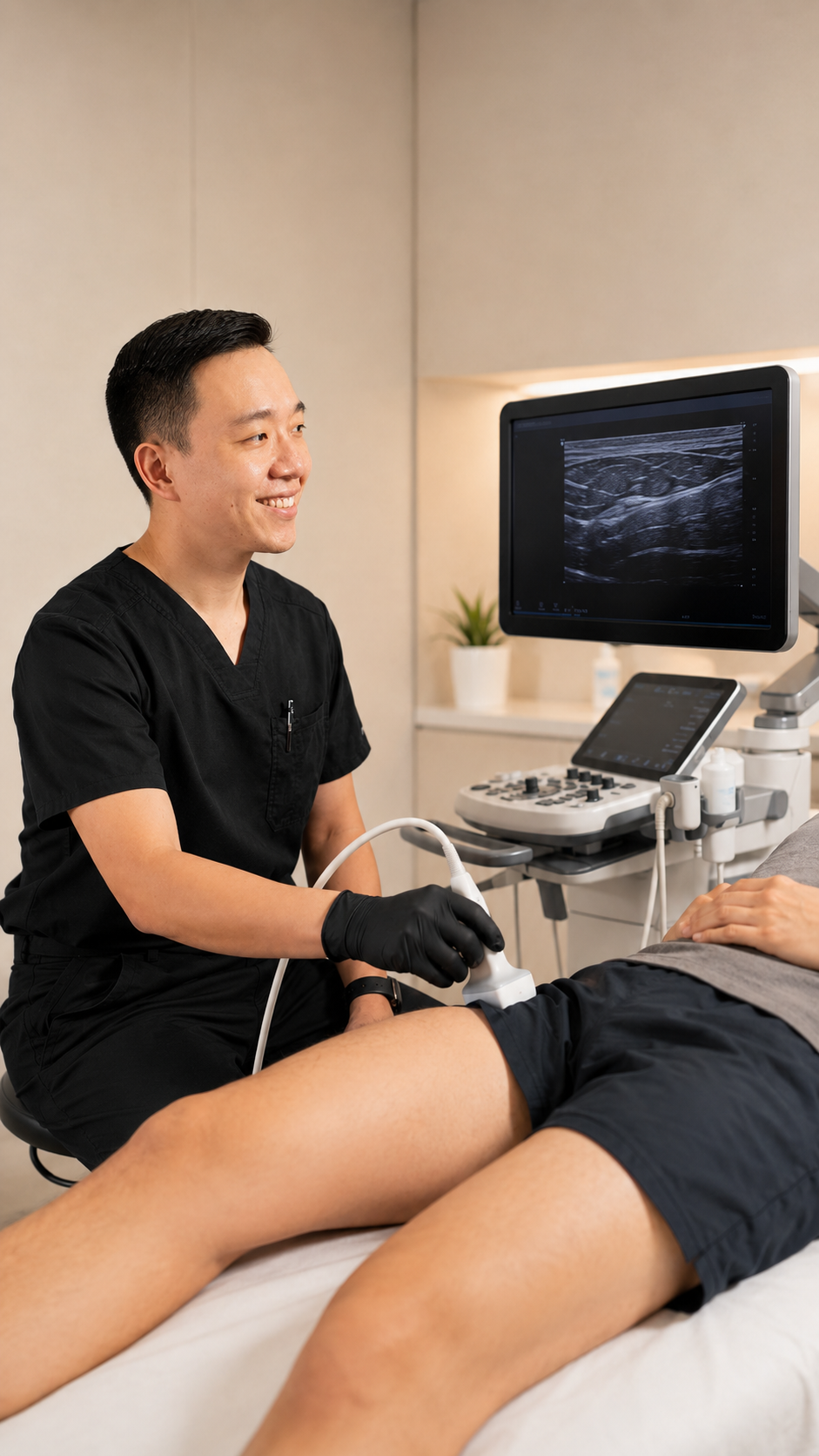
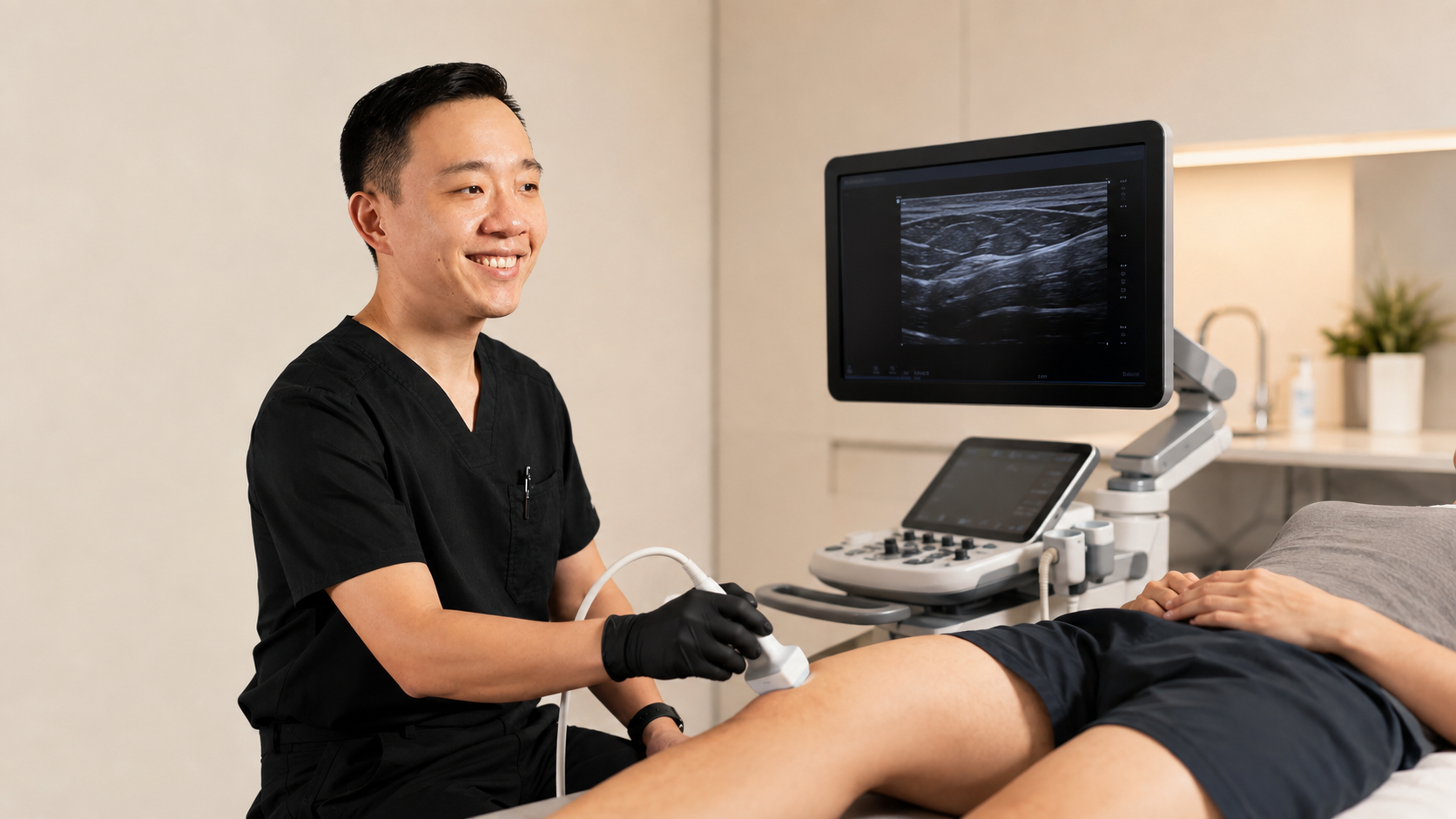
Musculoskeletal ultrasound allows a physician to visualize many joints, tendons, ligaments, nerves, and surrounding soft tissues in real time. It can also allow the physician to observe the needle during selected procedures.
Ultrasound does not make an ineffective treatment effective, and not every musculoskeletal injection requires imaging guidance.
However, when the anatomical target is small, deep, adjacent to important structures, or difficult to identify using surface landmarks alone, image guidance may provide useful procedural information.
Who Might Be a Reasonable Candidate for Regenerative Treatment?
The ideal candidate depends on the specific procedure and diagnosis, but regenerative treatments may be discussed when a patient has:
A reasonably well-defined musculoskeletal diagnosis
Persistent symptoms despite an appropriate period of conservative care
Mild-to-moderate degenerative joint disease rather than end-stage structural damage
Selected chronic tendon or ligament conditions
Functional limitations despite rehabilitation
A desire to consider nonsurgical options
Realistic expectations regarding the potential benefit and limitations of treatment
PRP, prolotherapy, or another procedure should not automatically be recommended simply because pain has persisted for a long time.
If you are just beginning a pain evaluation, our Patient's Guide to Starting Integrative Pain Management explains how diagnosis, imaging, previous treatment, examination findings, and personal goals may influence the treatment plan.
Who May Not Be an Appropriate Candidate?
Regenerative procedures may be inappropriate, require additional evaluation, or need modification in patients with certain medical conditions.
Examples may include active infection, significant bleeding risk, certain blood disorders, severe structural damage requiring surgical management, poorly controlled medical conditions, or symptoms suggesting another diagnosis that needs evaluation first.
Medication use may also matter. Anticoagulants, antiplatelet medications, anti-inflammatory medications, and other treatments may require consideration depending on the planned procedure.
Individual risks should always be reviewed before treatment.
Regenerative Treatment Works Best as Part of a Broader Plan
One of the biggest misconceptions about regenerative medicine is that the injection itself is the entire treatment.
For many musculoskeletal conditions, long-term improvement depends on restoring strength, movement, load tolerance, mobility, and function.
A patient receiving PRP for a tendon problem, for example, may still require progressive loading and rehabilitation.
A patient receiving treatment for knee osteoarthritis may benefit from strengthening, mobility work, appropriate physical activity, weight management when relevant, and modification of activities that repeatedly aggravate the joint.
Regenerative medicine therefore fits most naturally within a broader integrative pain-management approach rather than functioning as a standalone cure.
Questions to Ask Before Having a Regenerative Procedure
Before proceeding with PRP, prolotherapy, BMAC, or another regenerative treatment, consider asking:
What is my actual diagnosis?
Which structure is being treated?
What evidence supports this procedure for my condition?
Are there randomized clinical trials for this specific problem?
What alternatives should I consider first?
What type of PRP or biological product will be used?
How many treatments are typically recommended?
Will ultrasound or another imaging method be used?
What are the risks?
What should I expect after treatment?
What rehabilitation will I need?
What happens if the treatment does not work?
Is the treatment FDA-approved for this particular use?
What claims can—and cannot—reasonably be made about tissue regeneration?
A clinician should be able to discuss these questions without promising a particular outcome.
What Current Research Ultimately Tells Us
Regenerative medicine is neither a miracle treatment nor a meaningless concept.
It is an evolving area of musculoskeletal medicine containing treatments with very different levels of supporting evidence.
PRP currently has one of the strongest clinical evidence bases among commonly used orthobiologic treatments, particularly for selected patients with mild-to-moderate knee osteoarthritis. AAPM&R's 2026 guidance reflects this growing evidence while still emphasizing appropriate patient selection and clinical judgment.
Prolotherapy has encouraging evidence for certain conditions, including knee osteoarthritis, but the research base is smaller and treatment protocols vary.
Bone marrow–derived and cell-based therapies remain active areas of investigation. Some clinical studies are promising, but evidence, regulation, product characteristics, and treatment protocols remain substantially less standardized. Patients should be cautious about commercial claims that extend beyond what clinical research can currently support.
Most importantly, the appropriate treatment depends on what is actually causing the pain.
The injection should follow the diagnosis—not replace it.
Evidence and Medical Review
This article is intended to reflect a balanced, evidence-informed interpretation of regenerative medicine rather than promotional claims about a particular procedure.
Key medical resources reviewed include:
U.S. Food and Drug Administration: Consumer Information About Regenerative Medicine Therapies
RESTORE Randomized Clinical Trial of PRP for Knee Osteoarthritis
Randomized Controlled Trial of Dextrose Prolotherapy for Knee Osteoarthritis
Regenerative medicine research continues to evolve, and recommendations may change as larger trials, standardized treatment protocols, and longer-term outcome data become available.
Considering Regenerative Medicine for Musculoskeletal Pain?
At Ask Dr. Hu, treatment begins by evaluating the likely source of pain rather than automatically recommending a procedure.
Depending on the diagnosis, medical history, examination findings, imaging, previous treatment, and individual goals, options may include rehabilitation, conservative treatment, acupuncture or dry needling, ultrasound-guided procedures, prolotherapy, PRP, other injection therapies, or referral for additional evaluation.
Learn more about Integrative Pain Management in Arizona, explore our complete Integrative Pain Management Resource Library, or contact Ask Dr. Hu to request an evaluation.
Medical Disclaimer
This article is for general educational purposes and does not provide individualized medical advice, diagnose a medical condition, or establish a physician-patient relationship. Regenerative procedures are not appropriate for every patient or every musculoskeletal condition. Treatment decisions should be based on an individualized medical evaluation, diagnosis, potential risks and benefits, available alternatives, and current clinical evidence.
About the Author
YiQiu Hu, NMD is an Arizona-licensed naturopathic physician and founder of Ask Dr. Hu. His clinical work includes personalized medical care, preventive health, diagnostic evaluation, health optimization, laboratory testing, medical weight management, hormone care, integrative pain management, and individualized treatment planning.
Dr. Hu's approach to musculoskeletal pain emphasizes identifying the likely source of symptoms, explaining available treatment options, and developing an individualized plan that may incorporate conservative treatment, rehabilitation, selected procedures, and specialist referral when appropriate.