What Is IV Therapy?
Written by YiQiu Hu, NMD
Arizona-licensed naturopathic physician and concierge medicine provider
Published August 2026 | Medically reviewed August 2026
IV therapy, short for intravenous therapy, is a method of delivering fluids, medications, vitamins, minerals, or other prescribed substances directly into a vein.
Because intravenous treatment enters the bloodstream without first passing through the digestive system, it can provide a direct route of administration when hydration, medication, or specific nutrients need to be delivered intravenously.
IV therapy is routinely used throughout conventional medicine in hospitals, emergency departments, infusion centers, and outpatient medical practices. In recent years, IV hydration and nutrient therapy have also become increasingly available outside hospital settings.
However, IV therapy is still a medical procedure. The ingredients, dosage, fluid volume, infusion rate, medical appropriateness, and potential risks should be considered for each individual patient.
At Ask Dr. Hu, IV therapy begins with a physician-guided evaluation rather than simply selecting an infusion from a menu.


What Does “IV” Mean?
IV stands for intravenous, which literally means “within a vein.”
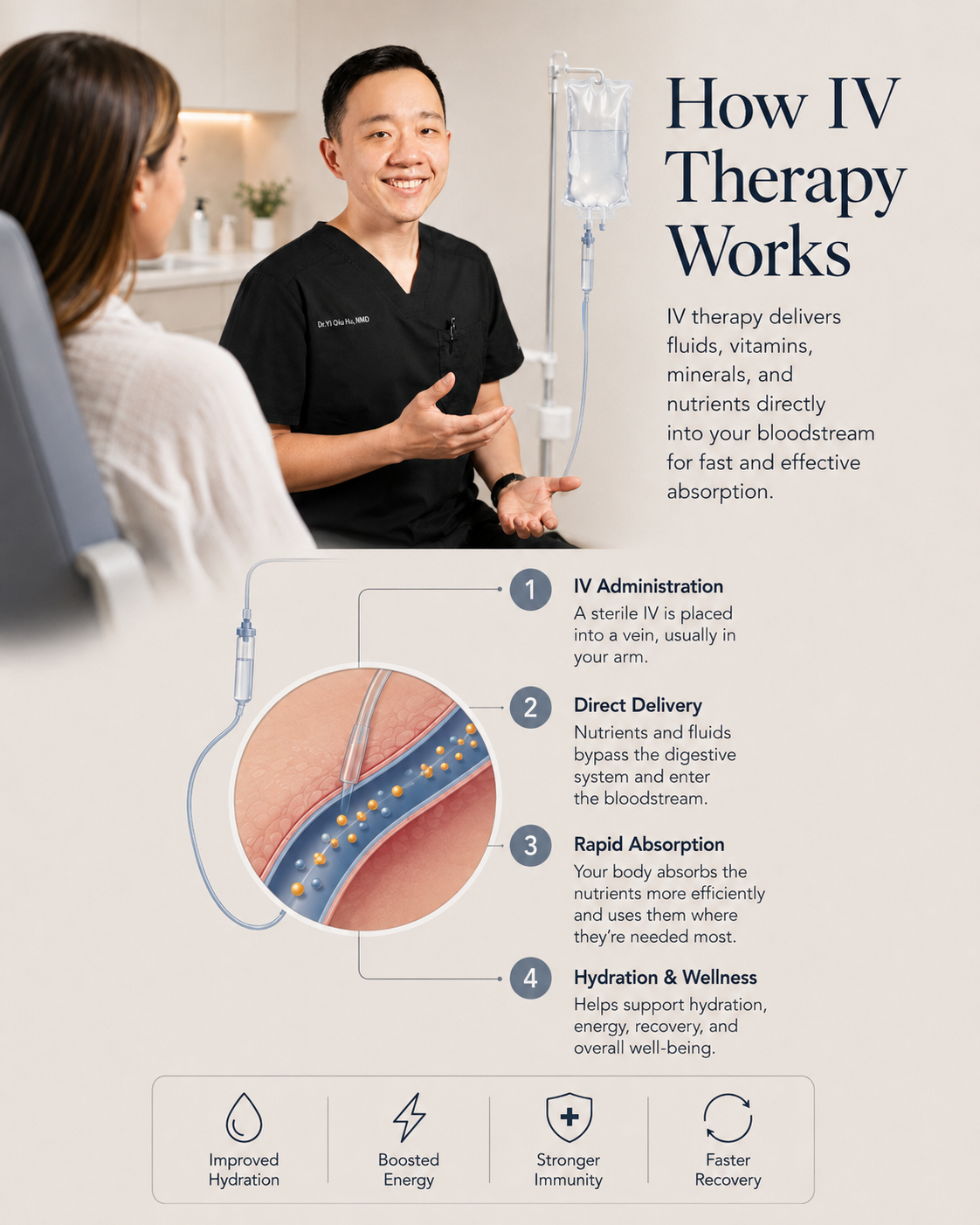
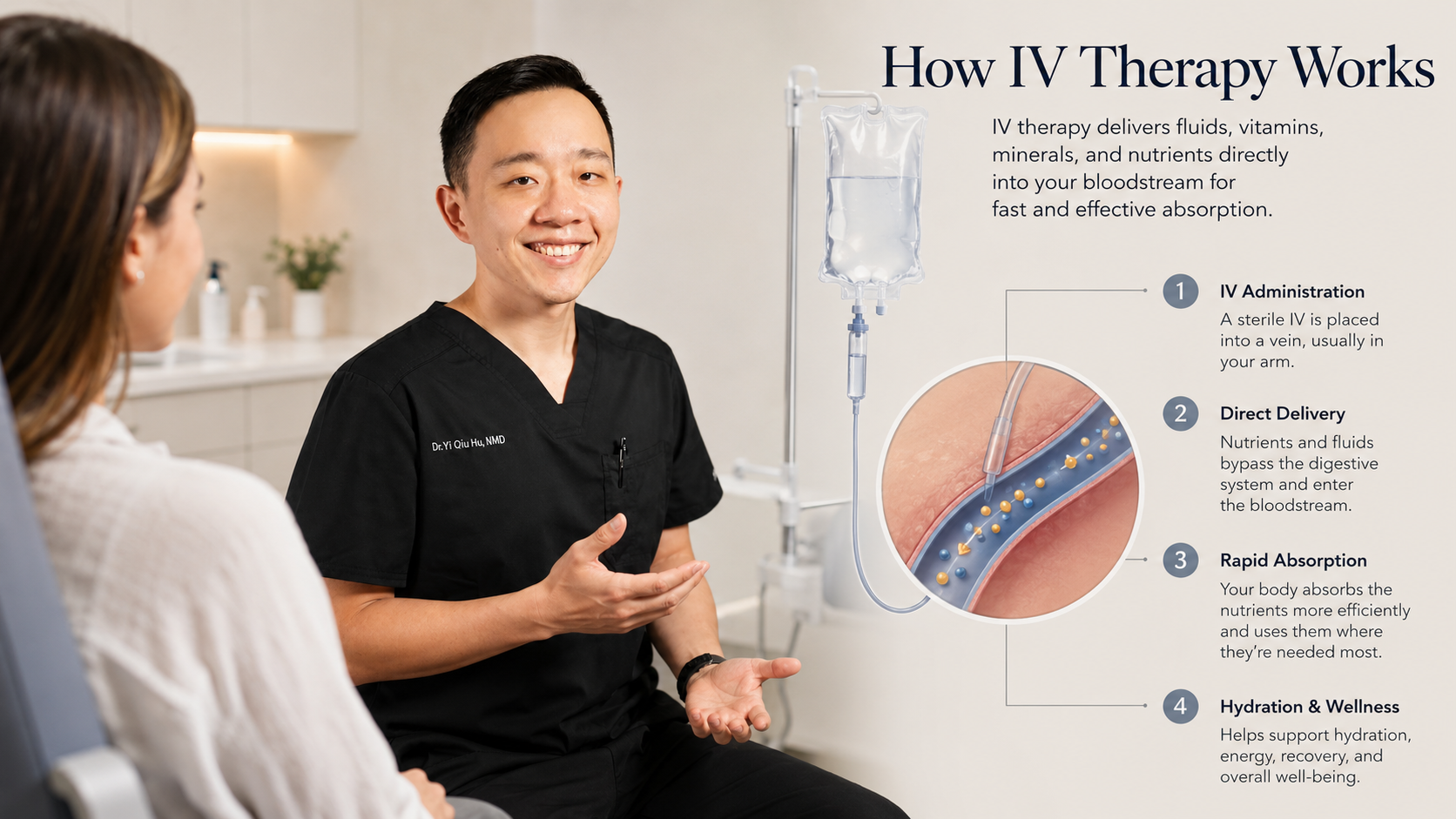
During IV therapy, a small catheter is placed into a suitable vein, usually in the arm or hand. The catheter is connected to tubing that allows a prepared solution to enter the bloodstream gradually.
Depending on why IV therapy is being used, the solution may contain:
IV fluids
Electrolytes
Medications
Vitamins
Minerals
Amino acids
Antioxidants
Other prescribed ingredients
Not every patient needs the same ingredients, and more ingredients do not necessarily make an IV treatment better.
How Does IV Therapy Work?
Oral fluids, food, and supplements must pass through the gastrointestinal tract before their components can be absorbed.
IV therapy takes a different route. The fluid or prescribed ingredients are administered directly into the circulation through a vein.
This can be medically useful when someone cannot adequately maintain oral intake, when absorption is a concern, or when a treatment specifically requires intravenous administration.
However, direct delivery does not mean IV therapy is automatically better than oral hydration, nutrition, or supplementation.
For many people, drinking adequate fluids, eating a balanced diet, addressing an underlying health problem, and using appropriately selected oral supplements remain the most practical approaches.
IV therapy should be considered when there is a reasonable clinical purpose for using the intravenous route.
For a more detailed explanation, read our physician guide: IV Therapy: A Complete Guide for Patients.
What Is Usually Included in IV Therapy?
There is no single formula that defines IV therapy.
The contents depend on the purpose of the infusion and the patient's individual medical needs.
A physician guided IV nutrient treatment might include ingredients such as:
IV Fluids and Electrolytes
Fluids and electrolytes may be used to support hydration and normal fluid balance when intravenous replacement is medically appropriate.
Vitamin C
Vitamin C participates in normal immune function, collagen formation, wound healing, and antioxidant processes.
The appropriate amount requires individual consideration. Higher-dose intravenous vitamin C requires particular attention to factors such as kidney function, kidney-stone history, G6PD deficiency, and iron-overload conditions.
B-Complex Vitamins
B vitamins participate in numerous metabolic pathways and contribute to functions such as normal energy metabolism and nervous-system function.
Vitamin B12
Vitamin B12 is important for red blood cell formation, neurological function, and DNA synthesis. It may be considered when nutritional status, medications, dietary patterns, gastrointestinal conditions, or laboratory findings suggest inadequate B12 status.
Magnesium
Magnesium contributes to normal nerve and muscle function, cardiac rhythm, glucose regulation, and hundreds of enzymatic reactions throughout the body.
Other Nutrients
Depending on the individual patient and reason for treatment, other prescribed ingredients may sometimes be considered.
The goal should not be to place as many substances as possible into an IV bag. Every ingredient should have a clear purpose and be evaluated for appropriate dosage, compatibility, allergies, medication interactions, and individual medical risk.
What Is IV Therapy Used For?
There is an important distinction between established medical uses of intravenous therapy and elective nutrient infusions marketed for general wellness.
Intravenous fluids and medications are routinely used in conventional medical care for many clearly established indications.
Elective nutrient therapy requires more nuance. Depending on the patient's circumstances, IV therapy may be considered as part of a broader treatment plan when:
Maintaining adequate oral hydration is difficult
Fluid replacement is clinically appropriate
A nutrient deficiency has been identified or is strongly suspected
Oral supplementation is poorly tolerated
Gastrointestinal absorption is a concern
A particular therapy requires intravenous administration
A physician identifies another reasonable clinical indication
Symptoms such as persistent fatigue should not automatically be treated with an IV without determining why they are occurring.
For example, fatigue can be associated with anemia, thyroid disease, sleep problems, nutritional deficiencies, medication effects, hormonal concerns, metabolic conditions, infection, stress, or numerous other causes.
Appropriate evaluation may therefore include a medical history, examination, and laboratory testing before treatment recommendations are made.
Is IV Therapy Better Than Taking Vitamins by Mouth?
Not necessarily.
IV administration bypasses gastrointestinal absorption and can produce different blood concentrations than oral administration. That can be medically important in specific situations.
But a higher blood concentration does not automatically mean a better clinical outcome.
For many people, obtaining nutrients from food and using oral supplementation when indicated is simpler, less invasive, and less expensive.
IV treatment makes the most sense when there is a reasonable medical reason to choose the intravenous route rather than simply assuming that intravenous vitamins are superior.
This is one reason our approach to IV therapy is integrated into a broader philosophy of preventive healthcare and health optimization, rather than treating IV infusions as a replacement for nutrition, exercise, sleep, appropriate medical treatment, and healthy lifestyle habits.
Is IV Therapy Safe?
IV therapy can be performed safely when appropriate clinical precautions are followed, but no intravenous procedure is completely risk-free.
Potential risks can include:
Pain or bruising at the IV site
Bleeding
Infiltration of fluid into surrounding tissue
Vein irritation or inflammation
Infection
Dizziness or nausea
Allergic reactions
Medication or nutrient interactions
Electrolyte abnormalities
Excessive fluid administration
Adverse effects related to particular ingredients or dosages
Because IV treatment bypasses many of the body's normal gastrointestinal barriers, appropriate ingredient selection, sterile preparation, dosing, and monitoring are important.
The Centers for Disease Control and Prevention emphasizes aseptic technique and safe injection practices when preparing and administering injectable treatments.
The U.S. Food and Drug Administration also notes that compounded medications are not FDA-approved before reaching patients and that poor compounding practices can create risks such as contamination or incorrect concentrations.
Who Requires Additional Caution Before IV Therapy?
IV therapy is not appropriate for everyone.
Additional evaluation may be particularly important for people with:
Kidney disease
Recurrent kidney stones
Heart failure or significant cardiovascular disease
Fluid restrictions
Significant electrolyte abnormalities
Pregnancy or breastfeeding
Medication interactions
Previous reactions to IV ingredients
Certain blood disorders
G6PD deficiency
Hemochromatosis or iron overload
The safety considerations also depend on the actual ingredients being administered.
For example, the National Cancer Institute's review of intravenous vitamin C identifies kidney disease, G6PD deficiency, and hemochromatosis among important risk factors when high-dose IV vitamin C is being considered.
Your physician may therefore recommend laboratory testing before certain IV formulations.
What Happens During an IV Therapy Appointment?
A medically supervised IV therapy visit typically involves several steps.
1. Medical Review
Your clinician reviews your symptoms, medical history, medications, supplements, allergies, previous reactions, laboratory findings, and treatment goals.
2. Treatment Selection
If IV therapy is considered appropriate, the ingredients, amounts, fluid volume, and infusion rate are selected.
3. IV Placement
A small intravenous catheter is placed into a suitable vein and connected to the infusion tubing.
4. Infusion and Monitoring
The solution is administered gradually while your comfort and response are monitored.
You should immediately tell your treating clinician if you experience burning, swelling, dizziness, nausea, shortness of breath, chest discomfort, or another unexpected symptom.
5. Post-Treatment Assessment
After the infusion is complete, the catheter is removed and the IV site is examined.
Future treatments should be based on your response and ongoing medical assessment rather than automatically scheduled indefinitely.
How Long Does IV Therapy Take?
There is no single treatment time.
The length of an infusion depends on:
The solution being administered
Fluid volume
Ingredients
Dosages
Prescribed infusion rate
Your individual tolerance and response
Some treatments require slower administration than others.
How Often Should You Receive IV Therapy?
There is no universal schedule that is appropriate for everyone.
Some patients may receive a single treatment for a specific circumstance, while others may be considered for a series of treatments when there is a clear clinical reason.
The appropriate frequency depends on the purpose of treatment, medical history, laboratory findings when relevant, treatment response, and the ingredients being administered.
Routine IV therapy should not continue simply because a predetermined package or schedule was purchased.
Is IV Therapy the Same as a Vitamin Drip?
Not exactly.
“Vitamin drip” usually refers to an IV containing one or more vitamins or nutrients.
IV therapy is a broader term and includes intravenous fluids, medications, electrolytes, nutrients, and many other forms of treatment.
Therefore, every vitamin drip is a form of IV therapy, but not every IV treatment is a vitamin infusion.
Can IV Therapy Replace Regular Medical Care?
No.
IV nutrient therapy should not replace:
Appropriate diagnostic evaluation
Treatment of an underlying medical condition
Prescribed medications when medically necessary
A balanced diet
Adequate everyday hydration
Sleep and exercise
Preventive healthcare
Emergency medical treatment
IV therapy is best viewed as one potential tool within a broader medical plan rather than a stand-alone solution for every health concern.
What Is Different About IV Therapy at Ask Dr. Hu?
At Ask Dr. Hu, IV therapy begins with an individualized physician assessment.
We consider your medical history, current symptoms, medications, supplements, available laboratory findings, treatment goals, and relevant risk factors before deciding whether IV therapy is appropriate.
When treatment is recommended, the formulation, dosage, fluid volume, and infusion rate are individualized rather than automatically selected from a standardized wellness menu.
Every IV treatment is personally administered by a physician, and your physician remains with you throughout the infusion to monitor your response and address questions or concerns.
Learn more about our physician-guided IV Therapy services in Arizona.


Frequently Asked Questions
-
Substances administered intravenously enter the circulation directly, but how quickly someone notices an effect depends on what is being administered, why it is being given, and the individual's health circumstances. Patients should be cautious of claims promising immediate or guaranteed wellness benefits.
-
Not before every IV treatment. However, laboratory testing may be recommended when information about kidney function, electrolytes, nutrient status, blood counts, G6PD status, iron status, or another health factor is needed before a particular treatment can be safely recommended.
-
No. The appropriateness of IV therapy depends on the person's health history, medications, allergies, kidney and cardiovascular function, pregnancy status, the ingredients being considered, and other individual factors.
-
“IV therapy” is a route of administration rather than one specific product. Many FDA-approved medications and fluids are administered intravenously. Elective nutrient formulations may contain prescription or compounded ingredients, and compounded preparations themselves do not undergo FDA premarket approval in the same manner as FDA-approved drug products.
-
Our personalized IV treatments generally range from $600 to $800 per treatment, depending on the ingredients and amounts selected. Your expected cost is reviewed before treatment.
The Bottom Line
IV therapy is the administration of fluids, medications, nutrients, or other prescribed substances directly into a vein.
It is an important and well-established route of treatment in medicine, but that does not mean every person needs IV nutrient therapy or that intravenous vitamins are inherently superior to food, hydration, or oral supplementation.
The safest and most useful approach is to first determine why IV therapy is being considered, identify relevant medical risks, select ingredients carefully, and monitor the patient's response.
If you're considering IV nutrient therapy, contact Ask Dr. Hu to discuss whether physician-guided IV therapy may be appropriate for your individual health needs.
Medical Accuracy & Trusted Sources
This article is intended to provide balanced patient education about intravenous therapy. Recommendations should be individualized because IV treatment may involve different fluids, medications, nutrients, dosages, and medical considerations.
For additional information about intravenous treatment and injection safety, patients may review:
Medical information is reviewed periodically and may be updated as clinical evidence, safety guidance, and treatment standards evolve.
About the Author
YiQiu Hu, NMD is an Arizona-licensed naturopathic physician and the founder of Ask Dr. Hu. His clinical work focuses on concierge medicine, preventive healthcare, health optimization, laboratory evaluation, medical weight management, hormone care, integrative pain management, and individualized treatment planning.
Dr. Hu earned his Doctor of Naturopathic Medicine degree from Sonoran University of Health Sciences and a Bachelor of Science in Biomedical Sciences from Northern Arizona University. In addition to patient care, he has extensive experience serving in medical director and clinical leadership roles.
His approach emphasizes careful medical evaluation, clear patient education, evidence-informed decision-making, and treatment recommendations tailored to each patient's individual circumstances.
Learn more about Dr. YiQiu Hu and the physicians at Ask Dr. Hu.
Information on this page is provided for general educational purposes and does not replace individualized medical advice or establish a physician-patient relationship.