ADVANCED TESTING • PHYSICIAN-GUIDED INTERPRETATION
Specialty Laboratory Testing for Deeper Health Insights

Go beyond routine blood work with advanced specialty testing selected according to your symptoms, health history, risk factors, and personal wellness goals. We use comprehensive laboratory panels, including select testing from Vibrant Wellness, to investigate patterns that may involve cardiovascular health, hormones, nutrition, digestion, immune function, environmental exposures, chronic infections, genetics, and more.

Personalized Test Selection
Testing is chosen according to your individual health concerns rather than using the same panel for every patient.

More Comprehensive Insights
Specialty panels can examine biomarkers and physiological patterns that may not be included in conventional routine testing.

Physician-Guided Interpretation
Your results are reviewed within the context of your symptoms, medical history, medications, lifestyle, and previous laboratory findings.
Specialty testing is recommended only when clinically appropriate. Test availability, specimen requirements, turnaround times, and laboratory fees vary by panel.
LOOKING BEYOND ROUTINE SCREENING
Why Specialty Laboratory Testing May Be Helpful
Routine blood work is an important starting point for understanding your health. However, it may not always provide enough detail to explain persistent concerns, evaluate complex patterns, or guide a highly individualized health plan.
When clinically appropriate, specialty laboratory testing can examine selected areas in greater depth. The goal is not to test for everything, but to gather meaningful information that may help us better understand your symptoms, health history, risk factors, and wellness goals.


When Health Concerns Remain Unexplained
Symptoms such as fatigue, digestive discomfort, difficulty concentrating, hormonal concerns, headaches, skin changes, or reduced exercise recovery can have many possible contributors. Targeted testing may provide additional information and help identify patterns that deserve further evaluation.

When Detailed Assessment Is Appropriate
Specialty panels may evaluate areas that are not routinely included in basic laboratory screening. Depending on your needs, this may include gastrointestinal function, immune activity, hormone metabolism, cardiometabolic markers, nutrient status, environmental exposures, or other selected biomarkers.

When Care Needs to Be More Personalized
Additional laboratory information may help us prioritize your next steps and avoid a one-size-fits-all approach. Results can be used to support more focused recommendations involving nutrition, lifestyle, supplements, medications, additional evaluation, or follow-up testing.
Testing With Purpose, not Testing for Everything
Specialty testing is not automatically necessary for every patient. We begin by reviewing your concerns, medical history, current medications and supplements, previous laboratory results, lifestyle, and health goals.
Tests are selected only when the results are reasonably expected to provide useful clinical information. Every result is interpreted within the context of your overall health and is not used by itself to diagnose or treat a medical condition.
Who May Benefit from Specialty Testing?
WHEN ADDITIONAL INSIGHT MAY HELP
Specialty laboratory testing may be considered when symptoms persist, routine evaluations have not provided enough clarity, or a more detailed assessment could help guide personalized care. The appropriate testing strategy depends on your health history, symptoms, previous results, risk factors, and treatment goals.

Persistent or Unexplained Symptoms
Specialty testing may be helpful when concerns such as fatigue, headaches, body discomfort, skin changes, reduced exercise tolerance, or a general decline in well-being continue despite an initial evaluation. Testing may help identify patterns that deserve further clinical attention.

Brain, Mood, and Sleep Concerns
Brain fog, difficulty concentrating, mood changes, poor sleep, unrefreshing sleep, or reduced mental performance can have many possible contributors. A targeted evaluation may help identify nutritional, hormonal, metabolic, or inflammatory factors worth addressing.

Digestive Concerns
Patients experiencing ongoing bloating, abdominal discomfort, irregular bowel movements, food-related symptoms, or other digestive concerns may benefit from a more detailed evaluation of gastrointestinal function, immune activity, and possible dietary triggers.

Immune and Inflammatory Concerns
Specialty testing may be considered for patients with frequent illnesses, prolonged recovery, allergy-like symptoms, unexplained inflammatory concerns, or a history that suggests altered immune function. Test selection should be based on the individual clinical picture.

Hormone and Metabolic Concerns
Changes in energy, weight, menstrual cycles, libido, temperature regulation, blood sugar, or overall metabolic health may warrant a closer evaluation. Specialty testing can sometimes provide additional context beyond a basic hormone or metabolic panel.

Environment & Infection Concerns
A more detailed assessment may be appropriate when symptoms and history suggest possible exposure to mold, heavy metals, environmental chemicals, or certain persistent infections. Testing should be chosen carefully based on credible exposure history, symptoms, and clinical relevance.

Testing for Prevention and Health Optimization
Specialty testing may also be appropriate for patients who feel generally well but want a more detailed understanding of their cardiovascular, metabolic, nutritional, hormonal, neurologic, or immune health.
More testing is not always better. We prioritize tests that are clinically relevant, appropriately selected, and likely to provide information that can meaningfully guide your care.
PERSONALIZED TEST SELECTION AND INTERPRETATION
A Physician-Guided Testing Strategy
Specialty laboratory testing is most useful when it is selected for a clear clinical reason. Rather than automatically ordering the largest available panel, we begin by understanding your symptoms, health history, previous laboratory results, medications, lifestyle, exposures, and personal health goals.
When appropriate, conventional blood work may be combined with focused specialty testing to investigate specific areas of concern. Your results are then reviewed within the context of your overall health so that individual findings are not interpreted in isolation.


Start With Your Health History
We begin with a detailed discussion of your symptoms, previous diagnoses, current treatments, family history, nutrition, lifestyle, environmental exposures, and health priorities. Existing medical records and laboratory results may also be reviewed to identify what has already been evaluated and where important questions may remain.

Choose Tests with a Clear Purpose
Testing recommendations are based on the clinical questions we are trying to answer. Depending on your needs, this may include conventional laboratory testing, a focused Vibrant Wellness panel, or a carefully selected combination of tests. Not every patient needs every test, and unnecessary duplication should be avoided whenever possible.

Look Beyond Individual Markers
Laboratory findings are interpreted alongside your symptoms, medical history, physical findings, medications, and other relevant results. We look for meaningful patterns, possible relationships, and findings that may require confirmation rather than relying on a single abnormal or borderline marker by itself.

Turn Information into Action
After reviewing your results, we discuss what the findings may mean, which areas deserve attention, and what next steps are appropriate. Recommendations may include additional evaluation, nutritional or lifestyle changes, treatment options, coordination with another healthcare professional, or follow-up testing to evaluate progress.
More Testing Is Not Always Better
Our goal is not to order the greatest number of tests. The goal is to choose testing that may provide useful information, avoid unnecessary duplication, and help guide responsible clinical decisions. Specialty testing should complement, not automatically replace, an appropriate medical evaluation and conventional laboratory testing.
Before testing is ordered, we will discuss the purpose of the recommended panel, its limitations, the expected cost, and how the results may influence your care.
FEATURED SPECIALTY TESTING OPTIONS
Explore 12 Featured Vibrant Wellness Testing Options
Vibrant Wellness offers advanced testing across several areas of health, including cardiovascular function, hormones, nutrition, digestion, immune activity, neurological health, environmental exposures, infections, and genetics. Testing is selected based on your health history, symptoms, previous results, and personal goals, not simply ordered as a standard package.
Your physician will help determine which tests may provide useful information, explain their limitations, and interpret the findings alongside your medical history and conventional laboratory results.

Foundation Zoomer
The Foundation Zoomer provides a broad starting point for evaluating how several major systems may be functioning together. It brings information about metabolic health, cardiovascular health, hormones, organ function, nutrient status, immune activity, blood health, and selected genetic pathways into one coordinated assessment.

Cellular Zoomer
The Cellular Zoomer examines biochemical pathways involved in cellular energy production, mitochondrial function, oxidative stress, detoxification, nutrient metabolism, neurotransmitter balance, and microbial metabolites. It may help identify patterns affecting energy production, recovery, metabolic resilience, and cellular stress.

Neural Zoomer
The Neural Zoomer evaluates immune reactivity involving the brain, myelin, peripheral nerves, neuromuscular structures, and the blood–brain barrier. It may provide additional context when neurological symptoms appear to overlap with inflammation or immune-system activity. Category: neurological and neuroimmune health.

Cardio Zoomer
The Cardio Zoomer provides a more detailed cardiovascular risk assessment than a standard cholesterol panel alone. It examines multiple pathways that may affect heart and vascular health, including advanced lipid patterns, inflammation, metabolic function, oxidative stress, endothelial function, clotting-related markers, and inherited risk factors.

Gut Zoomer
The Gut Zoomer provides a comprehensive assessment of the intestinal microbiome and gut–brain relationship. It evaluates beneficial and potentially harmful organisms together with digestion, inflammation, intestinal barrier function, microbial metabolites, antibiotic-resistance genes, and selected neurotransmitter patterns. Category: microbiome health.

Toxin Zoomer
The Toxin Zoomer evaluates several categories of environmental exposure together with genetic factors that may affect detoxification capacity. It combines information about heavy metals, mold-related toxins, industrial and household chemicals, PFAS compounds, and selected detoxification pathways.

Hormone Zoomer
The Hormone Zoomer evaluates sex hormones, adrenal hormones, hormone metabolites, cortisol patterns, melatonin, endocrine-disrupting exposures, oxidative stress, and markers related to bone turnover. This allows hormone levels to be considered alongside how hormones are metabolized and how stress and daily biological rhythms may affect symptoms.

Food Zoomer
The Food Zoomer measures IgA and IgG immune reactivity to a broad selection of food extracts, proteins, peptides, and additives. Results must be interpreted cautiously and alongside symptoms, dietary history, and other clinical findings. Important: Food-specific IgG testing does not diagnose an IgE-mediated food allergy and should not be used by itself.

Infection Tests
Vibrant Wellness offers several infection-focused panels designed to evaluate immune-response patterns involving tickborne organisms, Lyme disease and coinfections, selected viral infections, and Candida-related patterns. The appropriate panel depends heavily on symptoms, exposure history, and previous testing.

Nutrient Zoomer
The Nutrient Zoomer provides a detailed evaluation of vitamins, minerals, electrolytes, amino acids, fatty acids, and functional nutrient relationships. It also examines genetic variations that may influence nutrient absorption, transportation, activation, metabolism, and utilization. Category: nutrition and micronutrient health

Immune Zoomer
The Immune Zoomer evaluates systemic and tissue-specific autoantibodies across multiple body systems. It may help organize immune-activity patterns affecting endocrine tissues, joints, connective tissue, the gastrointestinal system, neurological tissues, blood vessels, and broader immune signaling. Category: immune and autoimmune activity.

Genetic Tests
Genetic testing may provide long-term information about inherited tendencies affecting nutrient metabolism, cardiovascular health, methylation, oxidative stress, detoxification, gluten-related risk, blood clotting, and neurological health. Category: genetics and traits testing.

Testing Is Personalized to You
Not every patient needs every panel. Your physician will first review your symptoms, medical history, medications, previous laboratory results, family history, exposures, and health goals. Testing may use blood, dried blood spot, urine, saliva, stool, or a combination of samples depending on the panel.
Specialty laboratory findings are interpreted alongside your clinical history and other appropriate testing. An abnormal result does not automatically establish a diagnosis, and a normal result does not exclude every possible medical condition.
What to Expect from Specialty Lab Testing
OUR PROCESS
Specialty laboratory testing should be selected thoughtfully and interpreted within the context of your complete health history. Your physician will help determine which tests may provide useful information, explain how to complete the testing, and review the results with you in detail.

Comprehensive Initial Evaluation
We begin by discussing your symptoms, health concerns, medical history, medications, supplements, lifestyle, previous laboratory results, and personal health goals.

Personalized Test Selection
Your physician will recommend testing based on your individual clinical picture rather than automatically ordering every available panel.

Sample Collection and Testing
Depending on the selected test, collection may involve blood, urine, saliva, stool, or another sample type. Some samples may be collected at home, while others may require a laboratory draw.

Physician Review and Interpretation
Once the results are available, your physician will evaluate the findings alongside your symptoms, medical history, medications, lifestyle, and conventional laboratory results.

Personalized Next-Step Plan
During your results review, we will explain the findings in understandable language and discuss which results appear most relevant.
Thoughtful Testing, Careful INterpretation
We use carefully selected specialty laboratory testing and evidence-informed interpretation to explore areas that may not be included in routine testing.
Your health. Your data. Our commitment.

Testing With a Purpose
Not every patient needs specialty laboratory testing, and not every abnormal result requires treatment. Our goal is to order testing only when it may provide clinically useful information and use the results to support thoughtful, individualized medical decision-making.
From Results to a Personalized Care Plan
Specialty laboratory reports can contain a large amount of information, but individual markers should not be interpreted in isolation. Your results are reviewed alongside your symptoms, health history, medications, lifestyle, previous testing, and overall health goals.
The objective is not simply to identify every result outside an expected range. It is to determine which findings may be most meaningful, how they may relate to one another, and which next steps are most likely to support your health.


Review the Complete Picture
We begin by reviewing your specialty laboratory findings together with your medical history, current symptoms, conventional laboratory results, medications, supplements, lifestyle, and personal health goals.

Identify Meaningful Patterns
Rather than focusing on a single marker, we look for relationships and patterns that may provide a clearer understanding of the factors affecting how you feel and function.

Prioritize the Most Important Findings
Not every abnormal or borderline result requires immediate treatment. We identify which findings deserve attention first so your care plan remains focused, practical, and medically appropriate.

Develop Your Personalized Care Plan
Depending on your needs, recommendations may include nutrition and lifestyle changes, targeted supplementation, medication management, additional conventional testing, specialty referrals, or other individualized treatments.

Monitor, Reassess, and Refine
Follow-up visits, symptom tracking, and repeat testing may be used when appropriate to evaluate progress and determine whether your care plan should be continued, adjusted, or expanded.

A laboratory report provides data. Physician-guided interpretation helps determine what that information may mean for you.
Testing and treatment recommendations are individualized. Specialty laboratory findings are interpreted within the broader clinical picture and do not independently establish a diagnosis.
Clear Pricing for Specialty Laboratory Testing
PRICING & CARE OPTIONS
Specialty laboratory testing should be selected thoughtfully, not ordered simply because a test is available. Before moving forward, we review your symptoms, health history, previous laboratory results, goals, and budget to determine whether a particular test is appropriate and likely to provide useful information.
You will receive a clear explanation of the recommended testing and the expected cost before anything is ordered.

Vibrant Wellness Zoomer Testing
$1,200 per Zoomer panel
Each $1,200 testing package includes:
An initial physician consultation to determine whether the selected test is appropriate
One selected Vibrant Wellness Zoomer test
Laboratory processing and testing fees
Standard in-home blood draw or specimen collection
A comprehensive physician review of your results
A follow-up consultation to explain the findings
An initial personalized treatment and follow-up plan
The $1,200 price applies to one Zoomer panel. When more than one test may be helpful, we will discuss the clinical value and total cost of each recommended panel before testing is ordered.

Other Genetic, Infection, and Specialty Tests
Typically $700–$1,500
The price of individual genetic tests, infectious disease testing, and other advanced laboratory assessments varies based on the laboratory, number of markers, specimen requirements, collection method, and complexity of interpretation.
Most comprehensive testing packages range from $700 to $1,500. You will receive a written price explaining what is included before authorizing the test.
Popular genetic and infection tests:
Antioxidant and Nutrient Genetics
Tickborne Diseases
Candida and Viral Infections
What Your Testing Package Includes

Physician-Guided Test Selection
Your medical history, symptoms, previous results, and health goals are reviewed before testing is recommended.

Testing Kit and Laboratory Processing
Your package includes the selected laboratory panel and standard laboratory processing charges.

In-Home Sample Collection and Shipping
Standard in-home blood draw or specimen collection is included when required for the selected package.

Comprehensive Results Review
Your results are evaluated in the context of your overall health, not simply marked as normal or abnormal.

Follow-Up Consultation (In-Person or Virtual)
We meet with you to explain the findings, answer your questions, and identify the most important areas to address.

Initial Personalized Care Plan
You receive an initial personalized plan based on your results, clinical history, priorities, and treatment preferences.

Concierge Medicine Membership
Patients who need ongoing physician access, repeated monitoring, accountability, treatment adjustments, or coordination across several health concerns may benefit from our concierge medicine membership.
Membership is $500 per month and provides ongoing access to your physician. Specialty laboratory kits, third-party laboratory charges, and collection costs remain separate unless they are specifically included in your written testing quote.

Individual Specialty Testing
Membership is not required to complete specialty laboratory testing. A bundled testing package may be appropriate when you have a specific health concern or want to explore one clearly defined area of your health.
Your quoted package will identify the test being ordered, included collection services, physician consultations, and results-review services.

No Unexpected Testing Charges
You will be informed of the expected cost before testing is ordered. We will not add another panel, upgrade a test, or arrange an additional paid service without discussing it with you first.
Testing-package prices do not include medications, supplements, imaging, outside specialist services, repeat laboratory testing, or treatments recommended after the results are reviewed unless those items are specifically identified in writing.
Standard in-home blood draw or specimen collection is included when required for the selected package, subject to availability and service area.
Find Out Which Testing Option Is Appropriate for You
Schedule an initial consultation to discuss your symptoms, health goals, previous testing, and whether specialty laboratory testing may provide useful next steps.
Learn More About Specialty Laboratory Testing
Explore physician-written articles, patient guides, and frequently asked questions to better understand what specialty laboratory testing is, how it differs from routine blood work, when it may be appropriate, and how results are interpreted as part of a personalized care plan.

Specialty Laboratory Testing: A Complete Guide for Patients
Learn what specialty laboratory testing can evaluate, when additional testing may be helpful, the important limitations to consider, and how physicians select and interpret advanced laboratory panels.
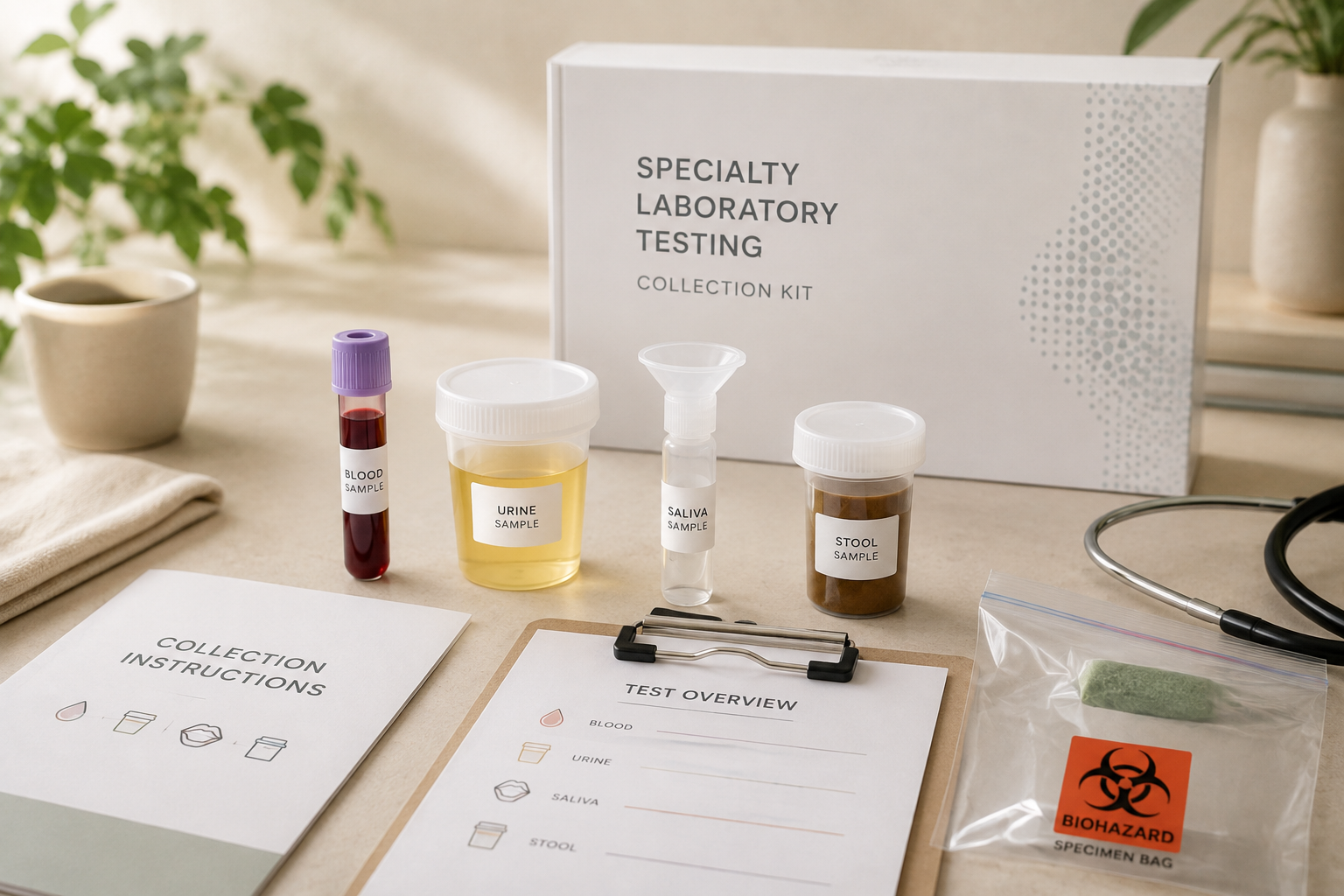
What Is Specialty Laboratory Testing? A Patient’s Guide
A patient-friendly introduction to specialty testing, including common test categories, specimen-collection methods, preparation instructions, costs, and what to expect after your results become available.
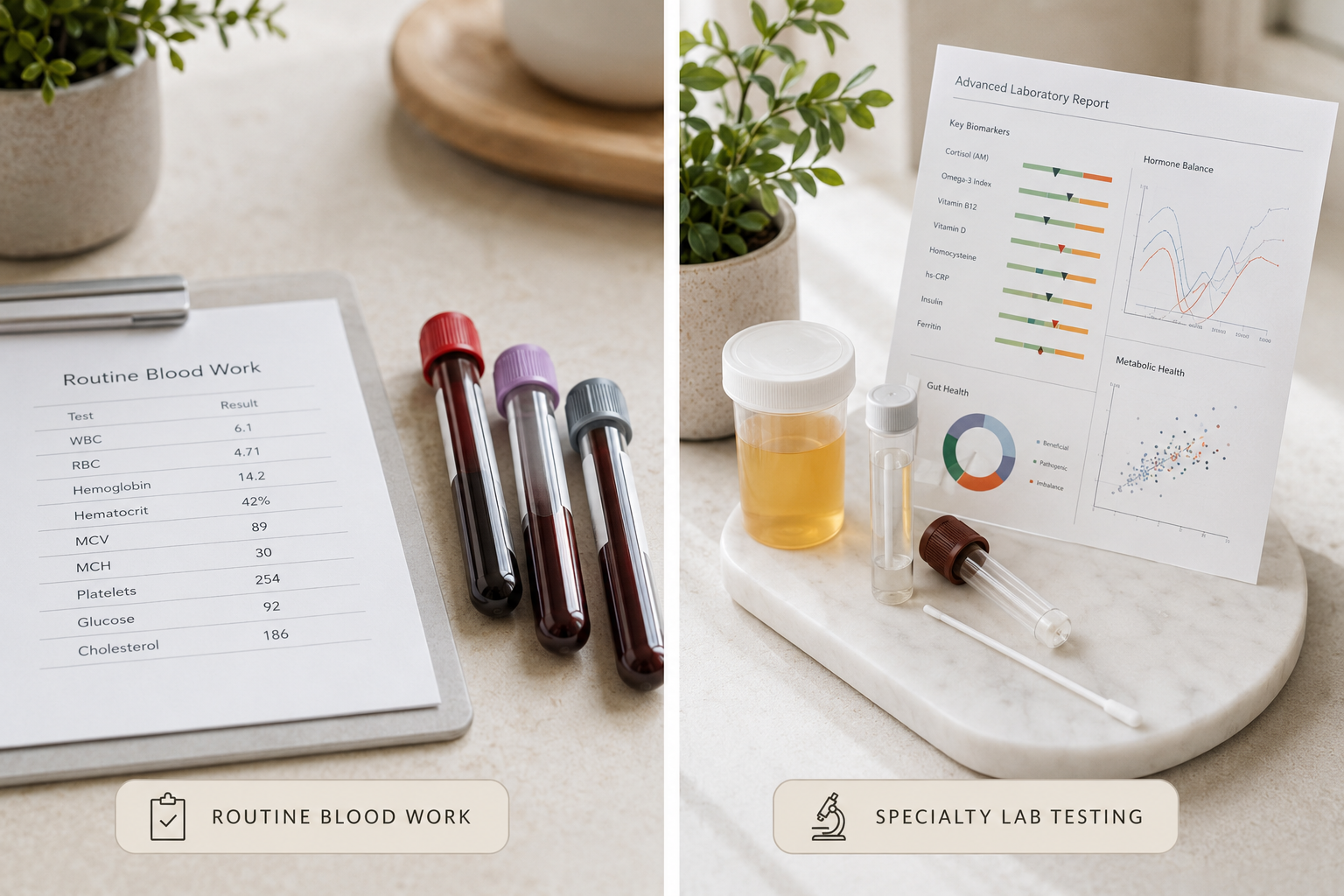
How Is Specialty Lab Testing Different from Routine Blood Work?
Frequently asked question article: Compare the purpose, scope, specimen types, turnaround times, insurance considerations, and clinical roles of routine blood work and specialty laboratory testing.
FREQUENTLY ASKED QUESTIONS
Questions About Specialty Laboratory Testing
Specialty laboratory testing can provide additional information beyond routine blood work, but not every test is appropriate for every patient. Testing recommendations are based on your symptoms, medical history, previous laboratory results, health goals, and whether the findings are likely to meaningfully influence your care plan.

-
Specialty laboratory testing includes more comprehensive or targeted panels that evaluate areas not always covered by routine laboratory work. Depending on the test selected, this may include immune activity, digestive health, environmental exposures, nutrient status, neurological health, hormones, infections, cardiovascular risk, cellular function, or other clinically relevant patterns.
In some cases, additional imaging, laboratory testing, medical records, or specialist evaluation may be recommended before treatment.
-
Routine blood work is often designed to screen for common medical conditions and identify significant abnormalities. Specialty testing may examine a broader range of markers or explore a particular health concern in greater depth. It is generally used to complement—not automatically replace—standard medical testing.
-
No. Most patients will not need every available test. Dr. Hu will review your history, symptoms, existing laboratory results, and goals before recommending the testing options most likely to provide useful and actionable information.
-
An initial consultation is required before testing is ordered. This helps determine whether specialty testing is appropriate, which panel is most relevant, and whether other routine evaluations should be completed first.
-
For the featured Zoomer testing packages, the listed fee includes the initial consultation to determine whether testing is appropriate, the laboratory test, in-home blood draw or sample collection when included, a comprehensive results review, and an initial treatment-plan discussion.
Other individual genetic, infectious-disease, and specialty testing options may have different pricing depending on the laboratory, specimen requirements, and complexity of interpretation. Please review the Pricing and Care Options section for current details.
-
Specialty testing is generally offered on a self-pay basis. Insurance coverage and reimbursement vary by plan and by test, and reimbursement cannot be guaranteed. Clear pricing will be discussed before testing is ordered.
-
Collection requirements depend on the test selected. Testing may require blood, urine, stool, saliva, or another type of specimen. When applicable, instructions and collection materials will be provided, and certain testing packages include in-home blood draw or specimen collection.
-
Turnaround time varies by test and begins after the laboratory receives an acceptable specimen. Some results may be available sooner than others, while more complex panels may require additional processing time. Expected timing will be reviewed when your test is ordered.
-
Your results will be reviewed in the context of your symptoms, medical history, medications, previous testing, and health goals. During your results appointment, Dr. Hu will explain the most relevant findings, discuss their possible significance, and outline reasonable next steps.
-
Not necessarily. Laboratory findings are one part of a comprehensive medical evaluation. A test may reveal patterns, exposures, immune responses, deficiencies, or other findings that deserve attention, but results should not be interpreted in isolation or assumed to explain every symptom.
-
Yes. Please provide any recent laboratory reports before your consultation. Reviewing your existing results can help prevent unnecessary duplicate testing and determine whether a more targeted specialty panel may provide additional value.
Specialty Lab Testing Resources Coming Soon
We are developing physician-reviewed educational resources to help patients better understand specialty laboratory testing, sample collection, results interpretation, and how testing may contribute to a personalized care plan.
New guides and frequently asked questions will be added as they become available.


Find Out Whether Specialty Testing Is Appropriate for You
TAKE THE NEXT STEP
Advanced testing should have a clear clinical purpose. Your first step is a physician consultation to review your symptoms, medical history, previous results, and health goals.
When specialty testing is likely to provide useful information, Dr. Hu can help you select the most appropriate option, coordinate sample collection, interpret the findings, and turn the results into practical next steps.

Physician-guided test selection

In-home sample collection

Clear self-pay pricing

Virtual consultations throughout Arizona