What Is Specialty Laboratory Testing? A Patient’s Guide
Written by YiQiu Hu, NMD
Arizona-licensed naturopathic physician and concierge medicine provider
Published August 2026 | Medically reviewed August 2026
Routine blood work can provide valuable information about your overall health, but it does not answer every medical question. When symptoms persist, health concerns are complex, or a more detailed evaluation could meaningfully guide care, specialty laboratory testing may provide additional information.
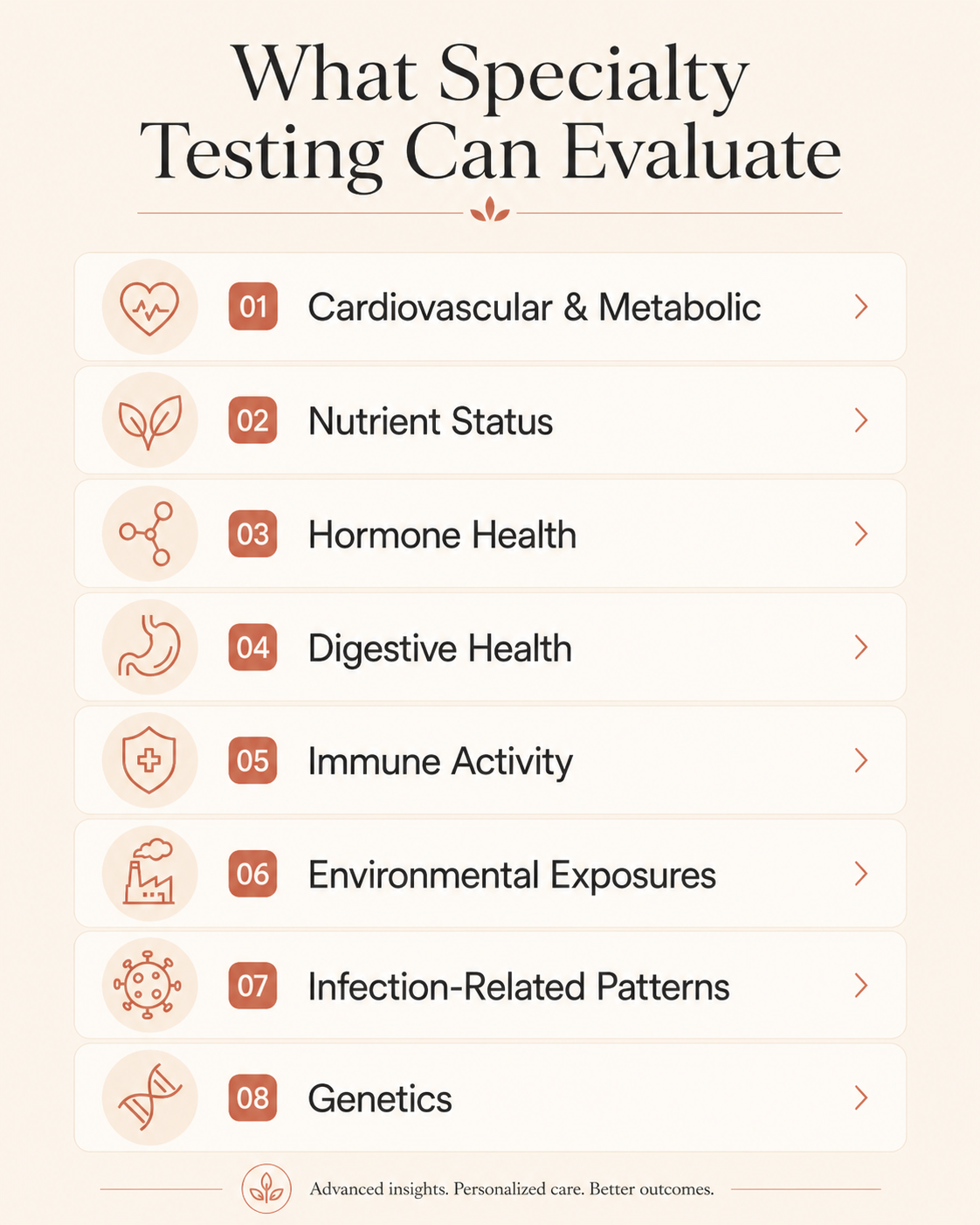
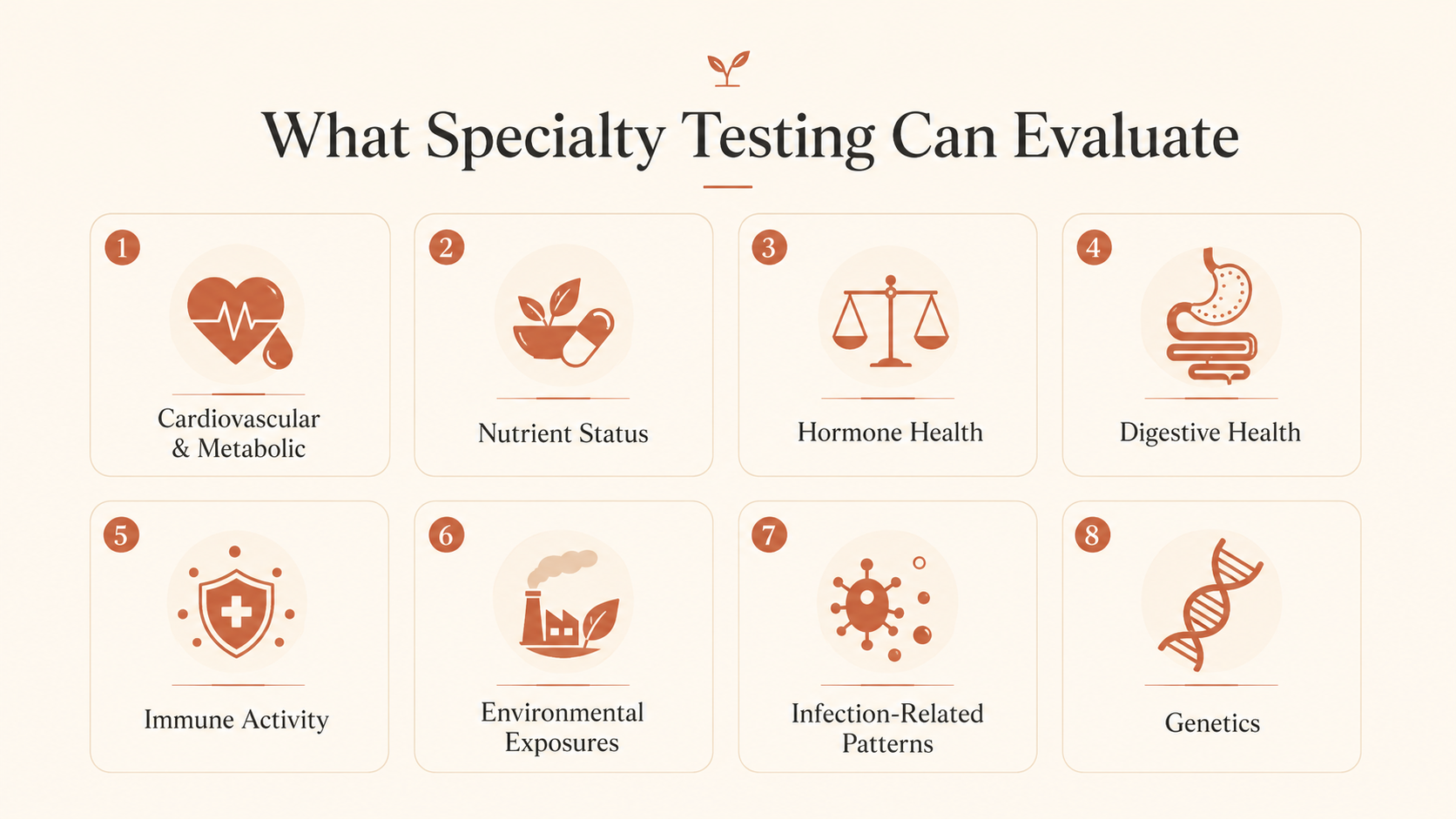
Specialty laboratory testing includes targeted or comprehensive panels that examine selected areas of health in greater detail than routine screening. Depending on the test, this may include cardiovascular risk, nutrient status, hormone metabolism, digestive function, immune activity, genetics, environmental exposures, cellular health, or certain infection-related patterns.
The goal is not to order the largest possible panel or search for every theoretical abnormality. The goal is to select testing for a clear reason, interpret the findings carefully, and determine whether the results provide useful information that can guide your next steps.
At Ask Dr. Hu, specialty laboratory testing is selected according to each patient’s symptoms, medical history, previous results, risk factors, exposures, health goals, and budget.


Specialty Laboratory Testing: A Simple Definition
Specialty laboratory testing refers to laboratory panels that evaluate markers or physiological patterns not always included in routine blood work.
Routine laboratory testing commonly includes tests such as:
Complete blood count
Comprehensive metabolic panel
Cholesterol panel
Blood sugar or hemoglobin A1c
Thyroid-stimulating hormone
Basic kidney and liver testing
Selected vitamin or hormone levels
These tests are important and often provide the best place to begin. You can learn more about them in our patient’s guide to understanding blood work.
Specialty testing may evaluate a particular area in greater depth, combine a larger number of related markers, use a different type of specimen, or examine patterns that are not part of a typical annual laboratory panel.
Examples may include:
Advanced cardiovascular and metabolic testing
Comprehensive nutrient assessments
Hormone and hormone-metabolite testing
Gastrointestinal and microbiome testing
Immune and inflammatory panels
Environmental exposure testing
Selected infectious-disease testing
Genetic or genomic assessments
Cellular-energy and oxidative-stress markers
Specialty testing should generally complement—not automatically replace—an appropriate medical evaluation and conventional laboratory testing.
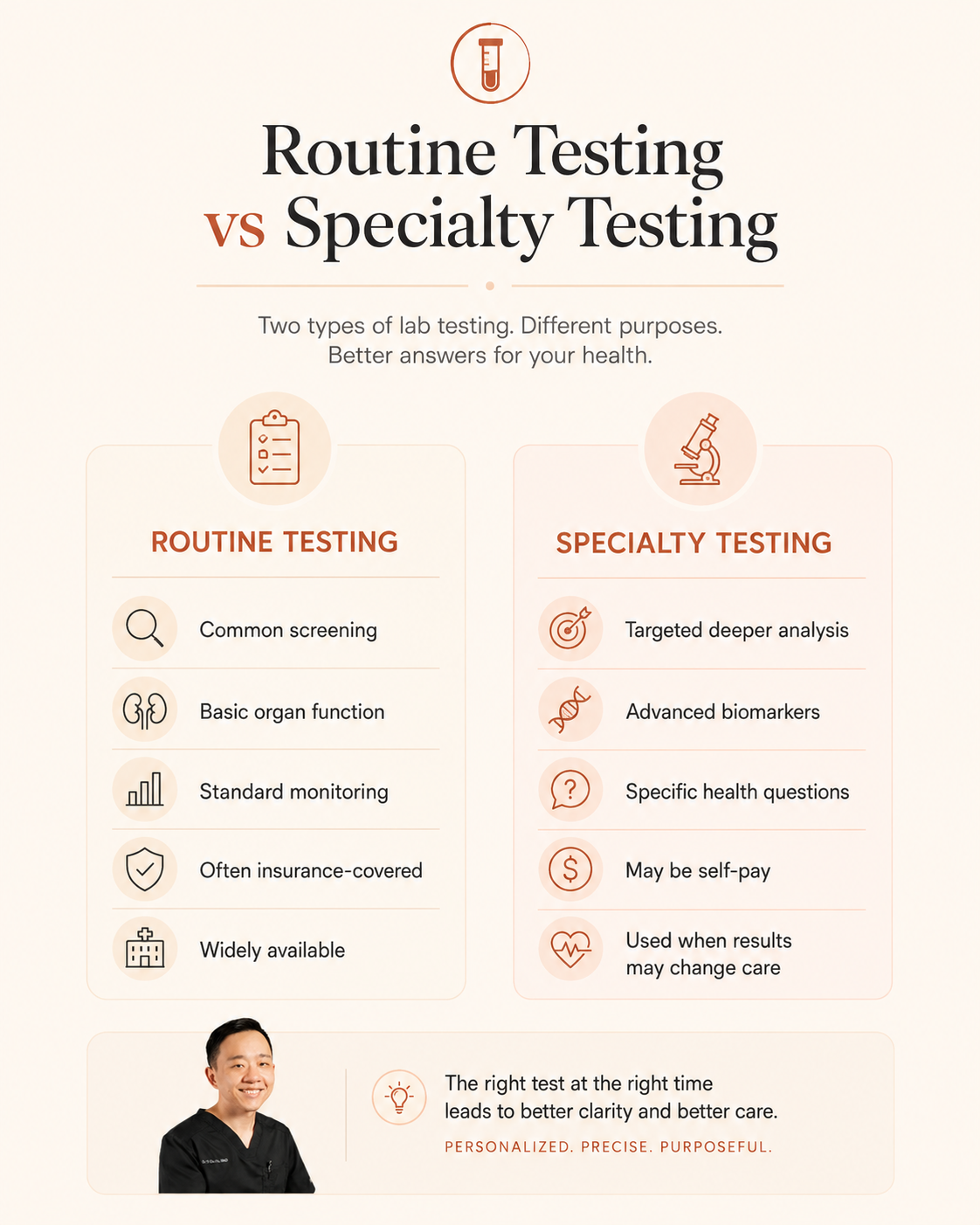
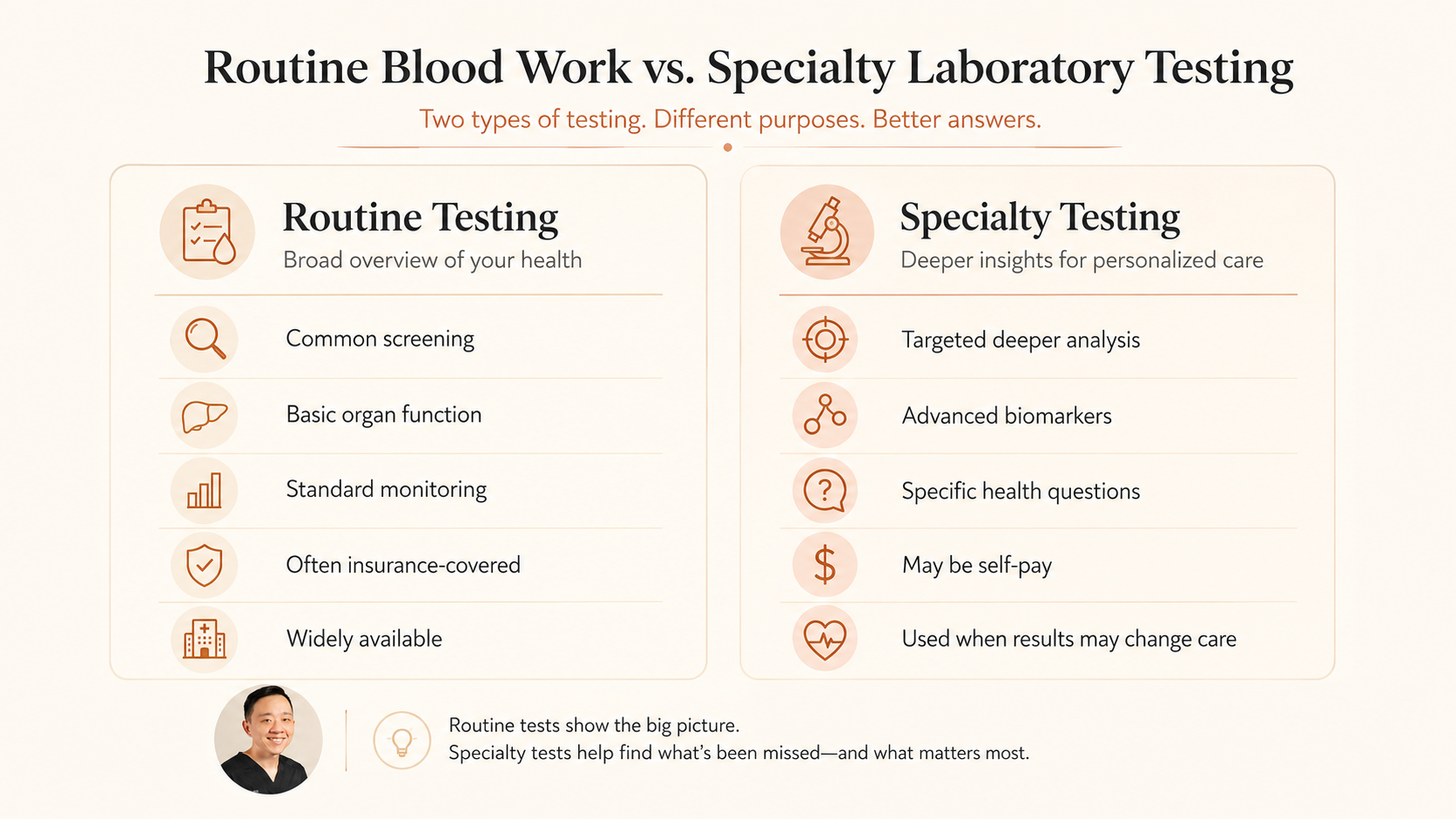
Routine Blood Work vs. Specialty Laboratory Testing
Routine and specialty tests serve different purposes. One is not automatically better than the other.
Routine laboratory testing
Routine testing is generally used to:
Screen for common medical conditions
Evaluate basic organ function
Monitor established health problems
Assess medication safety
Identify significant abnormalities
Support preventive healthcare
These tests are usually widely available, well standardized, and more likely to be covered by health insurance when medically indicated.
Specialty laboratory testing
Specialty testing may be used to:
Investigate a specific unresolved clinical question
Evaluate a selected system in greater detail
Explore patterns not included in routine screening
Examine relationships among multiple biomarkers
Support a more individualized health plan
Provide additional information after an initial evaluation
The decision to order specialty testing should be based on whether the results are reasonably likely to influence medical recommendations or next steps.
For a broader explanation of how laboratory tests are selected and interpreted, read Understanding Laboratory Testing: A Complete Guide for Patients.
What Can Specialty Laboratory Testing Evaluate?
There are many different types of specialty laboratory tests. The appropriate test depends on the specific questions your physician is trying to answer.
Cardiovascular and metabolic health
Advanced cardiovascular testing may examine more than total cholesterol, LDL cholesterol, HDL cholesterol, and triglycerides.
Depending on the panel, testing may include information related to:
Lipoprotein particle patterns
Inherited lipid-related risk
Inflammation
Blood-sugar regulation
Insulin resistance
Oxidative stress
Vascular function
Clotting-related markers
These results must still be interpreted alongside your age, blood pressure, family history, smoking status, medical conditions, medications, and overall cardiovascular risk.
Nutrient status
Nutritional testing may evaluate selected vitamins, minerals, amino acids, fatty acids, or other nutrient-related markers.
Testing may be considered when there are concerns involving:
Restricted diets
Digestive or absorption problems
Fatigue
Neurological symptoms
Previous nutrient deficiencies
Certain medications
Bariatric surgery
Chronic medical conditions
Long-term supplement use
A result outside a laboratory range does not always prove that a particular symptom is caused by a nutrient deficiency. The finding should be compared with your symptoms, diet, medications, conventional laboratory results, and overall health history.
Hormone health
Specialty hormone testing may examine hormone levels, metabolites, or patterns that change throughout the day or menstrual cycle.
Depending on the clinical situation, testing may involve:
Testosterone
Estrogens
Progesterone
DHEA
Cortisol
Melatonin
Hormone metabolites
Selected thyroid markers
Markers related to hormone metabolism
The timing and specimen type can significantly affect certain hormone results. Age, sex, menstrual status, medications, supplements, sleep, stress, and time of collection may all need to be considered.
Specialty hormone testing does not automatically replace standard blood testing or the conventional evaluation of a suspected endocrine condition.
Digestive and gastrointestinal health
Specialty gastrointestinal testing may use a stool sample to evaluate selected markers related to:
Digestion
Intestinal inflammation
Microbial patterns
Parasites or other organisms
Pancreatic function
Intestinal immune activity
Microbial metabolites
Selected antibiotic-resistance genes
These reports can contain a large amount of information. Not every identified organism represents an infection, and not every microbiome variation requires treatment.
Digestive symptoms can also be caused by conditions that require conventional evaluation, imaging, endoscopy, breath testing, or consultation with a gastroenterologist. Stool testing should not delay those evaluations when they are medically indicated.
Immune and inflammatory activity
Some specialty panels evaluate antibodies, inflammatory signals, or patterns involving immune activity.
These tests may sometimes provide additional context, but an antibody result alone does not necessarily establish an autoimmune disease, allergy, infection, or other medical diagnosis.
Unexpected findings may need to be:
Repeated
Confirmed with conventional testing
Compared with symptoms
Evaluated by an appropriate specialist
Monitored over time
Clinical context is especially important because immune markers can be affected by previous exposures, temporary illnesses, medications, and other factors.
Food-related immune testing
Some specialty panels measure IgG or IgA reactivity to foods. These results must be interpreted cautiously.
Food-specific IgG testing does not diagnose an immediate, IgE-mediated food allergy. A person concerned about hives, swelling, breathing difficulty, vomiting, anaphylaxis, or other possible allergic reactions should receive an appropriate allergy evaluation.
Food-related specialty results should also not be used alone to create an unnecessarily restrictive diet. Removing many foods without a clear plan can create nutritional deficiencies, increase food anxiety, and make it harder to determine which foods are actually associated with symptoms.
When food-related symptoms are present, a structured symptom history, appropriate conventional testing, and a carefully supervised elimination and reintroduction plan may be more useful than relying on a report by itself.
Environmental exposure testing
Selected tests may evaluate markers associated with possible exposure to:
Heavy metals
Mold-related compounds
Industrial chemicals
Household chemicals
Certain pesticides
PFAS compounds
Other environmental substances
These tests are most useful when there is a credible exposure history and a clear plan for how the result will be interpreted.
The presence of a detectable substance does not automatically prove that it is causing a patient’s symptoms. Results may be influenced by the specimen type, timing of exposure, collection procedure, laboratory methodology, and expected background exposure.
Testing should be paired with careful history-taking and, when appropriate, environmental evaluation, occupational medicine, toxicology consultation, or confirmatory testing.
Infection-related testing
Specialty laboratories may offer panels involving immune responses to tickborne organisms, selected viruses, Candida species, and other infectious agents.
These panels should be chosen cautiously. A positive antibody or immune-response marker does not always mean there is a currently active infection.
Symptoms, exposure history, conventional testing, examination findings, and accepted diagnostic criteria remain important. Some results may require confirmation through another laboratory or review by an infectious-disease specialist.
Genetic testing
Genetic tests may provide information about inherited variants associated with:
Nutrient metabolism
Cardiovascular risk
Blood clotting
Medication metabolism
Gluten-related risk
Oxidative stress
Neurological health
Other inherited traits
A genetic variant is not necessarily a diagnosis or a prediction that disease will develop. Most medical conditions result from a combination of genetics, lifestyle, environment, age, and other factors.
Potentially significant genetic findings may require confirmatory testing or consultation with a genetic counselor or another qualified specialist.
Who May Benefit From Specialty Laboratory Testing?
Specialty testing may be considered when:
Symptoms continue after an initial evaluation
Routine testing has not provided enough clarity
A specific area requires a more detailed assessment
There is a credible environmental or occupational exposure
Conventional results suggest that further evaluation may be useful
A patient has complex nutritional or digestive concerns
More detailed cardiovascular risk assessment may affect treatment
Treatment needs to be monitored with specialized markers
The result is likely to influence a meaningful clinical decision
Specialty testing may also be considered as part of a comprehensive preventive care and health optimization plan. However, testing should still be individualized rather than automatically ordered simply because a patient feels well or wants the largest available panel.
Who May Not Need Specialty Testing?
Not every patient needs specialty laboratory testing.
Testing may provide limited value when:
A routine evaluation has not yet been completed
The test does not address a clear clinical question
The result would not change the treatment plan
The same information has already been evaluated
The panel is being ordered only because it contains many markers
The test’s limitations outweigh its potential usefulness
A more appropriate examination, imaging study, or specialist evaluation is needed
The cost would create a significant financial burden without a likely clinical benefit
More data does not always produce more clarity. Large panels can identify borderline or unexpected findings that may be difficult to interpret and may lead to additional testing that ultimately proves unnecessary.
The most appropriate test is not necessarily the test with the greatest number of biomarkers. It is the test most likely to answer a meaningful question about your health.
What Types of Samples Are Used?
The sample type depends on the test being ordered.
Specialty testing may use:
A standard blood draw
Dried blood spot
Urine
Saliva
Stool
Buccal or cheek swab
Hair or other specimens in limited circumstances
A combination of sample types
Some kits can be completed at home. Other tests require a mobile phlebotomist, laboratory draw station, or medical office.
At-home collection does not mean preparation is unimportant. Collection timing, fasting, hydration, medications, supplements, menstrual-cycle timing, storage temperature, and shipping can affect certain results.
How Should You Prepare for Specialty Testing?
Always follow the instructions provided for your specific test. Preparation requirements vary considerably among panels.
Before collecting your sample, confirm:
Whether fasting is required
Whether water is allowed
What time the specimen should be collected
Whether medications or supplements affect the test
Whether menstrual-cycle timing matters
Whether exercise should be limited beforehand
Whether alcohol should be avoided
How the specimen should be stored
When the sample must be shipped
Whether collection must occur on a weekday
Whether more than one specimen is required
Do not discontinue prescription medications unless the ordering physician specifically instructs you to do so.
Tell your physician about all medications, vitamins, herbs, hormones, injections, and supplements you use. Biotin, hormone products, corticosteroids, antibiotics, antifungal medications, probiotics, and many other products can influence selected test results.
What Happens During the Specialty Testing Process?
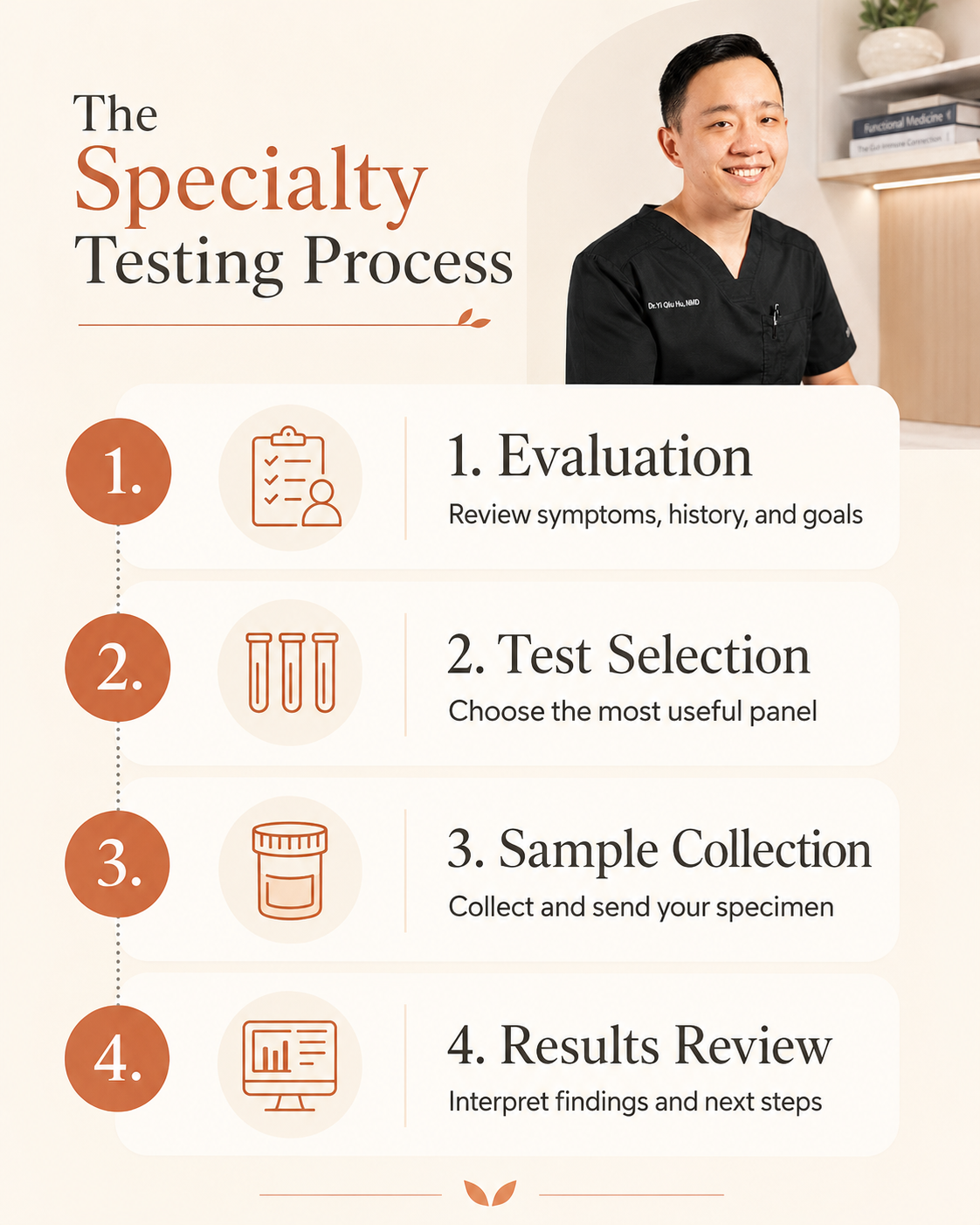
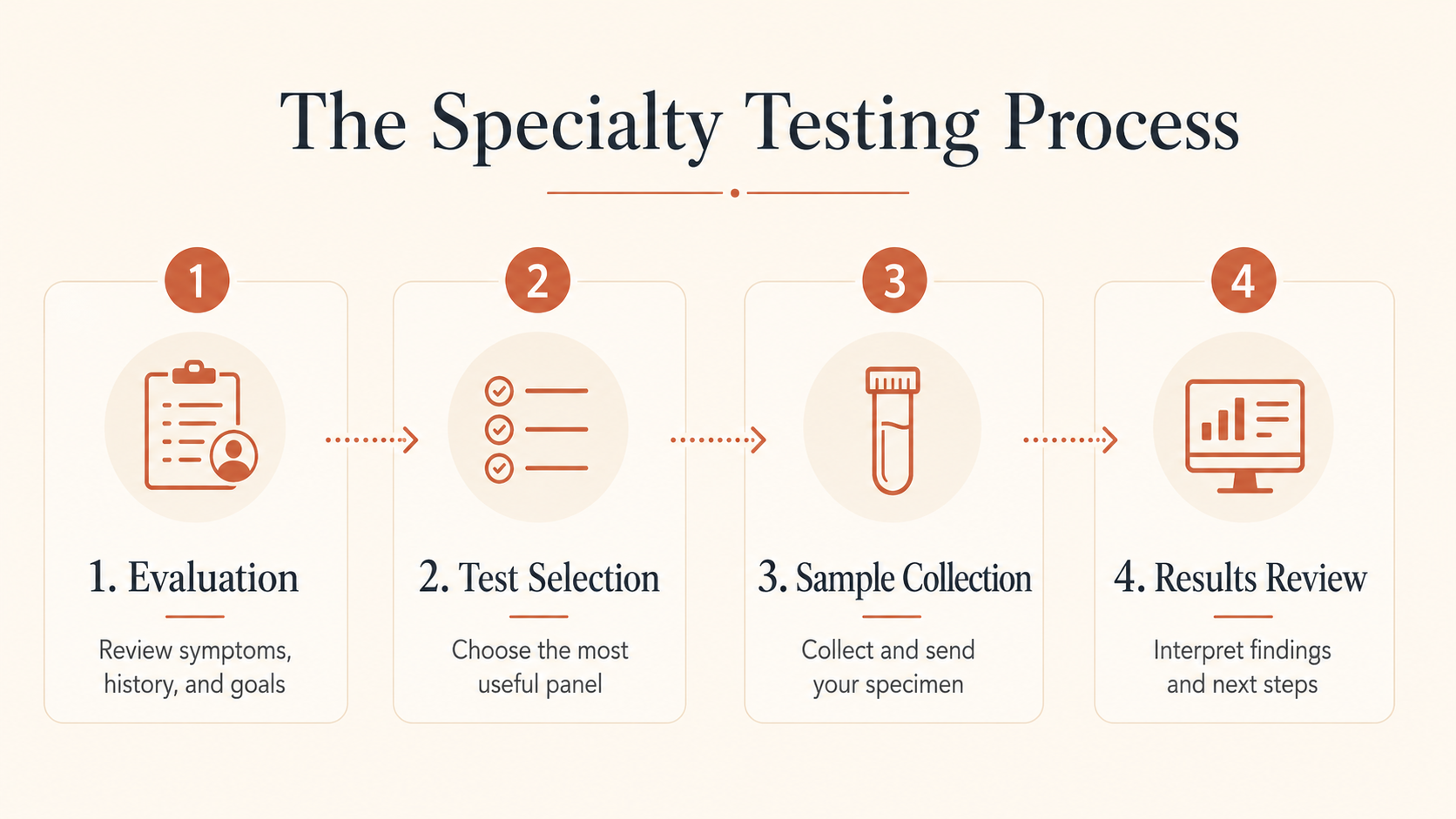
A thoughtful specialty laboratory evaluation generally includes four stages.
1. Initial medical evaluation
Your physician reviews your:
Current symptoms
Medical and family history
Previous diagnoses
Medications and supplements
Lifestyle
Nutrition
Environmental and occupational exposures
Previous laboratory results
Current treatment plan
Personal health goals
Routine testing or another medical evaluation may be recommended before specialty testing.
2. Personalized test selection
The physician identifies the clinical questions that need to be answered and recommends the test most likely to provide useful information.
You should receive an explanation of:
Why the test is being considered
What the panel measures
What it cannot determine
How the sample is collected
Expected turnaround time
Total expected cost
How the result may influence your care
3. Sample collection and laboratory processing
You complete the required blood, urine, saliva, stool, or other collection. The specimen is then shipped or delivered to the testing laboratory.
Careful collection is important. An improperly timed, contaminated, insufficient, delayed, or incorrectly stored sample may be rejected or produce less reliable information.
4. Physician review and next-step planning
Once the results are available, your physician reviews the findings alongside your symptoms, history, medications, previous testing, and health goals.
The next step may include:
No treatment if a finding is not clinically significant
Repeating or confirming an unexpected result
Additional conventional testing
Nutrition or lifestyle recommendations
Targeted supplementation
Medication management
Referral to a specialist
Monitoring symptoms over time
Carefully selected follow-up testing
A laboratory report provides data. Clinical interpretation determines whether that information is meaningful for you.
How Accurate Are Specialty Laboratory Tests?
There is no single answer that applies to every specialty test.
A laboratory test can be assessed in several different ways:
Analytical validity: Does the test accurately measure the substance it claims to measure?
Clinical validity: Is the measured marker meaningfully associated with a condition or outcome?
Clinical utility: Does using the result improve medical decision-making or patient care?
Reproducibility: Would repeat testing under similar conditions produce a comparable result?
A test can measure a biomarker accurately while the clinical meaning of that biomarker remains uncertain. This distinction is one reason specialty results should not be interpreted only by looking for red, yellow, or green flags on a report.
When considering a test, ask whether the laboratory is appropriately certified, whether the method has been validated, and whether the result is supported by evidence relevant to the clinical question being evaluated.
What Does an Abnormal Result Mean?
An abnormal specialty result does not automatically mean you have a medical condition requiring treatment.
Results can be influenced by:
Normal biological variation
Temporary illness
Dehydration
Recent meals
Exercise
Stress
Sleep
Medications
Supplements
Collection timing
Menstrual-cycle timing
Specimen handling
Laboratory methodology
The laboratory’s reference population
Reference ranges are statistical tools, not universal boundaries separating health from disease.
When a panel evaluates many markers, it is also possible for one or more results to fall outside the listed range by chance. Your physician should prioritize results according to their magnitude, consistency, relationship to your symptoms, supporting evidence, and whether the finding can be confirmed.
Questions to Ask Before Ordering a Specialty Test
Before agreeing to testing, consider asking:
What specific question are we trying to answer?
Have the appropriate routine tests already been completed?
How reliable and clinically useful is this test?
What are the test’s most important limitations?
Could medications or supplements affect the result?
How will the sample be collected?
What is included in the quoted price?
Is the test likely to be covered by insurance?
How long will results take?
What might we do differently based on the result?
Could an abnormal finding require confirmatory testing?
Who will review and explain the complete report?
You should understand both the potential value and the limitations of a panel before it is ordered.
Does Insurance Cover Specialty Laboratory Testing?
Coverage varies according to:
Your insurance plan
The laboratory
The test being ordered
The medical indication
Whether the laboratory is in network
Your deductible and coinsurance
Whether prior authorization is required
Many specialty laboratory panels are offered on a self-pay basis. Insurance reimbursement should not be assumed unless it has been confirmed directly with the insurer and laboratory.
Before testing, request a clear written explanation of:
The laboratory fee
Collection or mobile-phlebotomy fees
Shipping costs
Initial consultation fees
Results-review fees
Whether follow-up care is included
Potential additional costs after testing
Current Ask Dr. Hu testing options and package information are available on our specialty laboratory testing service page.
Specialty Testing at Ask Dr. Hu
Ask Dr. Hu offers physician-guided specialty laboratory testing for patients throughout Arizona.
Our process is built around several principles:
Testing should have a clear purpose
We begin by understanding your concerns and identifying the clinical questions that testing may help answer.
Not every patient needs the same panel
Testing is selected according to your symptoms, history, previous results, risk factors, exposures, goals, and budget.
Results should not be interpreted in isolation
We review your specialty findings alongside your conventional laboratory results, medications, supplements, lifestyle, and complete medical history.
Not every abnormal result requires treatment
We prioritize the findings most likely to be meaningful and recommend confirmation when appropriate.
Recommendations should be practical
Your plan may include conventional medical care, nutrition, lifestyle changes, carefully selected supplements, medications, specialist referrals, monitoring, or additional testing.
Patients seeking continued physician access, monitoring, and treatment adjustments may also explore our concierge medicine membership. Membership is not required to schedule an individual specialty testing service.
Frequently Asked Questions
-
The terms sometimes overlap. “Functional laboratory testing” is commonly used to describe testing intended to explore physiological patterns or potential contributors to symptoms. However, the term is not a guarantee that a test is clinically necessary, validated for every proposed use, or superior to conventional testing.
The specific test, methodology, evidence, laboratory quality, and clinical purpose are more important than the label used to describe it.
-
Ordering every available panel is generally not recommended. Large amounts of testing can create confusing or incidental findings, unnecessary expenses, and additional follow-up testing.
A targeted strategy based on your history and clinical needs is more likely to provide useful information.
-
Specialty testing may provide additional information, but fatigue has many possible causes. A complete evaluation may need to consider sleep, medications, anemia, thyroid disease, infection, cardiovascular conditions, mood disorders, nutrition, chronic illness, and other factors.
No single specialty panel can evaluate every possible cause of fatigue.
-
Food-specific IgG testing does not diagnose an immediate IgE-mediated food allergy. Suspected food allergy should be evaluated using an appropriate medical history and accepted allergy testing methods.
Seek urgent medical attention for breathing difficulty, throat swelling, faintness, or another potentially serious allergic reaction.
-
Many urine, saliva, stool, dried blood spot, and cheek-swab samples can be collected at home. Some tests require a standard blood draw or mobile phlebotomy.
Follow the collection, storage, and shipping instructions carefully.
-
Turnaround times vary by panel. Some results may be available within one or two weeks, while more complex testing may require several weeks.
Your expected turnaround time should be reviewed before the test is ordered.
-
No. A normal result does not exclude every medical condition. Laboratory testing is only one part of an evaluation.
Symptoms, medical history, examination findings, imaging, conventional testing, and specialist evaluation may still be necessary.
-
Treatment should not be based solely on color-coded laboratory flags or automated report recommendations.
Supplement decisions should consider the strength of the evidence, your symptoms, medical conditions, medications, diet, conventional laboratory results, potential interactions, and appropriate dosing.
Final Thoughts
Specialty laboratory testing can provide useful information when it is selected for a clear purpose and interpreted within the context of your complete health history.
It should not be viewed as a replacement for routine blood work, physical examinations, recommended screenings, imaging, or specialist care. More testing is not always better, and an abnormal marker does not automatically establish a diagnosis or require treatment.
The greatest value comes from choosing the right test, understanding its limitations, and using the results to support thoughtful medical decisions.
Explore additional physician-authored articles, patient guides, and health FAQs in the Ask Dr. Hu health resource library.


Interested in Specialty Laboratory Testing?
Ask Dr. Hu provides physician-guided specialty testing for patients throughout Arizona. Your consultation includes a review of your concerns, previous results, health history, testing options, limitations, and expected costs before a panel is ordered.
Contact Ask Dr. Hu to schedule a specialty laboratory testing consultation.
Information on this page is provided for general educational purposes and does not replace individualized medical advice, diagnosis, or treatment. Reading this article does not establish a physician-patient relationship.