What Is Platelet-Rich Plasma (PRP) Therapy?
Written by YiQiu Hu, NMD
Arizona-licensed naturopathic physician and virtual concierge medicine provider
Published August 2026 | Medically reviewed August 2026
Platelet-rich plasma, commonly called PRP, is a treatment made from a small sample of your own blood. The blood is processed to concentrate platelets and other components of plasma, and the resulting preparation is injected into a specific joint, tendon, ligament, or other treatment area.
PRP is sometimes described as an orthobiologic or regenerative medicine treatment because platelets contain growth factors and signaling proteins involved in the body's normal response to tissue injury. However, PRP should not be thought of as a guaranteed way to “regenerate” damaged tissue. Its effectiveness varies considerably depending on the condition being treated, the PRP preparation used, and the individual patient.
The American Academy of Orthopaedic Surgeons notes that research is most encouraging for certain musculoskeletal conditions, including some chronic tendon problems and mild-to-moderate knee osteoarthritis, while evidence for many other uses remains uncertain.
What Exactly Is Platelet-Rich Plasma?
Blood contains several components, including red blood cells, white blood cells, platelets, and plasma.
Platelets are probably best known for helping blood clot after an injury, but they also contain proteins and growth factors involved in tissue signaling and the body's normal healing response.
With PRP therapy, a patient's blood is processed to create plasma containing a higher concentration of platelets than is ordinarily present in circulating blood. The precise concentration and cellular composition can vary depending on the preparation system being used.
PRP is autologous, meaning it comes from your own blood rather than from a donor.
How Is PRP Made?
A typical PRP procedure begins with a routine blood draw.
The blood is placed into a specialized centrifuge that spins at high speed. This separates different components of the blood according to their physical characteristics.
The physician then collects the platelet-rich portion for use during the procedure.
The general process involves:
Drawing a small amount of your blood.
Processing the blood in a centrifuge.
Separating and concentrating the platelet-containing plasma.
Preparing the treatment area.
Injecting the PRP into the targeted tissue or joint.
The preparation process can differ between PRP systems, which is one reason results from clinical studies are not always directly comparable.
How Is PRP Supposed to Work?
PRP delivers a concentrated mixture of platelets and platelet-associated signaling proteins to a specific treatment area.
These substances participate in several aspects of the body's normal response to injury, including cellular signaling, inflammation, tissue remodeling, and healing.
The theory behind PRP is that increasing the concentration of these substances at an injured or degenerative area may influence the local healing environment.
However, the biological effects are complex, and having more platelets does not automatically mean that a tissue will heal or regenerate.
The most important question is therefore not simply whether PRP contains growth factors. It is whether clinical research shows that PRP improves pain and function for the specific condition being treated.
What Conditions May PRP Be Used For?
PRP has been studied for numerous musculoskeletal conditions, including:
Knee osteoarthritis
Tennis elbow, or lateral epicondylitis
Patellar tendon problems
Achilles tendinopathy
Rotator cuff and shoulder conditions
Certain ligament injuries
Sports-related injuries
Other chronic tendon and soft-tissue problems
PRP may also be used in some surgical settings.
However, being studied or offered for a condition does not necessarily mean that PRP has been proven effective for that condition.
That distinction is especially important when considering treatments marketed under broad terms such as “regenerative medicine.”
If you are experiencing persistent musculoskeletal pain, start with an appropriate diagnosis rather than selecting PRP based only on the location of the pain. Our Integrative Pain Management program begins with an evaluation of the possible source of symptoms before a specific procedure is recommended.
What Does the Research Say About PRP?
The evidence for PRP is not the same for every musculoskeletal condition.
For knee osteoarthritis, multiple studies and systematic reviews have reported improvements in pain or function in selected patients receiving PRP. The American Academy of Orthopaedic Surgeons describes increasing evidence supporting PRP for low- to moderate-grade knee osteoarthritis.
Research involving tendon disorders is more variable.
For example, some literature has suggested benefit for lateral epicondylitis, commonly known as tennis elbow. However, evidence should not be generalized from one tendon to another.
A 2025 systematic review and meta-analysis examining chronic Achilles tendinopathy included six randomized clinical trials involving 422 participants. The investigators found no meaningful improvement in pain or function from PRP compared with placebo and concluded that current evidence did not support its routine use for Achilles tendinopathy.
This illustrates an important principle:
PRP should be evaluated based on the diagnosis being treated rather than being considered a universal treatment for joint, tendon, or musculoskeletal pain.
Does PRP Regrow Cartilage?
PRP is sometimes marketed as if it can reliably regrow damaged cartilage or reverse arthritis.
That is stronger than the available clinical evidence supports.
Studies evaluating PRP for osteoarthritis primarily look at outcomes such as:
Pain
Physical function
Mobility
Symptoms
Quality of life
Need for additional treatment
Some laboratory and imaging research investigates possible effects on cartilage and the joint environment, but patients should not be promised that a PRP injection will restore damaged cartilage or permanently reverse osteoarthritis.
A more reasonable goal for selected patients may be improvement in symptoms and function.
Are PRP Injections Performed With Ultrasound Guidance?
They may be.
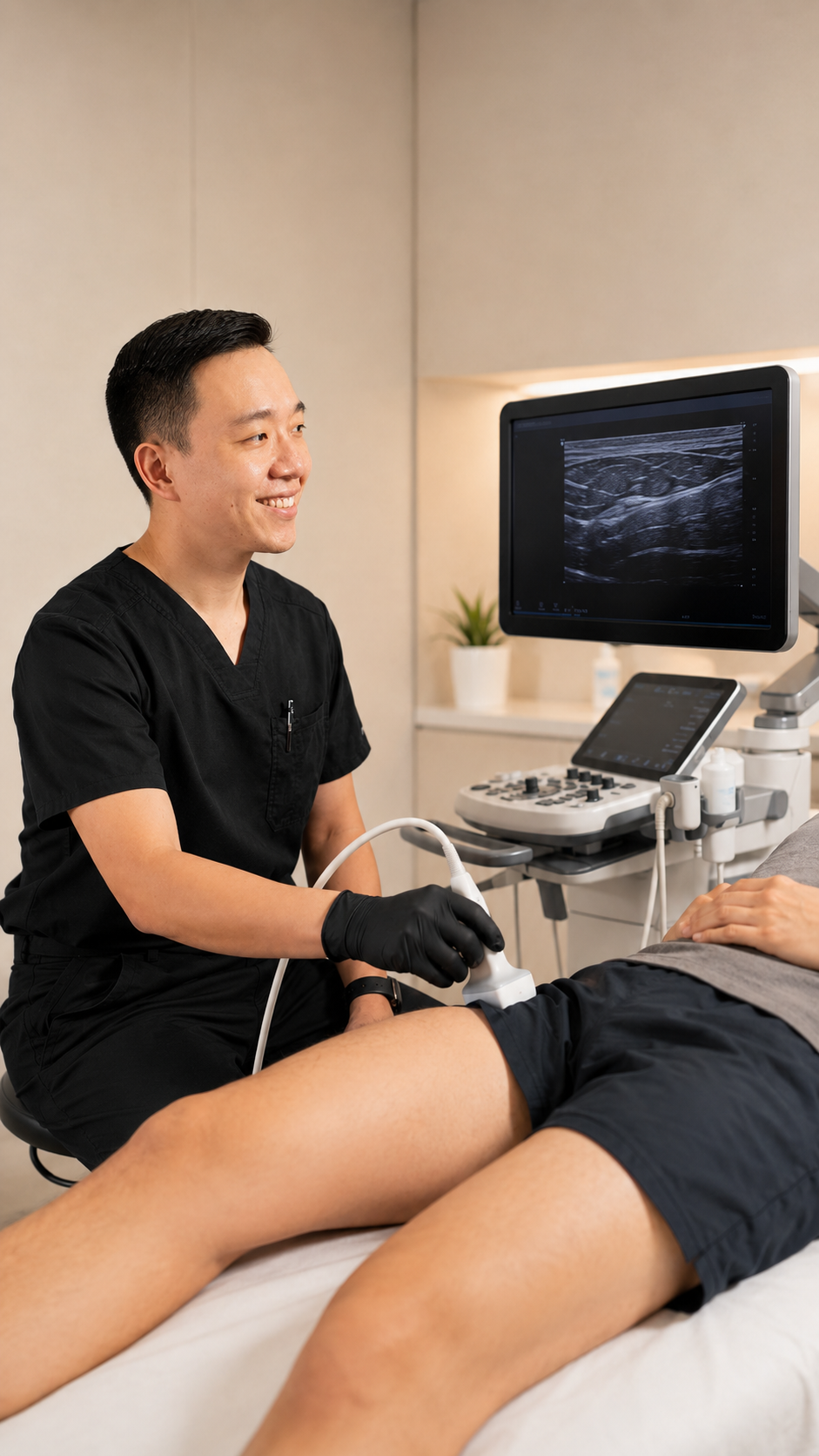
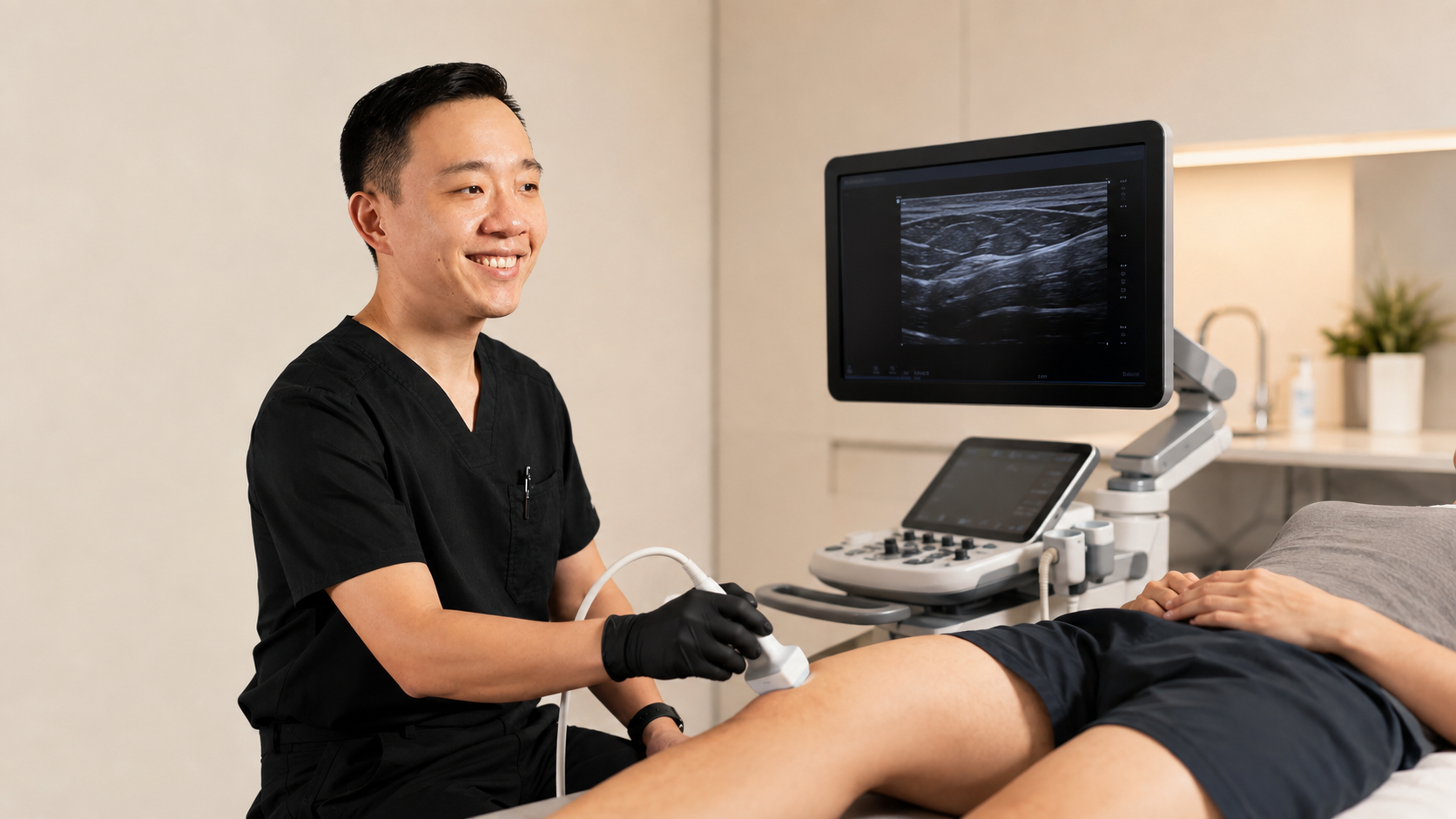
Musculoskeletal ultrasound allows a physician to visualize many joints, tendons, ligaments, muscles, nerves, blood vessels, and other soft-tissue structures in real time.
During certain PRP procedures, ultrasound can help the physician identify the intended treatment area and guide needle placement.
Not every PRP injection requires ultrasound guidance. Whether it is appropriate depends on the anatomy, condition, procedure, and physician's clinical judgment.
You can learn more about the broader role of image-guided procedures on our Integrative Pain Management page.
Does a PRP Injection Hurt?
Most patients experience some discomfort from the blood draw and injection.
Temporary soreness, stiffness, or increased discomfort can also occur following treatment. The degree of discomfort depends on the structure being treated and the type of procedure performed.
PRP is generally not intended to provide immediate pain relief. In conditions where it is effective, improvement may occur gradually as the treatment area responds over the following weeks or months.
Individual response varies, and improvement cannot be guaranteed.
How Long Does PRP Take to Work?
There is no single PRP recovery timeline.
Some patients may notice improvement within several weeks, while others may require a longer period before determining whether treatment has been beneficial.
The timeline can depend on:
The diagnosis
Severity of the condition
How long the problem has been present
The tissue being treated
PRP preparation
Rehabilitation
Activity level
General health
Previous injuries or procedures
PRP should generally be considered one component of a broader recovery plan rather than a replacement for appropriate rehabilitation.
Our patient guide to starting integrative pain management explains how procedures, rehabilitation, activity modification, imaging, and other treatments may fit together within an individualized treatment plan.
How Many PRP Treatments Are Needed?
There is no universally accepted number of PRP injections for every condition.
Some treatment protocols involve a single procedure, while others involve more than one injection.
The appropriate approach depends on the diagnosis, available research, previous treatment, severity of symptoms, response to treatment, and the physician's clinical judgment.
More injections do not necessarily mean better results.
Treatment should be reassessed based on meaningful changes in pain, function, mobility, and activity rather than automatically continuing a predetermined series.
What Are the Risks of PRP Therapy?
Because PRP is prepared from the patient's own blood, it does not involve receiving donor plasma or donor platelets.
However, PRP is still an injection procedure and is not risk-free.
Possible risks may include:
Temporary pain or soreness
Bruising
Bleeding
Swelling
Temporary inflammatory reaction
Infection
Irritation of nearby tissue
Injury to a nerve, blood vessel, or other structure
Lack of meaningful improvement
The precise risks depend on the area being treated and the procedure being performed.
Before treatment, patients should tell their physician about medications, supplements, blood thinners, bleeding problems, infections, medical conditions, recent procedures, and other factors that could affect procedural safety.
Do not stop a prescribed blood thinner or other medication simply because you are considering PRP. Medication changes should be discussed with the clinician responsible for your care.
Who May Not Be a Good Candidate for PRP?
PRP is not automatically appropriate simply because a patient has joint or tendon pain.
Additional consideration may be necessary for patients with factors such as:
Active infection
Significant bleeding disorders
Abnormal platelet counts or other blood abnormalities
Certain medications that affect bleeding or platelet function
Serious uncontrolled medical conditions
A diagnosis that is unlikely to respond to PRP
An injury requiring surgical treatment or another form of medical care
An appropriate evaluation is particularly important when symptoms have not yet been clearly diagnosed.
You can learn more about this broader diagnostic approach in our FAQ, What Is Integrative Pain Management?.
Is PRP FDA Approved?
This question requires some clarification.
The FDA lists devices authorized for preparing autologous PRP for specific intended uses. Some FDA-listed PRP preparation devices, for example, are intended to prepare PRP that is mixed with bone graft material during orthopedic procedures.
That is different from FDA approval of PRP injections as a drug treatment for conditions such as knee osteoarthritis, tendon pain, or chronic musculoskeletal pain.
The U.S. Food and Drug Administration also cautions consumers against assuming that treatments marketed broadly as “regenerative medicine” have been FDA-approved for orthopedic conditions.
Patients should therefore distinguish between the regulatory status of a device used to prepare PRP and evidence supporting the clinical use of PRP for a particular diagnosis.
Is PRP the Same as Stem Cell Therapy?
No.
PRP is produced from the patient's blood and concentrates platelets and plasma.
Stem-cell and cell-based products involve a different category of biological material and raise different scientific, safety, and regulatory considerations.
Although PRP is sometimes grouped with stem-cell treatments under the general terms “regenerative medicine” or “orthobiologics,” the treatments should not be considered interchangeable.
How Much Does PRP Therapy Cost?
At Ask Dr. Hu, current pricing for PRP therapy is $1,000–$1,400 per joint. Final pricing may vary depending on the treatment area, procedural complexity, ultrasound guidance, and additional services.
Ask Dr. Hu is a direct-pay practice and does not bill insurance for pain-management visits or procedures. Documentation may be provided upon request for patients who wish to seek reimbursement from an insurance plan, HSA, or FSA, but reimbursement cannot be guaranteed.
See current services and pricing on our Integrative Pain Management page.
Is PRP Right for Me?
PRP may be reasonable to consider for certain patients, but the decision should begin with a diagnosis.
Before recommending PRP, a physician may consider:
What structure appears to be causing the pain
Whether the problem is acute or chronic
Physical examination findings
Available imaging
Previous treatments
Severity of the injury or degeneration
Medical history
Current medications
Rehabilitation options
Available evidence for PRP in that particular condition
The patient's goals, preferences, and expectations
PRP should not automatically be the first treatment for every musculoskeletal problem.
Depending on the diagnosis, appropriate care may instead involve rehabilitation, exercise, activity modification, physical therapy, medication, acupuncture or dry needling, another injection procedure, diagnostic testing, or referral to an orthopedic or other specialist.
Explore our Integrative Pain Management Resource Center for additional physician-written guides about evaluating and treating musculoskeletal pain.
The Bottom Line
Platelet-rich plasma therapy uses a concentrated preparation made from your own blood that is injected into a targeted joint or injured tissue.
PRP contains platelets and signaling proteins involved in the body's normal response to injury, but its clinical effectiveness depends heavily on the condition being treated.
Research is encouraging for selected musculoskeletal conditions, particularly some patients with mild-to-moderate knee osteoarthritis, while evidence for other conditions remains mixed or negative.
PRP is therefore best viewed as a condition-specific treatment option rather than a universal regenerative treatment or guaranteed alternative to surgery.
A thorough evaluation can help determine the likely source of your symptoms and whether PRP, rehabilitation, another treatment, additional imaging, or specialist evaluation is the more appropriate next step.
Evidence, Medical Sources, and Editorial Standards
This article was created for patient education using established orthopedic resources, current peer-reviewed research, and regulatory guidance.
Key references include:
American Academy of Orthopaedic Surgeons: Platelet-Rich Plasma
FDA: Important Patient and Consumer Information About Regenerative Medicine Therapies
PubMed: PRP for Knee Osteoarthritis — Systematic Review and Meta-Analysis
PubMed: PRP for Achilles Tendinopathy — Meta-Analysis of Randomized Clinical Trials
Medical evidence regarding PRP continues to evolve, and study results should be interpreted according to the condition being treated, patient characteristics, PRP preparation, treatment protocol, and quality of the available research.
This information is intended for general educational purposes and does not replace individualized medical evaluation, diagnosis, or treatment.
About the Author
YiQiu Hu, NMD, is an Arizona-licensed naturopathic physician with Ask Dr. Hu. His clinical approach emphasizes individualized medical evaluation, evidence-informed treatment, preventive care, and coordination of conventional and integrative treatment options.
Ask Dr. Hu provides personalized medical care for patients throughout Arizona, including integrative pain-management evaluations and musculoskeletal treatment options.
Considering PRP or another treatment for musculoskeletal pain?
Schedule an integrative pain-management evaluation to review your symptoms, examination findings, previous treatment, and available imaging and determine which treatment options may be appropriate for your condition.
Individual results vary. No specific treatment outcome can be guaranteed. Pain-management services are not intended for medical emergencies.