How Should I Prepare for Specialty Lab Testing?
Written by YiQiu Hu, NMD
Arizona-licensed naturopathic physician and virtual concierge medicine provider
Published August 2026 | Medically reviewed August 2026
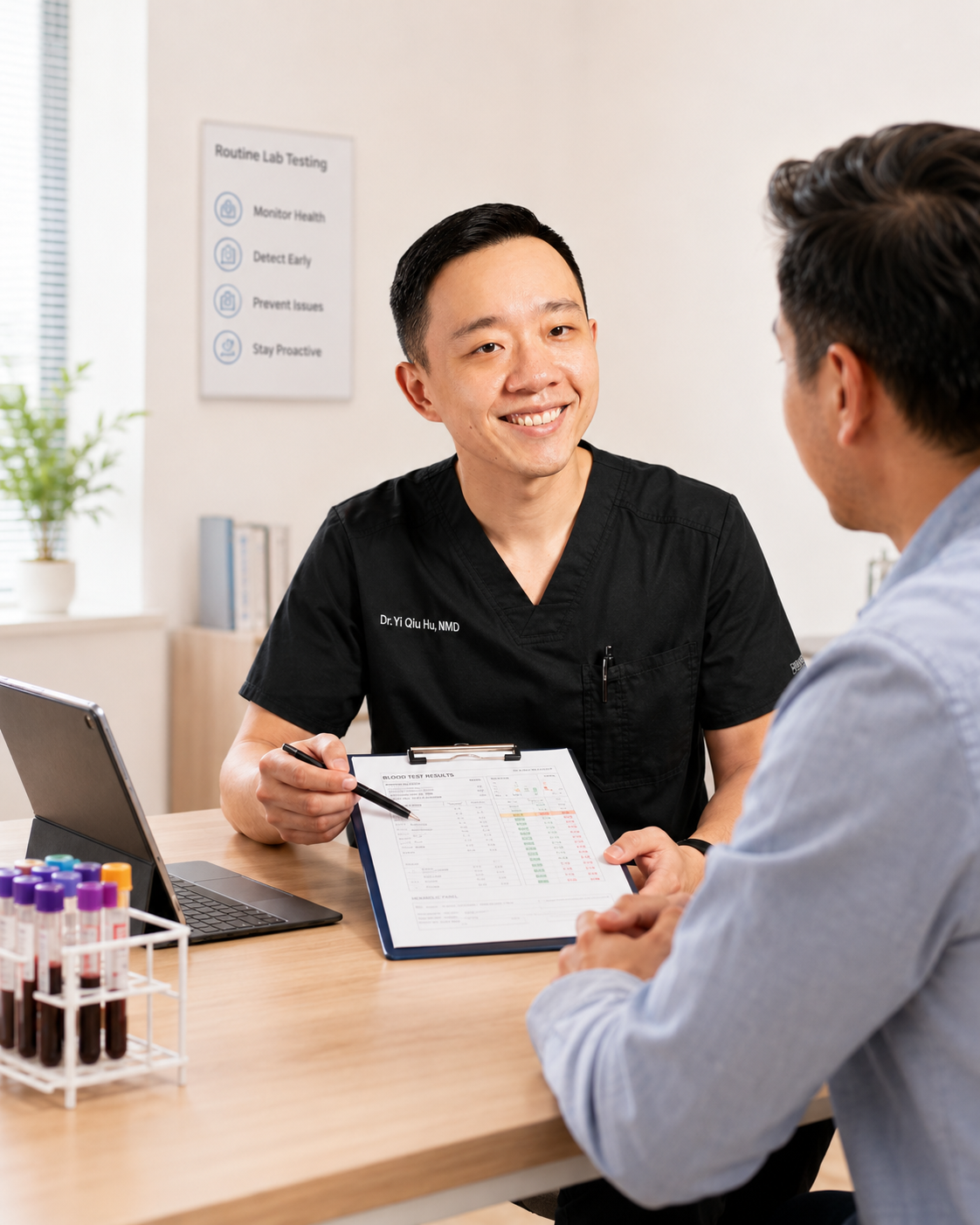

Preparing for specialty laboratory testing depends on the specific test, specimen type, and laboratory performing the analysis.
Some specialty tests require little or no preparation. Others may require fasting, avoiding certain foods or supplements, collecting a sample at a particular time of day, timing collection with a menstrual cycle, or following detailed instructions for urine, saliva, stool, or blood specimens.
The most important rule is simple: follow the preparation and collection instructions provided for your specific test rather than applying the same preparation rules to every laboratory panel.
Following the instructions carefully can reduce avoidable variables and help make your results as useful as possible. General laboratory guidance from the National Library of Medicine similarly emphasizes following test-specific instructions and telling your healthcare professional if the instructions were not followed exactly.
If you are new to advanced testing, you may first want to read What Is Specialty Laboratory Testing? A Patient's Guide.
Do All Specialty Lab Tests Require Special Preparation?
No.
Preparation varies considerably from one test to another.
Depending on the panel, you may be asked to:
Fast for a specific number of hours
Drink water normally or change your fluid intake
Avoid alcohol
Avoid strenuous exercise
Avoid certain foods
Temporarily change the timing of selected supplements
Collect a sample at a particular time
Collect multiple samples throughout the day
Collect a specimen on a particular day of your menstrual cycle
Avoid contaminating a urine, saliva, or stool specimen
Refrigerate or freeze a specimen after collection
Ship the sample within a specified period
Other tests may require virtually no preparation.
Because these requirements differ, do not assume that instructions from a previous laboratory test apply to a new test.
The National Library of Medicine notes that fasting, food intake, alcohol, exercise, smoking, medications, supplements, and other behaviors can affect selected laboratory tests.
Should I Fast Before Specialty Lab Testing?
Only if your physician or laboratory specifically instructs you to fast.
Fasting is commonly associated with laboratory testing, but not every specialty test requires it.
If fasting is required, your instructions should tell you:
How many hours to fast
Whether plain water is allowed
Whether medications can be taken
Whether supplements should be delayed
What time the sample should be collected
When a blood-test fast is required, plain water is generally permitted unless you receive different instructions. MedlinePlus notes that fasting instructions may also include avoiding gum, smoking, and exercise during the fasting period.
Do not extend the fasting period simply because you believe a longer fast will produce a "cleaner" result. Follow the requested duration.
If several laboratory tests are being performed at the same time, the preparation requirements for one test may determine how you prepare for the entire collection.
For a broader discussion of conventional testing, see Understanding Laboratory Testing: A Complete Guide for Patients.
Should I Stop My Medications Before Specialty Lab Testing?
Do not stop a prescription medication unless your physician specifically tells you to do so.
Medications can influence some laboratory measurements, but abruptly discontinuing a medication can also be inappropriate or unsafe.
Before testing, make sure your physician knows about:
Prescription medications
Over-the-counter medications
Vitamins
Minerals
Herbal products
Hormones
Protein or nutritional supplements
Pre-workout products
Hair, skin, and nail supplements
Your physician or the laboratory can then determine whether anything needs to be changed before collection.
MedlinePlus specifically recommends telling your healthcare professional about medications, vitamins, and supplements and advises patients not to discontinue medications unless instructed to do so.
Should I Stop Vitamins or Supplements Before Testing?
Sometimes—but not automatically.
Certain supplements can directly alter the biomarker being measured, while others can interfere with the laboratory method used to measure it.
For example, biotin, also known as vitamin B7, can interfere with certain laboratory assays. The NIH Office of Dietary Supplements documents interactions between biotin and laboratory testing, including reports involving hormone-related assays.
Biotin can be found in:
B-complex supplements
Multivitamins
Prenatal vitamins
Hair, skin, and nail products
Stand-alone biotin supplements
However, there is no universal rule that every patient should stop every supplement for the same number of days.
The appropriate approach depends on:
The supplement
The dose
The laboratory method
The biomarkers being tested
Why you are taking the supplement
Your physician's instructions
If your laboratory kit tells you to withhold a supplement, follow the specific timing provided.
Should I Drink Water Before Specialty Lab Testing?
In many cases, normal hydration is appropriate.
Adequate hydration can also make a standard blood draw easier for some patients.
However, certain specialty tests involve measurements that can be influenced by fluid intake or urine concentration. A collection protocol may therefore tell you to maintain your normal fluid intake or follow more specific instructions.
Avoid deliberately drinking an unusually large amount of water before a urine collection unless instructed to do so. Excessive fluid intake can dilute urine.
MedlinePlus notes that fluid instructions vary by test and that some laboratory tests may specifically require additional water.
Should I Avoid Exercise Before My Test?
Possibly.
Strenuous exercise can temporarily influence certain physiological measurements and laboratory biomarkers.
Depending on the panel, you may be instructed to avoid vigorous exercise for a period before collection.
That does not mean everyone receiving specialty testing needs to stop exercising. Follow the instructions for your specific test.
If you unexpectedly complete a very strenuous workout before a test that instructed you to avoid exercise, tell your physician or the laboratory before submitting the sample.
Should I Avoid Alcohol Before Specialty Testing?
Some laboratory protocols ask patients to avoid alcohol before collection.
Alcohol can affect a variety of physiological processes, so its relevance depends on what is being measured.
If your test instructions specify an alcohol-free period, follow that period exactly rather than making assumptions about how long alcohol should be avoided.
MedlinePlus includes alcohol among the foods and beverages that patients may be asked to avoid for certain laboratory tests.
Does the Time of Day Matter?
For some specialty tests, yes.
Certain biomarkers naturally change throughout the day.
For example, some hormone-related testing may require:
Morning collection
Evening collection
Several samples over one day
Collection at specific intervals
Other testing may require a sample relative to:
Your waking time
Your last meal
Medication administration
Menstrual-cycle timing
Supplement use
If timing matters, record the requested information accurately.
Collecting a sample several hours outside the specified window may make the results harder to interpret.
Does Menstrual-Cycle Timing Matter for Hormone Testing?
It can.
Hormone concentrations change throughout the menstrual cycle, so the appropriate collection day depends on what your physician is evaluating.
Some hormone panels can be performed regardless of cycle day. Others are most informative during a specific phase.
Patients should tell their physician about:
The first day of their most recent menstrual period
Typical cycle length
Whether cycles are regular
Hormonal contraception
Hormone replacement therapy
Pregnancy or breastfeeding when relevant
Do not choose a collection day based solely on a generic online recommendation. Your physician should tell you whether cycle timing matters for the particular hormones being evaluated.
You can learn more about the different approaches to advanced testing in our Specialty Laboratory Testing: A Complete Guide for Patients.
How Should I Prepare for a Stool Test?
Stool testing generally requires more attention to collection technique than a routine blood draw.
Depending on the test, instructions may address:
Whether supplements or medications need to be discussed beforehand
Whether certain foods should be avoided
How much stool to collect
Which collection containers to use
Whether samples should be taken from different areas of the specimen
Whether urine or toilet water must be kept out of the specimen
Refrigeration or freezing
Shipping deadlines
Follow the kit instructions exactly.
Do not place a specimen into a container other than the one supplied unless the laboratory specifically permits it.
How Should I Prepare for a Urine Test?
Urine testing can involve several different collection methods.
You might be asked to provide:
A single urine specimen
First-morning urine
A timed specimen
Multiple specimens
A 24-hour urine collection
The instructions may also specify whether you should avoid certain foods, medications, supplements, or unusual fluid intake.
For a 24-hour collection, accurately recording the beginning and ending times is particularly important.
How Should I Prepare for a Saliva Test?
Saliva collection may require avoiding certain activities before sampling.
Depending on the test, the instructions might tell you not to:
Eat
Drink anything other than water
Brush or floss your teeth
Use mouthwash
Smoke or vape
Chew gum
Use certain medications or hormones immediately before collection
Some saliva panels also require several samples at different times during the day.
Because collection schedules vary, write down the sampling times before you begin rather than trying to remember them as you go.
What About At-Home Specialty Laboratory Testing?
Many specialty laboratory specimens can be collected at home, including selected urine, saliva, stool, dried blood spot, and cheek-swab tests.
At-home collection can be convenient, but correct collection and handling remain important.
Before starting:
Read the entire instruction sheet.
Make sure every required collection tube or container is present.
Confirm whether fasting or timing requirements apply.
Check storage requirements.
Review shipping instructions.
Complete identification labels before shipping.
Make sure you know whether the specimen must be refrigerated or frozen.
Confirm whether collection should occur on a particular day of the week so the package is not delayed in transit.
If something is missing or unclear, contact the laboratory or your physician before collecting the sample whenever possible.
Ask Dr. Hu's specialty laboratory testing service includes physician-guided test selection and instructions for completing the recommended testing.
What If I Make a Mistake While Preparing or Collecting My Sample?
Tell your physician or laboratory.
Do not hide a collection error because you are worried that the test will need to be repeated.
Examples include:
Accidentally eating during a required fast
Taking a supplement that was supposed to be withheld
Collecting at the wrong time
Missing one sample in a multi-sample test
Contaminating a specimen
Forgetting to refrigerate a sample
Shipping the specimen later than instructed
A minor deviation does not always make a test unusable, but the laboratory or physician needs accurate information to decide whether the sample can still be analyzed and interpreted appropriately.
MedlinePlus specifically recommends telling your healthcare professional when preparation instructions were not followed exactly because even seemingly minor deviations may affect certain results.
Should I Delay Testing If I Am Sick?
It depends on why the test is being performed.
An acute illness, infection, injury, major change in diet, unusual sleep schedule, strenuous physical activity, or significant stress may temporarily alter certain biomarkers.
Sometimes those changes are exactly what your physician wants to evaluate. In other situations, collecting during an unusual temporary condition may make establishing your usual baseline more difficult.
Contact your physician if your health changes significantly between ordering and completing the test.
What Should I Do the Day Before Specialty Laboratory Testing?
Unless your instructions say otherwise, try to maintain your usual routine rather than attempting to make your laboratory results look healthier.
Do not dramatically change your diet, begin an extreme fast, intentionally overhydrate, stop medications on your own, or suddenly eliminate everything you normally consume simply to prepare for testing.
The objective is generally to obtain a useful and interpretable measurement—not to produce the most "perfect" laboratory values possible.
What Should I Bring or Have Ready?
For an in-person blood draw or specimen collection, it can be helpful to have:
Your laboratory order or testing kit
Identification
Insurance information if applicable
A current medication and supplement list
Any laboratory-specific paperwork
Collection instructions
Information about when you last ate if fasting is relevant
For at-home testing, verify that all collection materials are present before beginning.
Frequently Asked Questions
Can I drink coffee before specialty laboratory testing?
It depends on the test.
If you have been instructed to fast, plain water is generally the safest default unless your instructions specifically allow another beverage. Coffee—even black coffee—should not automatically be assumed to be acceptable during a laboratory fast.
Can I take my morning medications before testing?
Often yes, but it depends on the medication and the test.
Do not skip prescription medications unless your physician has instructed you to do so.
Should I stop all supplements before specialty testing?
No.
Some supplements may need to be withheld for particular tests, while others do not. Review your complete supplement list with your physician and follow the test-specific directions.
Can I exercise the morning of my laboratory test?
If your test specifically instructs you to avoid strenuous exercise, wait until after your collection. Otherwise, preparation requirements depend on the biomarkers being evaluated.
What if the laboratory instructions conflict with what I was told?
Contact your physician or the laboratory before collecting the specimen.
For specialty testing, the laboratory's requirements for that particular assay and specimen often matter, so conflicting instructions should be clarified rather than guessed at.
The Most Important Preparation Rule
There is no single preparation protocol for every specialty laboratory test.
A fasting blood panel, hormone saliva profile, 24-hour urine collection, stool analysis, environmental exposure test, and genetic cheek swab may each have completely different requirements.
The best approach is to:
Understand what test you are completing
Read the instructions before collection day
Review medications and supplements with your physician
Follow fasting and timing requirements carefully
Use the correct collection materials
Follow storage and shipping instructions
Report any collection or preparation problems
Good preparation does not guarantee that every laboratory result will be clinically meaningful, but it helps reduce avoidable variables that can complicate interpretation.
For additional information about advanced testing, visit the Specialty Laboratory Testing Resource Center.
Medical Accuracy and Evidence
This article is intended to provide general patient education about laboratory preparation. Individual instructions vary according to the test, laboratory methodology, specimen type, medications, supplements, and reason for testing.
Medical information on this page was reviewed with reference to authoritative laboratory-testing resources, including:
MedlinePlus: How to Prepare for a Lab Test, from the U.S. National Library of Medicine
Centers for Medicare & Medicaid Services: Clinical Laboratory Improvement Amendments
CMS administers CLIA standards for human laboratory testing in the United States with the goal of promoting accurate, reliable, and timely laboratory results.
Laboratory results should be interpreted together with your symptoms, medical history, medications, previous testing, physical findings, and other relevant clinical information.
Preparing for Specialty Lab Testing at Ask Dr. Hu
At Ask Dr. Hu, specialty laboratory testing begins with a physician consultation rather than automatically ordering a large panel.
We review your symptoms, medical history, medications, supplements, previous laboratory results, exposures, health goals, and the clinical question the testing is intended to address.
When testing is appropriate, patients receive guidance about the required specimen, preparation, collection, and next steps.
Learn more about our physician-guided specialty laboratory testing services, or contact Ask Dr. Hu to discuss whether specialty testing may be appropriate for you.
About the Author
YiQiu Hu, NMD is an Arizona-licensed naturopathic physician, founder of Ask Dr. Hu, and medical director. He provides concierge medicine, preventive care, health optimization, laboratory evaluation, chronic condition management, and individualized medical care for patients throughout Arizona.
Through Ask Dr. Hu, Dr. Hu uses both routine and carefully selected specialty laboratory testing when the results are reasonably likely to provide clinically useful information and influence patient care.
This article is intended for general educational purposes and does not replace individualized medical advice, diagnosis, or treatment. Do not discontinue prescription medications or make significant changes to your treatment plan solely to prepare for laboratory testing unless instructed by your healthcare professional.