Building a Personalized Integrative Pain Management Plan
Written by YiQiu Hu, NMD
Arizona-licensed naturopathic physician and virtual concierge medicine provider
Published August 2026 | Medically reviewed August 2026
Pain may be felt in one specific location, but determining how to treat it often requires looking at much more than where it hurts.
Two people with knee pain, shoulder pain, back pain, or another musculoskeletal complaint may have very different underlying problems. They may also have different levels of physical conditioning, medical histories, previous injuries, functional limitations, treatment preferences, and goals.
That is why effective pain management should rarely begin with the question, “Which procedure should we do?”
A better question is:
What combination of treatments gives this particular patient the best opportunity to reduce symptoms, restore function, and return to the activities that matter to them?
A personalized pain management plan may combine diagnostic evaluation, activity modification, rehabilitation, exercise, medications, lifestyle strategies, complementary therapies, targeted procedures, and specialist involvement when appropriate.
This individualized approach is an important part of integrative pain management.
What Is a Personalized Pain Management Plan?
A personalized pain management plan is an individualized strategy developed around the patient's:
Likely diagnosis
Location and mechanism of pain
Duration of symptoms
Physical examination findings
Functional limitations
Previous injuries
Previous treatments and responses
Medical history
Current medications
Imaging or diagnostic findings when relevant
Lifestyle and occupational demands
Personal goals
Treatment preferences
Risks and potential contraindications
Rather than applying the same treatment to every person with the same symptom, the physician considers which factors are most likely contributing to the patient's condition and then selects an appropriate combination and sequence of interventions.
This is one of the central principles discussed in our complete guide to integrative pain management.
Step 1: Begin With the Most Likely Diagnosis
A treatment plan is only as useful as the clinical reasoning behind it.
For example, shoulder pain might originate from the rotator cuff, biceps tendon, joint, bursa, cervical spine, surrounding muscles, or another structure. Knee pain may involve osteoarthritis, meniscus pathology, tendons, ligaments, patellofemoral mechanics, referred pain, or several factors at once.
The location of pain alone therefore does not necessarily identify its source.
The evaluation may include:
A detailed history
Review of how the problem began
Assessment of aggravating and relieving factors
Examination of range of motion
Strength testing
Neurological examination when indicated
Orthopedic or provocative testing
Assessment of movement and function
Review of previous imaging
Diagnostic imaging when appropriate
Laboratory evaluation when a systemic condition is suspected
Not every patient needs advanced imaging before beginning treatment. The decision depends on the clinical situation, examination findings, duration of symptoms, suspected diagnosis, and presence or absence of warning signs.
Understanding the likely source of the symptoms helps determine whether rehabilitation, medication, a procedure, further testing, or referral is the most appropriate next step.
Step 2: Define What Successful Treatment Actually Means
Pain intensity matters, but it is only one measure of recovery.
When developing a treatment plan, I also want to understand what the pain is preventing the patient from doing.
One person may want to:
Walk without significant knee pain
Return to weight training
Play golf again
Pick up a child or grandchild
Work without recurrent back pain
Sleep without shoulder discomfort
Return to hiking
Reduce reliance on pain medication
Avoid or postpone surgery when medically reasonable
These functional goals help determine treatment priorities.
For someone with mild discomfort but major weakness and loss of mobility, rehabilitation may be especially important.
For another patient with severe pain that prevents participation in physical therapy, an appropriate intervention might first be considered to reduce symptoms enough for rehabilitation to become practical.
The treatment plan should therefore focus not simply on making a pain score lower, but on improving function, movement, independence, and quality of life whenever possible.
Step 3: Build the Foundation With Conservative Care
For many musculoskeletal conditions, treatment begins with conservative strategies.
The exact approach depends on the diagnosis, but options may include:
Activity Modification
Activity modification does not necessarily mean complete rest.
Instead, it may mean temporarily reducing or changing movements that repeatedly aggravate an injured or irritated structure while maintaining safe activity elsewhere.
The goal is often to protect the affected area without allowing unnecessary deconditioning.
Therapeutic Exercise and Rehabilitation
Exercise and rehabilitation can address problems such as:
Muscle weakness
Reduced joint mobility
Poor movement mechanics
Loss of endurance
Reduced tissue tolerance
Imbalances following injury
Fear or avoidance of movement
Loss of confidence after prolonged pain
The appropriate exercise program depends on the tissue involved, stage of recovery, previous activity level, and patient goals.
Progressive physical activity and other nonpharmacologic approaches are important components of modern pain care. The CDC recommends maximizing appropriate nonpharmacologic and nonopioid treatment strategies for many patients with subacute and chronic pain.
A well-designed pain treatment plan should therefore consider not only what can reduce pain today, but also what can improve physical capacity over the months ahead.
Step 4: Consider Medications When They Add Meaningful Benefit
Medication may be appropriate for certain pain conditions, but the medication should serve a defined purpose within the larger treatment strategy.
Depending on the diagnosis and the patient's medical history, options may include selected:
Topical medications
Nonsteroidal anti-inflammatory medications
Acetaminophen
Neuropathic pain medications
Muscle-directed medications
Other condition-specific therapies
Medication selection requires consideration of potential benefits, contraindications, interactions, kidney or liver health, gastrointestinal risks, cardiovascular history, age, and other individual factors.
For persistent musculoskeletal pain, medications are often most useful when considered alongside rehabilitation, movement, lifestyle interventions, or treatment of the underlying problem rather than automatically becoming the entire treatment plan.
Current CDC guidance emphasizes individualized decision-making and maximizing appropriate nonopioid and nonpharmacologic therapies for chronic pain before considering opioid therapy.
Step 5: Address Factors That May Influence Recovery
Pain exists within the context of the entire patient.
Although a painful joint or tendon may have a clear structural problem, recovery may also be influenced by other factors.
Depending on the situation, these may include:
Sleep
Poor sleep and persistent pain can reinforce one another. Identifying and addressing significant sleep problems may therefore be relevant for some patients with chronic pain.
Physical Conditioning
Loss of strength and cardiovascular conditioning can make ordinary activities more difficult and may contribute to continued functional limitations.
Nutrition and Metabolic Health
Nutrition does not replace treatment for a torn tendon, advanced arthritis, nerve compression, or another structural problem.
However, overall metabolic health, adequate nutrient intake, body composition, and management of relevant chronic conditions may influence health and physical function.
Stress and Pain Processing
Persistent pain is not always determined solely by the amount of tissue damage visible on an MRI or ultrasound.
With chronic pain, changes in nervous-system sensitivity and pain processing can sometimes become part of the overall clinical picture.
That does not mean that the pain is imaginary.
It means that persistent pain may require a broader treatment strategy than simply treating one anatomical structure.
Step 6: Consider Complementary Therapies Selectively
An integrative approach may incorporate complementary therapies when they are appropriate for the diagnosis and patient.
Examples can include:
Acupuncture
Dry needling
Manual therapies
Mind-body approaches
Selected movement practices
These treatments should not automatically be used simply because they are labeled "natural" or "integrative."
They should be considered according to the patient's condition, goals, available evidence, risks, and response.
For example, the National Center for Complementary and Integrative Health reports evidence supporting certain nonpharmacologic approaches—including acupuncture and selected movement or mind-body therapies—for some chronic pain conditions, although effectiveness varies substantially depending on the condition and intervention.
Integrative medicine works best when complementary treatments are incorporated thoughtfully rather than used indiscriminately.
Step 7: Determine Whether a Targeted Procedure May Help
Some patients improve with conservative treatment alone.
Others may have persistent symptoms despite an appropriate trial of rehabilitation and other treatments.
Depending on the diagnosis, examination, previous treatment response, and patient goals, a physician may then consider selected procedures.
Potential options may include:
Trigger-point injections
Joint injections
Selected nerve or perineural injections
Prolotherapy
Platelet-rich plasma therapy
Other targeted musculoskeletal procedures
The purpose of a procedure should be clear before performing it.
A procedure might be considered to:
Reduce significant symptoms
Address a particular pain-generating structure
Improve the patient's ability to participate in rehabilitation
Treat a selected tendon, ligament, joint, or soft-tissue condition
Provide another treatment option after conservative measures have been unsuccessful
Importantly, not every patient with pain needs an injection, and not every musculoskeletal condition is an appropriate candidate for regenerative medicine.
Treatment selection should follow the diagnosis rather than allowing the availability of a procedure to determine the diagnosis.
Patients considering procedural treatment can learn more about the types of conditions evaluated through integrative pain management.
Step 8: Use Imaging and Ultrasound When They Can Change Management
Medical imaging can be extremely useful, but it should answer a clinical question.
Depending on the condition, a physician might use:
X-ray
MRI
CT
Diagnostic musculoskeletal ultrasound
Other diagnostic studies
Imaging can help clarify suspected structural abnormalities, evaluate injuries, identify significant pathology, or guide treatment decisions.
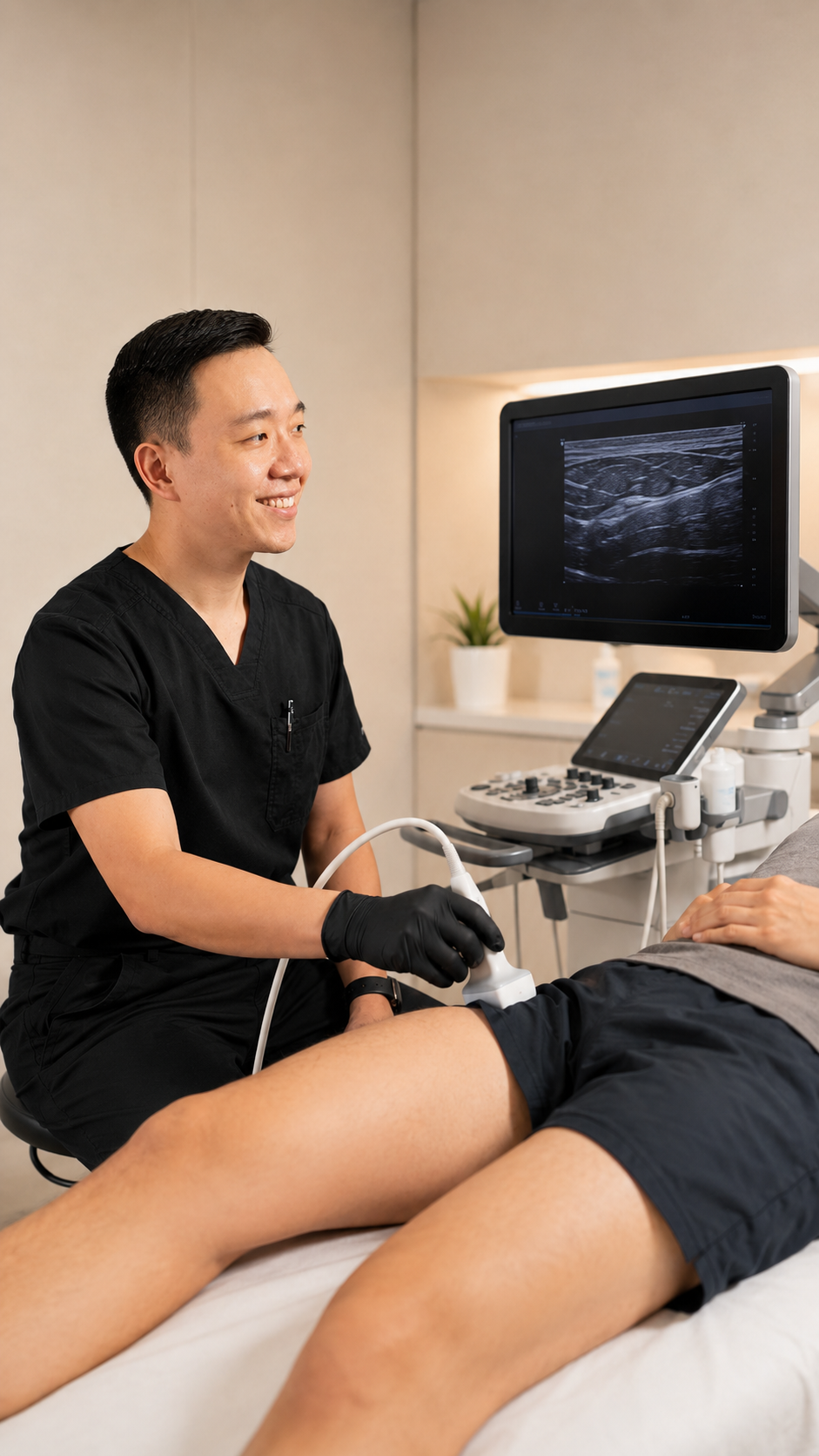
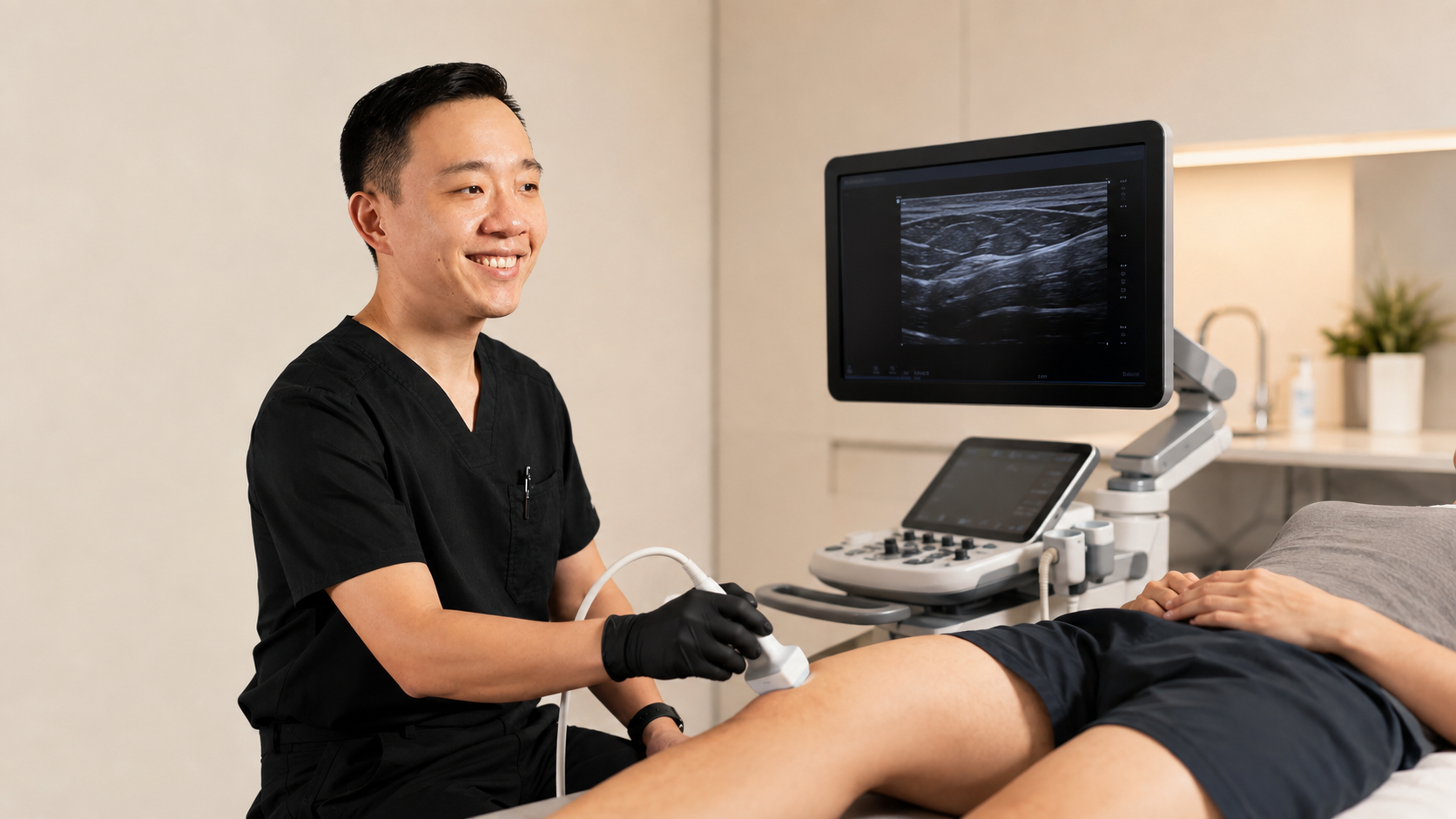
Musculoskeletal ultrasound can also provide real-time visualization of many superficial muscles, tendons, joints, ligaments, nerves, and other soft tissues.
When certain injections are performed, ultrasound guidance may allow the physician to visualize the anatomy and needle in real time rather than relying solely on external landmarks.
However, imaging findings should always be interpreted within the context of the patient's symptoms and examination.
An abnormal MRI does not automatically prove that a particular finding is responsible for the patient's pain.
Likewise, a relatively unremarkable study does not necessarily mean that a patient has no clinically meaningful problem.
Imaging is one part of the evaluation—not the entire diagnosis.
Step 9: Know When Another Specialist Should Be Involved
Integrative pain management does not mean attempting to manage every condition without outside help.
Some patients need coordinated care involving:
Physical therapists
Orthopedic specialists
Neurologists
Neurosurgeons
Rheumatologists
Sports medicine physicians
Interventional pain specialists
Other healthcare professionals
Referral may be appropriate when the suspected condition falls outside the treating physician's expertise, when surgery may be necessary, when progressive neurological symptoms are present, when the diagnosis remains uncertain, or when a multidisciplinary approach offers the patient a better chance of recovery.
The goal should always be to determine the most appropriate level of care for the problem, rather than trying to keep every aspect of treatment within one office.
Step 10: Reassess the Plan Instead of Simply Repeating Treatment
A personalized pain management plan should evolve.
If the patient improves, treatment can progress toward greater strength, activity, and independence.
If improvement is limited, the physician should reconsider questions such as:
Is the working diagnosis still correct?
Has the patient had enough time to respond?
Is rehabilitation appropriate and being performed consistently?
Are there mechanical or lifestyle factors continuing to aggravate the condition?
Is additional imaging warranted?
Could another structure be contributing to the symptoms?
Should the treatment strategy change?
Is referral appropriate?
Simply repeating the same treatment indefinitely without meaningful improvement is rarely a satisfactory long-term strategy.
The response to treatment is itself useful clinical information.
What Might a Personalized Plan Look Like?
There is no universal sequence, but several examples illustrate why individualization matters.
Example 1: Recent Musculoskeletal Injury
A patient with a relatively recent uncomplicated muscle or tendon injury might begin with:
Temporary activity modification
Progressive rehabilitation
Appropriate symptom management
Gradual return to normal activity
A procedure may never be necessary.
Example 2: Chronic Knee Pain With Osteoarthritis
A patient with chronic knee osteoarthritis might require a broader strategy involving:
Strengthening
Weight or metabolic management when relevant
Activity modification
Medication when appropriate
Selected injection treatment
Monitoring of function
Orthopedic referral if symptoms eventually become severe enough to warrant surgical consideration
Example 3: Persistent Tendon Pain
A patient with prolonged tendon symptoms might require evaluation of:
Training load
Strength and biomechanics
Occupational or repetitive stress
Rehabilitation history
Imaging when indicated
Whether a targeted procedure is reasonable after appropriate conservative care
Example 4: Chronic Back Pain
A patient with chronic back pain may require consideration of several contributing factors rather than assuming that one MRI finding explains everything.
Treatment could involve:
Progressive movement
Strengthening
Activity modification
Medication when appropriate
Selected complementary therapies
Evaluation for neurological involvement
Specialist referral when indicated
These examples demonstrate why the phrase “best pain treatment” is often misleading.
The better question is:
Best for which condition, in which patient, at which stage of recovery?
Why More Treatment Is Not Always Better Treatment
Integrative care should not mean assembling the longest possible list of therapies.
More injections, more supplements, more medications, more imaging, and more procedures do not automatically create better medical care.
A good treatment plan is often simpler.
Each recommendation should have a reason.
That might mean:
Establishing the likely diagnosis.
Identifying the patient's primary functional goals.
Starting with appropriate conservative treatment.
Adding medications or complementary therapies selectively.
Considering targeted procedures when there is a reasonable clinical rationale.
Reassessing the patient's response.
Changing direction or referring when the expected progress is not occurring.
The objective is not to use every available treatment.
It is to use the right treatments, in the right sequence, for the right patient.
When Pain Requires More Urgent Evaluation
Most musculoskeletal pain is not an emergency, but certain symptoms can require prompt or urgent medical evaluation.
Examples may include:
Significant trauma
Progressive weakness
New bowel or bladder dysfunction associated with back or neurological symptoms
New loss of sensation in the groin or saddle region
Fever with a painful, swollen, or red joint
Severe unexplained pain with systemic illness
Significant unexplained weight loss
New neurological deficits
Concern for fracture, infection, malignancy, or another serious medical condition
When symptoms suggest an emergency or potentially serious condition, appropriate urgent or emergency evaluation takes priority over routine pain-management treatment.
Personalized Pain Management in Arizona
At Ask Dr. Hu, pain treatment begins with understanding the patient rather than automatically recommending a particular procedure.
Our approach to integrative pain management in Arizona may incorporate medical evaluation, rehabilitation recommendations, acupuncture or dry needling, diagnostic musculoskeletal ultrasound, selected injections, regenerative procedures, imaging review, and coordination with other healthcare professionals when clinically appropriate.
Not every patient needs every treatment.
The goal is to understand the likely source of the problem, explain the available options, and develop a realistic plan based on the patient's health history, examination findings, goals, preferences, and response to treatment.
Patients who are new to this type of care may also find it helpful to read A Patient's Guide to Starting Integrative Pain Management or explore the complete Integrative Pain Management Resource Library.
Evidence-Informed Approach
This article is designed to provide physician-written, evidence-informed patient education.
The principles discussed here are consistent with contemporary pain-management guidance emphasizing individualized care, nonpharmacologic and nonopioid treatment when appropriate, functional improvement, careful consideration of treatment risks and benefits, and incorporation of complementary approaches when supported by the patient's condition and available evidence.
For additional evidence-based information, readers may review:
CDC Clinical Practice Guideline for Prescribing Opioids for Pain, which emphasizes individualized treatment and maximizing appropriate nonopioid and nonpharmacologic therapies for many acute, subacute, and chronic pain conditions.
CDC Nonopioid Therapies for Pain Management, which summarizes nonpharmacologic and nonopioid options that may be considered as part of individualized care.
National Center for Complementary and Integrative Health: Chronic Pain and Complementary Health Approaches, which reviews evidence for acupuncture, movement practices, and other complementary approaches for selected chronic pain conditions.
Medical evidence continues to evolve, and the appropriate treatment for an individual patient depends on the specific diagnosis, medical history, examination, risks, goals, and clinical circumstances.
About the Author
YiQiu Hu, NMD, is an Arizona-licensed naturopathic physician and founder of Ask Dr. Hu. His clinical interests include integrative pain management, preventive medicine, health optimization, laboratory evaluation, medical weight management, and individualized patient care.
Dr. Hu's approach emphasizes careful evaluation, clear patient education, evidence-informed treatment decisions, and personalized care plans designed around each patient's health concerns and long-term goals.
Learn more about Dr. YiQiu Hu and the physicians at Ask Dr. Hu.
Medical Disclaimer: This article is intended for general educational purposes only and does not replace individualized medical evaluation, diagnosis, or treatment. Pain can have many different causes, and appropriate treatment depends on the individual patient. Seek urgent or emergency medical care for severe, rapidly worsening, or potentially life-threatening symptoms.