Are Ultrasound-Guided Injections Better Than Landmark Injections?
Written by YiQiu Hu, NMD
Arizona-licensed naturopathic physician and virtual concierge medicine provider
Published August 2026 | Medically reviewed August 2026
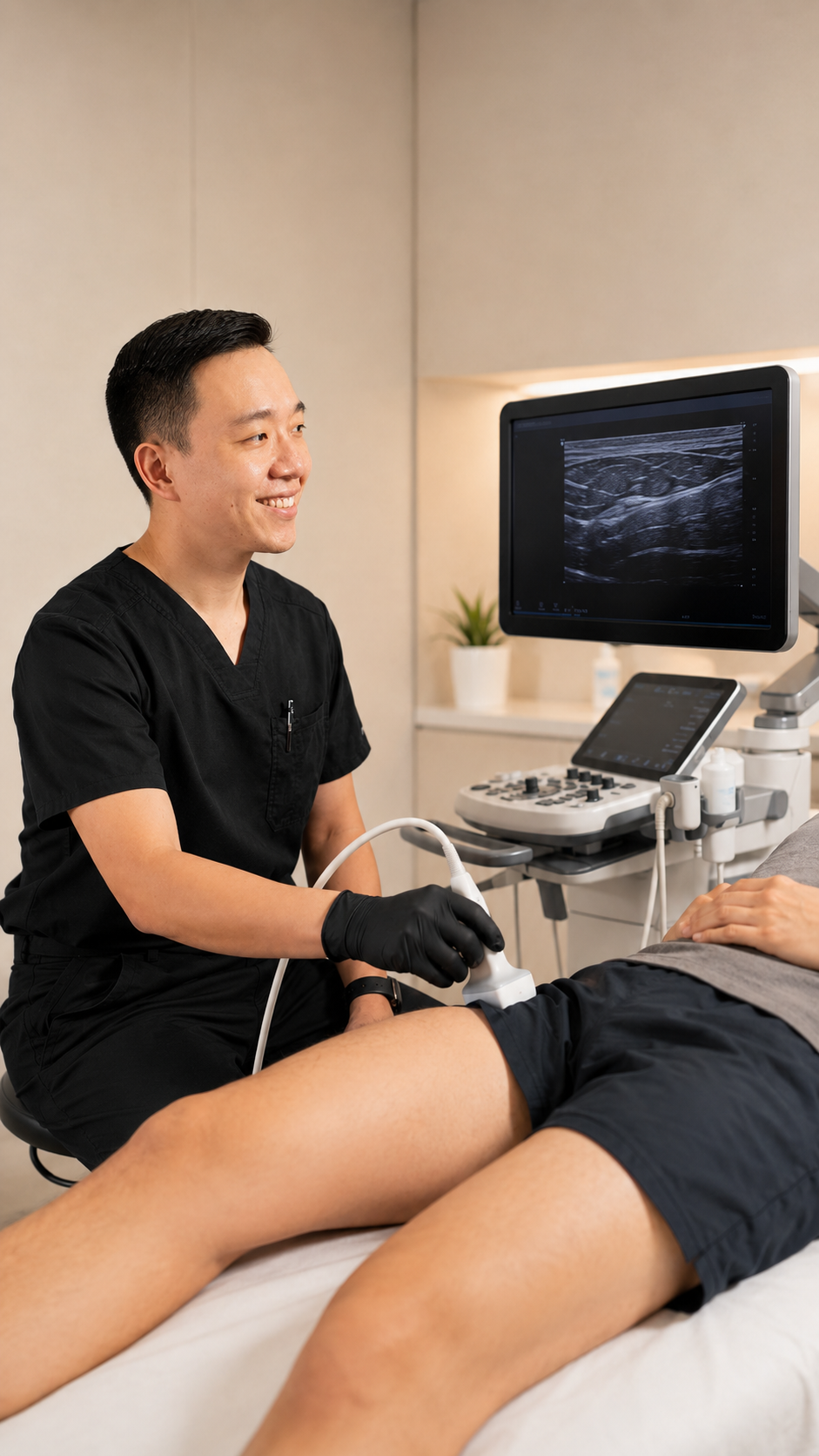
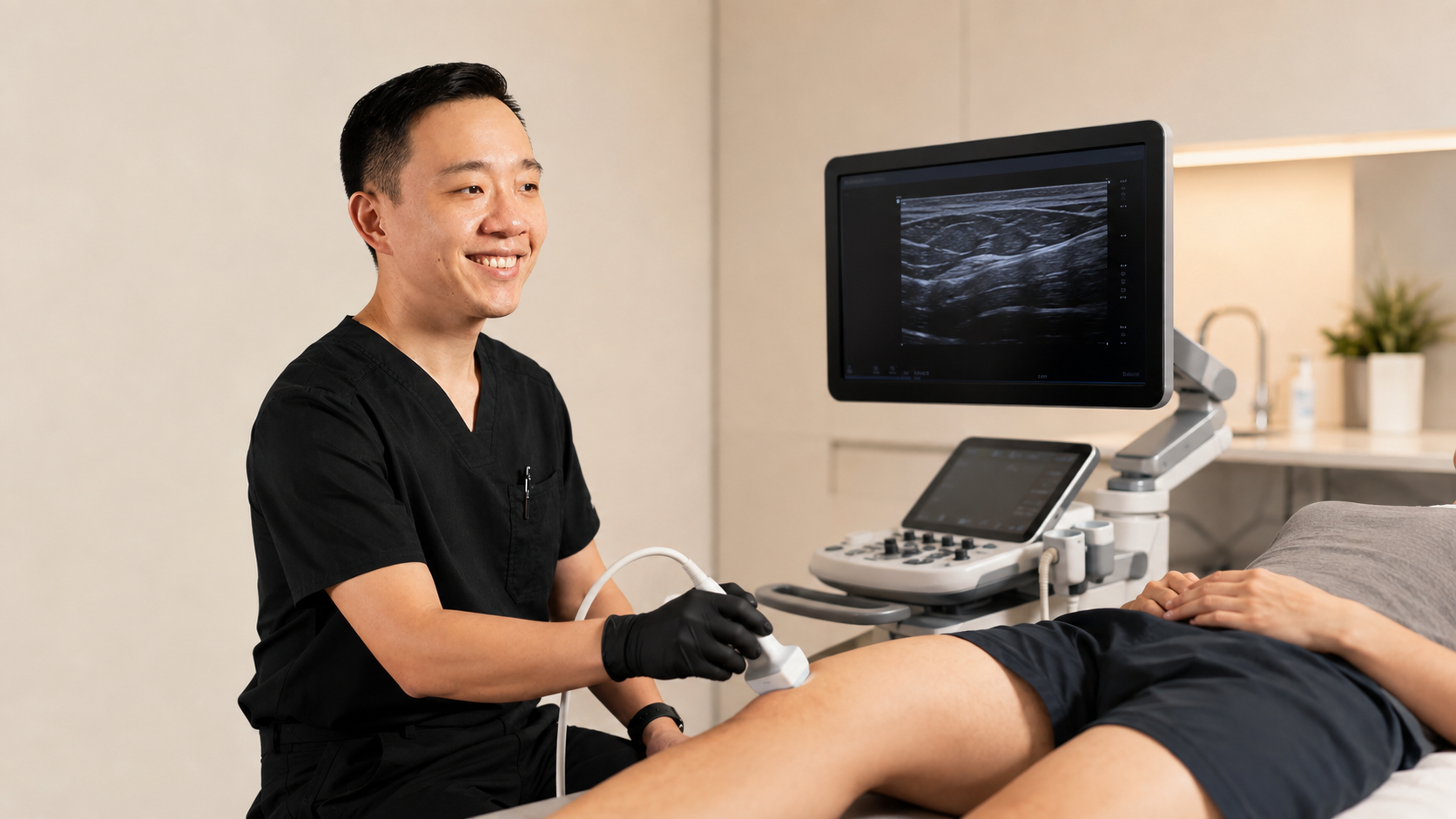
In many situations, ultrasound-guided injections can provide more accurate needle placement than injections performed using anatomical landmarks alone. However, that does not mean ultrasound guidance automatically produces better pain relief or better outcomes for every patient or every type of injection.
The advantage depends on what structure is being treated, how difficult it is to access, the patient's anatomy, the type of injection being performed, and the experience of the physician.
For many joint, tendon, bursa, nerve, and other musculoskeletal procedures, ultrasound gives the physician the additional advantage of seeing the relevant anatomy and needle position in real time.
What Is a Landmark-Guided Injection?
A landmark-guided injection is performed using knowledge of anatomy and structures that can be identified through physical examination and palpation.
The physician identifies anatomical landmarks—such as bones, tendons, joint spaces, or other structures—and uses those landmarks to determine where the needle should be placed.
Landmark-guided injections have been used successfully for many years and can be appropriate for certain procedures, particularly when:
The target is relatively large
The anatomy is easy to identify
The injection site is superficial
The procedure has a well-established landmark technique
The clinician is experienced with that particular injection
Ultrasound is therefore not necessary for every musculoskeletal injection.
What Is an Ultrasound-Guided Injection?
An ultrasound-guided injection uses real-time diagnostic ultrasound to help the physician visualize the treatment area while performing the procedure.
Ultrasound may allow the physician to see structures such as:
Joints
Tendons
Muscles
Ligaments
Bursae
Peripheral nerves
Blood vessels
Fluid collections
The physician can then monitor the needle as it approaches the intended target.
If you would like a more detailed explanation of the technology and procedures involved, read our physician article on Ultrasound-Guided Injections for Musculoskeletal Pain.
Are Ultrasound-Guided Injections More Accurate?
For many musculoskeletal injections, yes.
One of the most consistent findings in the medical literature is that ultrasound guidance can improve the accuracy of needle placement compared with landmark-guided techniques for a number of anatomical targets.
A 2024 umbrella review examining systematic reviews and meta-analyses found that ultrasound-guided musculoskeletal injections were generally more accurate than landmark-guided injections, particularly for certain shoulder procedures. However, improvements in pain and functional outcomes were less consistent.
Research involving knee injections has similarly found higher placement accuracy with ultrasound guidance. A recent systematic review reported cumulative accuracy of approximately 95% for ultrasound-guided knee injections and aspirations compared with 82% for landmark-guided procedures.
That difference can be important when the physician is trying to reach a specific joint space, tendon sheath, bursa, nerve, or other relatively small anatomical target.
Does Greater Accuracy Mean Better Pain Relief?
Not necessarily.
This is the most important distinction when comparing the two techniques.
An ultrasound-guided injection may place the needle more accurately, but accurate needle placement is only one part of a successful treatment.
Clinical improvement also depends on whether:
The correct diagnosis was made
The correct anatomical structure was targeted
The treatment being injected is appropriate for the condition
Significant structural damage is present
Rehabilitation is incorporated when needed
The patient has other contributing medical or biomechanical factors
Some studies have found better pain or functional outcomes with ultrasound-guided procedures, while others have found similar outcomes between ultrasound and landmark techniques.
For example, a randomized controlled study found that ultrasound significantly improved joint-injection accuracy but did not improve short-term outcomes compared with landmark-guided injections.
This is why saying that ultrasound-guided injections are always better would be an oversimplification.
When Can Ultrasound Guidance Be Especially Helpful?
Ultrasound guidance may offer particular advantages when the target is difficult to locate using physical landmarks alone.
Examples may include situations where:
The joint or treatment area is relatively deep
The target is very small
Important nerves or blood vessels are nearby
A tendon sheath needs to be reached precisely
A specific bursa is being treated
Fluid needs to be aspirated
Arthritis or degenerative changes have altered normal anatomy
Previous surgery has changed the anatomy
Body composition makes landmarks difficult to palpate
A previous landmark-guided injection was unsuccessful
Precise placement of treatments such as platelet-rich plasma is desired
Ultrasound may also allow the physician to select a needle path that avoids certain nearby structures.
However, ultrasound guidance does not eliminate the risks associated with an injection. Appropriate patient selection, anatomical knowledge, sterile technique, procedural training, and correct treatment selection remain essential.
What Types of Injections Can Be Ultrasound Guided?
Ultrasound may be used during many different musculoskeletal procedures.
Depending on the diagnosis, examples can include:
Joint Injections
Ultrasound may guide injections involving joints such as the shoulder, knee, hip, elbow, wrist, ankle, or smaller joints.
Bursa Injections
Ultrasound can help identify and access certain bursae around the shoulder, hip, knee, elbow, and other locations.
Tendon and Tendon-Sheath Procedures
Some injections are intended to be placed around a tendon or within its surrounding sheath rather than directly into the tendon itself. Ultrasound can help distinguish these structures.
Peripheral Nerve Procedures
Many superficial peripheral nerves can be visualized with ultrasound, which may assist with selected nerve blocks, perineural procedures, or other targeted injections.
Regenerative Medicine Procedures
Ultrasound guidance may also be used during selected PRP, prolotherapy, and other injection-based treatments when precise placement is clinically important.
Are Landmark-Guided Injections Still Appropriate?
Yes.
A well-performed landmark-guided injection can be appropriate and effective for certain conditions.
There are procedures where experienced clinicians can reliably identify the target without imaging, and adding ultrasound may not meaningfully change the patient's outcome.
The decision should therefore not simply be:
Ultrasound or no ultrasound?
A better question is:
Which technique gives the physician the safest and most reliable way to reach the intended target for this particular procedure?
That answer may differ from one joint, diagnosis, procedure, and patient to another.
Is Ultrasound Guidance Safer?
Ultrasound can provide additional information about the treatment area and surrounding anatomy.
For example, the physician may be able to visualize nearby nerves and use Doppler ultrasound to identify blood vessels before choosing a needle path.
This may be particularly useful for procedures where important structures are located close to the injection target.
However, ultrasound does not make an injection risk-free.
Possible complications of musculoskeletal injections can include soreness, bruising, bleeding, infection, nerve or blood-vessel injury, medication reactions, or failure to improve. The specific risks vary depending on the procedure and substance being injected.
Does the Type of Injection Matter?
Absolutely.
“Ultrasound-guided injection” describes how the needle is guided, not what is being injected.
Different procedures may involve:
Corticosteroids
Local anesthetics
Platelet-rich plasma
Dextrose-based prolotherapy solutions
Perineural injection solutions
Other medications or treatments
The effectiveness, risks, expected recovery, and evidence for each treatment can be very different.
Precise placement cannot make an ineffective or inappropriate treatment effective.
For that reason, the most important step often occurs before the needle is ever picked up: determining what is actually causing the patient's symptoms and whether an injection is appropriate at all.
Our article on Conservative Treatment for Musculoskeletal Pain explains why injections are only one of several possible approaches to managing musculoskeletal pain.
Why an Accurate Diagnosis Matters More Than the Technology
Ultrasound is a powerful procedural tool, but it cannot compensate for treating the wrong structure.
For example, precisely injecting a shoulder joint would be unlikely to resolve symptoms caused primarily by a pinched nerve in the neck.
Similarly, an accurately performed knee injection may not solve a mechanical problem requiring orthopedic treatment or rehabilitation.
Before considering an injection, your physician may evaluate:
How your symptoms started
Where the pain occurs
Which movements worsen or improve it
Your physical examination
Previous injuries
Prior treatment
Existing X-rays or MRI studies
Musculoskeletal ultrasound findings when appropriate
Medical conditions that could affect treatment
Your functional goals
If you are preparing for an evaluation, our Guide to Preparing for Your First Musculoskeletal Evaluation explains what information and medical records may be helpful to bring.
What Happens During an Ultrasound-Guided Injection?
The exact procedure varies depending on the treatment area, but generally the physician first identifies the intended target using ultrasound.
The skin is cleaned, and the ultrasound probe is positioned so the physician can visualize the relevant structures.
The needle is then advanced toward the target while its position is monitored on the ultrasound screen.
Once satisfactory positioning has been achieved, the selected medication or treatment is administered.
For a step-by-step explanation of preparation, the procedure itself, and recovery, see our Patient's Guide to Ultrasound-Guided Injection.
So, Are Ultrasound-Guided Injections Better?
For accuracy, ultrasound guidance is generally better for many musculoskeletal injection targets.
For pain relief and functional outcomes, however, the answer is more nuanced.
Some procedures appear to benefit clinically from ultrasound guidance, while others may produce similar results when a landmark-guided injection is performed correctly by an experienced clinician. Current research therefore does not support the idea that ultrasound automatically makes every injection more effective.
The greatest advantages of ultrasound are its ability to:
Visualize anatomy in real time
Monitor needle placement
Improve accuracy for many targets
Identify nearby structures
Help select an appropriate needle path
Guide procedures where landmarks are difficult to identify
The right technique ultimately depends on the procedure, anatomy, diagnosis, clinician's experience, and individual patient.
Ultrasound-Guided Injections at Ask Dr. Hu
At Ask Dr. Hu, injection procedures are considered as part of a broader integrative pain-management evaluation.
Not every patient with pain needs an injection, and not every condition is appropriate for injection therapy.
When an injection is being considered, the decision may take into account your examination findings, suspected source of pain, prior imaging, previous treatments, medical history, functional goals, and whether ultrasound guidance would provide a meaningful advantage.
You can also explore additional physician articles, patient guides, and FAQs in our Integrative Pain Management Resource Center.
Medical Review & Editorial Standards
This article was written and medically reviewed by an Arizona-licensed naturopathic physician for patient education.
The discussion reflects current medical evidence showing that ultrasound guidance generally improves the accuracy of many musculoskeletal injections while recognizing that greater procedural accuracy does not consistently translate into superior pain relief or functional outcomes for every condition.
Key evidence reviewed includes a 2024 umbrella review comparing ultrasound-guided and landmark-guided musculoskeletal injections, a 2024 systematic review and meta-analysis examining ultrasound versus landmark-guided injections for osteoarthritis, and clinical research evaluating whether improved injection accuracy translates into improved patient outcomes.
Treatment decisions should always be individualized. The appropriateness of an injection, choice of technique, substance being injected, potential benefits, risks, and alternatives depend on the diagnosis, anatomical location, patient health history, and clinical circumstances.
Last medically reviewed: August 2026
About the Author
YiQiu Hu, NMD
Dr. YiQiu Hu is an Arizona-licensed naturopathic physician and founder of Ask Dr. Hu. His clinical work includes concierge medicine, preventive healthcare, health optimization, laboratory evaluation, medical weight management, hormone care, and integrative pain management.
His approach to musculoskeletal pain emphasizes careful evaluation, identification of the likely source of symptoms, discussion of conservative and procedural options, and individualized treatment planning rather than relying on a single treatment for every patient.
Dr. Hu earned his Doctor of Naturopathic Medicine degree from Sonoran University of Health Sciences and a Bachelor of Science in Biomedical Sciences from Northern Arizona University. He also has experience in medical leadership and multidisciplinary healthcare practice.
Learn more about Dr. YiQiu Hu and the physicians at Ask Dr. Hu.
This article is intended for general educational purposes and does not replace individualized medical advice, diagnosis, or treatment. Reading this article does not establish a physician-patient relationship. If you are experiencing a medical emergency, call 911 or seek appropriate emergency medical care.