What Should I Expect During My First Pain Appointment?
Written by YiQiu Hu, NMD
Arizona-licensed naturopathic physician and virtual concierge medicine provider
Published August 2026 | Medically reviewed August 2026
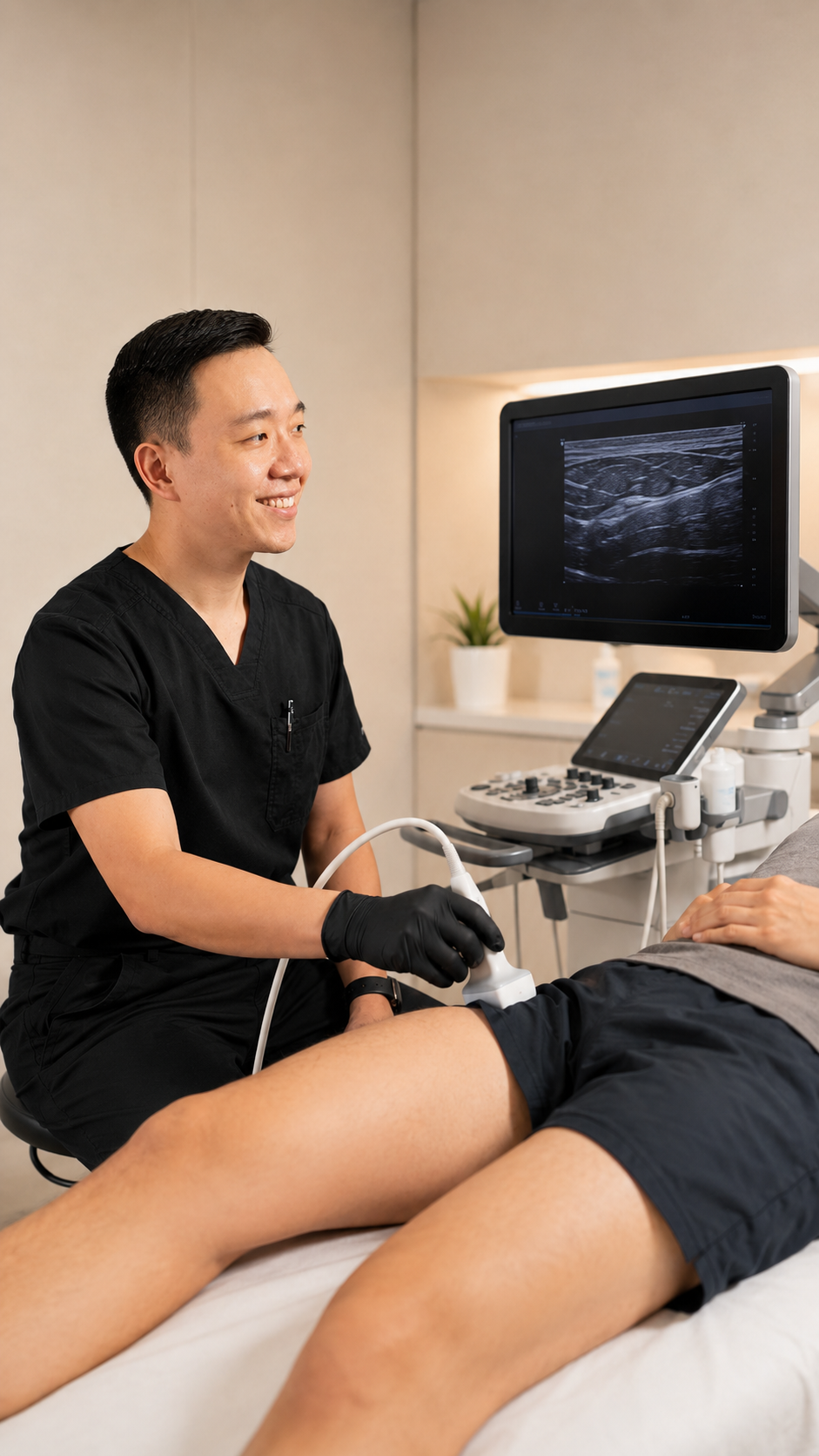
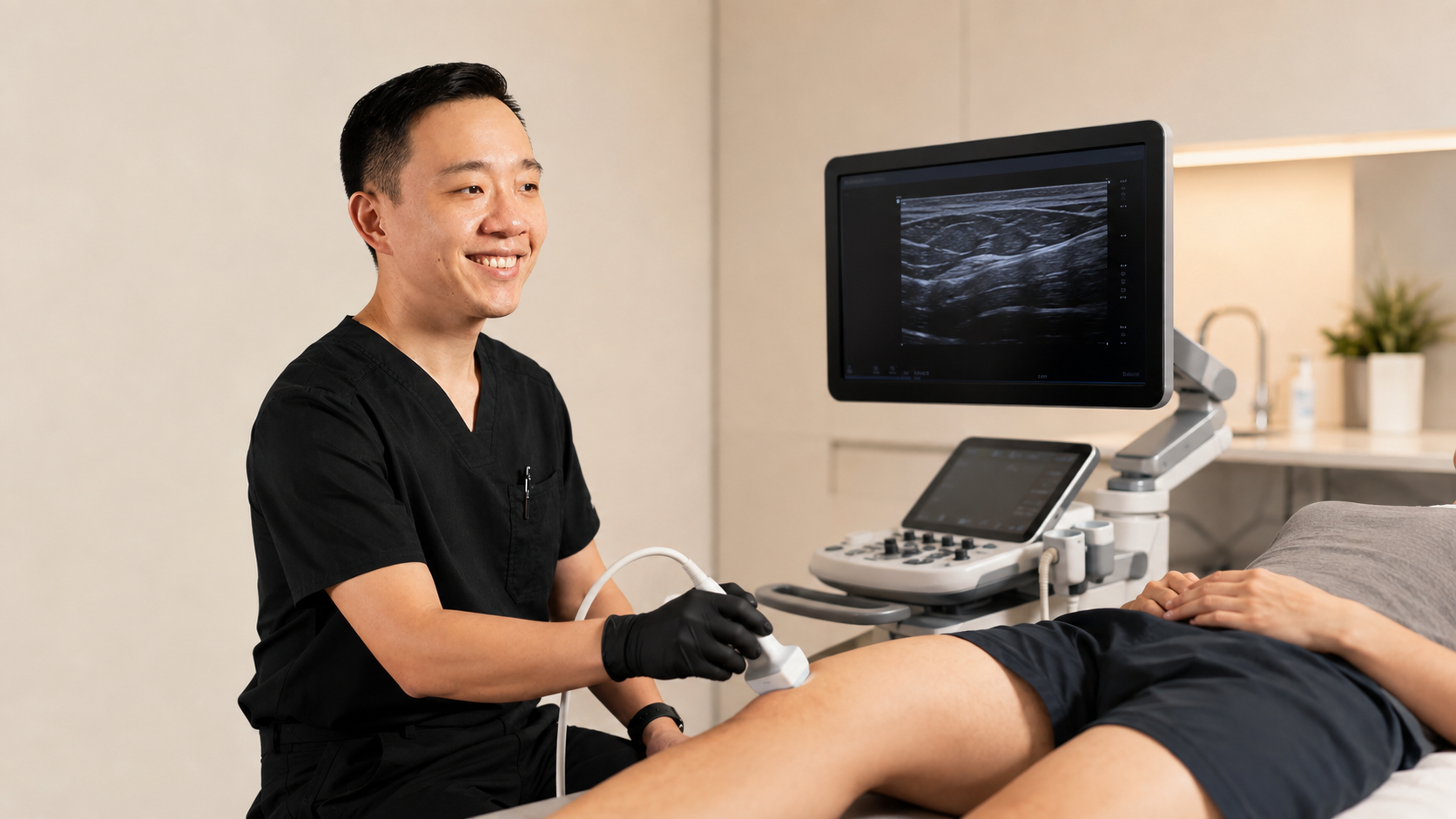
Your first pain-management appointment is usually focused on understanding what may be causing your symptoms before deciding how to treat them. Expect your physician to discuss your pain history, medical conditions, medications, previous treatments, imaging, and the activities your symptoms are limiting. A focused physical examination may follow, and additional imaging or diagnostic testing may be recommended when it would help clarify the diagnosis or change treatment.
You should not necessarily expect an injection, procedure, or MRI simply because you scheduled a pain appointment.
The purpose of the first visit is to answer a more important question:
What is the most appropriate next step for your particular condition?
At Ask Dr. Hu, integrative pain management begins with an individualized evaluation rather than automatically selecting a procedure. Your symptoms, physical examination, previous treatment response, available imaging, overall health, and functional goals can all influence the treatment plan.
Your Physician Will First Want to Understand Your Pain
Pain in the knee, shoulder, back, neck, hip, or another area does not automatically tell a physician which structure is causing the problem.
For example, pain near a joint may potentially involve muscles, tendons, ligaments, nerves, joint structures, or nearby tissues. Symptoms can also occasionally be referred from another location.
That is why your first appointment usually begins with a detailed conversation about how the problem started and how it behaves.
Your physician may ask questions such as:
When did the pain begin?
Did it start suddenly or gradually?
Was there an injury?
Where exactly do you feel the pain?
Does the pain travel anywhere?
What does it feel like?
Is there numbness, tingling, burning, or weakness?
What movements make it worse?
What makes it better?
Does it interfere with sleep?
Is there swelling, stiffness, clicking, catching, or instability?
Has the problem been getting better, worse, or staying about the same?
A detailed pain history combined with clinical examination is an important part of determining which diagnoses and additional tests should be considered.
If you would like to prepare before your visit, see Preparing for Your First Musculoskeletal Evaluation.
Expect Questions About How Pain Affects Your Daily Life
Your physician will probably want to know more than your pain score.
Knowing that your pain is a “7 out of 10” provides some information, but knowing what the pain prevents you from doing may be even more useful.
You might be asked whether your symptoms interfere with your ability to:
Walk
Exercise
Run
Work
Sit for prolonged periods
Lift objects
Climb stairs
Sleep comfortably
Reach overhead
Drive
Care for children or family members
Participate in sports or hobbies
Function is an important consideration in pain assessment and treatment planning. Clinical pain guidance also emphasizes establishing meaningful goals related to both pain and function rather than focusing only on symptom intensity.
A goal such as “I want to be able to walk for 30 minutes again” may be more useful for tracking progress than simply hoping for a lower number on a pain scale.
Your Medical History Matters
Pain treatment cannot be chosen based only on where you hurt.
Your physician may review medical conditions that could influence diagnosis, recovery, medication choices, imaging, or whether a procedure is appropriate.
Depending on your situation, relevant factors could include:
Diabetes
Cardiovascular disease
Kidney or liver disease
Osteoporosis
Autoimmune or inflammatory conditions
Neuropathy
Bleeding disorders
Previous cancer
Previous infections
Prior orthopedic or spine surgery
Joint replacements
Pregnancy or possible pregnancy
Allergies
You should also bring an accurate list of your prescription medications, over-the-counter medications, vitamins, herbs, and supplements.
If you take aspirin, anticoagulants, antiplatelet medications, or other medications that affect bleeding, make sure your physician knows.
Do not stop a prescribed blood thinner or other medication simply because you are attending a pain-management appointment. Medication changes should only be made when you have received individualized instructions from the clinician managing your care.
Your Previous Treatments Will Be Reviewed
One of the most useful questions your physician can ask is:
What have you already tried?
Previous treatment provides information about your condition and helps avoid unnecessarily repeating treatments that were ineffective.
Be prepared to discuss things such as:
Physical therapy
Home exercises
Activity modification
Chiropractic treatment
Massage
Acupuncture
Dry needling
Anti-inflammatory medications
Prescription pain medications
Steroid injections
Trigger-point injections
Joint injections
Nerve blocks
PRP
Prolotherapy
Bracing or taping
Previous surgery
Try to explain how long you tried each treatment and what happened afterward.
For example, instead of simply saying:
“Physical therapy didn't work.”
It may be more helpful to explain:
“I completed eight weeks of physical therapy. My mobility improved, but the pain I experience while running did not change.”
Even an unsuccessful treatment can provide useful information when developing the next plan.
A Focused Physical Examination May Be Performed
For many musculoskeletal problems, the examination is one of the most important parts of the first visit.
Depending on the location and type of symptoms, your physician may evaluate:
Posture
Walking or gait
Range of motion
Strength
Flexibility
Areas of tenderness
Joint stability
Muscle function
Neurologic function
Sensation
Specific orthopedic maneuvers
You may be asked to walk, bend, squat, rotate, lift an arm, move a joint, or push against resistance.
Some examination maneuvers are designed to determine whether a certain position or movement reproduces your familiar symptoms.
Your physician is not simply looking for where something hurts. The goal is to determine whether the pattern of findings points toward a particular muscle, tendon, ligament, joint, nerve, or other structure.
Comfortable clothing that allows the painful area to move and be examined can make this part of the appointment easier.
Your Existing Imaging May Be Reviewed
If you have already had an:
X-ray
MRI
CT scan
Ultrasound
Other relevant imaging study
bring the report and, when possible, access to the actual images.
Imaging can provide important information, but an abnormality on an MRI or X-ray does not automatically prove that it is the cause of your pain. Imaging findings need to be considered together with your symptoms and physical examination.
For example, the useful question is not simply:
“What does my MRI show?”
It is:
“Does what my MRI shows actually correspond with my symptoms and examination?”
Will I Need New Imaging?
Possibly—but not automatically.
Some patients can begin conservative treatment based on a thorough history and physical examination. Others may need an X-ray, MRI, ultrasound, CT scan, or another study before a diagnosis or treatment decision can reasonably be made.
The appropriate imaging depends on the body area, suspected condition, mechanism of injury, neurological findings, presence of concerning symptoms, and whether the imaging result is likely to change management.
The American College of Radiology publishes condition-specific Appropriateness Criteria because the appropriate imaging strategy varies significantly depending on the clinical situation.
You can read more in Do I Need Imaging Before Starting Treatment?.
Musculoskeletal Ultrasound May Sometimes Be Used
For certain muscle, tendon, ligament, joint, nerve, and soft-tissue concerns, diagnostic musculoskeletal ultrasound may provide useful additional information.
Ultrasound can allow the physician to examine certain structures dynamically and in real time.
It can also serve a different purpose during treatment: ultrasound guidance may be used during certain injections to visualize anatomy and needle placement.
Diagnostic ultrasound and ultrasound-guided procedures are related, but they are not the same thing. A patient may receive diagnostic ultrasound without having an injection, or an injection may be performed with ultrasound guidance after the diagnosis has already been established through other information.
You May Leave With a Working Diagnosis Rather Than a Final Diagnosis
Sometimes the likely diagnosis becomes fairly clear during the first visit.
Other times it does not.
Pain can be complicated, particularly when symptoms have existed for months or years, multiple structures could be involved, previous treatments have failed, or imaging and examination findings do not perfectly match.
Your physician may therefore explain that there are several possible causes and recommend additional evaluation before making a more definitive treatment recommendation.
That additional evaluation could include:
Additional imaging
Diagnostic ultrasound
Laboratory testing
Physical therapy evaluation
Neurologic evaluation
Orthopedic consultation
Another specialist referral
Observation and reassessment
A careful working diagnosis is often more useful than rushing to label the problem incorrectly.
Will I Receive Treatment at My First Appointment?
Possibly, but you should not assume that you will.
Some treatments may reasonably be performed during the initial visit when the diagnosis is sufficiently clear, the treatment is appropriate, and you have had the opportunity to understand its benefits, risks, alternatives, and expected recovery.
In other situations, the first appointment should remain primarily diagnostic.
At Ask Dr. Hu, some treatments can be performed during an initial pain appointment when clinically appropriate, while others are scheduled separately after the evaluation and treatment plan have been completed.
You should not feel that an appointment was unsuccessful simply because you did not receive an injection.
Sometimes the most useful outcome of a first pain appointment is determining that:
Rehabilitation should come first.
Additional imaging is needed.
Existing imaging is sufficient.
A medication adjustment should be considered.
A procedure may be reasonable.
Surgery is not currently necessary.
A specialist referral is appropriate.
More time and reassessment are needed.
The goal is not to perform the most treatment during the first visit.
The goal is to identify the most appropriate next step.
What Types of Treatment Might Be Discussed?
Treatment depends entirely on the suspected diagnosis.
Depending on your condition, options may include:
Activity modification
Home exercise
Progressive strengthening
Physical therapy
Rehabilitation
Medication management
Acupuncture
Dry needling
Trigger-point therapy
Diagnostic musculoskeletal ultrasound
Ultrasound-guided procedures
Joint injections
Selected nerve blocks
Prolotherapy
Platelet-rich plasma (PRP)
Referral to an orthopedic, neurologic, rehabilitation, or other specialist
Not every patient needs a procedure. Conservative and nonoperative treatments are appropriate for many musculoskeletal problems, while targeted procedures may be considered when the diagnosis, clinical evidence, goals, and individual circumstances support their use.
For more information about nonoperative options, read Can Pain Be Treated Without Surgery?.
Your Goals and Preferences Are Part of the Treatment Plan
There may be more than one reasonable way to manage the same condition.
That is why treatment decisions should consider not only the diagnosis, but also:
Your overall health
Severity of symptoms
Previous treatments
Activity level
Work demands
Recovery expectations
Treatment risks
Cost
Personal preferences
What activities you want to return to
Modern pain-care guidance emphasizes individualized, patient-centered decision-making rather than applying one treatment strategy to every patient.
A patient hoping to return to competitive running may have different priorities from someone primarily trying to walk comfortably through the grocery store.
Your treatment plan should reflect those differences.
For a deeper explanation, see Understanding Your Personalized Pain Treatment Plan.
What Should I Bring to My First Pain Appointment?
You do not need to arrive with every medical record you have ever received.
The most helpful information usually includes:
Current medication and supplement list
Relevant MRI, X-ray, CT, or ultrasound reports
Access to previous imaging when available
Previous orthopedic or specialist evaluations
Physical therapy records when relevant
Previous procedure or injection records
A list of treatments you have already tried
Notes about when your symptoms began
Information about activities that worsen or improve your symptoms
A short list of questions
Comfortable clothing that allows the affected area to be examined
Most importantly, think about what you want to be able to do again.
That information can help turn a general desire for “less pain” into a measurable treatment goal.
Questions You May Want to Ask During the Appointment
Consider asking:
What do you think is causing my pain?
Could more than one structure be involved?
Do I need imaging?
Would imaging actually change the treatment plan?
Are there conservative options I should try first?
Would physical therapy or rehabilitation help?
Which activities are safe to continue?
Are there activities I should temporarily avoid?
What should improvement look like?
When should we reassess?
At what point would an injection or procedure be considered?
Are there reasons I should see another specialist?
A good pain appointment should give you an opportunity to understand both what your physician recommends and why.
When Should I Seek Urgent Care Instead?
A routine pain-management appointment is not appropriate for a medical emergency.
Seek urgent or emergency medical evaluation for symptoms such as:
Major trauma or suspected fracture
Sudden or rapidly worsening weakness
Paralysis
New loss of bowel or bladder control
Numbness around the groin or saddle region
Severe pain associated with fever or serious illness
A hot, severely swollen joint with fever
Rapidly worsening swelling
A cold, pale, or poorly perfused limb
Chest pain
Difficulty breathing
Sudden stroke-like or neurologic symptoms
These symptoms should not wait for a routine pain appointment.
What Should I Expect From a Pain Appointment at Ask Dr. Hu?
Ask Dr. Hu provides individualized integrative pain-management evaluations for patients in Arizona.
Your evaluation may include discussion of your symptoms, medical history, medications, previous treatment, functional limitations, physical examination findings, and existing imaging.
Depending on what is found, your treatment plan may involve conservative care, rehabilitation, diagnostic musculoskeletal ultrasound, acupuncture or dry needling, selected injection procedures, regenerative treatments, additional imaging, or referral to another healthcare professional. Not every patient is a candidate for every treatment, and a specific procedure should not be selected until the condition has been appropriately evaluated.
If you are new to this approach, you may also want to read A Patient’s Guide to Starting Integrative Pain Management.
Frequently Asked Questions About Your First Pain Appointment
Do I need an MRI before my first pain appointment?
No. Many patients can be evaluated before advanced imaging is obtained. Whether you need an MRI, X-ray, ultrasound, CT, or no immediate imaging depends on your symptoms, examination findings, injury history, and suspected diagnosis.
Should I stop my pain medication before the appointment?
Usually, you should continue medications as prescribed unless your physician has specifically instructed you otherwise. Do not stop prescription medications simply so your physician can “see how bad the pain is.”
Will I get an injection during my first visit?
Not necessarily. Your physician may first need to complete an examination, review imaging, clarify the diagnosis, or discuss treatment alternatives. At Ask Dr. Hu, some treatments may occur during the initial appointment when appropriate, while others require a separate procedure visit.
What if I have already tried several treatments?
Bring as much information as you reasonably can about what you tried, how long you tried it, and whether it helped. Both successful and unsuccessful treatments can provide useful information when determining what to do next.
What is the main goal of the first appointment?
The main goal is to understand the likely source of your symptoms and determine an appropriate next step. That may be treatment, rehabilitation, additional diagnostic testing, a procedure, referral, or reassessment rather than immediate intervention.
The Bottom Line
Your first pain appointment should be more than a discussion about where you hurt.
A thoughtful evaluation brings together your symptoms, medical history, previous treatment, physical examination, imaging when appropriate, functional limitations, and personal goals.
Sometimes that process leads directly to treatment.
Sometimes the right answer is rehabilitation, further imaging, a different diagnosis, another specialist, or simply more information before proceeding.
Good pain management starts with understanding the problem before choosing the procedure.
If musculoskeletal pain is interfering with your movement, sleep, work, exercise, or daily activities, learn more about integrative pain management at Ask Dr. Hu or explore the Integrative Pain Management Resource Center for additional physician-written articles, patient guides, and frequently asked questions.
Medical Review, Editorial Standards, and Sources
This article was written and medically reviewed by YiQiu Hu, NMD, an Arizona-licensed naturopathic physician with clinical interests that include diagnostic evaluation, individualized treatment planning, preventive medicine, and integrative pain management. Ask Dr. Hu’s existing educational resources identify Dr. Hu as an Arizona naturopathic physician and founder of the practice.
The medical principles discussed in this article were reviewed with reference to established clinical resources, including:
National Institute of Neurological Disorders and Stroke — Pain, which discusses the clinical evaluation and assessment of pain.
American College of Radiology Appropriateness Criteria, which provides evidence-based recommendations regarding appropriate imaging for different clinical presentations.
CDC Clinical Practice Guideline for Prescribing Opioids for Pain, which emphasizes individualized pain assessment, patient-centered treatment decisions, and attention to both pain and function.
This article is intended for general educational purposes and does not replace individualized medical evaluation, diagnosis, treatment, or emergency medical care.
About the Author
YiQiu Hu, NMD is an Arizona-licensed naturopathic physician and founder of Ask Dr. Hu. His approach emphasizes thorough medical evaluation, preventive care, evidence-informed naturopathic medicine, clear patient education, and individualized treatment planning. He provides personalized medical care for patients throughout Arizona through Ask Dr. Hu.
Learn more about Dr. YiQiu Hu and the physicians at Ask Dr. Hu.