Understanding Your Personalized Pain Treatment Plan
Written by YiQiu Hu, NMD
Arizona-licensed naturopathic physician and virtual concierge medicine provider
Published August 2026 | Medically reviewed August 2026
Pain treatment is rarely as simple as identifying where something hurts and choosing a treatment from a list.
Two people may have pain in exactly the same area but need very different approaches. One person with shoulder pain may primarily need rehabilitation. Another may have arthritis that responds to a different strategy. A third may have symptoms coming from the neck or a nerve rather than the shoulder itself.
That is why a well-designed personalized pain treatment plan begins with understanding your individual situation rather than automatically recommending the same treatment for everyone.
Your plan may consider your diagnosis, symptoms, examination findings, imaging, previous treatment, overall health, activity level, goals, preferences, and response to treatment over time.
If you are new to this type of care, our Patient’s Guide to Starting Integrative Pain Management provides a broader introduction to what an evaluation and treatment process may involve.
What Is a Personalized Pain Treatment Plan?
A personalized pain treatment plan is a strategy developed around your specific condition and goals.
Rather than asking only, “What treatment helps back pain?” or “What injection helps knee pain?” your physician considers a much more important question:
What is most likely contributing to this patient’s pain, and what combination of treatments gives this particular patient a reasonable opportunity to improve?
Depending on the situation, a treatment plan may include:
Activity modification
Home exercises
Physical therapy or rehabilitation
Strengthening and mobility work
Medications when appropriate
Acupuncture or dry needling
Trigger-point treatment
Ultrasound-guided procedures
Joint or soft-tissue injections
Selected regenerative procedures
Nutrition or weight-management strategies
Sleep and recovery recommendations
Ergonomic or movement modifications
Diagnostic testing
Imaging
Referral to another medical specialist
Not every patient needs every treatment.
In fact, one of the goals of a personalized plan is to avoid unnecessary treatments while identifying the interventions most appropriate for your condition.
The CDC describes a variety of nonmedication and nonopioid options that may be incorporated into pain care when appropriate, including exercise, physical therapy, acupuncture, psychological therapies, and selected nonopioid medications.
You can explore these approaches in more detail in our Integrative Pain Management Resource Center.
Your Diagnosis Helps Determine Where the Plan Begins
Before deciding how to treat pain, it is important to understand what is most likely causing or contributing to it.
Pain itself is a symptom. It is not always the diagnosis.
For example, pain around the shoulder could potentially involve the rotator cuff, biceps tendon, joint, bursa, muscles, cervical spine, or nerves. Knee symptoms may involve arthritis, tendons, the meniscus, surrounding muscles, referred pain, or several problems at once.
Treatment therefore becomes more useful when it is directed toward the most clinically meaningful contributors.
You can read more about this process in Finding the Source of Pain: Why an Accurate Diagnosis Matters.
Your physician may use several pieces of information together when developing a diagnosis:
How and when your symptoms started
The location and quality of your pain
Movements that make symptoms better or worse
Previous injuries or surgeries
Weakness, numbness, tingling, or other neurologic symptoms
Your physical examination
Your response to previous treatments
Imaging or laboratory testing when appropriate
No single test necessarily provides the entire answer.
Your Goals Matter as Much as Your Pain Score
A treatment plan should not focus exclusively on making a number on a 0-to-10 pain scale lower.
For many patients, the more meaningful question is:
What would you like to be able to do that pain is currently preventing you from doing?
Your goals might include:
Walking without having to stop
Sleeping more comfortably
Returning to the gym
Playing golf or pickleball again
Hiking
Working without persistent discomfort
Picking up your child or grandchild
Getting back to a sport
Sitting through a workday
Climbing stairs
Improving range of motion
Reducing reliance on pain medication
Pain-management goals commonly include improving function and quality of life in addition to reducing symptoms. NIH resources similarly describe physical therapy, activity, medications, and other approaches as potential components of pain treatment depending on the individual condition.
Your physician may therefore measure progress not only by how much something hurts, but also by what you are able to do.
Previous Treatments Help Shape the Next Step
Treatments you have already tried provide valuable information.
Your physician may ask about:
Physical therapy
Chiropractic treatment
Massage
Acupuncture
Anti-inflammatory medications
Other pain medications
Steroid injections
Trigger-point injections
PRP or other procedures
Surgery
Home exercise programs
Rest or activity modification
Bracing
Heat or ice
Previous specialist evaluations
Even treatments that did not help can provide useful information.
For example, failing to improve after one type of treatment does not necessarily mean that nothing will help. It may mean that the treatment was not directed toward the primary problem, that the rehabilitation strategy needs to change, or that the diagnosis deserves another look.
This is one reason your plan should be reassessed rather than simply repeating the same treatment indefinitely.
Your Medical History Can Change Which Treatments Are Appropriate
A treatment may be reasonable for one patient but inappropriate for another.
Your physician may consider factors such as:
Age
Pregnancy
Diabetes
Kidney or liver disease
Cardiovascular disease
Bleeding disorders
Use of anticoagulant or antiplatelet medications
Allergies
Previous surgery
Autoimmune or inflammatory disease
Neurologic conditions
Current medications
Infection risk
Overall physical health
For example, even commonly used nonopioid medications can have important risks in patients with certain kidney, cardiovascular, gastrointestinal, liver, or other medical conditions.
A personalized plan therefore considers more than whether a treatment can be used. It considers whether it makes sense for you.
Imaging May Be Important—but It Is Only One Part of the Plan
Patients sometimes assume that an MRI, X-ray, or ultrasound automatically determines which treatment they should receive.
Imaging can be extremely useful, but it needs to be interpreted alongside your symptoms and examination.
A finding on an MRI does not necessarily prove that it is responsible for your pain, and significant symptoms can sometimes occur without a dramatic abnormality appearing on routine imaging.
Your physician may therefore consider:
Whether the imaging finding matches your symptoms
Whether it corresponds with the physical examination
Whether additional imaging would actually change treatment
Whether diagnostic ultrasound may provide useful information
Whether imaging is needed before proceeding with treatment
The goal is not necessarily to obtain as many tests as possible.
The goal is to obtain the right information to make a better decision.
Conservative Treatment May Be the First Step
Many musculoskeletal problems do not require an injection or procedure as the first treatment.
Depending on the condition, an initial plan may emphasize:
Modifying aggravating activities
Progressive movement
Strengthening
Mobility
Physical therapy
Home exercises
Ergonomic changes
Appropriate medications
Weight management
Sleep and recovery
Gradual return to activity
You can explore these options further in Conservative Treatment: Evidence-Based Options for Musculoskeletal Pain.
Conservative treatment does not necessarily mean “doing nothing.”
A carefully designed rehabilitation program can be an active medical strategy aimed at improving movement, strength, tissue tolerance, and function.
Rehabilitation Is Often Part of the Long-Term Solution
A procedure may reduce pain, but pain relief alone does not automatically restore strength, mobility, coordination, or physical capacity.
That is why rehabilitation frequently remains an important part of treatment even when procedures are used.
Depending on your diagnosis, rehabilitation might focus on:
Strengthening weakened muscles
Improving joint mobility
Gradually loading a tendon
Improving movement mechanics
Restoring range of motion
Improving balance
Increasing tolerance for walking or exercise
Returning gradually to work or sport
Research supports physical activity and exercise as components of treatment for many people with chronic pain, although the appropriate program depends on the individual condition.
Learn more in How Rehabilitation and Exercise Support Pain Recovery.
When Procedures May Be Added to the Plan
Some patients may benefit from a targeted procedure when conservative treatment alone is insufficient or when the diagnosis suggests that a procedure may reasonably help.
Depending on your condition, options might include:
Trigger-point injections
Perineural or nerve-related treatments
Joint injections
Tendon or soft-tissue procedures
Prolotherapy
Platelet-rich plasma therapy
Other selected injection treatments
Procedures should not automatically be performed simply because an area hurts.
The physician should first consider the diagnosis, anatomy, potential benefits, risks, alternatives, previous treatment, and your goals.
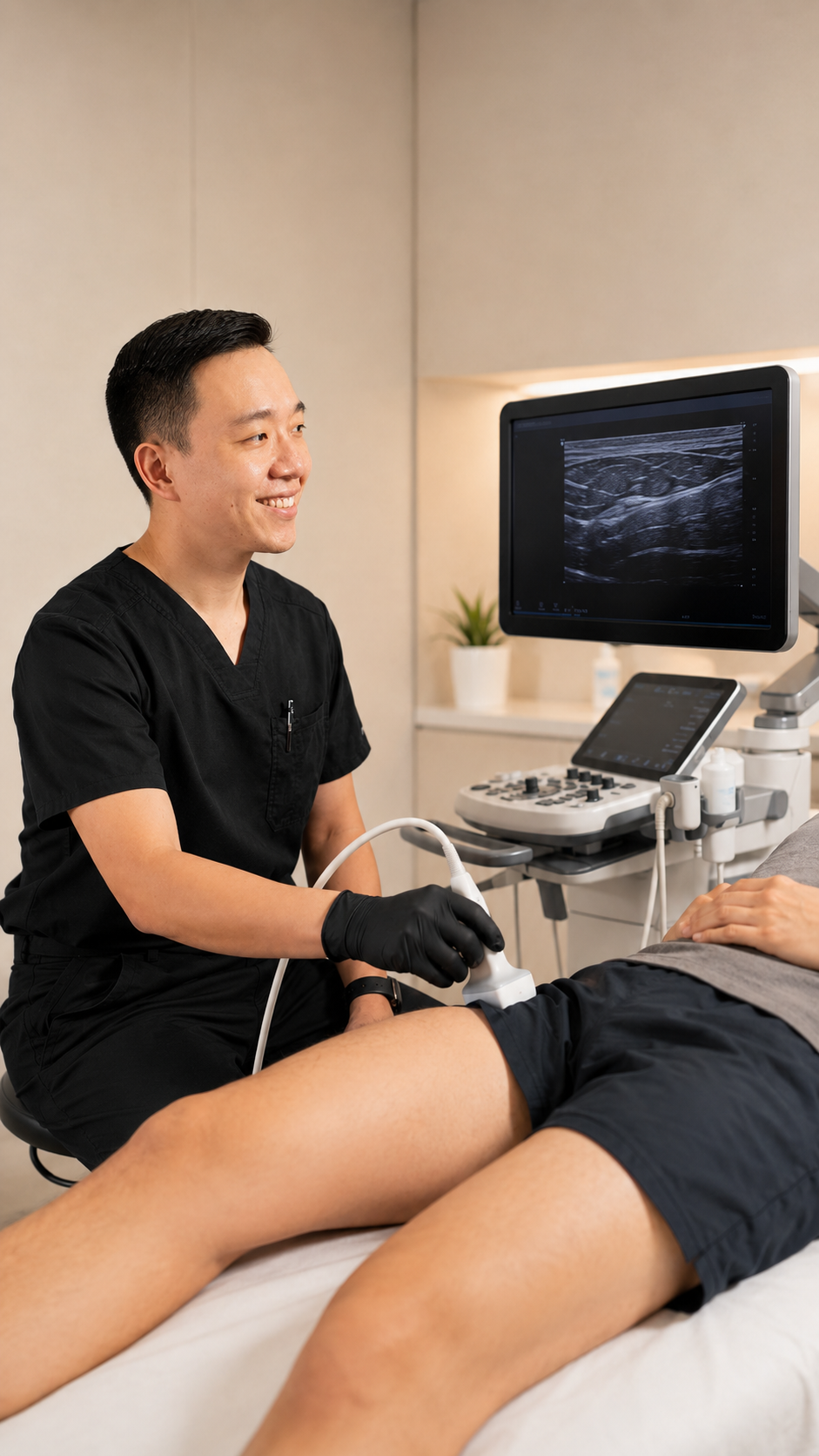
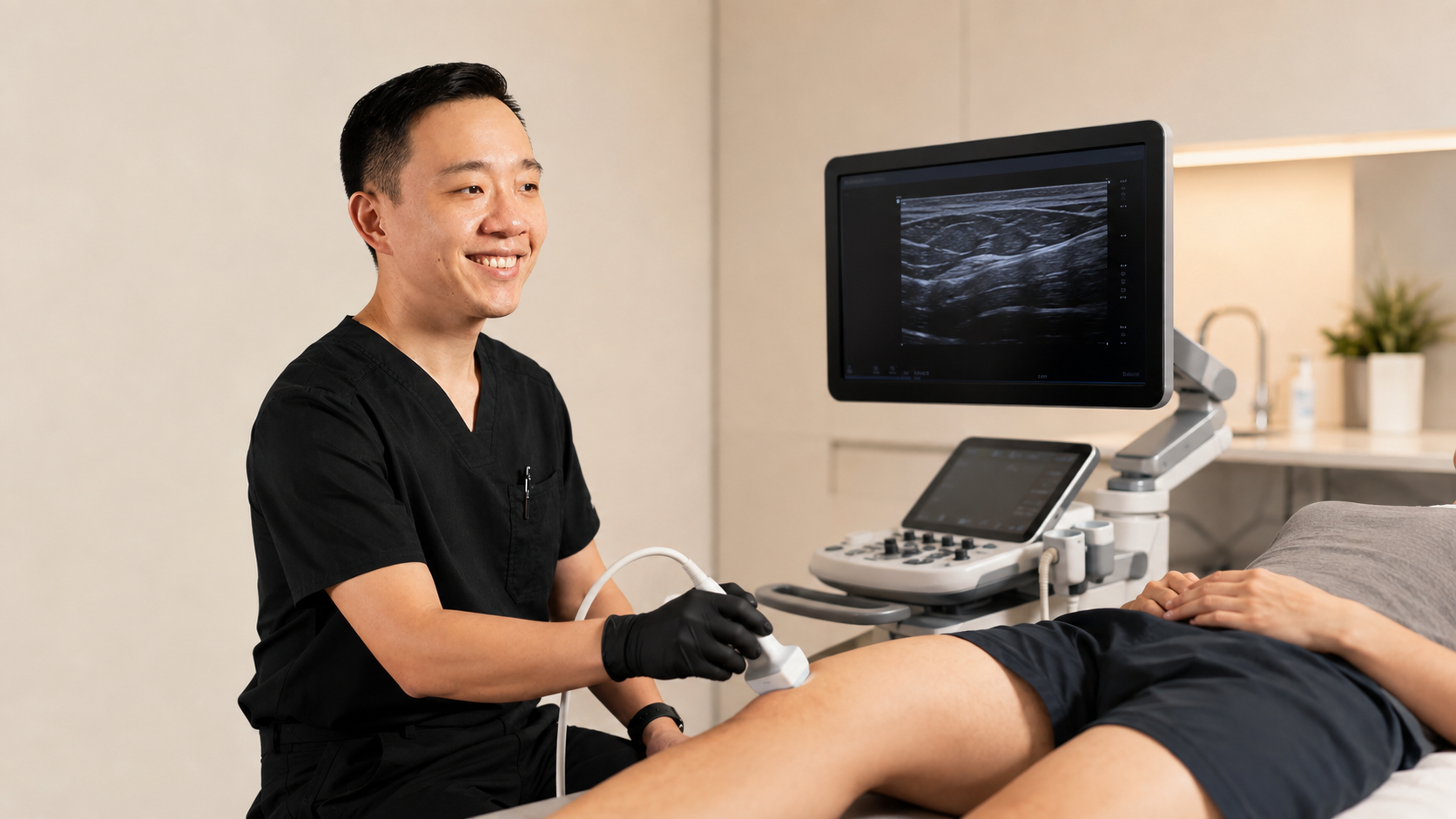
When appropriate, musculoskeletal ultrasound may also be used to visualize relevant anatomy and guide the placement of a needle during certain procedures.
You can learn more in Ultrasound-Guided Injections for Musculoskeletal Pain.
A Personalized Plan May Use More Than One Treatment
Pain is often influenced by more than one factor.
For example, someone with knee osteoarthritis may also have:
Reduced leg strength
Limited hip mobility
Deconditioning
Excess mechanical loading
Poor sleep
Reduced activity because of pain
An injection alone may not address all of those factors.
Similarly, a patient with persistent neck pain may have a combination of joint irritation, muscle tension, weakness, posture-related strain, nerve sensitivity, poor sleep, and reduced physical conditioning.
A personalized approach might therefore use several complementary strategies rather than expecting one treatment to solve every part of the problem.
This broader decision-making process is discussed in greater detail in our physician article, Building a Personalized Integrative Pain Management Plan.
Your Treatment Plan Should Change as You Improve
A pain-management plan is not necessarily permanent.
It should evolve based on how you respond.
At follow-up visits, your physician may reassess:
Pain severity
Range of motion
Strength
Walking or activity tolerance
Sleep
Ability to exercise
Ability to work
Medication use
Response to procedures
New or changing symptoms
Progress toward your personal goals
Treatment may then be continued, modified, expanded, or stopped.
For example, if a treatment provides substantial improvement, the next step may be to emphasize rehabilitation rather than repeating the procedure immediately.
If a treatment produces little improvement, the diagnosis or treatment strategy may need to be reconsidered.
Reassessment is an important part of individualized pain management rather than a sign that your original plan “failed.”
What Does Successful Pain Treatment Look Like?
Success does not always mean eliminating every sensation of pain.
Depending on the condition, meaningful improvement might mean:
Pain occurs less frequently
Flare-ups are less severe
You can walk farther
You are sleeping better
Your strength has improved
You can return to exercise
You need less medication
You have better range of motion
You can participate more fully in work or family activities
You understand how to manage future flare-ups
For chronic conditions especially, improving function and quality of life may be just as meaningful as improving the pain score itself.
Questions to Ask About Your Treatment Plan
Being an active participant in your care can make your treatment plan easier to understand.
Consider asking:
What do you think is causing my pain?
Are there several possible contributors?
What is the main goal of this treatment?
What should I do at home?
Do I need physical therapy?
Do I need imaging?
What improvement should we look for?
How long should I try this treatment before reassessing?
What are the risks and alternatives?
What happens if this treatment does not work?
When should I return for follow-up?
Are there activities I should temporarily avoid?
How and when should I return to exercise?
You should understand why a treatment is being recommended—not simply what the treatment is called.
When Your Plan May Need to Be Reconsidered
Pain treatment should be reassessed if:
Your symptoms are getting progressively worse
Treatment repeatedly provides little benefit
New weakness or numbness develops
The location or character of your pain changes significantly
You develop new swelling or instability
Your ability to function continues to decline
New medical information becomes available
A previously suspected diagnosis no longer fits your symptoms
Sometimes the right next step is a different treatment.
Other times it is additional imaging, laboratory testing, electrodiagnostic testing, or referral to an orthopedic, neurologic, rheumatologic, spine, or other specialist.
Knowing when another type of evaluation is appropriate is part of good pain management.
If you are unsure whether your symptoms deserve further evaluation, see When Should You See a Pain Management Physician?.
When Pain Requires Urgent Medical Attention
Integrative pain management is intended for appropriate musculoskeletal and pain conditions. It is not a replacement for emergency care.
Seek urgent or emergency medical attention for symptoms such as:
Chest pain or difficulty breathing
Sudden facial weakness, confusion, or difficulty speaking
New or rapidly worsening weakness
Loss of bowel or bladder control
Numbness around the groin or saddle region
A severely swollen, red, hot joint accompanied by fever
Major trauma or suspected fracture
A cold, pale, severely swollen, or pulseless limb
Sudden severe headache
Severe abdominal pain
Signs of a serious infection
The Most Important Part of Your Treatment Plan: It Should Make Sense for You
There is rarely one universally “best” treatment for musculoskeletal pain.
The most appropriate plan depends on the likely diagnosis, your examination findings, medical history, previous treatments, imaging when appropriate, functional goals, treatment preferences, and how you respond over time.
Your physician may recommend starting conservatively, progressing through rehabilitation, considering a procedure, obtaining additional diagnostic information, or referring you to another specialist.
The key is that each step should have a reason.
You should understand:
What are we treating?
Why are we choosing this treatment?
What are we hoping to improve?
How will we know whether it is working?
What happens next if it does—or does not—help?
That is the foundation of a truly personalized pain treatment plan.
Personalized Integrative Pain Management in Arizona
At Ask Dr. Hu, pain-management recommendations begin with an individualized evaluation rather than automatically recommending a particular procedure.
Depending on your condition, care may incorporate conservative treatment, rehabilitation recommendations, acupuncture or dry needling, musculoskeletal ultrasound, targeted injections, selected regenerative procedures, diagnostic testing, imaging review, or referral to another medical specialist when appropriate. Ask Dr. Hu's current pain-management resources describe this individualized approach for Arizona patients.
Explore additional physician-written articles, patient guides, and frequently asked questions in the Integrative Pain Management Resource Center.
Medical Review & Evidence Standards
Ask Dr. Hu's patient education is designed to explain medical topics in practical language while recognizing that pain treatment must be individualized.
This guide is informed by current medical guidance and patient-education resources, including:
The Centers for Disease Control and Prevention guidance on nonopioid pain-management therapies, which discusses appropriate nonpharmacologic and nonopioid treatment options for pain.
The CDC's patient guidance for working with your physician to manage pain, which emphasizes discussing treatment options and incorporating appropriate nonmedication therapies.
The National Institute of Neurological Disorders and Stroke overview of pain, which discusses physical therapy and other approaches used in the management of acute and chronic pain.
Medical evidence and treatment recommendations can change over time. Individual treatment decisions should be made after reviewing your diagnosis, medical history, examination findings, medications, risks, goals, and treatment preferences.
This article is intended for general educational purposes and does not replace individualized medical evaluation, diagnosis, treatment, or emergency medical care.
About the Author
YiQiu Hu, NMD, is an Arizona-licensed naturopathic physician and co-founder of Ask Dr. Hu. His clinical work focuses on personalized medical care, preventive medicine, health optimization, and integrative approaches to musculoskeletal pain.
At Ask Dr. Hu, Dr. Hu helps patients understand their medical conditions and treatment options through individualized evaluations and physician-guided care. Pain-management recommendations may incorporate conventional medical evaluation, rehabilitation, lifestyle strategies, musculoskeletal ultrasound, and selected procedural treatments when clinically appropriate.